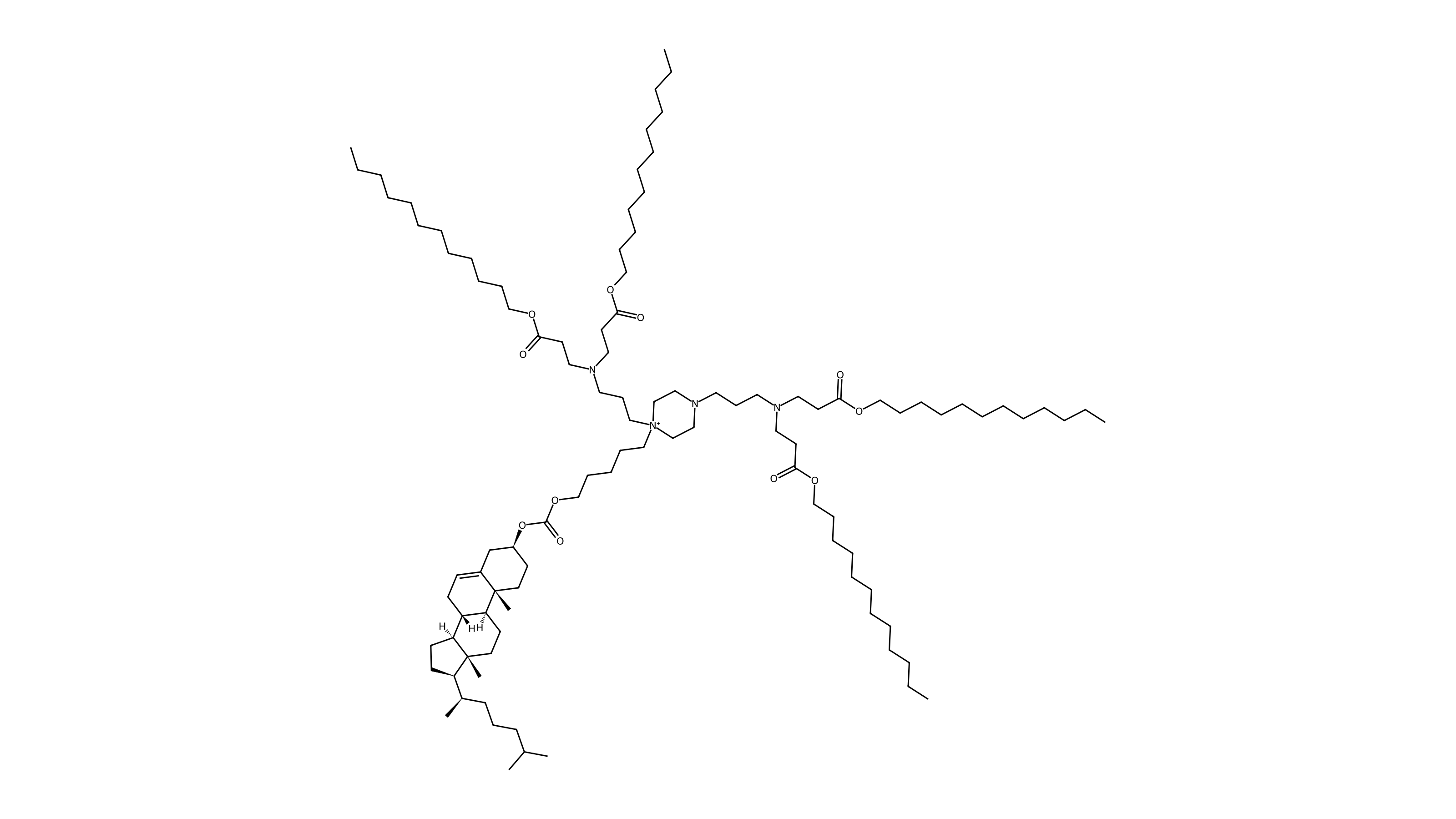
C6O2B2 is a cholesterol-conjugated cationic/ionizable lipid developed for ligand-free mRNA delivery to brain endothelial cells following intravenous administration. Its architecture combines a piperazine-containing polyamine core, four degradable ester-linked hydrophobic tails, and a covalently attached cholesterol moiety through a flexible five-carbon spacer. Among 51 newly synthesized cholesterol-based lipids, C6O2B2 produced the strongest brain luciferase expression. An optimized LNP formulation containing C6O2B2, DODAP, DSPC, and DMG-PEG enabled efficient functional mRNA expression throughout the cerebral vascular network, with preferential transfection of CD31-positive brain endothelial cells and minimal detectable neuronal or glial expression. The formulation preserved BBB integrity in Evans blue and contrast-enhanced MRI assessments. Mechanistic studies associated its activity with improved membrane fusion, enhanced endosomal escape, and ApoA-I enrichment in the protein corona. Delivery of IL-10 mRNA also reduced vascular leakage and inflammatory cytokines in a mouse model of acute neuroinflammation. C6O2B2 remains a preclinical research lipid requiring further pharmacokinetic and repeat-dose evaluation.