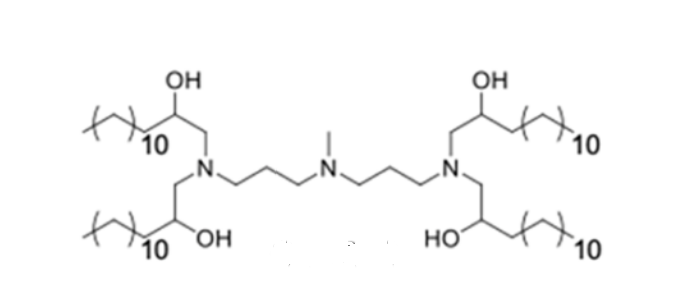
C14-306 is a rationally designed ionizable lipid for brain targeting delivery, characterized by a linear 3,3'-diamino-N-methyldipropylamine (306) core conjugated with tetradecyl (C14) tails. This specific architectural configuration, synthesized via epoxide ring-opening amination, yields a molecular structure that optimally balances hydrophobic character and protonation capacity. The C14 alkyl chains enhance membrane integration and LNP stability, while the multiamine core facilitates efficient mRNA complexation and pH-dependent endosomal disruption. When formulated into LNPs with standard helper lipids (DOPE, cholesterol, DMG-PEG2000), C14-306-based nanoparticles exhibit favorable physicochemical properties, including a monodisperse size distribution near 110 nm and high mRNA encapsulation efficiency (>84%). High-throughput in vivo barcoding screening identified C14-306 LNPs as lead candidates for brain delivery, demonstrating a significant tropism for neuronal cells over liver tissue. In validation studies, LNPs incorporating C14-306 achieved a 6.9-fold increase in luciferase mRNA transfection in the mouse brain compared to the SM-102 benchmark, coupled with a substantial reduction in hepatic off-target expression. Flow cytometry confirmed preferential transfection of NeuN+ neurons, and safety assessments indicated no significant blood-brain barrier compromise or induction of systemic inflammation. The efficacy of C14-306 is attributed to its tailored pKa, promoting extended circulation and enhanced endosomal escape within brain cells. C14-306 represents a promising platform for systemic mRNA therapeutics targeting neurological disorders.