 To enhance service speed and avoid tariff delays, we've opened a US warehouse. All US orders ship directly from our US facility.
| Cat. No. | Product Name | Field of Application | Chemical Structure |
|---|---|---|---|
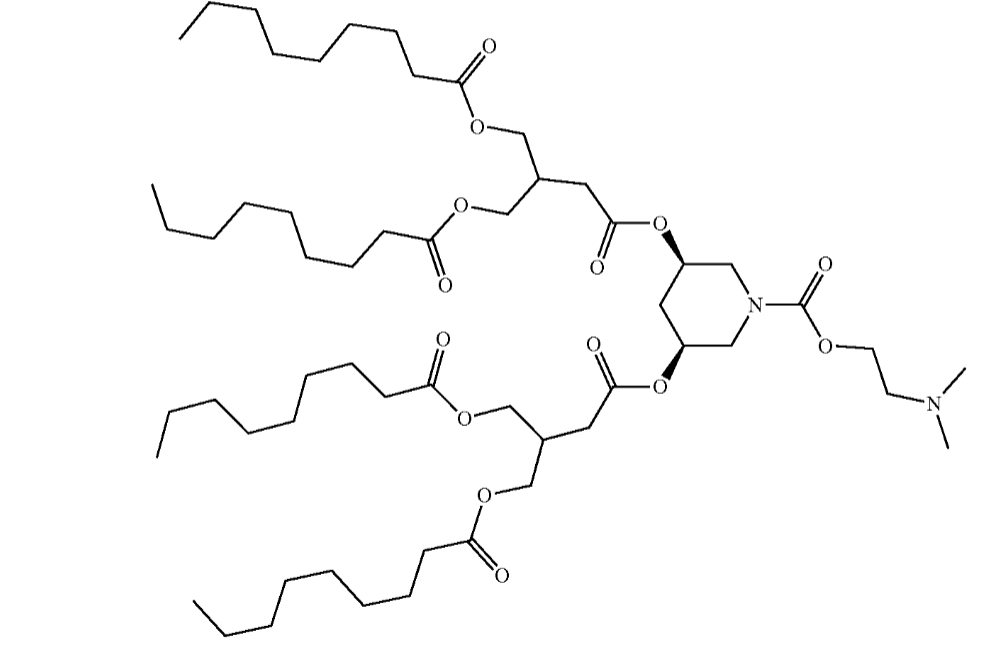
| DC67651 | CICL-238 |
Based on the data from patent US 20250127728A1, CICL-238 emerges as a highly promising ionizable lipid candidate, demonstrating notable advantages for targeted delivery applications. It achieves exceptional transfection efficiency—reaching approximately 90% of CICL-207's performance in splenic T-cells even at a reduced lipid ratio of 50% in LNP formulations. Additionally, CICL-238 exhibits minimal off-target expression in hepatocytes (<8%, comparable to CICL-207), underscoring its enhanced specificity for immune cells over liver tissues. Its optimized structure likely contributes to efficient endosomal escape and reduced Kupffer cell uptake, making it ideal for liver-related therapies (e.g., siRNA silencing for metabolic diseases) and potentially broadening applications to genetic medicine where precision and safety are paramount. Further validation in disease models could solidify its role as a versatile, low-toxicity alternative to benchmark lipids.
More description
|
|
| DC67549 | ORNA lipid 144(1-C) |
ORNA lipid 144 is a novel ionizable lipid engineered for splenic RNA delivery developed by ORNA Therapeutics, featuring a biodegradable structure with a protonatable tertiary amine headgroup and ester-linked branched C14 alkyl chains. This design enables exceptional spleen-targeting capability, demonstrated by 3-fold higher luciferase expression in the spleen compared to benchmark lipids and near-complete B-cell depletion when delivering anti-CD19 CAR circRNA. It forms highly stable lipid nanoparticles maintaining homogeneous size (60–80 nm) and low polydispersity across diverse manufacturing conditions and buffer systems. Rapid clearance from the liver and spleen minimizes off-target accumulation, while high circRNA encapsulation efficiency (>90%) and pH-dependent endosomal escape make it ideal for immunotherapies and vaccines requiring precise splenic bioavailability and sustained efficacy.
More description
|

|
| DC67460 | CP-LC-1422 |
Derived from the natural amino acid homocysteine, CP-LC-1422 is an ionizable cationic lipid that enables robust in vivo delivery of various RNA forms (mRNA, cRNA, and saRNA), driving high protein expression. When formulated into LNPs (50/38.5/10/1.5 molar ratio of ionizable lipid/cholesterol/DOPE/PEG-lipid), it achieves superior spleen-specific targeting compared to commercial options through intravenous administration, while maintaining an excellent safety profile.
More description
|

|
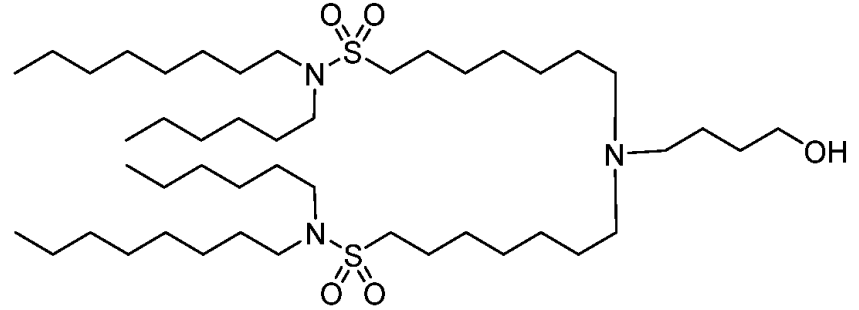
| DC67281 | BNT-51 Featured |
BNT-51 is an ionizable thiolipid developed by Biontech, characterized by its sulfur-containing moieties and a multiarm dendron-like architecture. Synthesized via reactions between amine-containing compounds and sulfur-based halides or sulfonates, it forms stable lipid nanoparticles (LNPs) optimized for mRNA delivery. The LNPs exhibit uniform particle size (80–100 nm, PDI <0.2), near-neutral zeta potential, and high mRNA encapsulation efficiency (>90%), while maintaining payload integrity through freeze-thaw cycles and extended storage. In vitro, BNT-51 demonstrates low cytotoxicity (>80% cell viability in C2C12, HepG2, and HEK293 cells) and superior transfection efficiency compared to conventional lipids, particularly in immune cells such as CD4+/CD8+ T cells within PBMCs. Its modular design allows integration of stealth lipids (e.g., PEG or vitamin E derivatives) to prolong circulation time and minimize immune activation, as evidenced by low hemolysis and complement activation risks. In vivo, BNT-51-based LNPs enable targeted mRNA delivery to splenic macrophages, achieving potent genome editing (e.g., Cre mRNA) and therapeutic protein expression (e.g., BACH1) in preclinical models. With its tunable structure, robust stability, and cell-specific tropism, BNT-51 holds promise for advancing mRNA therapeutics in gene editing, cancer immunotherapy, and regenerative medicine, offering a versatile platform for next-generation nanomedicine.
More description
|
|
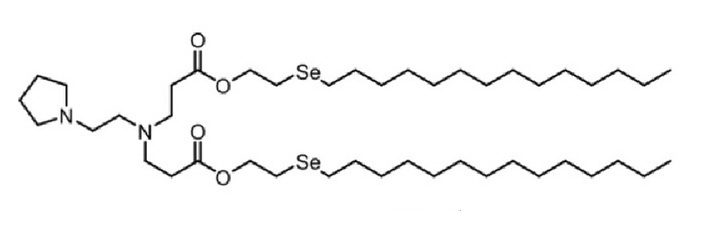
| DC60494 | 76-O17Se |
76-O17Se is a lipidoid for the efficient delivery of antiCD19 mRNA CAR to murine primary macrophages. 76-O17Se is more efficient than delivery with lipofectamine 2000 (LPF2K) or MC3
More description
|
|
| DC67544 | HCQ Lipid 4(HCQ-4) |
HCQ-4 is a rationally engineered ionizable lipid derived from hydroxychloroquine (HCQ), featuring a ditetradecylamine-derived twin-C14 saturated hydrocarbon tail linked to the HCQ headgroup via a succinic acid spacer. Synthesized through a three-step route involving HCQ deprotonation, ditetradecylamine carboxylation, and EDC/DMAP-mediated amidation, this lipid forms the core of optimized lipid nanoparticles (LNPs) at a molar ratio of 60:10:40:0.5 (HCQ-4:DOPE:cholesterol:DMG PEG2000). The structure enables dual functionality: (1) Spleen-selective mRNA delivery (2.3-fold higher splenic vs. hepatic transfection) via 80-100 nm particle size, near-neutral charge (-3 mV), and low PEG density, facilitating immune cell uptake; (2) Tumor microenvironment modulation through HCQ-mediated repolarization of M2 macrophages to antitumor M1 phenotype (iNOS+ cells ↑2.5-fold, CD206+ cells ↓60%). This bifunctional design synergistically enhances mRNA cancer vaccine efficacy, demonstrating superior prophylactic/therapeutic antitumor activity and antimetastatic effects compared to clinical benchmarks like MC-3 LNP.
More description
|

|
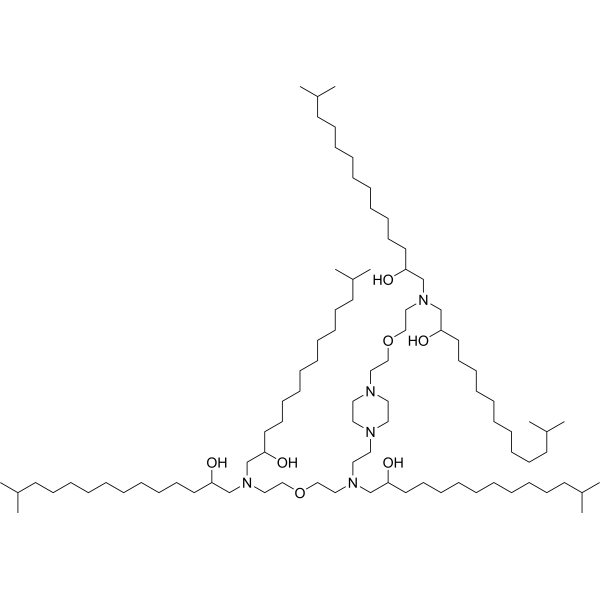
| DC13101 | E10i-494 Featured |
E10i-494 is a branched ionizable lipid designed to enhance the delivery of mRNA and CRISPR-Cas9 ribonucleoprotein (RNP) complexes. It belongs to the Branched Endosomal Disruptor (BEND) lipid family, which features terminal branching to improve endosomal escape and cellular uptake.E10i-494 demonstrated exceptional performance in T cell engineering, achieving >80% transfection efficiency in primary human T cells. This is significantly higher than the ~70% efficiency achieved by the linear lipid C14-494.The isopropyl branch enhances the lipid's ability to penetrate and disrupt endosomal membranes, leading to improved release of mRNA and RNPs into the cytoplasm.Despite its high efficiency, E10i-494 exhibits low cytotoxicity, making it suitable for therapeutic applications.E10i-494 is particularly effective for delivering mRNA to T cells, making it a promising tool for CAR-T cell therapy and other immunotherapies.Its ability to deliver CRISPR-Cas9 RNPs efficiently also makes it suitable for in vivo gene editing applications.
More description
|
|
| DC67565 | IAJD249 |
IAJD 294 is a single-component ionizable amphiphilic Janus dendrimer that autonomously coassembles with mRNA via simple injection into uniform monodisperse dendrimersome nanoparticles (DNPs, 85 nm diameter, PDI<0.2), eliminating complex multi-component formulations. Its optimized 3,5-benzoyl ester linkage and symmetric hydrophobic tails enable dual-organ targeting:
Spleen: 2.97 × 10⁷ RLU (50% of total activity)
Lymph nodes: 10⁶ RLU (10× higher than IAJD 87)
through partial hydrophobic interdigitation (stabilizing DNPs for enhanced lymphatic uptake) and pKa ~6.5 (facilitating endosomal escape), validating constitutional isomerism for precision delivery.
More description
|

|
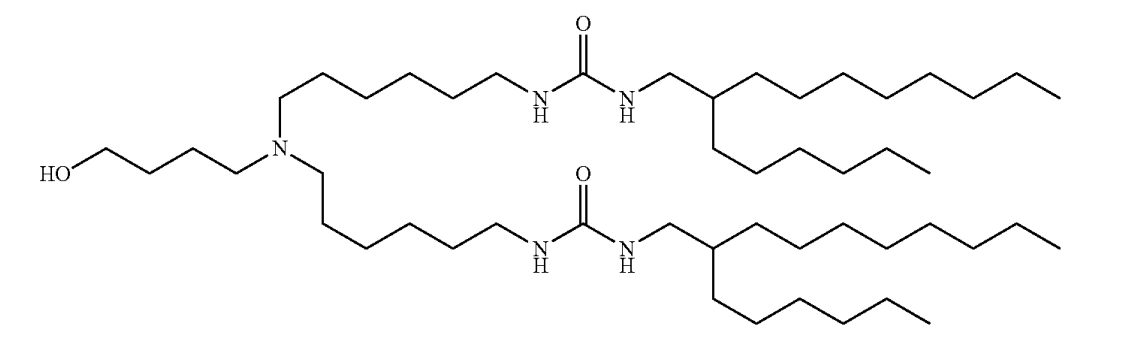
| DC67517 | Westgene lipid 8 |
Westgene lipid 8 is a cationic lipid featuring a tertiary amine core with three alkyl chains (C1-C15) and two unsaturated C18 linoleate-like tails. Its ionizable amine enables pH-dependent charge for mRNA encapsulation in LNPs. Key structural elements include branched alkyl groups (X1/X2: C4, X3: C2) and ester-linked unsaturated R1/R2 chains, enhancing membrane fusion and endosomal escape. N Used in lipid nanoparticles (LNPs) with DOPE, cholesterol, and PEG-DMG, it demonstrates low cytotoxicity, high mRNA delivery efficiency, and spleen-targeted immune activation, making it suitable for vaccine/therapeutic delivery.
More description
|
|
| DC60684 | Lipid I97 |
Lipid I97 is a vitamin B5-derived ionizable lipid for mRNA vaccine delivery. Lipid I97 LNP specifically delivers the mRNA to the spleen and lymph nodes in model mice, induces balanced Th1/Th2 immune responses, and elicits the production of high levels of neutralizing antibodies with low toxicity.
More description
|

|
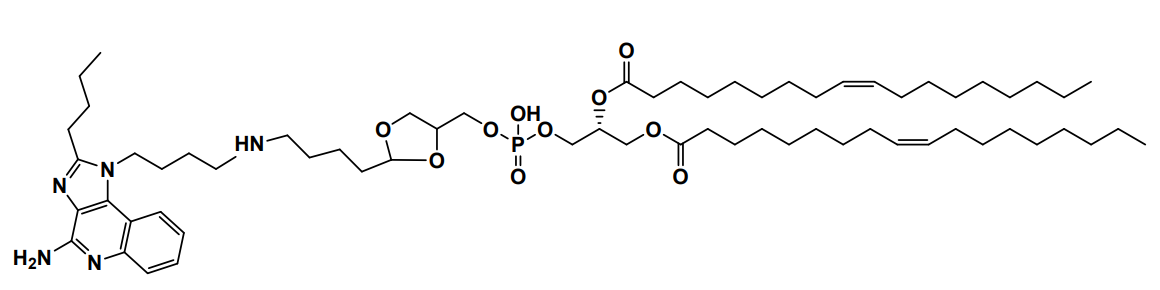
| DC60828 | YK-TLR-001 Featured |
YK-TLR-001 is a cyclic acetal-based ionizable lipid for mRNA delivery. YK-TLR-001 LNPs are demonstrated to enhance mRNA expression in the spleens and to induce exceptional maturation of antigen-presenting cells (APCs) and to promote antigen presentation.
More description
|
|
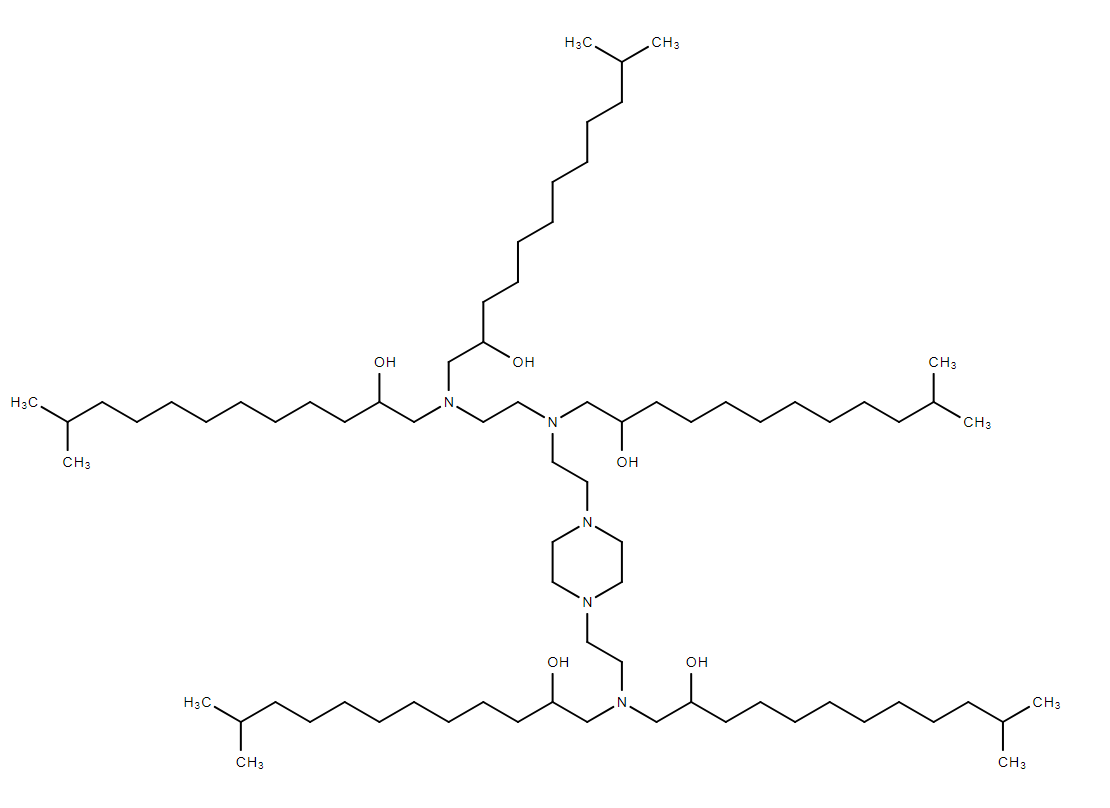
| DC13058 | E8i-200 |
E8i-200 is a novel Branched Endosomal Disruptor (BEND) ionizable lipid, designed to enhance the efficiency of lipid nanoparticles (LNPs) in drug delivery, particularly for mRNA and protein delivery. Its unique structure, featuring terminal branching, improves endosomal escape, a critical step in the delivery of therapeutic cargo into cells.E8i-200 is designed to enhance endosomal escape, a key bottleneck in mRNA and protein delivery. Its terminal branching structure provides several advantages:Improved Endosomal Membrane Penetration: The branched structure allows E8i-200 to more effectively disrupt endosomal membranes, facilitating the release of mRNA and proteins into the cytoplasm.Enhanced Gene Editing Efficiency: E8i-200 has been shown to significantly improve the delivery of CRISPR-Cas9 ribonucleoprotein (RNP) complexes, enabling efficient gene editing in vivo.E8i-200 significantly enhanced mRNA expression in the liver, outperforming traditional linear lipids like C12-200 in mouse models.E8i-200 effectively delivered CRISPR-Cas9 RNP complexes, achieving high editing efficiency in the liver, surpassing that of linear lipids.E8i-200 also showed high transfection efficiency and low cytotoxicity in T cells, making it a promising candidate for CAR-T cell engineering and other immunotherapies.
More description
|
|
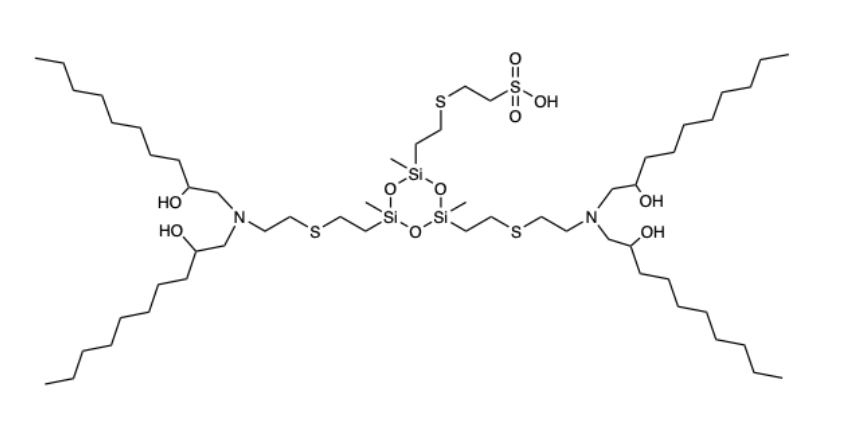
| DC60664 | Si12-C10 |
Si12-C10 is a siloxane-incorporated lipid for spleen-targeting mRNA delivery. The siloxane moieties enhance cellular internalization of mRNA-LNPs and improve their endosomal escape capacity, augmenting their mRNA delivery efficacy.
More description
|
|
