 To enhance service speed and avoid tariff delays, we've opened a US warehouse. All US orders ship directly from our US facility.
| Cat. No. | Product Name | Field of Application | Chemical Structure |
|---|---|---|---|
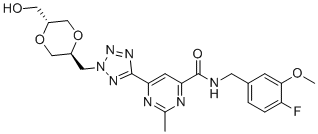
| DC21494 | PF-152 Featured |
PF-152 is a potent, highly selective and orally bioavailable MMP13 inhibitor with Ki of 1.5 nM, with no activity against MMP3 (Ki>10 uM).
More description
|
|
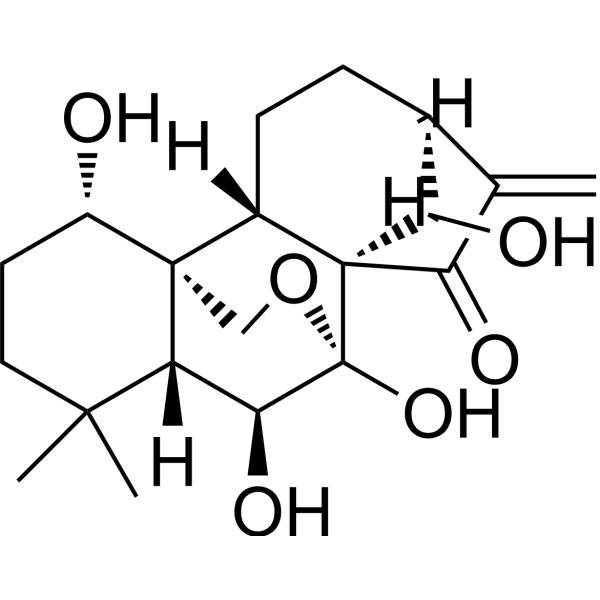
| DCD-031 | Oridonin Featured |
Oridonin (Cmpd-5, NSC 250682) is a natural ent-kaurane diterpenoid from Rabdosia rubescens identified as a first-in-class small-molecule inhibitor that directly binds β-arrestin1 and β-arrestin2 with high nanomolar to low micromolar affinity. Oridonin broadly suppresses β-arrestin recruitment, receptor desensitization, internalization, and downstream ERK signaling across multiple GPCR families, and abrogates T-cell chemotaxis.
More description
|
|
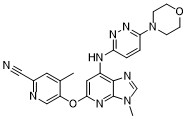
| DC74638 | GLPG3667 Featured |
GLPG3667 is an oral, reversible, and selective tyrosine kinase 2 (TYK2) inhibitor. It is being developed to treat inflammatory and auto-immune diseases. Biochemical assays showed that GLPG3667 displayed nanomolar potency on TYK2 with a selectivity over other JAK kinases >3-fold. In human PBMC, GLPG3667 showed comparable potency on the IFNα and IL-23 pathways (around 50 nM). Selectivity for TYK2 on the IFNα pathway was >14-fold and >19-fold toward the IL-2 and GM-CSF pathways in human PBMC and whole blood, respectively. Dermal ear inflammation in a mouse model of psoriasis driven by IL-23 was prevented by GLPG3667 with a minimal effective dose of 3 mg/kg given orally once daily. This effect was associated with a decrease in neutrophil infiltration and STAT3 phosphorylation at sites of inflammation. In healthy HV, GLPG3667 completely inhibited IFNα-induced STAT1 and STAT3 phosphorylation but did not impact IL-2- and GM-CSF-induced STAT5 phosphorylation.
More description
|
|
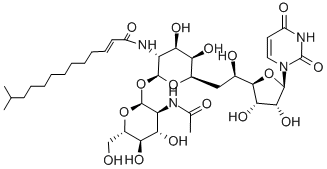
| DCC5270 | Tunicamycin Featured |
Antibiotic, inhibiting the first step in the N-linked glycosylation in eukaryotes and inducing ER stress to activate the unfolded protein response (UPR)
More description
|
|
| DC22098 | GB1107 Featured |
GB1107 is a novel small-molecule inhibitor specifically designed to target galectin-3 (Gal-3), demonstrating high binding affinity and oral bioavailability.
More description
|

|
| DC22129 | HOIPIN-1(JTP-0819958;HOIP inhibitor-1) Featured |
HOIPIN-1 (JTP-0819958, HOIP inhibitor-1) is a chemical inhibitor of linear ubiquitin chain assembly complex (LUBAC, IC50=2.8 uM), specifically generates Met1-linked linear ubiquitin chains through the ubiquitin ligase activity in HOIP, and activates the N
More description
|

|
| DC71669 | ARV471 Featured |
ARV471 is an orally bioavailable estrogen receptor-targeting (ER-targeting) PROTAC for the treatment of patients with locally advanced or metastatic ER+/HER2- breast cancer.
More description
|

|
| DC70864 | UHMCP1 Featured |
UHMCP1 is a small molecule that prevents the SF3b155/U2AF65 interaction, binds to the hydrophobic pocket of the U2AF65 UHM domain (Kd=1-20 uM), impacts splicing and cell viability.
More description
|

|
| DC73047 | JC19 Featured |
JC19 is a a cysteine-reactive small molecule degrader of SARS-CoV-2 nsp14 with DC50 of 8.7 uM in HEK293T cells.
More description
|

|
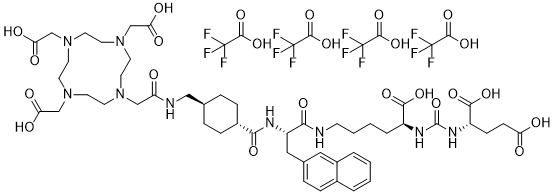
| DC75325 | PSMA-617 TFA Featured |
PSMA-617, also know as vipivotide tetraxetan, is a ligand used to make 177Lu-PSMA-617, which is a radioactive molecule to fight cancer. PSMA617 possesses a small peptide, which was designed to target prostate-specific membrane antigen (PSMA). PSMA617 demonstrates high radiolytic stability for at least 72 h. PSMA617 has high inhibition potency (equilibrium dissociation constant Ki=2.34±2.94 nM on LNCaP; Ki=0.37±0.21 nM enzymatically determined). 177 Lu-PSMA-617 offers a potential additional life-prolonging treatment option for men with mCRPC.
More description
|
|
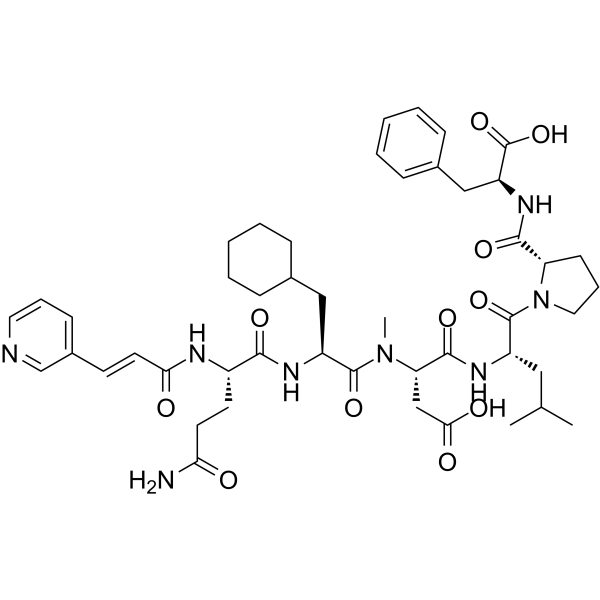
| DC47736 | Targeting the bacterial sliding clamp peptide 46 Featured |
Targeting the bacterial sliding clamp peptide 46 is a short peptide targeting the bacterial sliding clamp(SC), inhibiting SC-dependent DNA synthesis.
More description
|
|
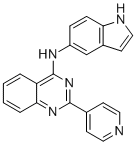
| DC74299 | BC18630 free base Featured |
BC18630 free base (BC 18630) is a small molecule inhibitor of the E3 ubiquitin ligase subunit DCAF7, potently inhibits SARS-CoV-2 infection with IC50 of 39 nM in cell-based assays.
More description
|
|
| DC74298 | BC18630 Featured |
BC18630 (BC 18630) is a small molecule inhibitor of the E3 ubiquitin ligase subunit DCAF7, potently inhibits SARS-CoV-2 infection with IC50 of 39 nM in cell-based assays.
More description
|

|
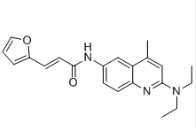
| DC73322 | DP308 Featured |
DP308 is a novel and effective 53BP1 tandem Tudor domain (TTD) inhibitor, disrupts the binding between 53BP1 and H4K20me2 peptide with IC50 of 1.69 uM.
More description
|
|
| DC73130 | AC-003 Featured |
AC-003 is a novel, orally administered small-molecule inhibitor targeting receptor-interacting protein kinase 1 (RIPK1), demonstrating therapeutic potential for the treatment of idiopathic pulmonary fibrosis (IPF).
More description
|

|
| DC70170 | AC3573 Featured |
AC3573 (AC-3573) is a potent, specific small molecule inhibitor of HER3.AC3573 abrogates HER2–HER3 signalling in cells and is more specific for HER3, inhibits NRG (heregulin)-induced HER3 phosphorylation with IC50 of 10 uM, abrogates the formation of the active HER2-HER3 heterodimer, inhibits oncogenic downstream signalling in SK-BR-3 breast cancer cells.
More description
|

|
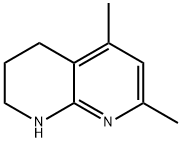
| DC73284 | F1957-0088 Featured |
F1957-0088 is a small molecule targeting the UHRF1 tandem Tudor domain (TTD) with TR-FRET (TTD vs. H3K9me3) EC50 of 45.1 uM.
More description
|
|
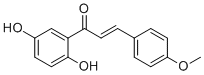
| DC74181 | SPI-21 Featured |
SPI-21 (Spt5-Pol II inhibitor 21) is a small-molecule inhibitor of Spt5-Pol II with IC50 of 25.2 uM.
More description
|
|
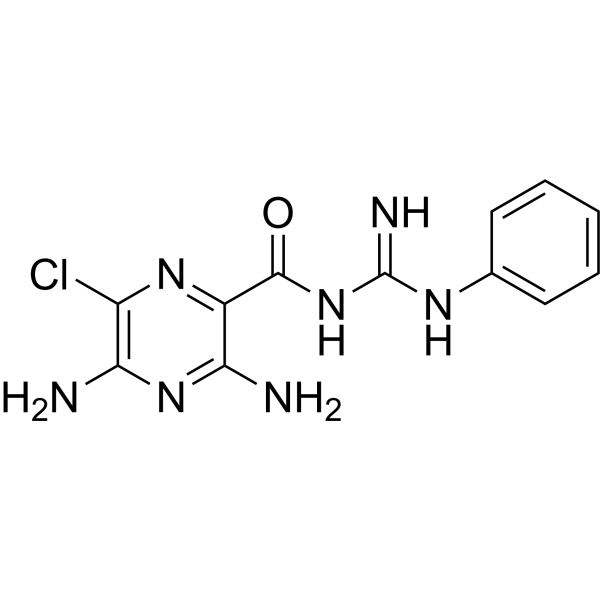
| DC43231 | Phenamil Featured |
Irreversible inhibitor of amiloride-sensitive Na channels; derivative of amiloride
More description
|
|
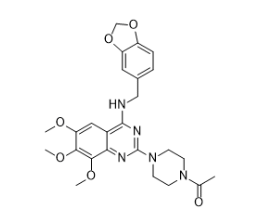
| DC73706 | ER-001135935 Featured |
ER-001135935 is a potent selective inhibitor of aldehyde dehydrogenase family 1 member A3 (ALDH1A3) with IC50 of 64 nM, Ki value of 106 nM.
More description
|
|
| DC40582 | Montelukast Featured |
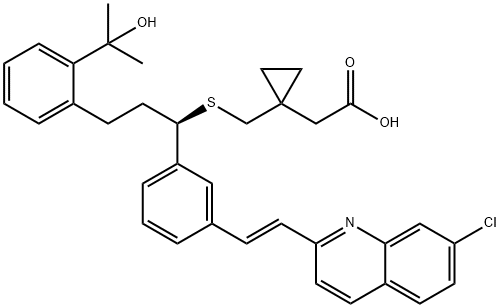
Montelukast is a potent, selective and orally active antagonist of cysteinyl leukotriene receptor 1 (CysLT1). Montelukast can be used for the reseach of asthma and liver injury. Montelukast also has an antioxidant effect in intestinal ischemia-reperfusion injury, and could reduce cardiac damage.
More description
|
|
| DC48260 | Izilendustat Featured |
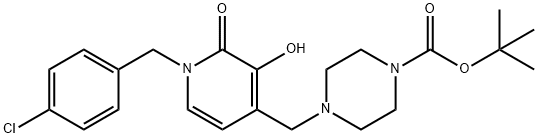
Izilendustat is a potent inhibitor of prolyl hydroxylase which can stabilize hypoxia inducible factor- 1 alpha (HIF- lα) and hypoxia inducible factor-2 (HIF-2). Izilendustat has the potential for researching diseases that relate to the body’s inmmune response like colitis and other inflammatory bowel diseases (extracted from patent WO2011057115A1 and WO2011057121A1).
More description
|
|
| DC28252 | Seltorexant hydrochloride Featured |
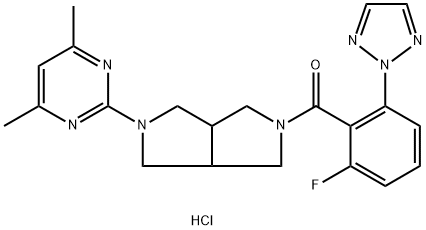
Seltorexant hydrochloride (JNJ-42847922 hydrochloride) is an orally active, high-affinity, and selective OX2R antagonist (pKi values of 8.0 and 8.1 for human and rat OX2R). Seltorexant hydrochloride crosses the blood-brain barrier and quickly occupies OX2R binding sites in the rat brain.
More description
|
|
| DC73230 | SD133 Featured |
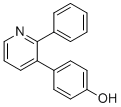
SD133 (Sd-133) is a drug-like small molecule inhibitor of adhesion molecule cadherin 11 (CDH11), binds specifically to the CDH11 binding pocket with KD of 25.2 uM in SPR assays.
More description
|
|
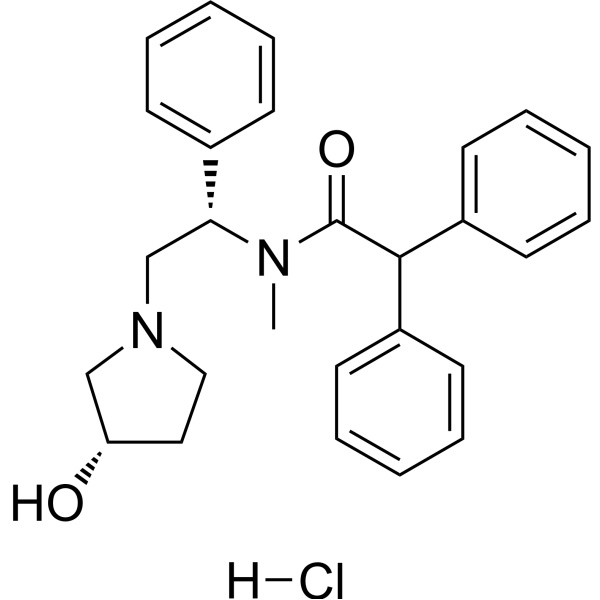
| DC33138 | N-[(1S)-2-[(3S)-3-hydroxy-1-pyrrolidinyl]-1-phenylethyl]-N-methyl-a-phenyl-benzeneacetamide hydrochloride Featured |
Asimadoline HCl is a κ-opioid receptor agonist potentially for the treatment of pruritus. Asimadoline has also been shown to be used in the treatment of irritable bowel syndrome.
More description
|
|
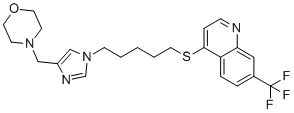
| DC74555 | GYS32661 Featured |
GYS32661 is a potent, small-molecule inhibitor of RAC1 and its isoform RAC1B, specifically designed to target the Sonic Hedgehog (Shh) signaling pathway in cancers like medulloblastoma and colorectal carcinoma. Distinguishing itself from other RAC1 inhibitors, GYS32661 exhibits exceptional blood-brain barrier (BBB) permeability with an approximately 50% brain-to-plasma ratio, making it a premier candidate for treating CNS-related malignancies. It functions by disrupting the activation of RAC1 (IC50 ≈ 1.18 μM), subsequently reducing the expression of downstream transcription factors GLI1 and GLI2, which effectively halts tumor proliferation and metastasis. In preclinical in vivo models, the compound has demonstrated significant anti-tumor efficacy and a favorable safety profile without systemic toxicity. Due to its hydrophobic nature, it is typically formulated in a vehicle of DMSO, PEG300, and saline for administration. As a non-toxic clinical candidate, GYS32661 represents a promising therapeutic strategy for overcoming chemoresistance and improving survival rates in Shh-driven pediatric and adult tumors.
More description
|
|
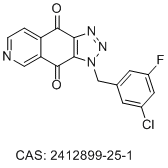
| DC74282 | HY041004 Featured |
HY041004 is the first small molecule inhibitor of deubiquitinase Josephin Domain-containing protein 2 (JOSD2) with IC50 of 0.26 uM for JOSD2 catalytic activity inhibition.
More description
|
|
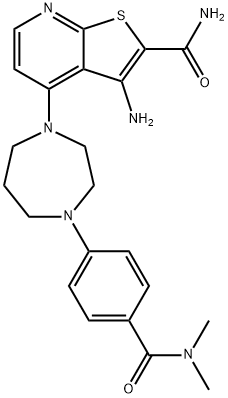
| DC73178 | SNX631 Featured |
SNX631 (SNX-631) is a potent, selective inhibitor of CDK8/19 Mediator kinase with IC50 of 10.3 nM in the NF κB-dependent cell-based assays.
More description
|
|
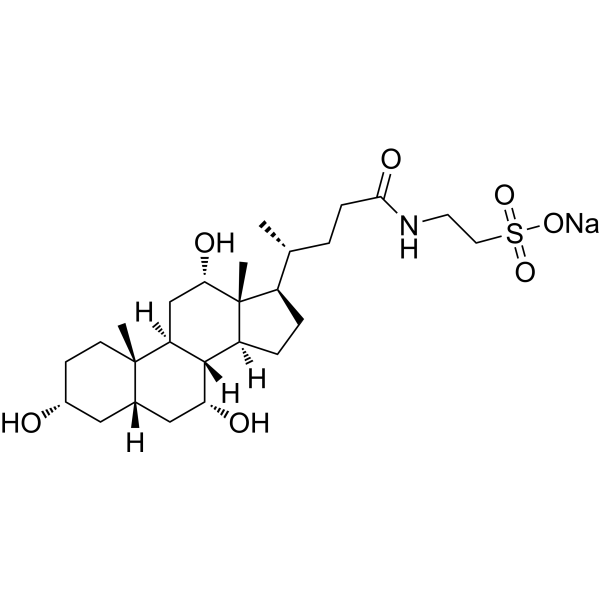
| DC33119 | Sodium taurocholate Featured |
Sodium taurocholate is a GPBAR1 protein agonist potentially for the treatment of type 2 diabetes and obesity in rats.
More description
|
|
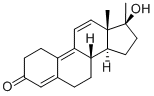
| DC23721 | Metribolone Featured |
An orally active anabolic-androgenic steroid and a 19-nortestosterone derivative that has been widely used in scientific research as a hot ligand in androgen receptor (AR) ligand binding assays (LBAs) and as a photoaffinity label for the AR..
More description
|
|
