 To enhance service speed and avoid tariff delays, we've opened a US warehouse. All US orders ship directly from our US facility.
| Cat. No. | Product Name | Field of Application | Chemical Structure |
|---|---|---|---|
| DC9527 | Methylnaltrexone (Bromide) Featured |
Methylnaltrexone Bromide is a pheriphally-acting μ-opioid antagonist that acts on the gastrointestinal tract to decrease opioid-induced constipation.
More description
|

|
| DC10947 | FPL64176 Featured |
FPL64176 is a potent L-type Ca++ channel activator with EC50 of 16 nM.
More description
|

|
| DC44944 | JHU37160 Featured |
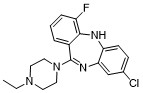
JHU37160 is a potent and brain-penetrant DREADD agonist, with EC50s of 18.5 nM and 0.2 nM for hM3Dq and hM4Di DREADDs in HEK-293 cells, respectively. JHU37160 exhibits selective [3H]Clozapine displacement from DREADDs and not from other Clozapine-binding sites in mice brain tissue.
More description
|
|
| DC36965 | 2'-Deoxyadenosine Featured |
2'-Deoxyadenosine is the DNA nucleoside A, which pairs with deoxythymidine (T) in double-stranded DNA.
More description
|

|
| DC32002 | sugammadex Featured |
Sugammadex is an agent for reversal of neuromuscular blockade by the agent rocuronium in general anaesthesia. It is the first selective relaxant binding agent (SRBA). Sugammadex is a modified γ-cyclodextrin, with a lipophilic core and a hydrophilic periphery. This gamma cyclodextrin has been modified from its natural state by placing eight carboxyl thio ether groups at the sixth carbon positions. These extensions extend the cavity size allowing greater encapsulation of the rocuronium molecule. These negatively charged extensions electrostatically bind to the quaternary nitrogen of the target as well as contribute to the aqueous nature of the cyclodextrin.
More description
|

|
| DC45607 | JNJ-63576253 (TRC-253) Featured |
JNJ-63576253 (TRC-253) is a potent and selective androgen receptor (AR) Antagonist with IC50 of 6.9 nM. JNJ-63576253 displays robust inhibition in WT and LBD-mutated, enzalutamide-resistant models of prostate cancer.
More description
|

|
| DC29135 | Lanreotide acetate Featured |
Lanreotide acetate (BIM 23014 acetate) is a somatostatin analogue with antineoplastic activity. Lanreotide acetate is used for treatment for carcinoid syndrome.
More description
|

|
| DC46276 | BRD0639 Featured |
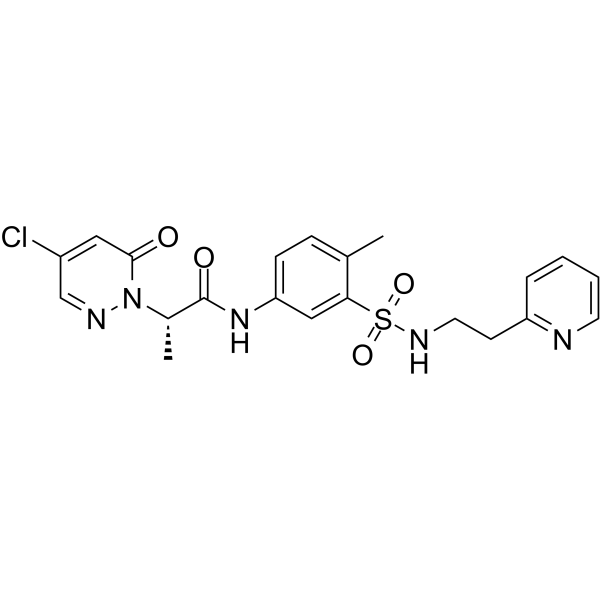
BRD0639 is a first-in-class inhibitor of the PRMT5-substrate adaptor interaction. BRD0639 is a PRMT5 binding motif (PBM)-competitive agent that can support studies of PBM dependent PRMT5 activities.
More description
|
|
| DC37639 | Cyclam Featured |
Cyclam (1,4,8,11-tetraazacyclotetradecane) is an organic compound. It is a white solid that is soluble in water. The compound is notable as a macrocyclic ligand, which binds strongly to many transition metal cations. The compound was first prepared by the reaction of 1,3-dibromopropane and ethylenediamine.
More description
|

|
| DC36079 | Artemisitene Featured |
Artemisitene is an antimalarial agent and the oxidized form of Artemisinin. Artemisinin precursors are the important basic substances for biosynthesis of Artemisinin, including Artemisinic acid, Artemisinin B, Artemisitene, etc.
More description
|

|
| DC20505 | Pimozide Featured |
Pimozide is an antipsychotic agent that acts as an antagonist of the D2, D3, and D4 receptors and the 5-HT7 receptor, also is an inhbitor of STAT5.
More description
|

|
| DC9968 | CCT251545 Featured |
CCT251545 is an orally bioavailable and potent inhibitor of WNT signaling with IC50 value of 5 nM.
More description
|

|
| DC45531 | ICCB-19 hydrochloride Featured |
ICCB-19 hydrochloride is an inhibitor of TNFRSF1A Associated Via Death Domain (TRADD) with IC50 of 1.12 μM and 2.01 μM for protecting Velcade-induced apoptosis in Jurkat cells and protecting RDA in MEFs, respectively. ICCB-19 indirectly inhibits Receptor-interacting serine/threonine-protein kinase 1 (RIPK1). ICCB-19 effectively induces autophagy.
More description
|

|
| DC46697 | Tertiapin-Q |
Tertiapin-Q (TPNQ) is a derivative of tertiapin and inhibits BK-type K+ channels in a use- and concentration-dependent manner. Tertiapin-Q also binds to ROMK1 (Kir1.1) and GIRK1/4 (Kir3.1/3.4) channels with Ki values of 1.3 nM and 13.3 nM respectively.
More description
|

|
| DC46696 | RN-1747 |
RN-1747 is a selective TRPV4 agonist with EC50s of 0.77 μM, 4.0 μM and 4.1 μM for hTRPV4, mTRPV4 and rTRPV4, respectively. RN-1747 also antagonizes TRPM8 with IC50 of 4 μM.
More description
|
|
| DC46692 | NRD167 |
NRD167 is a potent and selective SIRT5 inhibitor.
More description
|
|
| DC46688 | Sevelamer-(d5)n hydrochloride |
Sevelamer-(d5)n hydrochloride is the deuterium labeled Sevelamer hydrochloride. Sevelamer hydrochloride is a phosphate binding drug used to treat hyperphosphatemia in patients with chronic kidney disease; consists of polyallylamine that is crosslinked with epichlorohydrin.
More description
|
|
| DC46685 | Uridine triphosphate 13C9,15N2 sodium |
Uridine triphosphate 13C9,15N2 (UTP 13C9,15N2) sodium is a labeled Uridine triphosphate sodium. Uridine triphosphate sodium can be used in nucleic acid synthesis.
More description
|
|
| DC46684 | Cytidine-5'-triphosphate |
Cytidine 5′-triphosphate (5'-CTP) is a nucleoside triphosphate and serves as a building block for nucleotides and nucleic acids, lipid biosynthesis. Cytidine triphosphate synthase can catalyze the formation of cytidine 5′-triphosphate from uridine 5′-triphosphate (UTP). Cytidine 5′-triphosphate is an essential biomolecule in the de novo pyrimidine biosynthetic pathway in T. gondii.
More description
|
|
| DC46683 | 5-O-TBDMS-N4-Benzoyl-2-deoxycytidine |
5-O-TBDMS-N4-Benzoyl-2-deoxycytidine is a modified nucleoside. 5-O-TBDMS-N4-Benzoyl-2-deoxycytidine can be used in the synthesis of deoxyribonucleic acid or nucleic acid.
More description
|
|
| DC46682 | 5'-O-TBDMS-dT |
5'-O-TBDMS-dT is a nucleoside with protective and modification effects.
More description
|
|
| DC46681 | 5'-O-TBDMS-dG |
5'-O-TBDMS-dG is a modified nucleoside. 5'-O-DMT-2'-O-TBDMS-rI can be used in the synthesis of deoxyribonucleic acid or nucleic acid.
More description
|
|
| DC46680 | 5'-O-TBDMS-dA |
5'-O-TBDMS-dA is a modified nucleoside and can be used to synthesize DNA or RNA.
More description
|
|
| DC46679 | 5'-O-TBDMS-Bz-dA |
5'-O-TBDMS-Bz-dA is a nucleoside with protective and modification effects.
More description
|
|
| DC46678 | 5'-O-DMT-rU |
5'-O-DMT-rU is a modified nucleoside and can be used to synthesize RNA.
More description
|
|
| DC46677 | 5'-O-DMT-rI |
5'-O-DMT-Ri can be used in the synthesis of oligoribonucleotides.
More description
|
|
| DC46676 | 5'-O-DMT-PAC-dA |
5'-O-DMT-PAC-dA can be used in the synthesis of oligoribonucleotides.
More description
|
|
| DC46675 | 5'-O-DMT-N4-Bz-5-Me-dC |
5'-O-DMT-N4-Bz-5-Me-dC is a modified nucleoside. 5'-O-DMT-2'-O-TBDMS-rI can be used in the synthesis of deoxyribonucleic acid or nucleic acid.
More description
|
|
| DC46674 | 5'-O-DMT-N4-Bz-2'-F-dC |
5'-O-DMT-N4-Bz-2'-F-dC is a nucleoside with protective and modification effects.
More description
|
|
| DC46673 | 5'-O-DMT-N4-Ac-2'-F-dC |
5'-O-DMT-N4-Ac-2'-F-dC is a modified nucleoside and can be used to synthesize DNA or RNA.
More description
|
|
