 To enhance service speed and avoid tariff delays, we've opened a US warehouse. All US orders ship directly from our US facility.
| Cat. No. | Product Name | Field of Application | Chemical Structure |
|---|---|---|---|
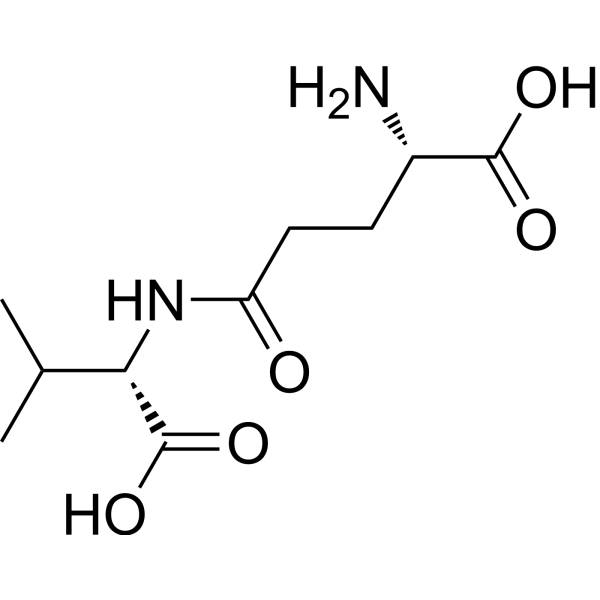
| DC34031 | G-Glu-Val Featured |
G-Glu-Val, also known as gamma-Glutamyl-L-valine or H-gGlu-Val-OH, is a taste-modulating dipeptide and a main contributor to the "kokumi" taste of edible beans.
More description
|
|
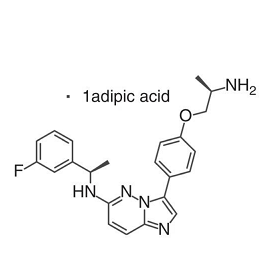
| DC26199 | Taletrectinib adipate(DS-6051b) Featured |
DS-6051b is a potent and selective ROS1 and TRK family inhibitor with IC50 of 0.207 nM, 0.622 nM and 0.980 nM against ROS1, NTRK1 and NTRK3. DS-6051b especially inhibits ROS1 G2032R and other crizotinib-resistant ROS1 mutants.
More description
|
|
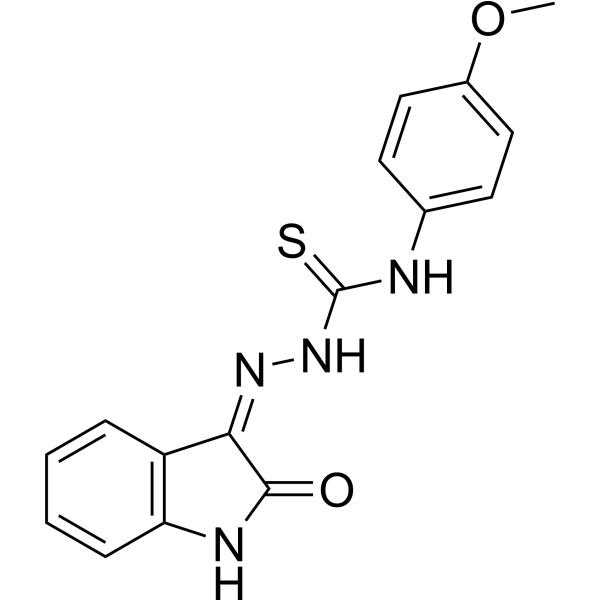
| DCC3793 | NSC73306 Featured |
NSC73306 is a cell penetrant, cytotoxic agent that exhibits greater toxicity against cells expressing functional P-gp (P-glycoprotein) than against other cells. Irrespective of variations in cell line background, NSC73306 consistently demonstrated a Pgp-potentiated MDR-selective toxicity.
More description
|
|
| DC46320 | HBC599 Featured |
HBC599 is a HBC analog. HBC is nonfluorescent in solution, but emits strong fluorescence upon forming tight complex with Pepper RNA aptamer. HBC-Pepper complex can be used to visualize RNA dynamics in live cells.
More description
|
|
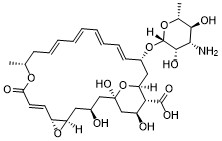
| DCAPI1337 | Natamycin(Pimaricin) Featured |
Natamycin is a naturally occurring polyene macrolide antifungal agent produced by Streptomyces natalensis, exhibiting potent in vitro and in vivo activity against a broad spectrum of yeasts and filamentous fungi. In vitro studies show strong inhibition of Candida spp., Aspergillus spp., and other food- and ocular-relevant fungi, with reported MIC values typically in the low µg/mL range (often ~1–10 µg/mL depending on species and strain).
More description
|
|
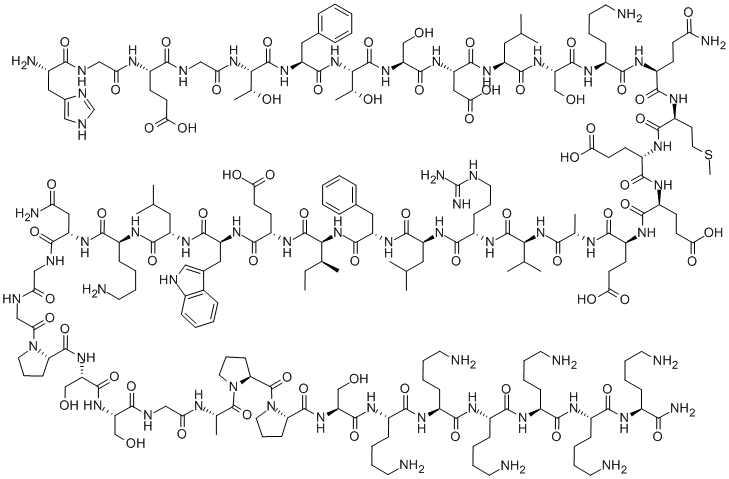
| DC22543 | Lixisenatide Featured |
Lixisenatide is a glucagon-like peptide-1 (GLP-1) receptor agonist. Lixisenatide inhibits the inflammatory response through down regulation of pro-inflammatory cytokines, and suppresses of the Akt-MEK1/2 signaling pathway. Lixisenatide can inhibit oxidative stress, mitochondrial dysfunction and apoptosis. Lixisenatide can be used for the researches of inflammation, metabolic disease, neurological disease and cardiovascular disease, such as rheumatoid arthritis, diabetes, Alzheimer's disease and atherosclerosis.
More description
|
|
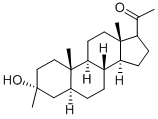
| DC32105 | Ganaxolone Featured |
Ganaxolone, also known as CCD 1042 and C1042, is a CNS-selective GABAA modulator that acts on well-characterized targets in the brain known to have anxiolytic and anticonvulsant effects. Ganaxolone protects against seizures in diverse animal models, including the pentylenetetrazol, 6 Hz and amygdala kindling models. Ganaxolone is a positive allosteric modulator of the action of the GABAA receptor and, unlike benzodiazepines, there does not appear to be tolerance to the anticonvulsant effects of ganaxolone.
More description
|
|
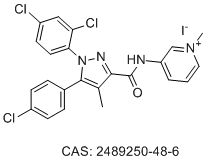
| DC74207 | TXX-1-10 Featured |
TXX-1-10 (CB1-8) is a small chemical molecule that inhibits HPIP oncoprotein expression, suppresses breast cancer cell growth and metastasis in vitro and in vivo.
More description
|
|
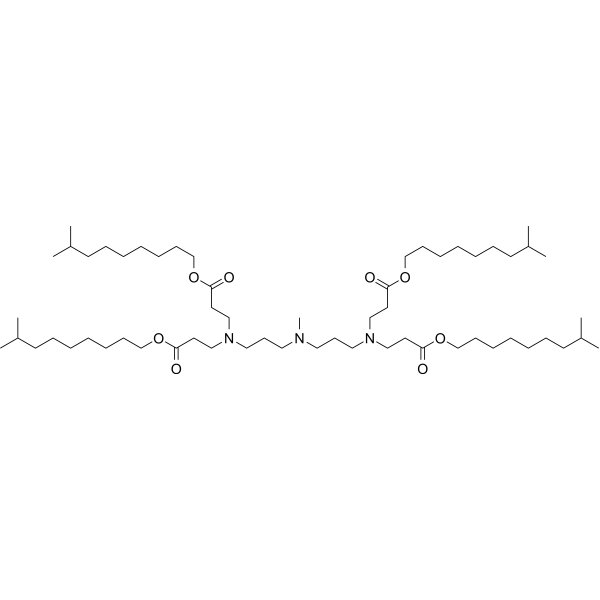
| DC80066 | 306Oi10 Featured |
306Oi10 is a branched ionizable lipid that can be used to construct lipid nanoparticles (LNPs) for delivering messenger RNA. The surface ionization of lipid nanoparticles is related to the effectiveness of mRNA delivery. The tail of 306Oi10 has a one-carbon branch, which provides it with stronger surface ionization compared to lipids with linear tails, thereby enhancing its mRNA delivery efficacy. 306Oi10 can be used in research related to mRNA delivery.
More description
|
|
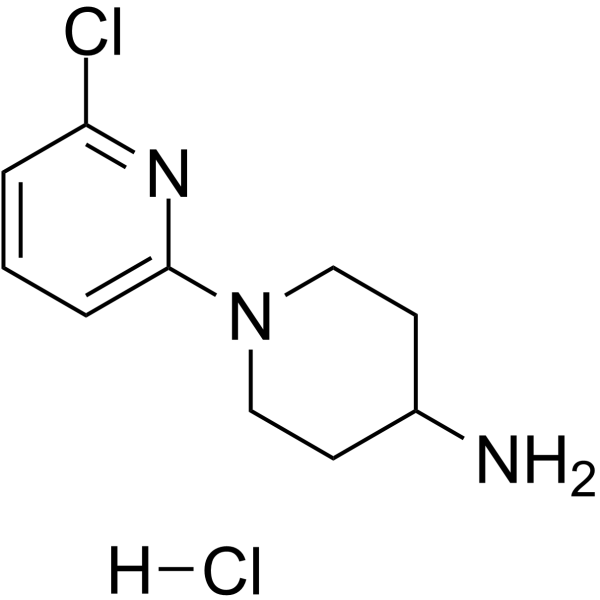
| DC22234 | SR 57227A Featured |
SR-57227 is a high affinity, selective 5-HT3 receptor agonist, demonstrates anticonvulsant effects in vivo. Head group of Lipid S4
More description
|
|
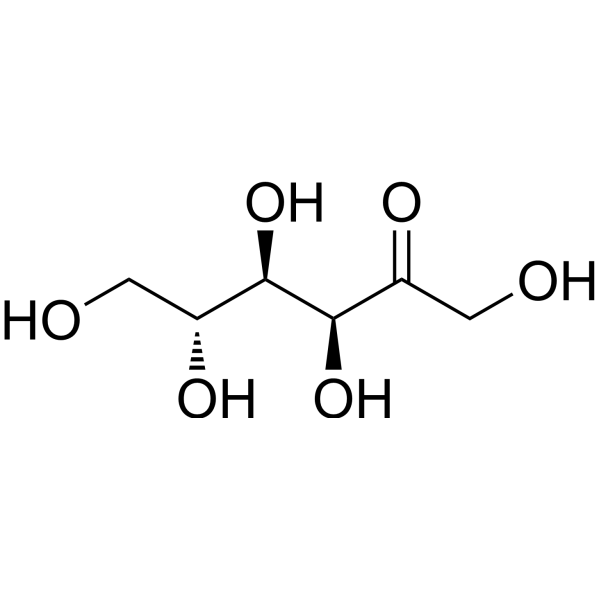
| DCG-056 | D(-)-Fructose |
>98%,Standard References
More description
|
|
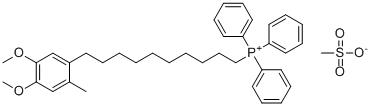
| DC74166 | SB-U015 Featured |
SB-U015 is a MitoQ derivative and tumor necrosis factor receptor-associated protein 1 (TRAP1) inhibitor.
More description
|
|
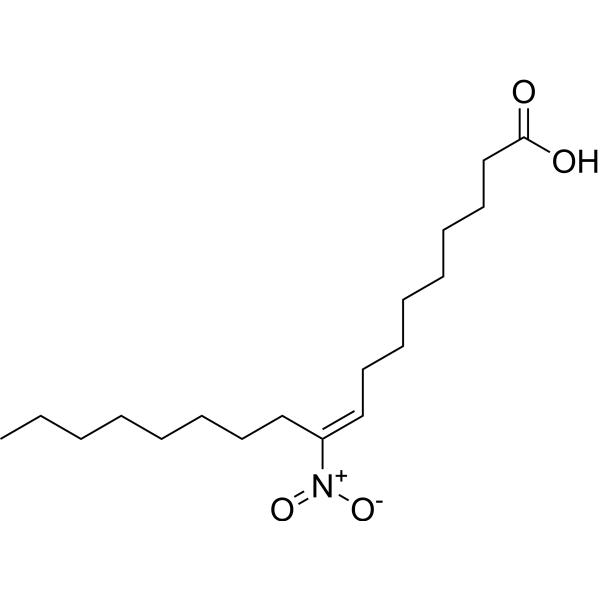
| DC47162 | 10-Nitrooleic acid Featured |
10-Nitrooleic acid (CXA-10), a nitro fatty acid, has potential effects in disease states in which oxidative stress, inflammation, fibrosis, and/or direct tissue toxicity play significant roles.
More description
|
|
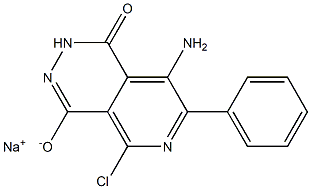
| DC45885 | L 012 sodium salt Featured |
L 012 sodium salt a luminol-based chemiluminescent (CL) probe, is widely used in vitro and in vivo to detect NADPH oxidase (Nox)-derived superoxide (O2•−) and identify Nox inhibitors.
More description
|
|
| DC81830 | SS-3091 |
SS‑3091 is a potent inhibitor of pan‑KRas that targets the interaction interfaces of KRas, destabilizing critical KRas-protein complexes and thereby blocking its downstream signaling pathways. SS‑3091 effectively inhibits KRas‑driven signaling in multiple cancer cell lines, including those harboring G12D, G12V, and G13D mutations, leading to reduced ERK and AKT phosphorylation.
More description
|

|
| DC81827 | N-Hydroxysuccinimide |
N-Hydroxysuccinimide (HOSu; 1-Hydroxy-2,5-pyrrolidinedione) is a crucial reagent that forms NHS esters via DCC-mediated carboxylic acid activation. These esters enable covalent protein/antibody coupling to surfaces through primary amine reactions. It also modifies microfluidic SPR sensors for bacterial pathogen detection.
More description
|
|
| DC81826 | MY-1B |
MY‑1B is a covalent inhibitor of the RNA methyltransferase NSUN2, with an IC50 of 1.3 μM. MY‑1B stereoselectively targets the active‑site cysteine residue C271 of NSUN2 and can be used to probe the function of NSUN2 in RNA methylation‑related processes.
More description
|
|
| DC81822 | Bireociclib (XZP-3287,CDK4/6-IN-2) |
CDK4/6-IN-2 is a CDK4 and CDK6 inhibitor obtained from patent US20180000819A1 (Compound 1). It exhibits IC50 values of 2.7 nM for CDK4 and 16 nM for CDK6.
More description
|
|
| DC81821 | BBI-2779 |
BBI-2779 is a potent, selective, and orally active inhibitor of CHK1 with an IC50 of 0.3 nM. It preferentially kills cancer cells containing extrachromosomal DNA (ecDNA) by inducing replication stress and cell death. In gastric cancer models with FGFR2 gene amplification on ecDNA, BBI-2779 suppresses tumor growth and prevents drug resistance.
More description
|
|
| DC81816 | δ-Carboline |
δ-Carboline is a nitrogen-containing heterocyclic compound, and its derivatives all exhibit anti-cancer and antibacterial activities.
More description
|
|
| DC81815 | γ-Linolenic acid NHS ester |
γ-Linolenic acid NHS ester is a lipid metabolite of γ-Linolenic acid (GLA), which can serve as a synthetic intermediate or probe labeling reagent for the preparation of GLA conjugates. In practical applications, γ-Linolenic acid NHS ester can be conjugated with taxanes and polysaccharides to form dual-type conjugates for drug delivery purposes.
More description
|
|
| DC81814 | βGlcCer |
βGlcCer is a glycosphingolipid.
More description
|
|
| DC81813 | β-Funaltrexamine |
β-funaltrexamine (β-FNA) is a irreversible and selective μ opioid receptor antagonist that exhibits anti-inflammatory and neuroprotective effects. β-Funaltrexamine reduces TLR4 signaling, inhibits cytokine-induced iNOS activation and neuroinflammation, and ameliorates neuronal degeneration. β-funaltrexamine inhibits NF-κB signaling and chemokine expression in both human astrocytes and mice. β-funaltrexamine can be used for research on neurodegenerative diseases, such as stroke.
More description
|
|
| DC81810 | β-Aspartyl phosphate |
β-Aspartyl phosphate is a nucleoside metabolite.
More description
|
|
| DC81808 | α-Synuclein aggregate binder 2 |
α-Synuclein aggregate binder 2 (Compound 1) is a specific alpha-synuclein binder with a Ki of 1.6 nM. α-Synuclein aggregate binder 2 has a weak binding affinity for β-amyloid aggregates with a Ki of 295 nM. α-Synuclein aggregate binder 2 can be used as a tracer in Parkinson's disease.
More description
|
|
| DC81806 | α-Hydroxysalmeterol |
α-Hydroxysalmeterol is a metabolite that can be formed via cytochrome P450 isoform 3A4-induced hydroxylation of Salmeterol. α-Hydroxysalmeterol is a potentially relevant urine biomarker to include when screening for Salmeterol misuse.
More description
|
|
| DC81804 | α-Glucosidase-IN-100 |
α-Glucosidase-IN-100 (compound 6) is a potent alpha glucosidase inhibitor. α-Glucosidase-IN-100 can be used to study metabolic diseases such as diabetes.
More description
|
|
| DC81792 | ZS34 |
ZS34 is a potent, orally active, and selective MAT2A inhibitor with an IC50 of 13.7 nM, displaying minimal hERG and UGT1A1 liabilities. ZS34 selectively suppresses the growth of methylthioadenosine phosphorylase (MTAP)-deficient cancer cells by inhibiting SAM synthesis, reducing SDMA levels, and inducing DNA damage. ZS34 exhibits antitumor efficacy in a HCT116 MTAP-/- xenograft mouse model. ZS34 can be used for the research of MTAP-deficient cancer.
More description
|
|
| DC81786 | ZK-93426 |
ZK-93426 is a benzodiazepine receptor antagonist. ZK-93426 does not alter the dogs' motility but induces generalized myoclonic jerks and tonic-clonic seizures. ZK-93426 can be used to study the mechanism of withdrawal reactions in the state of benzodiazepine dependence.
More description
|
|
| DC81785 | Zifrosilone |
Zifrosilone is an orally active acetylcholinesterase (AChE) inhibitor with a mean maximum inhibition of 20.9% at 10 mg. Zifrosilone can be used for the research of neurological disease.
More description
|
|
