 To enhance service speed and avoid tariff delays, we've opened a US warehouse. All US orders ship directly from our US facility.
| Cat. No. | Product Name | Field of Application | Chemical Structure |
|---|---|---|---|
| DC46132 | Milvexian Featured |
Milvexian (BMS-986177), an effective antithrombotic agent, is an orally-bioavailable, reversible and direct inhibitor of human and rabbit factor XIa (FXIa) with Ki of 0.11, and 0.38 nM, respectively.
More description
|

|
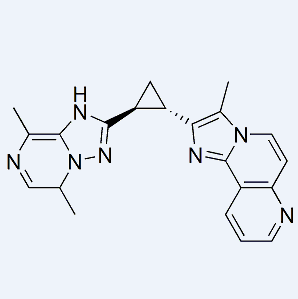
| DC8048 | SEP-0372814 Featured |
SEP-0372814 is a potent PDE10 inhibitor.
More description
|
|
| DC10004 | SHP099 free base Featured |
SHP099 is a selective, orally bioavailable, and efficacious SHP2 inhibitor with IC50 =0.07 μM and p-ERK modulation in cells IC50 = 0.250 μM.
More description
|

|
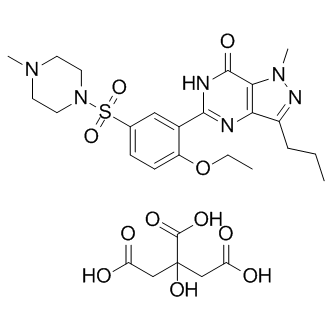
| DC9779 | Sildenafil citrate Featured |
Sildenafil citrate, one of the selective phosphodiesterase-5 (PDE5) inhibitors(IC50= 5.22 nM), is considered the best treatment for erectile dysfunction.
More description
|
|
| DC9690 | Sinogliatin (HMS5552, RO5305552) Featured |
Sinogliatin (HMS5552, RO5305552) is a mall molecule glucokinase (GCK; GK) activator.
More description
|

|
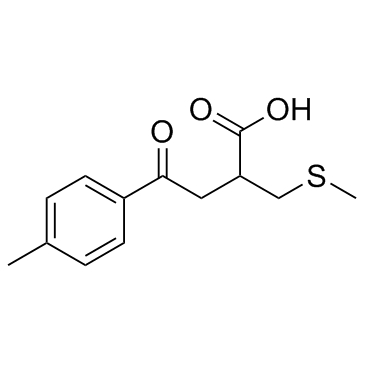
| DC10713 | S-methyl-KE-298 Featured |
S-methyl-KE-298 is an active metabolite of KE-298. KE-298 inhibits matrix metalloproteinase (MMP-1) production from rheumatoid arthritis (RA) synovial cells.
More description
|
|
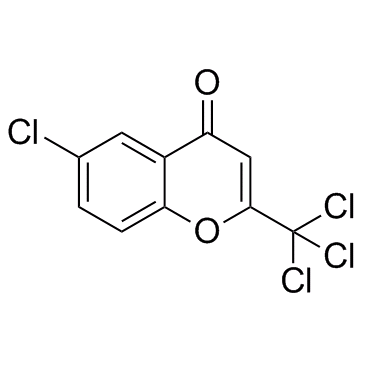
| DC10553 | ST034307 Featured |
ST034307 is a potent and selective adenylyl cyclase 1 (AC1) inhibitor, with IC50 of 2.3 μM.
More description
|
|
| DC7573 | STF-118804 Featured |
STF-118804 is a highly specific NAMPT inhibitor.
More description
|

|
| DC7945 | TAK-063 Featured |
TAK-063 is a highly potent, selective and orally active PDE10A inhibitor with IC50 of 0.30 nM; >15000-fold selectivity over other PDEs.
More description
|

|
| DC9996 | TB5 Featured |
TB5 is a potent, selective and reversible inhibitor of hMAO-B with a Ki value of 0.11±0.01 μM.
More description
|

|
| DC42524 | YM750 Featured |
YM-750 is a potent acyl-CoA:cholesterol acyltransferase (ACAT) inhibitor (IC50=0.18 μM). ACAT catalyzes the formation of cholesteryl esters from cholesterol and long-chain fatty-acyl-coenzyme A.
More description
|

|
| DC2080 | TMS Featured |
TMS is a potent and selective inhibitor of CYP1B1, with an IC50 of 6 nM.
More description
|

|
| DC10083 | UK-371804 Featured |
UK-371804 is a potent and selective uPA inhibitor with excellent enzyme potency (Ki 10 nM) and selectivity profile (4000-fold versus tPA and 2700-fold versus plasmin).
More description
|

|
| DC9990 | URB602 Featured |
URB602 is a selective inhibitor of monoglycerol lipase (MGL), exhibiting an IC50 of 28 µM for the rat brain enzyme.
More description
|

|
| DC11021 | KY-226 Featured |
KY-226 (KY226) is a potent, allosteric, orally active inhibitor of protein tyrosine phosphatase 1B (PTP1B) with IC50 of 0.28 uM (human PTP1B), does not exhibit PPARγ agonist activity.
More description
|

|
| DC70922 | YTX-7739 |
YTX-7739 is a potent, selective stearoyl-CoA desaturase (SCD) inhibitor with IC50 of 12 nM.YTX-7739 concentration-dependently reduces the fatty acid desaturation index (FADI), the ratio of monounsaturated to saturated fatty acids, with potential to treat synucleinopathies.
More description
|
|
| DC70848 | TK-453 |
TK-453 (TK453) is a potent, selective SHP2 allosteric inhibitor with IC50 of 18.76 and 179 nM for SHP2-WT and SHP2-E76K, respectively.TK-453 has strong inhibitory effect on the enzyme activity of the SHP2-WT, and does not inhibit the activity of the SHP2-PTP catalytic domain, and homologues (SHP1 and PTP1B).TK-453 binds SHP2-WT (KD=150 nM) and SHP2-E76K, higher affinity with SHP2 than SHP099.TK-453 binds in the allosteric binding pocket at the junction of three domains and stabilizes the autoinhibition conformation of SHP2.TK-453 alleviates imiquimod (IMQ)-induced inflammation in macrophages, inhibits the phosphorylation levels of p-IKKα/β and p-p65.TK-453 significantly ameliorates imiquimod-triggered skin-like inflammation in mice via inhibition of IL-23/Th17 axis.
More description
|
|
| DC70806 | ST-115 |
ST-115 (ST115) is a potent and specific inhibitor of aminopeptidase P2 (XPNPEP2, APP2) with IC50 of 3.7 nM.ST-115 does not inhibit ACE, neprilysin, or multiple other enzymes, and littile inhibition against Aminopeptidase P1/A/B/N (IC50=600 nM->10 uM).ST-115 can reduce bradykinin degradation, increasing its concentration and protective effects when administered intravenously at the start of reperfusion, reduced damaged area of the heart in a mouse model of myocardial infarction.In a rat model of ischemic stroke, ST-115 reduced functional deficits in a skilled walking test by 60% and reduced brain edema by 51%.ST-115 also reduced brain infarct size by 48% in a major subset of rats with small strokes.
More description
|
|
| DC70787 | SMIP-30 |
SMIP-30 is a potent and selective inhibitor of PPM1A with IC50 of 1 uM, selectively inhibits the phosphatase activity of PPM1A.SMIP-30 shows poor inhibitory activity against closest homolog PPM1B (IC50>30 uM).SMIP-30 is an uncompetitive inhibitor for PPM1A (Ki=0.84 uM), does not exhibit any cytotoxic effects up to 30 uM in THP-1 macrophages.SMIP-30 dose-dependently reduces the Mtb burden in infected macrophages, and is well tolerated in vivo and combined with rifampicin reduces Mtb burden in the lungs of infected mice.SMIP-30 induces LC3B-II expression, activates autophagy in Mtb-infected macrophages in a PPM1A-dependent manner.SMIP-30 induces a dose-dependent increase in phosphorylation of S403-p62 in WT macrophages.
More description
|
|
| DC70762 | SCP1 inhibitor T-65 |
SCP1 inhibitor T-65 (T-65) is a specific, small molecule covalent inhibitor of small CTD phosphatase 1 (SCP1), reduces transcription factor REST protein level HEK293 cells with EC50 of 1.5 uM.T-65 showed no detectable inhibition against a panel of eight mammalian cysteine-based phosphatases, including SHP2, TCPTP, CD45, DUSP3 and and lymphoid protein tyrosine phosphatase (LYP) at 25 uM.T-65 promotes REST degradation, increases expression of REST-suppressed genes DYRK1a, ELAVL1, USP37, CELSR3, and SCN2 in HEK293 cells.
More description
|
|
| DC70761 | SCP1 inhibitor T-62 |
SCP1 inhibitor T-62 (T-62) is a specific, small molecule covalent inhibitor of small CTD phosphatase 1 (SCP1), reduces transcription factor REST protein level HEK293 cells.
More description
|
|
| DC70760 | SC-78080 |
SC-78080 (SD-2590) is a potent, selective inhibitor of MMP2/9/13 with IC50 of <0.1/0.18/<0.1 nM, respectively.SC-78080 shows weaken inhibitory effect on MMP3/8, and no inhibition on MMP1/7.
More description
|
|
| DC70759 | SBI-4668 |
SBI-4668 (SBI 4668) is a novel furanylbenzamide molecule as inhibitor of both WT and oncogenic SHP2 with IC50 of 0.73/1.8 uM for Wt SHP2/SHP2-E76K, 13-fold selective over PTP1B and 73-fold selective over STEP;
SBI-4668 exhibited cell viability inhibitory effect on cell growth in both Kasumi-1 cells (IC50=8.5 uM) and KYSE-520 cells (IC50=5.4 uM), SBI-4668 on cell viability was also determined in additional AML cell lines, including MOLM-13 (IC50 = 12 μM) and MV4-11 (IC50 = 8.2 μM).
SBI-4668 inhibited U-937 cell (harbor a G60R oncogenic mutation in SHP2) growth with IC50 of 6.3 uM, which is comparable to the potency found in AML cells expressing WT SHP2, while RMC4550 showed a very weak effect on this G60R mutation cell.
More description
|
|
| DC70758 | SBI-2130 |
SBI-2130 (SBI 2130) is a novel furanylbenzamide molecule as inhibitor of both WT and oncogenic SHP2 with IC50 of 0.22/5.0 uM for Wt SHP2/SHP2-E76K.
More description
|
|
| DC70741 | RO-5459072 |
RO 5459072 (RG-7625) is a potent, highly selective of cathepsin S with IC50 of 0.1 nM and 0.3 nM for human and murine Cathepsin S, respectively; shows no sub-micro molar inhibition against others cathepsins (Cat L, B, K, and F) with the exception of Cat V (IC50=700 nM); dose-dependently reverses aberrant systemic autoimmunity, e.g. plasma cytokines, activation of myeloid cells and hypergammaglobulinemia, especially suppresses IgG autoantibody production.
More description
|
|
| DC70732 | Rebimastat |
Rebimastat (BMS-275291, D2163) is a potent, broad spectrum matrix metalloproteinase (MMPs) inhibitor with potential antineoplastic activity, shows nM potency against MMP-1/2/7/9/14.BMS-275291 inhibits tumor growth in a B16BL6 model of experimental metastasis, BMS-275291 treatment results in a dose-dependent reduction in the number of lung metastases.BMS-275291 also inhibits angiogenesis in a murine angiogenesis model with a dose-dependent inhibition of endothelial cell migration.Rebimastat (BMS-275291) induces extracellular matrix degradation, and inhibiting angiogenesis, tumor growth and invasion, and metastasis.
More description
|
|
| DC70731 | Rat C53 peptide |
Rat C53 peptide (C53, pGC-B activator C53) is a novel potent, selective particulate guanylyl cyclase B (pGC-B) activator, activates pGC-B/cGMP signaling pathway, and enhances cGMP generating actions.C53 is highly resistant to NEP degradation and has less interaction with NPRC compared to CNP in vitro.C53 activates the protective pGC-B/cGMP signaling pathway and possesses enhanced cGMP generating actions.C53 inhibits fibroblast proliferation chronically and suppresses the differentiation of fibroblasts to myofibroblasts.
More description
|
|
| DC70700 | PKM-833 |
PKM-833 (PKM833) is a potent, selective, and orally active FAAH inhibitor with IC50 of 8.8 and 10 nM against human and rat FAAH, respectively.PKM‐833 showed human and rat K inact/K i values with 34 300 ± 10 800 and 128 000 ± 39 800 mol-1 L−1 s-1, respectively.PKM-833 does not inhibit human MAGL and a panel of 137 molecular targets, exhibits weak inhibitory effects (>50%) in five receptor binding assays [PFA, 5‐HT2B, sigma, Na+ channel and Cl‐ channel (GABA gated) at 20 uM.PKM-833 showed excellent brain penetration and good oral bioavailability, and elevated anandamide (AEA) concentrations in the rat brain.PKM-833 significantly attenuated formalin-induced pain responses (3 mg/kg) and improved mechanical allodynia in CFA-induced inflammatory pain (0.3-3 mg/kg) in rat models, without significant side effects on catalepsy and motor coordination up to 30 mg/kg.
More description
|
|
| DC70694 | PG-116800 |
PG-116800 is a selective, oral matrix metalloproteinase (MMPs) inhibitor with significant antiremodeling effects in animal models of MI and ischemic heart failure.
More description
|
|
| DC70691 | PF-07284892 |
PF-07284892 (PF 07284892) is a small molecule inhibitor of SHP2 that may block MAPK signaling and lead to tumor growth inhibition.
More description
|
|
