 To enhance service speed and avoid tariff delays, we've opened a US warehouse. All US orders ship directly from our US facility.
| Cat. No. | Product Name | Field of Application | Chemical Structure |
|---|---|---|---|
| A1050 | Regdanvimab Biosimilar(Anti-Spike RBD Reference Antibody) Featured |
Regdanvimab (CT-P59) is a human monoclonal antibody that targets the receptor-binding domain of SARS-CoV-2 spike protein, blocking interaction with ACE2 for viral entry. Regdanvimab can be used for the research of COVID-19.
More description
|

|
| A1049 | Tixagevimab Biosimilar(Anti-Spike RBD Reference Antibody) Featured |
Tixagevimab (AZD8895) is a human monoclonal antibody that targets the SARS-CoV-2 receptor binding domain (RBD). It exhibits neutralizing activity against SARS-CoV-2 by binding to the RBD and the S-glycoprotein ectodomain and blocking S-glycoprotein-mediated binding to the receptor.
More description
|

|
| A1048 | Etesevimab Biosimilar(Anti-Spike RBD Reference Antibody) Featured |
Etesevimab (JS016) is a recombinant neutralizing human IgG1 anti-SARS-CoV-2 monoclonal antibody.
More description
|

|
| A1047 | Sotrovimab Biosimilar(Anti-Spike RBD Reference Antibody) Featured |
Sotrovimab (VIR 7831) is a human IgG1κ pan-sarbecovirus monoclonal antibody (mAb), neutralizes SARS-CoV-2, SARS-CoV-1, and multiple other sarbecoviruses. Sotrovimab is developed based on S309, exhibits a long half-life and great bioavailability in the respiratory mucosa. Sotrovimab could result in immune-mediated viral clearance and prevent progression of Covid-19 early in the course of disease.
More description
|

|
| A1046 | Amubarvimab Biosimilar(Anti-Spike RBD Reference Antibody) Featured |
Amubarvimab (BRII-196) is a human IgG1 mAb that bind to non-competing epitopes on the receptor binding domain (RBD) of spike protein, with a KD of 5.88 nM. Amubarvimab can effectively neutralize SARS-CoV-2 variants.
More description
|

|
| A1045 | Semzuvolimab Biosimilar(Anti-CD4 Reference Antibody) Featured |
Semzuvolimab is a murine IgG1κ antibody, targeting to p55, T cell surface antigen T4/Leu-3 (CD4). Murine CD4 antibodies can neutralize HIV infection and have the potential to inhibit HAART stable HIV infection.
More description
|

|
| A1044 | Temtokibart Biosimilar(Anti-IL22RA1 Reference Antibody) Featured |
Temtokibart is a humanized IgG1λ2 antibody targeting IL22RA1. Expressed by cells lacking the glutamine synthetase gene.
More description
|

|
| A1043 | Maftivimab Biosimilar(Anti-Zaire ebolavirus Reference Antibody) Featured |
Maftivimab (REGN3470-3471-3479), the inhibitor of Filovirus, is an Food and agent Administration (FDA)-approved agent. Maftivimab, also named as Atoltivimab, Odesivimab (Inmazeb), can be used for research of Zaire ebolavirus infection.
More description
|

|
| A1042 | Ansuvimab Biosimilar(Anti-Zaire ebolavirus Reference Antibody) Featured |
Ansuvimab (Ansuvimab-zyk) is a recombinant human monoclonal IgG1 antibody that exhibits antiviral activity against Zaire ebolavirus. Ansuvimab binds to the glycoprotein on Zaire ebolavirus to block its entry into host cells.
More description
|

|
| A1041 | Iluzanebart Biosimilar(Anti-TREM2 Reference Antibody) Featured |
Iluzanebart is a human IgG1κ antibody targeting TREM2, a triggering receptor expressed on myeloid cells.
More description
|

|
| A1040 | Burfiralimab Biosimilar(Anti-Vimentin Reference Antibody) Featured |
Burfiralimab (hzVSF-v13) is a monoclonal IgG4 antibody against vimentin expressed on the surface of virus-infected cells, with broad-spectrum antiviral activity and anti-inflammatory effects against virus-induced inflammation. Burfiralimab can be used in severe COVID-19 studies.
More description
|

|
| A1039 | Dalnicastobart Biosimilar(Anti-TNFRSF5 / CD40 Reference Antibody) Featured |
Dalnicastobart (LVGN-7409) is a human IgG1κ antibody targeting CD40/TNFRSF5.
More description
|

|
| A1038 | Stapokibart Biosimilar(Anti-IL-4Ra / CD124 Reference Antibody) Featured |
Stapokibart (CM310) is a humanised monoclonal antibody targeting IL-4Rα and efficiently blocks the interaction of cytokines IL-4 and IL-13 with their co-receptor subunit IL-4Rα. Stapokibart has the capacity to interact with IL-4Rα in humans, cynomolgus monkeys, and rats.
More description
|

|
| A1037 | Raludotatug Biosimilar(Anti-CDH6 / K-Cadherin Reference Antibody) Featured |
Raludotatug is a humanized immunoglobulin G1-kappa, anti-CDH6 monoclonal antibody. Raludotatug is an antineoplastic.
More description
|

|
| A1036 | Izeltabart Biosimilar(Anti-ADAM9 Reference Antibody) Featured |
Izeltabart is a high-affinity humanized antibody targeting ADAM9. Izeltabart can be used as ADC Antibody for site-specific conjugation with Maytansinoid-based DM21-C (a Drug-Linker Conjugates for ADC), to synthesize IMGC936 (Antibody-Drug Conjugates (ADCs)) with strong anti-cancer activity. DM21-C is composed of Maytansinoid (microtubule inhibitor) and a stable tripeptide linker. IMGC936 exhibits cytotoxicity against ADAM9-positive human tumor cell lines and potent antitumor activity in xenograft tumor models.
More description
|

|
| A1035 | Keliximab Biosimilar(Anti-CD4 Reference Antibody) Featured |
Keliximab (SB-210396) is a chimeric human/macaque IgG1 anti-CD4 monoclonal antibody with a Ki value of 1.0 nM for soluble CD4. Keliximab blocks T cell proliferation and inhibits IL-2 production. Keliximab can be used for cancer research.
More description
|

|
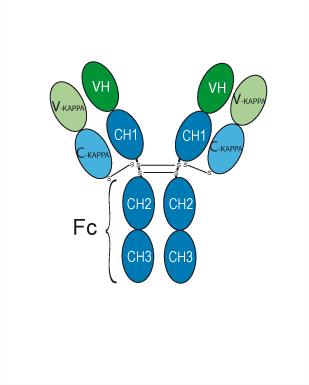
| A1034 | Tuvonralimab Biosimilar(Anti-CTLA4 Reference Antibody) Featured |
Tuvonralimab (PSB-205; QL1706) is a dual immune checkpoint blockade containing a mixture of anti-PD-1 IgG4 and anti-CTLA-4 IgG1 antibodies, Iparomlimab and Tuvonralimab.
More description
|
|
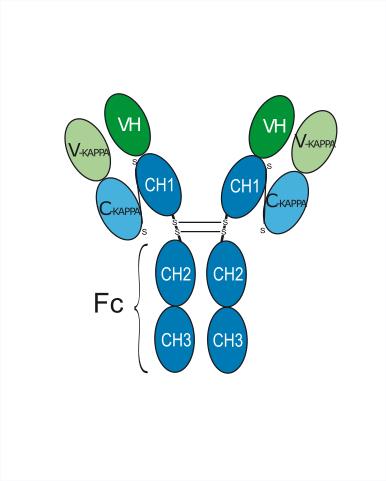
| A1033 | Gilvetmab Biosimilar(Anti-PDCD1 / PD-1 / CD279 Reference Antibody) Featured |
Gilvetmab is a potent caninized anti-PD-1 monoclonal antibody. gilvetmab blocks the interaction between PD-1 and its ligand PDL-1.
More description
|
|
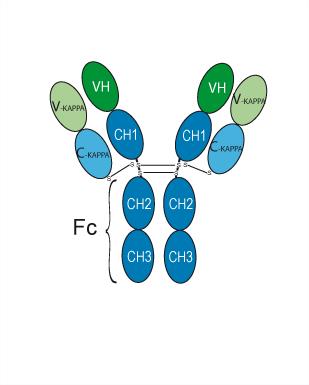
| A1032 | Pritumumab Biosimilar(Anti-Vimentin Reference Antibody) Featured |
Pritumumab is a natural human IgG1kappa mAb originally isolated from a regional draining lymph node of a patient with cervical carcinoma. Pritumumab recognizes vimentin expressing on the cell surface of the malignant tumor. Pritumumab can be used for glioblastoma research.
More description
|
|
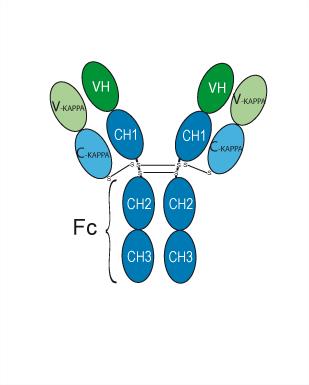
| A1031 | Minretumomab Biosimilar(Anti-TAG-72 Reference Antibody) Featured |
Minretumomab (CC-49) is a murine monoclonal antibody against TAG-72 (tumor-associated glycoprotein 72). Minretumomab is used in cancer and immunity research.
More description
|
|
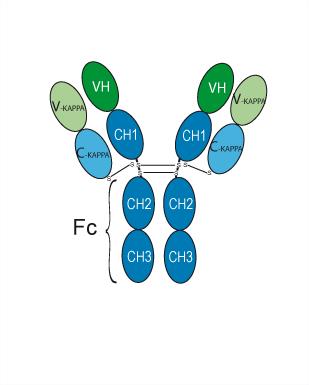
| A1030 | Anselamimab Biosimilar(Anti-SAA Reference Antibody) Featured |
Anselamimab (CAEL-101) a humanized IgG1-κ anti-Amyloid fibrils antibody targeting to serum amyloid A1 (SAA1).
More description
|
|
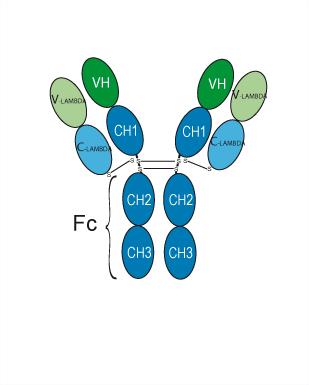
| A1029 | Socazolimab Biosimilar(Anti-B7-H1 / PD-L1 / CD274 Reference Antibody) Featured |
Socazolimab (ZKAB001) is an anti-PD-L1 monoclonal antibody. Socazolimab has lasting safety and efficacy in the treatment of recurrent or metastatic cervical cancer. Socazolimab also has potential applications in small cell lung cancer, esophageal squamous cell carcinoma (ESCC), advanced urothelial carcinoma and osteosarcoma.
More description
|
|
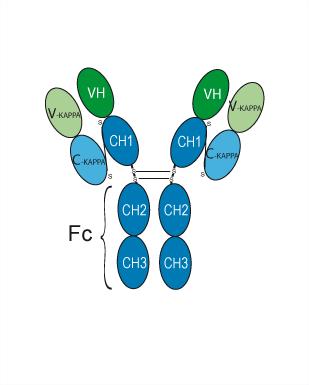
| A1028 | Sirexatamab Biosimilar(Anti-DKK-1 Reference Antibody) Featured |
Sirexatamab is an active peptide. Sirexatamab can be used for various biochemical studies.
More description
|
|
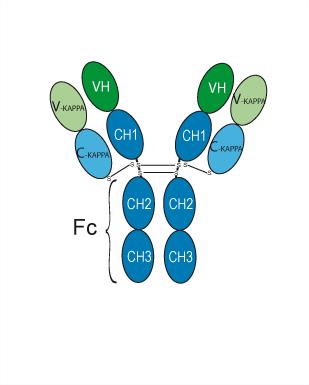
| A1027 | Pivekimab Biosimilar(Anti-CD123 Reference Antibody) Featured |
Pivekimab is a human IgG1 monoclonal antibody that targets interleukin-3 (IL-3) and CD123. Pivekimab is used to synthesize pivekimab sunirine, a CD123-directed antibody-active molecule conjugate (ADC). Pivekimab is used in the study of blastic plasmacytoid dendritic cell neoplasm (BPDCN).
More description
|
|
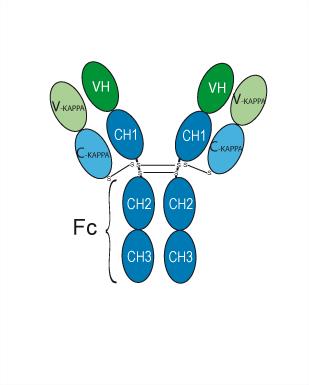
| A1026 | Tulisokibart Biosimilar(Anti-VEGI Reference Antibody) Featured |
Tulisokibart (PRA023) is a humanized IgG1-κ monoclonal antibody targeting to TNFSF15/TL1A. Tulisokibart can be used to study a variety of inflammatory/fibrotic diseases, such as Crohn's Disease (CD).
More description
|
|
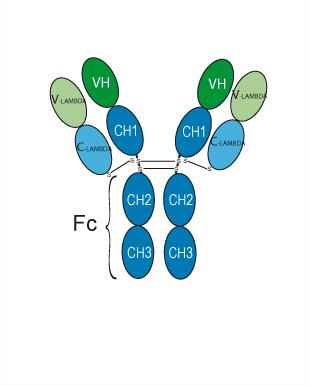
| A1025 | Duvakitug Biosimilar(Anti-VEGI Reference Antibody) Featured |
Duvakitug is a humanized IgG1-λ2 monoclonal antibody targeting to TNFSF15/TL1A. Duvakitug' main expression system is CHOK1SV cells endogenously expressing glutamine synthetase (GS). Duvakitug can be used in the study of Crohn's Disease (CD).
More description
|
|
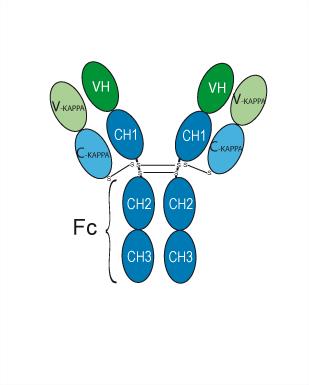
| A1024 | Paridiprubart Biosimilar(Anti-TLR4 Reference Antibody) Featured |
Paridiprubart (NI-0101) is a humanised anti-TLR4 monoclonal antibody. Paridiprubart has the potential for the research of rheumatoid arthritis.
More description
|
|
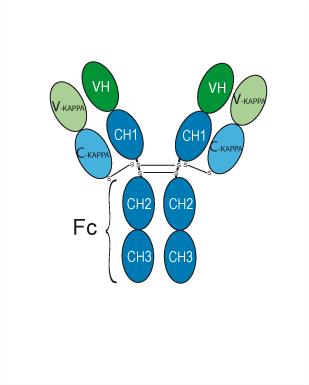
| A1023 | Rosnilimab Biosimilar(Anti-PDCD1 / PD-1 / CD279 Reference Antibody) Featured |
Rosnilimab is a humanized IgG1-κ antibody targeting to PD-1.
More description
|
|
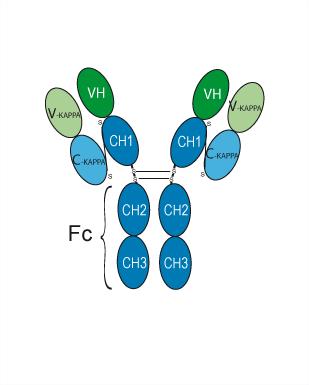
| A1022 | Ginisortamab Biosimilar(Anti-GREM1 / Gremlin Reference Antibody) Featured |
Ginisortamab (UCB6114) is a fully human IgG4P antiGremlin-1 monoclonal antibody. Ginisortamab has the potential for the research of gastrointestinal (GI) tumors.
More description
|
|
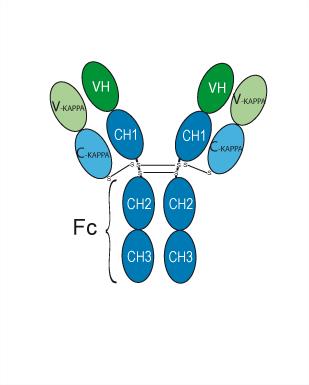
| A1021 | Lesabelimab Biosimilar(Anti-B7-H1 / PD-L1 / CD274 Reference Antibody) Featured |
Lesabelimab (LDP) is an immunoglobulin G1-kappa anti-CD274 monoclonal antibody. CD274 is an immune checkpoint ligand, represses antitumour immunity through the interaction with PDCD1 receptor.
More description
|
|
