 To enhance service speed and avoid tariff delays, we've opened a US warehouse. All US orders ship directly from our US facility.
| Cat. No. | Product Name | Field of Application | Chemical Structure |
|---|---|---|---|
| DC7424 | HPGDS-inhibitor-1 Featured |
HPGDS inhibitor 1 is a novel and selective Hematopoietic Prostaglandin D Synthase (HPGDS) inhibitor with an IC50 Value of 0.7 nM.
More description
|

|
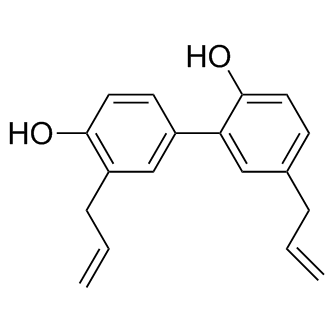
| DC5908 | Honokiol Featured |
Honokiol(NSC-293100), a hydroxylated biphenyl compound isolated from the Chinese herb Magnolia officinalis, has been reported to have anticancer activities in a variety of cancer cell lines.
More description
|
|
| DC9650 | Homoharringtonine Featured |
Homoharringtonine(HHT) is a cytotoxic alkaloid from the evergreen tree.
More description
|

|
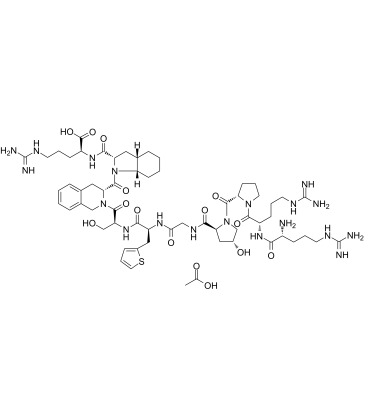
| DC6314 | Icatibant acetate Featured |
HOE-140 (Icatibant) is a potent and selective bradykinin B2 receptor antagonist (pA2 = 9.04). Also inhibits aminopeptidase N (Ki = 9.1 μM).
More description
|
|
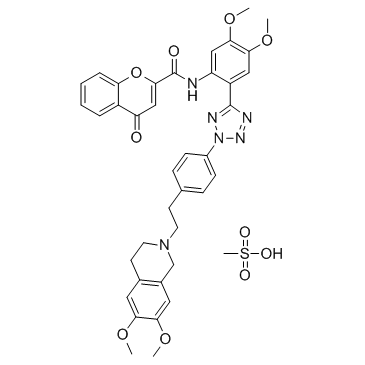
| DC12074 | HM30181 mesylate Featured |
HM30181 mesylate is a competitive and potent P-glycoprotein inhibitor.
More description
|
|
| DC9678 | HLCL-61 hydrochloride Featured |
HLCL-61 is a first-in-class small-molecule inhibitor of PRMT5 for treatment of acute myeloid leukemia.
More description
|

|
| DC10171 | Hispidulin Featured |
Hispidulin is a natural flavone with a broad spectrum of biological activities. Hispidulin is a Pim-1 inhibitor with an IC50 of 2.71 μM.
More description
|
|
| DC8846 | HhAntag Featured |
HhAntag is a GLI1-Mediated transcription inhibitor.
More description
|

|
| DC10108 | HG-9-91-01 Featured |
HG-9-91-01 is a potent and highly selective salt-inducible kinase (SIKs) inhibitor with IC50s of 0.92 nM, 6.6 nM and 9.6 nM for SIK1, SIK2 and SIK3 respectively.
More description
|

|
| DC10613 | NVP-HDM201(Siremadlin ) Featured |
HDM201 is an orally bioavailable human double minute 2 homolog (HDM2) inhibitor with potential antineoplastic activity.
More description
|

|
| DC11416 | HC-067047 Featured |
HC-067047 is a potent and selective TRPV4 antagonist with IC50 values of 48 ± 6 nM, 133 ± 25 nM, and 17 ± 3 nM, respectively in human, rat, and mouse. Also inhibits the endogenous TRPV4-mediated response to 4α-PDH (IC50 = 22 nM).
More description
|

|
| DC5200 | HC-030031 Featured |
HC-030031 is a selective TRPA1 channel blocker that antagonizes AITC- and formalin-evoked calcium influx with IC50 of 6.2 μM and 5.3 μM respectively.
More description
|

|
| DC8207 | HBX41108 Featured |
HBX 41108 is an inhibitor of ubiquitin-specific protease (USP) 7 activity (IC50 = 424 nM).
More description
|

|
| DC10741 | HAMNO (NSC111847) Featured |
HAMNO is a novel protein interaction inhibitor of replication protein A (RPA).
More description
|

|
| DC9795 | HA-15 Featured |
HA15 displayed anti-cancerous activity on all melanoma cells tested, including cells isolated from patients and cells that developed resistance to BRAF inhibitors.
More description
|

|
| DC8563 | HA130 Featured |
HA130 is a selective ATX (autotaxin) inhibitor with IC50 of 28 nM.
More description
|

|
| DC10033 | H3B-6527 Featured |
H3B-6527 is an orally bioavailable inhibitor of human fibroblast growth factor receptor 4 (FGFR4), with potential antineoplastic activity.
More description
|

|
| DC7835 | H-89 2HCl Featured |
H 89 2HCl is a potent PKA inhibitor with Ki of 48 nM, 10-fold selective for PKA than PKG, greater than 500-fold selectivity than PKC, MLCK, calmodulin kinase II and casein kinase I/II.
More description
|

|
| DC7147 | GZD824 Featured |
GZD824 is a novel orally bioavailable Bcr-Abl inhibitor for Bcr-Abl(WT) and Bcr-Abl(T315I) with IC50 of 0.34 nM and 0.68 nM, respectively.
More description
|

|
| DC2079 | GW-9662 Featured |
GW9662 is a selective PPAR antagonist, inhibiting PPARγ, PPARα and PPARδ with IC50 of 3.3 nM, 32 nM and 2 μM, respectively.
More description
|

|
| DC1086 | GW-9508 Featured |
GW9508 is a potent and selective agonist for FFA1 (GPR40) with pEC50 of 7.32.
More description
|

|
| DC10503 | GW806742X Featured |
GW806742X is a novel VEGFR inhibitor.
More description
|

|
| DC7146 | GW788388 Featured |
GW788388 is a potent and selective inhibitor of ALK5 with IC50 of 18 nM, also inhibits TGF-β type II receptor and activin type II receptor activities, but does not inhibit BMP type II receptor.
More description
|

|
| DC7662 | GW4869 Featured |
GW4869 is a cell permeable, selective inhibitor of N-SMase (neutral sphingomyelinase).
More description
|

|
| DC7837 | GW-3965 hydrochloride Featured |
GW3965 HCl is a potent, selective LXR agonist for hLXRα and hLXRβ with EC50 of 190 and 30 nM, respectively.
More description
|

|
| DC1018 | GW-2580 (GW2580) Featured |
GW2580 is a selective inhibitor of human c-FMS with IC50 of 30 nM.
More description
|

|
| DC8266 | GW-627368X Featured |
GW 627368X is a selective prostanoid EP4 receptor competitive antagonist with additional affinity at TP receptors (pKi values are 7.0 and 6.8 in competition radioligand bioassays).
More description
|

|
| DC8810 | GW-5074 Featured |
GW 5074 is a potent, selective and cell-permeable c-Raf1 kinase inhibitor (IC50 = 9 nM); displays ≥ 100-fold selectivity for raf kinase over CDK1, CDK2, c-src, ERK2, MEK, p38, Tie2, VEGFR2 and c-fms.
More description
|

|
| DC8303 | GTS 21 2HCl(DMXBA) Featured |
GTS 21 dihydrochloride is a partial agonist of α7 nicotinic acetylcholine receptors (nAChRs); also a weak α4β2 and 5-HT3 antagonist at micromolar concentrations.
More description
|

|
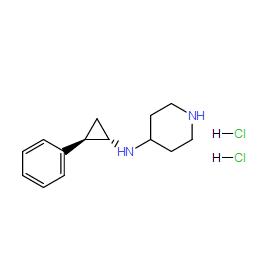
| DC7857 | GSK-LSD1 Featured |
GSK-LSD1 is a potent and selective inhibitor of lysine specific demethylase 1 (LSD1).
More description
|
|
