 To enhance service speed and avoid tariff delays, we've opened a US warehouse. All US orders ship directly from our US facility.
| Cat. No. | Product Name | Field of Application | Chemical Structure |
|---|---|---|---|
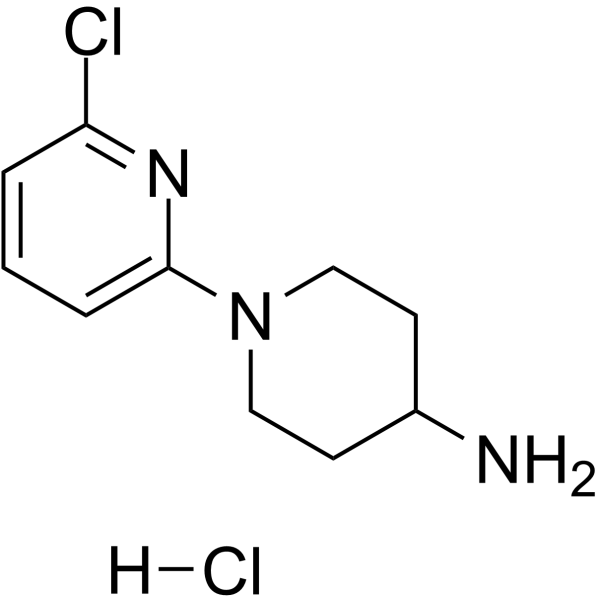
| DC22234 | SR 57227A Featured |
SR-57227 is a high affinity, selective 5-HT3 receptor agonist, demonstrates anticonvulsant effects in vivo. Head group of Lipid S4
More description
|
|
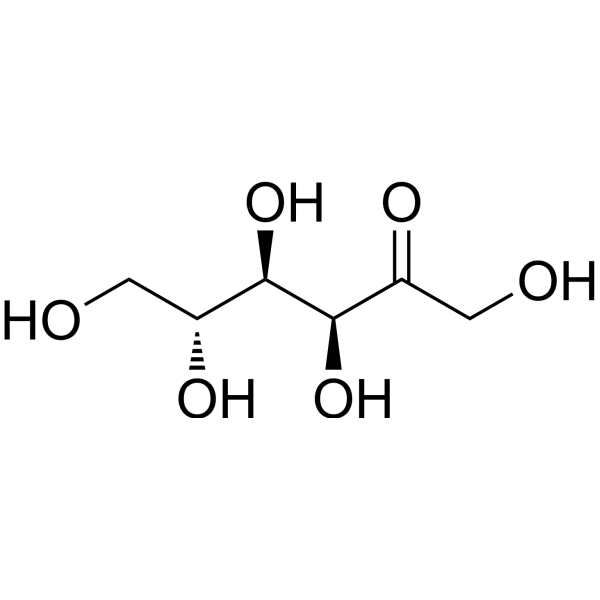
| DCG-056 | D(-)-Fructose |
>98%,Standard References
More description
|
|
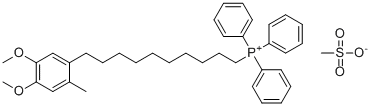
| DC74166 | SB-U015 Featured |
SB-U015 is a MitoQ derivative and tumor necrosis factor receptor-associated protein 1 (TRAP1) inhibitor.
More description
|
|
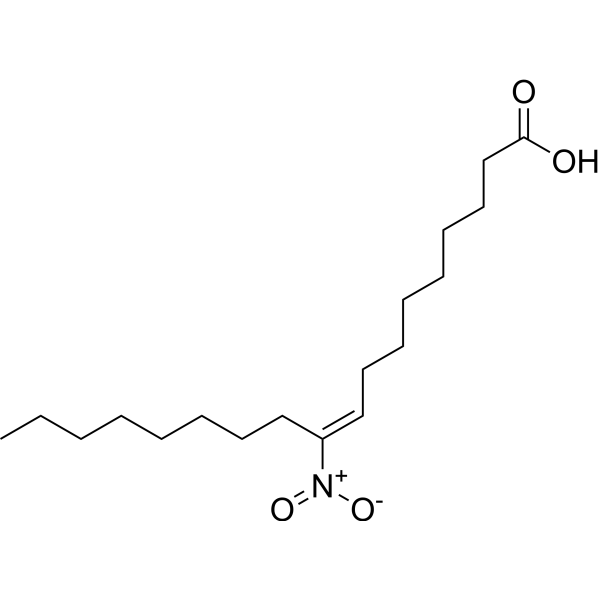
| DC47162 | 10-Nitrooleic acid Featured |
10-Nitrooleic acid (CXA-10), a nitro fatty acid, has potential effects in disease states in which oxidative stress, inflammation, fibrosis, and/or direct tissue toxicity play significant roles.
More description
|
|
| DC77017 | 9(10)-Nitrooleate Featured |
9(10)-Nitrooleate(NOA)is an endogenous nitrated fatty acid that functions as a highly efficient bioactive molecule. Its primary role is the specific inhibition of the STING protein, a key inflammatory signaling sensor within cells. When STING is aberrantly activated, it can trigger a severe inflammatory response, leading to cellular damage.Mechanistically, NOA acts as an electrophile, capable of covalently modifying specific cysteine residues on the STING protein, thereby effectively blocking its ability to activate downstream signaling pathways. This inhibitory action establishes NOA as a potent endogenous anti-inflammatory agent.
In practical application, loading NOA into delivery systems, such as lipid nanoparticles, equips them with an intrinsic "molecular fire extinguisher." It significantly mitigates the acute inflammatory response triggered by delivered cargo, effectively transforming otherwise toxic delivery vehicles into safe platforms. The core value of NOA lies in its ability to provide exceptional safety without compromising the functional expression of therapeutic payloads, offering a crucial safeguard for achieving long-term treatments.
More description
|
-Nitrooleate.gif)
|
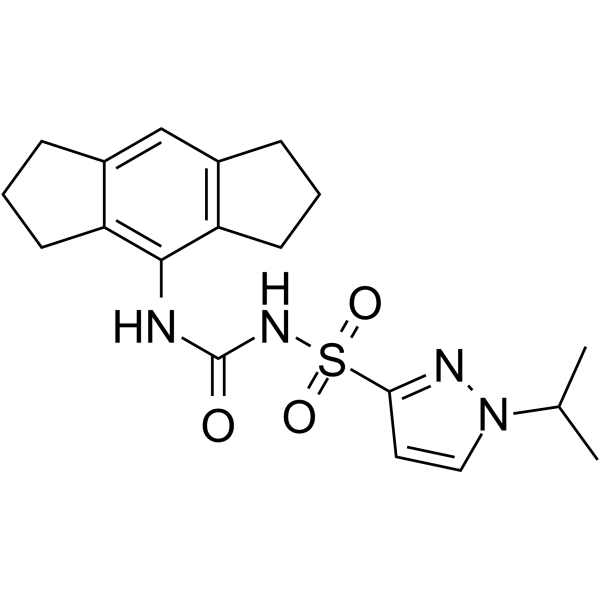
| DC44153 | Emlenoflast(MCC7840) Featured |
MCC7840, a sulfonylurea, is a potent and selective inhibitor of NLRP3 inflammasome, with an IC50 of <100 nM. MCC7840 can be used for the research of inflammatory diseases.
More description
|
|
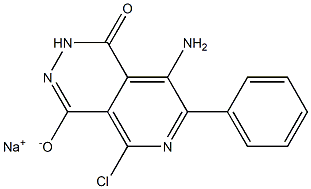
| DC45885 | L 012 sodium salt Featured |
L 012 sodium salt a luminol-based chemiluminescent (CL) probe, is widely used in vitro and in vivo to detect NADPH oxidase (Nox)-derived superoxide (O2•−) and identify Nox inhibitors.
More description
|
|
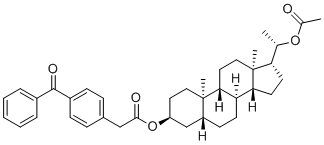
| DC70281 | C67399 Featured |
C67399 is a small molecule that blocks the integrin β1 binding site of TLN1, reduces the malignant behaviours of TNBC in vitro (MDA-MB-231 cell, IC50=2.0 uM).C67399 treatment significantly reduced the viability of BT549 cells.C67399 (2 uM) significantly reduced the expression of integrin β1, AKT, FAK, and phosphorylated FAK in MDA-MB-231 cells, while did not affect the expression of integrin β3.C67399 inhibited the binding of TLN1 to integrin β1 in MDA-MB-231 cells.C67399 (1.75 mg/kg) inhibited tumour growth and metastasis of MDA-MB-231 cells in mice, without causing obvious structural toxic changes.
More description
|
|
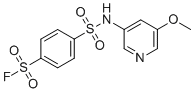
| DC70729 | Ral inhibitor 1 Featured |
Ral inhibitor 1 is a covalent inhibitor of RalB (Ras-like GTPase) activation, inhibits guanine exchange factor Rgl2-mediated nucleotide exchange of Ral GTPase, selectively inhibits Ral over Ras; Ral inhibitor 1 inhibits RalB/Rgl2 interaction through covalent reaction at Tyr-82 with IC50 of 49.5 uM; Ral (Ras-like) GTPases are directly activated by oncogenic Ras GTPases.
More description
|
|
| DC81833 | Thiethylperazine |
Thiethylperazine is a phenothiazine derivative that acts as an oral dopamine D2-receptor and histamine H1-receptor antagonist. This compound functions as an ABCC1 activator and has been shown to decrease amyloid-β (Aβ) accumulation in mice. It exhibits anti-emetic, antipsychotic, and antimicrobial properties.
More description
|

|
| DC81832 | STAT3-IN-13 |
STAT3-IN-13 (compound 6f) is a STAT3 inhibitor. It exhibits anti-proliferative activity and binds to the STAT3 SH2 domain with a KD of 0.46 μM. This compound inhibits STAT3 Y705 phosphorylation and downstream target gene expression. In vitro studies show STAT3-IN-13 induces apoptosis, while in vivo experiments demonstrate its ability to suppress tumor growth and metastasis. STAT3-IN-13 has potential applications in cancer research.
More description
|
|
| DC81831 | STAT3-IN-12 |
STAT3-IN-12 is a potent inhibitor of STAT3signaling, by effectively blocking IL-6-induced activation of the JAK/STAT3 pathway. STAT3-IN-12 suppresses cancer cell proliferation and migration, while promoting apoptosis and inducing cell cycle arrest.
More description
|
|
| DC81830 | SS-3091 |
SS‑3091 is a potent inhibitor of pan‑KRas that targets the interaction interfaces of KRas, destabilizing critical KRas-protein complexes and thereby blocking its downstream signaling pathways. SS‑3091 effectively inhibits KRas‑driven signaling in multiple cancer cell lines, including those harboring G12D, G12V, and G13D mutations, leading to reduced ERK and AKT phosphorylation.
More description
|
|
| DC81829 | PYCR1-IN-1 |
PYCR1-IN-1 (compound 4) is an inhibitor of pyrroline-5-carboxylate reductase 1 (PYCR1) with an IC50 of 8.8 µM. It significantly reduce the levels of proline within a breast cancer cell line and exhibits anti-cell proliferation effect.
More description
|
|
| DC81828 | Opiranserin hydrochloride |
Opiranserin hydrochloride (VVZ-149 hydrochloride) is a non-opioid and non-NSAID analgesic that acts as a dual antagonist of glycine transporter type 2 (GlyT2) and serotonin receptor 2A (5HT2A), with IC50 of 0.86 μM and 1.3 μM, respectively.
More description
|
|
| DC81827 | N-Hydroxysuccinimide |
N-Hydroxysuccinimide (HOSu; 1-Hydroxy-2,5-pyrrolidinedione) is a crucial reagent that forms NHS esters via DCC-mediated carboxylic acid activation. These esters enable covalent protein/antibody coupling to surfaces through primary amine reactions. It also modifies microfluidic SPR sensors for bacterial pathogen detection.
More description
|
|
| DC81826 | MY-1B |
MY‑1B is a covalent inhibitor of the RNA methyltransferase NSUN2, with an IC50 of 1.3 μM. MY‑1B stereoselectively targets the active‑site cysteine residue C271 of NSUN2 and can be used to probe the function of NSUN2 in RNA methylation‑related processes.
More description
|
|
| DC81825 | JNJ-9350 |
JNJ-9350 is a chemical probe that inhibits spermine oxidase (SMOX) with an IC50 of 0.01 μM. This compound also shows inhibitory activity against polyamine oxidase (PAO), exhibiting an IC50 of 0.79 μM. JNJ-9350 has potential applications in cancer research.
More description
|
|
| DC81824 | GPX4-IN-5 |
GPX4-IN-5 covalently inhibits GPX4 with an IC50 of 0.12 μM. This compound induces ferroptosis and exhibits anti-tumor activity. It has potential applications in triple-negative breast cancer (TNBC) research.
More description
|
|
| DC81823 | Famitinib (SHR1020) |
Famitinib (SHR1020), an orally active inhibitor of multi‑targeted kinase, which inhibits the activity of c‑Kit, VEGFR‑2, and PDGFRβ with IC50 of 2.3 nM, 4.7 nM, and 6.6 nM, respectively.
More description
|
|
| DC81822 | Bireociclib (XZP-3287,CDK4/6-IN-2) |
CDK4/6-IN-2 is a CDK4 and CDK6 inhibitor obtained from patent US20180000819A1 (Compound 1). It exhibits IC50 values of 2.7 nM for CDK4 and 16 nM for CDK6.
More description
|
|
| DC81821 | BBI-2779 |
BBI-2779 is a potent, selective, and orally active inhibitor of CHK1 with an IC50 of 0.3 nM. It preferentially kills cancer cells containing extrachromosomal DNA (ecDNA) by inducing replication stress and cell death. In gastric cancer models with FGFR2 gene amplification on ecDNA, BBI-2779 suppresses tumor growth and prevents drug resistance.
More description
|
|
| DC81820 | AD1058 |
AD1058 is an orally bioavailable ATR inhibitor with blood-brain barrier permeability (IC50 = 1.6 nM). It demonstrates antitumor effects through inhibition of tumor cell proliferation, induction of cell cycle arrest, and promotion of apoptosis. This compound is applicable for studies involving advanced malignancies and brain metastases.
More description
|
|
| DC81819 | 360A |
360A stabilizes G-quadruplex structures and inhibits telomerase activity, showing an IC50 of 300 nM in TRAP-G4 assays.
More description
|
|
| DC81818 | σ1R/H3R ligand-1 |
σ1R/H3R ligand-1 is a dual σ1R/H3R antagonist with a σ1R Ki of 8.8 nM and an H3R Ki of 31.2 nM. Through the dual action of simultaneously antagonizing σ1R and H3R, σ1R/H3R ligand-1 exhibits potent dose-dependent analgesic activity in mouse models of visceral pain and neuropathic pain. σ1R/H3R ligand-1 can be used for the research of visceral pain and neuropathic pain.
More description
|
|
| DC81817 | ΔDi6S sodium |
ΔDi6S sodium is a chondroitin that can be isolated from chondroitin-4-sulfate in whale cartilage.
More description
|
|
| DC81816 | δ-Carboline |
δ-Carboline is a nitrogen-containing heterocyclic compound, and its derivatives all exhibit anti-cancer and antibacterial activities.
More description
|
|
| DC81815 | γ-Linolenic acid NHS ester |
γ-Linolenic acid NHS ester is a lipid metabolite of γ-Linolenic acid (GLA), which can serve as a synthetic intermediate or probe labeling reagent for the preparation of GLA conjugates. In practical applications, γ-Linolenic acid NHS ester can be conjugated with taxanes and polysaccharides to form dual-type conjugates for drug delivery purposes.
More description
|
|
| DC81814 | βGlcCer |
βGlcCer is a glycosphingolipid.
More description
|
|
| DC81813 | β-Funaltrexamine |
β-funaltrexamine (β-FNA) is a irreversible and selective μ opioid receptor antagonist that exhibits anti-inflammatory and neuroprotective effects. β-Funaltrexamine reduces TLR4 signaling, inhibits cytokine-induced iNOS activation and neuroinflammation, and ameliorates neuronal degeneration. β-funaltrexamine inhibits NF-κB signaling and chemokine expression in both human astrocytes and mice. β-funaltrexamine can be used for research on neurodegenerative diseases, such as stroke.
More description
|
|
