 To enhance service speed and avoid tariff delays, we've opened a US warehouse. All US orders ship directly from our US facility.
| Cat. No. | Product Name | Field of Application | Chemical Structure |
|---|---|---|---|
| DC44536 | Neticonazole |
Neticonazole (SS717) is a selecvie inhibitor of exosome biogenesis and secretion. Neticonazole exhibits Neticonazole antifungal and antitumor activity.
More description
|

|
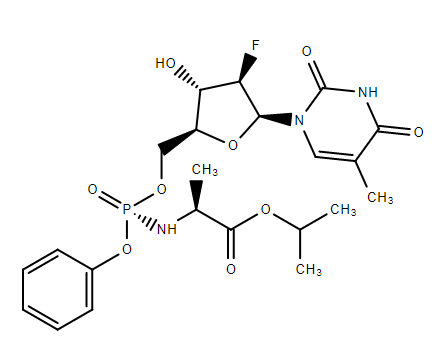
| DC53050 | ATI-2173 Featured |
ATI-2173 is a novel liver-targeted molecule designed to deliver the 5′-monophosphate of clevudine for the treatment of chronic hepatitis B infection.
More description
|
|
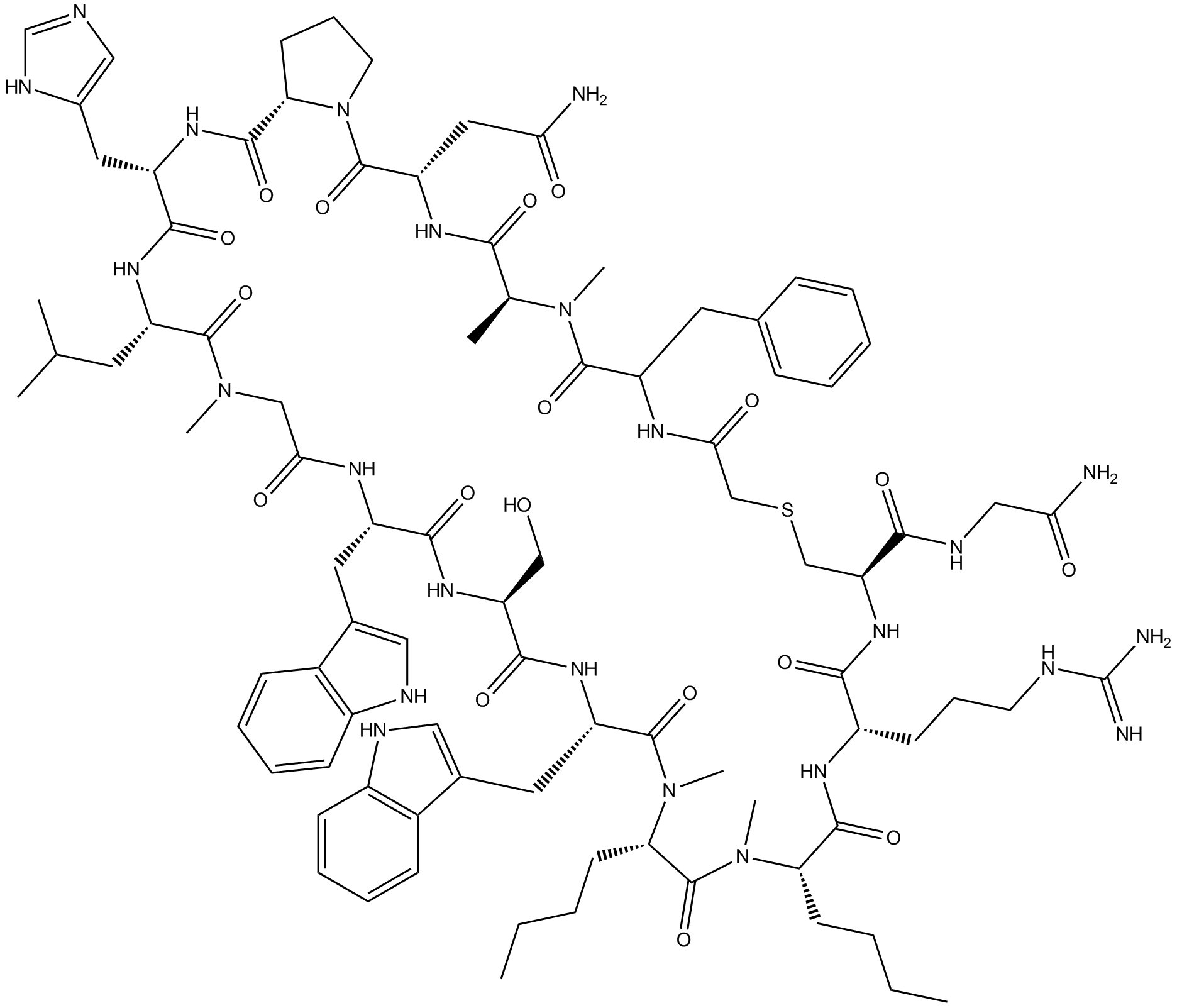
| DC44154 | PD-1/PD-L1-IN 3 Featured |
PD-1/PD-L1-IN 3, a macrocyclic peptide, is a potent and selective inhibitor of the PD-1/PD-L1 and CD80/PD-L1 interactions extracted from patent WO2014151634A1, compound No.1. PD-1/PD-L1-IN 3 interferes with PD-L1 binding to PD-1 and CD80 by binding to PD-L1, with IC50s of 5.60 nM and 7.04 nM, respectively. PD-1/PD-L1-IN 3 can be used for the research of various diseases, including cancer and infectious diseases.
More description
|
|
| DC52035 | BAR501 Impurity Featured |
BAR501 impurity is an impurity found in the preparation of BAR501 that acts as an agonist of the G protein-coupled bile acid-activated receptor (GP-BAR1). BAR501 impurity (10 µM) induces a 150% increase in luciferase activity in a GP-BAR1 reporter gene assay.
More description
|

|
| DC51019 | AST5902 Featured |
AST5902 is the active metabolite of Alflutinib.
More description
|

|
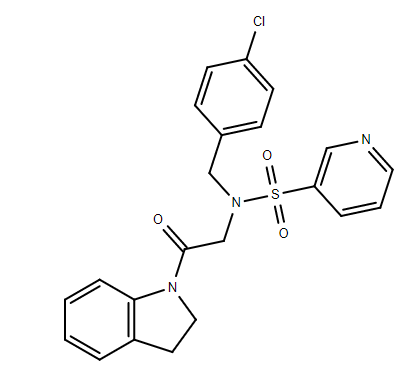
| DC51011 | IXA6 Featured |
IXA6 is a novel small molecule compound of inducing IRE1 RNase activity.
More description
|
|
| DC44534 | P11149 |
P11149 is a competitive, BBB-penetarated weakly, orally active and selective inhibitor of AChE. P11149 exhibits an IC50 of 1.3 μM for rat BChE/AChE. P11149, a Galanthamine derivative, demonstrates central cholinergic activity, behavioral efficacy and safety. P11149 is used in the study for Alzheimer's disease.
More description
|
|
| DC44533 | Biotin-PEG4-PFP ester |
Biotin-PEG4-PFP ester is a cleavable 4 unit PEG ADC linker used in the synthesis of antibody-drug conjugates (ADCs).
More description
|
|
| DC44532 | Biotin-sar-oh |
Biotin-sar-oh is a cleavable ADC linker used in the synthesis of antibody-drug conjugates (ADCs).
More description
|
|
| DC44531 | (2-Pyridyldithio)-PEG6 acid |
2-Pyridyldithio-PEG6 acid is a cleavable 6 unit PEG ADC linker used in the synthesis of antibody-drug conjugates (ADCs).
More description
|
|
| DC44530 | BS3 Crosslinker disodium |
BS3 Crosslinker disodium is a non-cleavable ADC linker used in the synthesis of antibody-drug conjugates (ADCs).
More description
|
|
| DC44528 | N-trifluoroacetyl-β-alanyl chloride |
N-trifluoroacetyl-β-alanyl chloride is a cleavable ADC linker used in the synthesis of antibody-drug conjugates (ADCs).
More description
|
|
| DC44527 | Biotin-PEG1-azide |
Biotin-PEG1-azide is a cleavable 1 unit PEG ADC linker used in the synthesis of antibody-drug conjugates (ADCs).
More description
|
|
| DC44526 | Biotin-PEG1-NH2 |
Biotin-PEG1-NH2 is a cleavable 1 unit PEG ADC linker used in the synthesis of antibody-drug conjugates (ADCs).
More description
|
|
| DC44525 | Biotin-C4-amide-C5-NH2 |
Biotin-C4-amide-C5-NH2 is a cleavable ADC linker used in the synthesis of antibody-drug conjugates (ADCs).
More description
|
|
| DC44524 | 6-Azido-hexylamine |
6-Azido-hexylamine is a cleavable ADC linker used in the synthesis of antibody-drug conjugates (ADCs).
More description
|
|
| DC44523 | 1,6-Bis(mesyloxy)hexane |
16-Bismesyloxyhexane is a cleavable ADC linker used in the synthesis of antibody-drug conjugates (ADCs).
More description
|
|
| DC44522 | EML4-ALK kinase inhibitor 1 |
EML4-ALK kinase inhibitor 1 is a potent orally active inhibitor of echinoderm microtubule-associated protein-like 4-anaplastic lymphoma kinase (EML4-ALK), with an IC50 of 1 nM.
More description
|
|
| DC44517 | CDK6/9-IN-1 |
CDK6/9-IN-1 (compound 66) is an orally active active and dual CDK 6 and CDK 9 inhibitor, with IC50 values of 40.5 nM and 39.5 nM for CDK6 anmd CDK9, respectively.
More description
|
|
| DC44516 | Resazurin sodium |
Resazurin sodium (Resazurin sodium salt, Diazoresorcinol sodium) is commonly used to measure bacterial and eukaryotic cell viability through its reduction to the fluorescent product resorufin.
More description
|
|
| DC44515 | Phenol Red sodium salt |
Phenol Red sodium salt (Phenolsulfonephthalein sodium salt) is used ubiquitously as a pH indicator in tissue culture media ranging from 6.8 (yellow) to 8.2 (red). Phenol red binds to the estrogen receptor of MCF-7 human breast cancer cells.
More description
|
|
| DC44510 | SLF TFA |
SLF TFA is a synthetic ligand for FK506-binding protein (FKBP) with an affinity of 3.1 μM for FKBP51 and an IC50 of 2.6 μM for FKBP12. SLF TFA can be used in the synthesis of PROTAC.
More description
|
|
| DC44509 | Desmethyl-QCA276 |
Desmethyl-QCA276 (PROTAC BRD4-binding moiety 4), the QCA276-based moiety, binds to cereblon ligand via a linker to form PROTAC to degrade BET. QCA276 is a BET inhibitor with an IC50 of 10 nM, and with a Ki of 2.3 nM.
More description
|
|
| DC44508 | MEG hemisulfate |
MEG (Mercaptoethylguanidine) hemisulfate is a potent and selective inhibitor of the inducible NO synthase (iNOS), with EC50s of 11.5, 110, and 60 μM for iNOS, ecNOS, and bNOS respectively in tissue homogenates. MEG hemisulfate is also a potent scavenger of peroxynitrite and inhibits peroxynitrite-induced oxidative processes. MEG hemisulfate has a protective effect in many experimental models of inflammation, including ischemia/reperfusion injury, periodontitis, hemorrhagic shock, inflammatory bowel disease, and endotoxic and septic shock.
More description
|
|
| DC44507 | Amino-PEG7-C2-SH hydrochloride |
Amino-PEG7-C2-SH hydrochloride is a PEG-based PROTAC linker that can be used in the synthesis of PROTACs.
More description
|
|
| DC44506 | Amine-PEG6-thiol |
Amine-PEG6-thiol is a PEG-based PROTAC linker that can be used in the synthesis of PROTACs.
More description
|
|
| DC44505 | Amino-PEG4-C2-SH hydrochloride |
Amino-PEG4-C2-SH hydrochloride is a PEG-based PROTAC linker that can be used in the synthesis of PROTACs.
More description
|
|
| DC44504 | Thiol-PEG-COOH (MW 5000) |
Thiol-PEG-COOH (MW 5000) is a PEG-based PROTAC linker can be used in the synthesis of PROTACs.
More description
|
|
| DC44503 | Hydroxy-PEG3-MS |
Hydroxy-PEG3-MS is a PEG-based PROTAC linker that can be used in the synthesis of PROTACs.
More description
|
|
| DC44502 | Benzyl-PEG36-alcohol |
Benzyl-PEG36-alcohol is a PEG-based PROTAC linker that can be used in the synthesis of PROTACs.
More description
|
|
