 To enhance service speed and avoid tariff delays, we've opened a US warehouse. All US orders ship directly from our US facility.
| Cat. No. | Product Name | Field of Application | Chemical Structure |
|---|---|---|---|
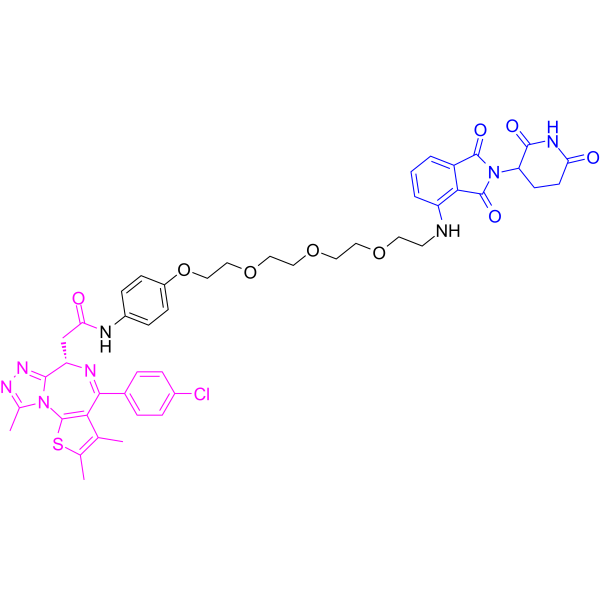
| DC12024 | ARV-825 Featured |
ARV-825 is a BRD4 Inhibitor based on PROTAC technology. ARV-825 binds to BD1 and BD2 of BRD4 with Kds of 90 and 28 nM, respectively.
More description
|
|
| DC73285 | GSK-3484862(GSK862) Featured |
GSK-3484862 is a non-covalent inhibitor for DNA methyltransferase (Dnmt1). GSK-3484862 induces DNA hypomethylation to against cancer. GSK-3484862 mediates dramatic demethylation in murine embryonic stem cells with minimal non-specific toxicity.
More description
|

|
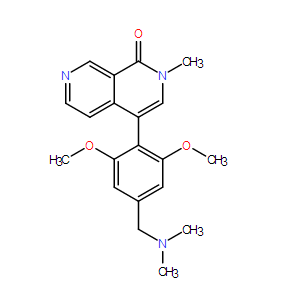
| DC9724 | BI-7273 Featured |
BI-7273 is a potent, selective, and cell-permeable BRD9 BD Inhibitor.
More description
|
|
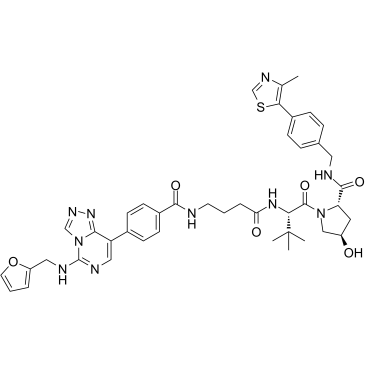
| DC28688 | UNC6852 Featured |
UNC6852 is a selective rolycomb repressive complex 2 (PRC2) degrader based on PROTAC and contains an EED (embryonic ectoderm development) ligand and a VHL ligand, with an IC50 of 247 nM for EED.
More description
|
|
| DC79850 | DW34 |
DW34 is an orally active pan-BRD4-D1 biased inhibitor with additional BRD4-D2 inhibitive activity. DW34 displays comparable inhibitive efficacy to I-BET151 (EC50 = 0.16 μM) with low nanomolar EC50 values of 0.14 μM. DW34 significantly reduces liver inflammation induced by LPS and APAP via reducing chemokine expression and cellular necrosis.
More description
|

|
| DC79811 | (2R,4R,6S)-Tubacin |
(2R,4R,6S)-Tubacin is the 2R,4R,6S enantiomer of Tubacin. Tubacin is a potent and selective inhibitor of HDAC6, with an IC50 value of 4 nM and approximately 350-fold selectivity over HDAC1. Tubacin also inhibits metallo-β-lactamase domain-containing protein 2 (MBLAC2).
More description
|
|
| DC79682 | rel-A-395 hydrochloride |
rel-A-395 hydrochloride is the relative configuration of A-395) hydrochloride. A-395 is an antagonist of polycomb repressive complex 2 (PRC2) protein-protein interactions that potently inhibits the trimeric PRC2 complex (EZH2-EED-SUZ12) with an IC50 of 18 nM.
More description
|
|
| DC79522 | TAF1 ligand 1 |
TAF1 ligand 1 is a TAF1 ligand. TAF1 ligand 1 can be used as a Ligands for Target Protein for PROTAC synthesis, such as ZS3-046.
More description
|
|
| DC79518 | Repibresib |
Repibresib (VYN201) is a bromodomain and extra-terminal motif (BET) inhibitor. Repibresib shows antineoplastic activity.
More description
|
|
| DC79506 | KB-0118 |
KB-0118 (BBC0115) is an orally active BET bromodomain inhibitor. KB-0118 selective binds to BRD2 and BRD4 over BRD3, with Kd values of 36.7 μM for BRD2 BD1 and 47.4 μM for BRD4 BD1. KB-0118 inhibits pro-inflammatory cytokines, including TNF, IL-1β, and IL-23a and selectively suppresses Th17 cell differentiation. KB-0118 modulates Th17-driven inflammation occurs through epigenetic suppression of BRD4, confirmed by downregulation of STAT3 and BRD4 target genes. KB-0118 has immunomodulatory effects in inflammatory bowel disease (IBD) model.
More description
|
|
| DC79492 | Forvisirvat |
Forvisirvat (SP-624) is an orally active, brain-penetrant and selective sirtuin 6 (SIRT6) activator. Forvisirvat activates the deacetylase activity of SIRT6, enhancing DNA repair and mitochondrial health, and exhibits antidepressant activity in animal models. Forvisirvat is promising for research of major depressive disorder.
More description
|
|
| DC79400 | PySAHA |
PySAHA is a multifunctional HDAC inhibitor. PySAHA can degrade intracellular HDAC via a hydrophobic tagging mechanism. PySAHA also possesses photodynamic therapeutic activity and can generate reactive oxygen species under light irradiation. PySAHA can inhibit the proliferation, migration and induce cell apoptosis of breast cancer cells. PySAHA has antitumor activity and can be used in breast cancer research.
More description
|
|
| DC79398 | MPT0G413 |
MPT0G413 (Compound 6) is a potent, selective, orally active and brain-penetrant HDAC6 inhibitor with an IC50 of 3.92 nM. MPT0G413 decreases not only the level of phosphorylation of tau proteins but also the aggregation of tau proteins. MPT0G413 can ameliorate the impaired learning and memory. MPT0G413 can be used for the research of neurological disease, such as Alzheimer's disease.
More description
|
|
| DC79370 | SKLB-0124 |
SKLB-0124 is a selective PRMT6 degrader with DC50s of 15.4 μM and a 16.4 μM in HCC827 and MDA-MB-435 cells. SKLB-0124 does not degrade PRMT1 or PRMT8. SKLB-0124 exhibits an IC50 on PRMT6 of 1.6 μM. SKLB-0124 induces proteasome dependent degradation of PRMT6 and significantly inhibits the proliferation. SKLB-0124 effectively induces apoptosis and cell cycle arrest. SKLB-0124 can be used for the studies of lung cancer and breast cancer.
More description
|
|
| DC79322 | MC3935 |
MC3935 is a LSD1 inhibitor with an IC50 of 0.52 μM for LSD1-CoREST enzymatic complex. MC3935 has significant antischistosomal activity against transformed schistosomula (NTS) and Schistosoma mansoni adult worms while showing a delayed onset of action towards juvenile forms. MC3935 has no significant toxicity to human cells. MC3935 can be used for schistosomiasis research.
More description
|
|
| DC79319 | ZnPc-O3-JQ1 |
ZnPc-O3-JQ1 is a light-triggered BRD4 degrader. Under illumination, ZnPc-O3-JQ1 generates reactive oxygen species (ROS) that degrades BRD4. The degradation of BRD4 results in downregulation of HIF-1α, thereby counteracting the photodynamic therapy (PDT) resistance induced by tumor hypoxia. ZnPc-O3-JQ1 exhibits both Type I and Type II PDT mechanisms.
More description
|
|
| DC79315 | DDP-38003 |
DDP-38003 (Compound 15) is an orally active KDM1A/LSD1 inhibitor with an IC50 value of 84 nM. DDP-38003 exhibits anticancer activity against promyelocytic leukemia.
More description
|
|
| DC79312 | LO-3-62 |
LO-3-62 is a PROTAC-like SMARCA2/4 degrader with a truncated fumaramide handle. LO-3-62 degrades SMARCA2/4 in cells.
More description
|
|
| DC79311 | LO-3-61 |
LO-3-61, a JQ-1 analog bearing a truncated fumaramide handle, is a PROTAC (proteolysis-targeting chimeras)-like BRD4 degrader. LO-3-61 degrades both the long and short isoforms of BRD4 CUL4DcAr16-dependently in cells. LO-3-61 shows selectivity for BRD3 and BRD4 degradation in MDA-MB-231 cells.
More description
|
|
| DC79308 | ZWZH-21 |
ZWZH-21 is a selective and orally active HDAC1/2 dual inhibitor with IC50 values of 34 nM for HDAC1 and 41 nM for HDAC2. ZWZH-21 can inhibit HCT116 and SW480 cells growth with IC50 values of 0.524 μM and 1.063 μM, respectively. ZWZH-21 can inhibit proliferation and migration and induces apoptosis in multiple colorectal cancer cells. ZWZH-21 can be used for the research of cancer, such as colorectal cancer.
More description
|
|
| DC79281 | BTR2038 |
BTR2038 is a BRD9 degrader. BTR2038 induces targeted degradation of V5-tagged human BRD9. BTR2038 can be used for the study of biological processes and diseases associated with abnormal BRD9 protein function.
More description
|
|
| DC79275 | Rodin-C |
Rodin-C is a selective HDAC inhibitor with IC50s of 0.059, 0.18 and 5.39 μM for HDAC1, HDAC2 and HDAC11, respectively, over HDAC3-10. Rodin-C significantly inhibits the HDAC-CoREST complex with low hematological toxicity. Rodin-C can be used for neurologic disorders such as Alzheimer’s disease research.
More description
|
|
| DC79274 | Rodin-A |
Rodin-A is an orally active, brain-penetrant and selective histone deacetylase (HDAC)-co-repressor of repressor element-1 silencing transcription factor (CoREST) complex inhibitor with an IC50 value of 1.80 μM for the CoREST complex, 0.15 μM for HDAC1, and 0.43 μM for HDAC2. Rodin-A increases the acetylation level of histone H3K9, upregulates the expression of neuron-related genes, thereby promoting the increase in dendritic spine density, the colocalization of synaptic proteins (SV2A and PSD95), and the improvement of hippocampal long-term potentiation (LTP), exerting synaptic protection and repair activity. Rodin-A is promising for research of neurodegenerative diseases related to synaptic dysfunction, especially Alzheimer’s disease.
More description
|
|
| DC79087 | UNC10415667 |
UNC10415667 is a NSD2 degrader, with a DC50 values of 460 nM. UNC10415667 can be used for the study of cancers driven by NSD2 overexpression or dysregulation, such as multiple myeloma, acute lymphocytic leukemia, and prostate cancer.
More description
|
|
| DC79072 | CDD-1154 |
CDD-1154 is an aminopyrimidine analog. CDD-1154 is a BRDT-BD2 inhibitor (IC50: 139 nM). CDD-1154 is used in male contraceptive research.
More description
|
|
| DC79071 | CDD-1498 |
CDD-1498 (Compound 12) is a potent inhibitor of BRDT-BD2. CDD-1498 has an IC50 of 978 nM against BRDT-BD2. CDD-1498 can be studied in research on nonhormonal contraceptive agent.
More description
|
|
| DC79070 | CDD-1128 |
CDD-1128 (Compound 11) is a potent inhibitor of BRDT-BD2. CDD-1128 has an IC50 of 521 nM against BRDT-BD2. CDD-1128 can be studied in research on nonhormonal contraceptive agent.
More description
|
|
| DC79069 | CDD-1147 |
CDD-1147 is a BRDT-BD2 inhibitor with an IC50 of 94 nM. CDD-1147 can be used in the research of non-hormonal contraceptives for men.
More description
|
|
| DC79068 | CDD-1349 |
CDD-1349 (Compound 15) is a BRDT-BD2/BRD4-BD2 selective inhibitor. CDD-1349is an analog with sixfold selectivity for BRDT-BD2 versus BRD4-BD2. CDD-1349 has an IC50 of 22 nM against BRDT. CDD-1349 can be studied in research on nonhormonal contraceptive agent.
More description
|
|
| DC79051 | CDD-1132 |
CDD-1132 (Compound 8) is a potent inhibitor of BRDT-BD2. CDD-1132 has an IC50 of 13 nM against BRDT-BD2. CDD-1132 can be studied in research on nonhormonal contraceptive agent.
More description
|
|
