 To enhance service speed and avoid tariff delays, we've opened a US warehouse. All US orders ship directly from our US facility.
| Cat. No. | Product Name | Field of Application | Chemical Structure |
|---|---|---|---|
| DC26208 | Remdesivir metabolite(GS-441524) Featured |
Remdesivir metabolite.Remdesivir blocks SARS-CoV and MERS-CoV in HAE cells with EC50s of both 74 Nm,and also showed potent activity blocking 2019-nCov(Coronavirus).
More description
|
.gif)
|
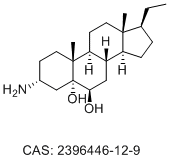
| DC73788 | K161 Featured |
K161 is a potent, pan-SHIP1/2 inhibitor with IC50 of 1.5- 6 uM and 6.5-13 uM, respectively.
More description
|
|
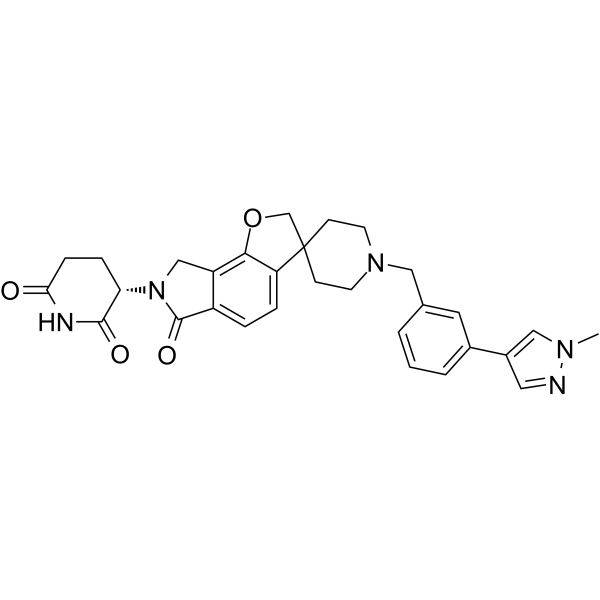
| DC60852 | PVTX-405 Featured |
PVTX-405 is a potent, effective, highly selective, and orally efficacious IKZF2 molecular glue degrader with DC50 of 0.7 nM. PVTX-405 in combination with anti-PD1 or anti-LAG3 significantly increases animal survival compared to anti-PD1 or anti-LAG3 alone.
More description
|
|
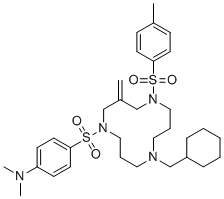
| DC73944 | CK147 Featured |
CK147 (CK-147) is a potent CD4 down-modulator with IC50 of 63 nM, inhibits Sec61-dependent cotranslational translocation of huCD4 in vitro.
More description
|
|
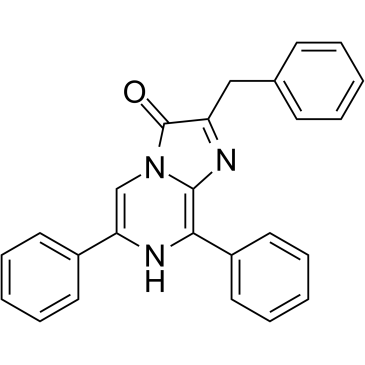
| DC39823 | Diphenylterazine (DTZ) Featured |
Diphenylterazine (DTZ) is a bioluminescence agent. Diphenylterazine alone yielded very little background, leading to excellent signal-to-background ratios.
More description
|
|
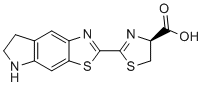
| DC10610 | CycLuc1(Luciferase substrate) Featured |
CycLuc1 is a luciferase substrate which offers brighter bioluminescence and improved imaging in mouse models at lower doses than the standard D-luciferin.
More description
|
|
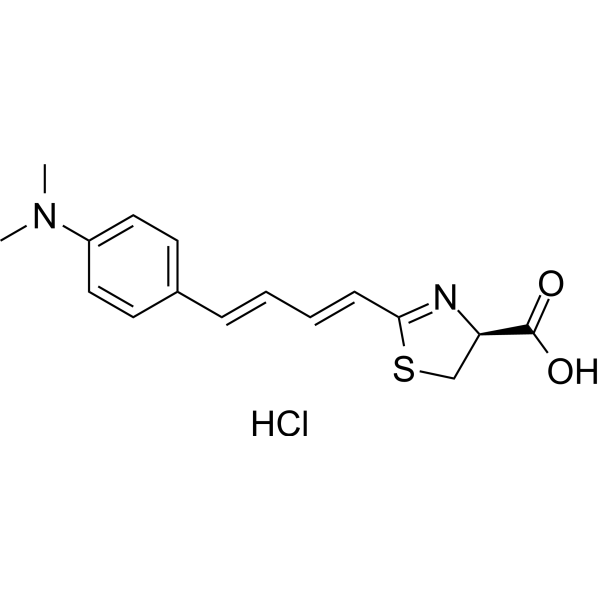
| DC65436 | AkaLumine hydrochloride Featured |
AkaLumine hydrochloride is a luciferin analogue, with a Km of 2.06 μM for recombinant Fluc protein.
More description
|
|
| DC34025 | AkaLumine Featured |
AkaLumine is a luciferin analogue. The bioluminescence produced by AkaLumine in reactions with native firefly luciferase is in the near-infrared wavelength ranges (λmax=677?nm), and yields significantly increased target-detection sensitivity from deep tissues with maximal signals attained at very low concentrations, as compared with D-luciferin and emerging synthetic luciferin CycLuc1.
More description
|
.gif)
|
| DC45080 | Suc-Ile-Glu(γ-pip)-Gly-Arg-pNA hydrochloride (factor Xa specific chromogenic substrate) Featured |
Suc-Ile-Glu(γ-pip)-Gly-Arg-pNA hydrochloride is a factor Xa specific chromogenic substrate.
More description
|
-Gly-Arg-pNA hydrochloride.gif)
|
| DC26055 | Caspase-1/4 Chromogenic Substrate(Suc-YVAD-pNA) Featured |
Suc-YVAD-pNA is a colorimetric substrate for caspase-1/interleukin-1β-converting enzyme (ICE) and caspase-4.
More description
|

|
| DC11334 | Suc-Ala-Ala-Pro-Abu-pNA trifluoroacetate salt Featured |
Suc-AAP-Abu-pNA is a chromogenic peptide substrate for pancreatic elastase.It is cleaved by elastase to release p-nitroalinide (p-NA), which can be quantified by colorimetric detection at 405 nm as a measure of enzyme activity.
More description
|

|
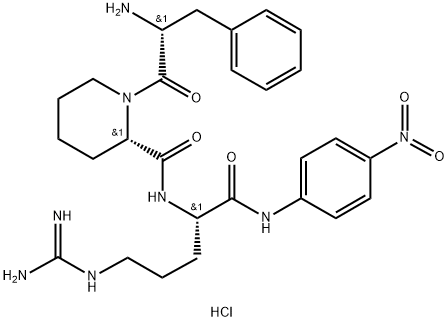
| DC40321 | H-D-Phe-Pip-Arg-pNA dihydrochloride Featured |
H-D-Phe-Pip-Arg-pNA (S-2238) dihydrochloride, a chromogenic substrate, is patterned after the N-terminal portion of the A alpha chain of fibrinogen, which is the natural substrate of thrombin. H-D-Phe-Pip-Arg-pNA dihydrochloride is specific for thrombin and is used to measure antithrombin-heparin cofactor (AT-III). The AT-III assay using H-D-Phe-Pip-Arg-pNA dihydrochloride is sensitive, accurate, and easy to perform.
More description
|
|
| DC26060 | H-Gly-Arg-PNA.HCl (colorimetric substrate for thrombin) Featured |
H-Gly-Arg-pNA is a colorimetric substrate for thrombin.
More description
|

|
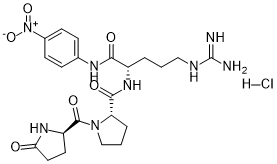
| DC67318 | S2366 HCl(chromogenic substrate for Factor XI ) Featured |
S2366 HCl is a chromogenic substrate for Factor XI in plasma.
More description
|
|
| DC53058 | CH3OCO-D-CHA-Gly-Arg-pNA (Chromogenic Substrate Pefachrome FXa) Featured |
CH3OCO-D-CHA-Gly-Arg-pNA acetate is a chromogenic substrate for factor Xa.
More description
|

|
| DC11356 | Ac-LEHD-pNA(Caspase-9 substrate) Featured |
Ac-LEHD-pNA is a biological active peptide. (Caspase-9 substrate; pNA (4-nitroaniline)-derived caspase substrates are widely used for the colorimetric detection of various caspase activities. Cleavage of pNA peptides by caspases generates pNA that is monitored colorimetrically at ~405 nm. pNA has maximum absorption around 408 nm.)
More description
|

|
| DC26049 | Bz-IEGR-pNA (acetate) Featured |
Bz-IEGR-pNA is a colorimetric substrate for Factor Xa.
More description
|

|
| DC65800 | ARV-393 Featured |
ARV-393 is an orally active PROTAC that utilizes the ubiquitin-proteasome system to target the degradation of BCL6. ARV-393 consists of ligand conjugates targeting BCL6 and the E3 ligase cereblon, respectively. ARV-393 has DC50 and GI50 values of <1 nM in multiple cell lines of diffuse large B-cell lymphoma (DLBCL) and Burkitt lymphoma (BL). ARV-393 also demonstrated considerable tumor suppressor activity in tumor xenograft models. ARV-393 is being studied to inhibit non-Hodgkin lymphoma.
More description
|
.gif)
|
| DC44518 | SY-5609 (CDK7-IN-3) Featured |
SY-5609 (CDK7-IN-3) is a selective CDK7 inhibitor with a KD of 0.059 nM. CDK7-IN-3 shows poor inhibition on CDK2 (Ki=390 nM), CDK9 (Ki=290 nM), CDK12 (Ki=78 nM). CDK7-IN-3 induce apoptosis in tumor cells and has antitumor activity.
More description
|
.gif)
|
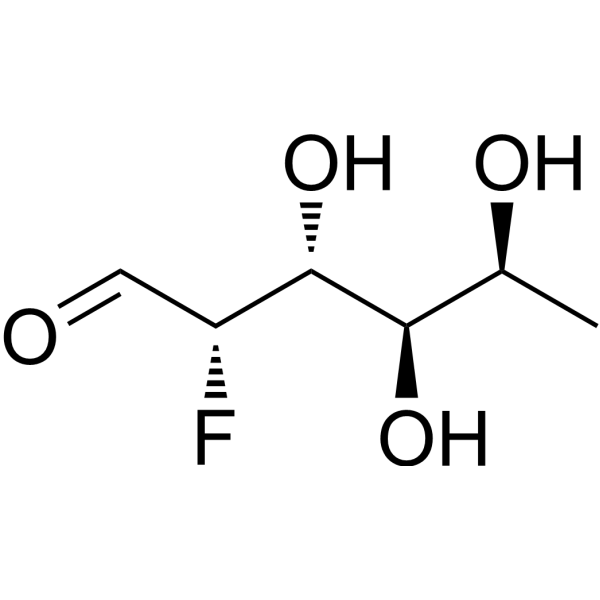
| DC48063 | 2-Deoxy-2-fluoro-L-fucose Featured |
2-Deoxy-2-fluoro-L-fucose, an L-fucose analog, is a fucosylation inhibitor. 2-Deoxy-2-fluoro-L-fucose inhibits de novo synthesis of GDP-fucose in mammalian cells. Fucosylation is a relatively well-defined biomarker for progression in many human cancers; for example, pancreatic and hepatocellular carcinoma.
More description
|
|
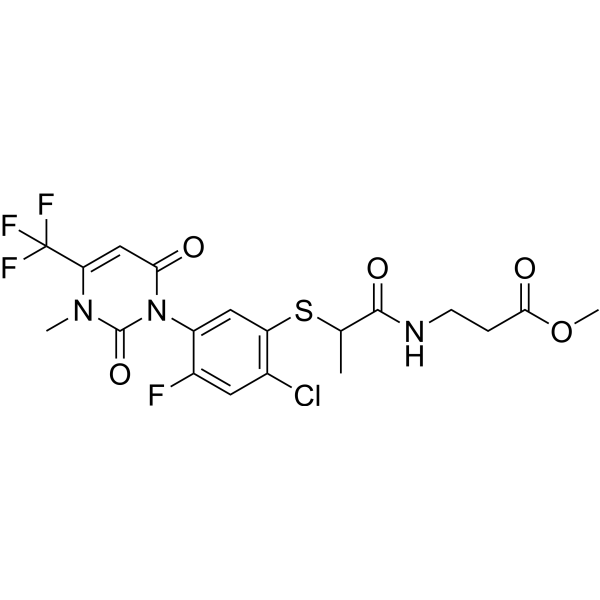
| DC41046 | Tiafenacil Featured |
Tiafenacil is a new protoporphyrinogen IX oxidase (PPO)-inhibiting herbicide, with IC50 values of 22 to 28 nM for various plant species, including amaranth (Amaranthus tuberculatus), soybean (Glycine max), arabidopsis (Arabidopsis thaliana), and rapeseed (Brassica napus).
More description
|
|
| DC40351 | DSPE-PEG(2000)-Amine Featured |
DSPE-PEG(2000)-Amine is used in the synthesis of solid lipid and thermosensitive liposomal nanoparticles for the delivery of anticancer agents.
More description
|

|
| DC58047 | DSPE-mPEG2000((sodium salt)) Featured |
mPEG2000-DSPE is used in COVID 19 mRNA vaccines. It is a PEGylated derivative of 1,2-distearoyl-sn-glycero-3-PE . Formulations containing DSPE-MPEG(2000) have been used to prepare liposomes with long circulation time for the delivery of anticancer and antimalarial agents.. mPEG2000-DSPE has also been widely used as hydrophilic surface modifying agent for a variety types of hydrophobic nanoparticles, including recently reported lipid nanoparticle mRNA vaccines.
More description
|

|
| DC65786 | DSPE-PEG2000-OH (DSPE-PEG hydroxyl) Featured |
DSPE-PEG2000-OH is used for creating micelles that are able to carry drugs with low solubility.
More description
|

|
| DC66175 | DMPE-PEG-Rhodamine B Featured |
DMPE-PEG, a synthetic lipid, possesses unique properties and finds extensive applications as liposomes. Firstly, DMPE-PEG exhibits excellent biocompatibility and solubility, allowing for its stable presence and efficient absorption and metabolism in vivo. Additionally, DMPE-PEG possesses good surface activity, aiding in the stabilization of liposome structures and enhancing their stability.
More description
|

|
| DC66226 | DOPE-PEG-NBD Featured |
DOPE-PEG is a versatile phospholipid derivative with unique properties that make it suitable for various applications. Its hydrophobic and hydrophilic nature enables efficient encapsulation and delivery of drugs and nucleic acids, making it a valuable tool in drug delivery systems and gene therapy.
Additionally, DOPE-PEG can enhance the stability and circulation time of liposomes, improving their efficacy as drug carriers.
More description
|
|
| DC21253 | LY3202626 Featured |
LY3202626 is a small molecule non-selective BACE1 inhibitor, causes dose-dependent reductions in CSF and plasma Aβ concentrations, shows potential for the treatment of Alzheimer's disease..
More description
|

|
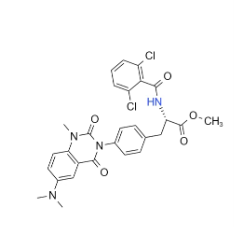
| DC67586 | AGM300 Featured |
|
|
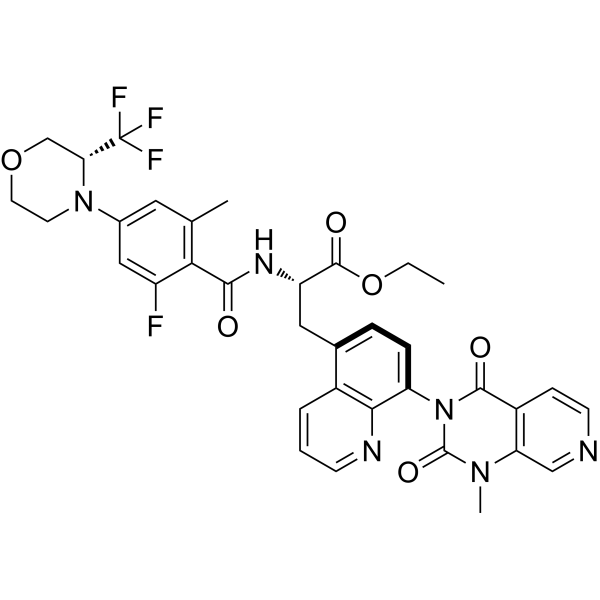
| DC67574 | GS-1427 Featured |
GS-1427 is a drug candidate specifically designed based on this mechanism. It potently inhibits the α4β7–MAdCAM-1 interaction with picomolar-level activity while demonstrating high selectivity.
More description
|
|
| DC73194 | Fraisinib Featured |
Fraisinib is a specific and effective inhibitor of glycyl-tRNA synthetase 1 (GARS1), suppresses the synthesis of Ap4A by GARS1 and displays strong anti-tumoral potential.
More description
|
|
