 To enhance service speed and avoid tariff delays, we've opened a US warehouse. All US orders ship directly from our US facility.
| Cat. No. | Product Name | Field of Application | Chemical Structure |
|---|---|---|---|
| DC7292 | SF1670 Featured |
SF1670 is a selective PTEN (phosphatase and tensin homolog) inhibitor with an IC50 of 2 micromolar.
More description
|

|
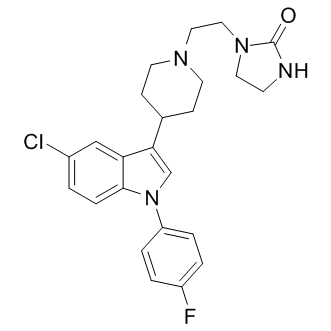
| DC9536 | Sertindole Featured |
Sertindole, a neuroleptic, is one of the newer antipsychotic medications available.
More description
|
|
| DCAPI1406 | Sertaconazole nitrate |
Sertaconazole nitrate is a topical broad-spectrum antifungal that is developed to provide an additional agent for the treatment of superficial cutaneous and mucosal infections.
More description
|

|
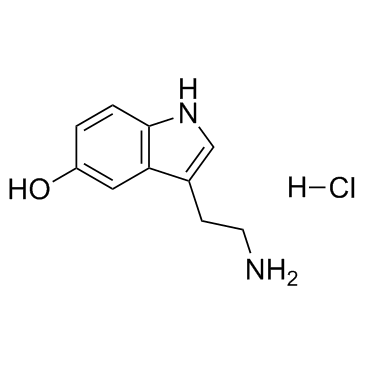
| DC20267 | Serotonin hydrochloride(5-HT) Featured |
Serotonin hydrochloride is a monoamine neurotransmitter in the CNS and an endogenous 5-HT receptor agonist. Serotonin hydrochloride is also a catechol O-methyltransferase (COMT) inhibitor with a Ki of 44 μM.
More description
|
|
| DC9600 | Senicapoc Featured |
Senicapoc(ICA17043) is a potent and selective Gardos channel blocker; blocked Ca(2+)-induced rubidium flux from human RBCs/ inhibited RBC dehydration with IC50s of 11 nM/30 nM, respectively.
IC50 value: 11/30 nM [1]
Target: Gardos channel
in vitro: I
More description
|

|
| DC7290 | Semaxanib (SU5416) Featured |
Semaxanib (SU5416) is a potent and selective VEGFR(Flk-1/KDR) inhibitor with IC50 of 1.23 μM, 20-fold more selective for VEGFR than PDGFRβ, lack of activity against EGFR, InsR and FGFR.
More description
|

|
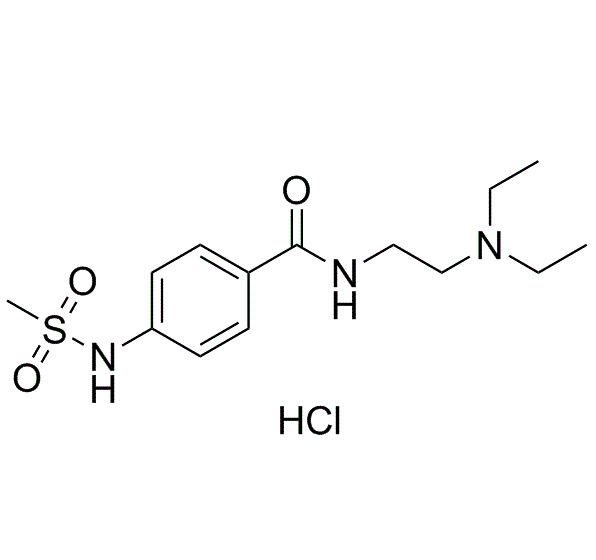
| DC10687 | Sematilide hydrochloride Featured |
Sematilide, also known as CK-1752, is a class III antiarrhythmic.
More description
|
|
| DC7285 | FR 180204 Featured |
Selective ERK inhibitor (IC50 values are 0.14 and 0.31 μM for ERK2 and ERK1 respectively). Displays 30-fold selectivity for ERK over p38α (IC50 = 10 μM); displays no activity against human recombinant MEK1, MKK4, IKKα, PKCα, Src, Syc and PDGFα.
More description
|

|
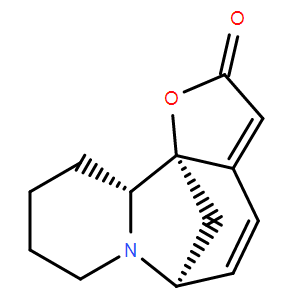
| DC23052 | Securinine Featured |
Securinine is an alkaloid originally isolated from S. suffructicosa.It reduces proliferation of SW480 colon adenocarcinoma cells in a dose- and time-dependent manner via increased Beclin 1 expression and induction of autophagy.
More description
|
|
| DC11400 | Seclidemstat(SP-2577) Featured |
Seclidemstat(SP-2577) is a potent LSD1 inhibitor, with a mean IC50 of 127 nM.
More description
|

|
| DC10379 | SDMA Featured |
SDMA (Symmetric dimethylarginine) is an endogenous inhibitor of nitric oxide (NO) synthase activity.
More description
|
|
| DC7739 | SD-208 Featured |
SD-208 is a potent, orally active ATP-competitive transforming growth factor-β receptor 1 (TGF-βRI) inhibitor (IC50= 49 nM)
More description
|

|
| DC7284 | Scriptaid(GCK1026) Featured |
Scriptaid(Scriptide; GCK-1026) is an inhibitor of HDAC; shows a greater effect on acetylated H4 than H3.
More description
|

|
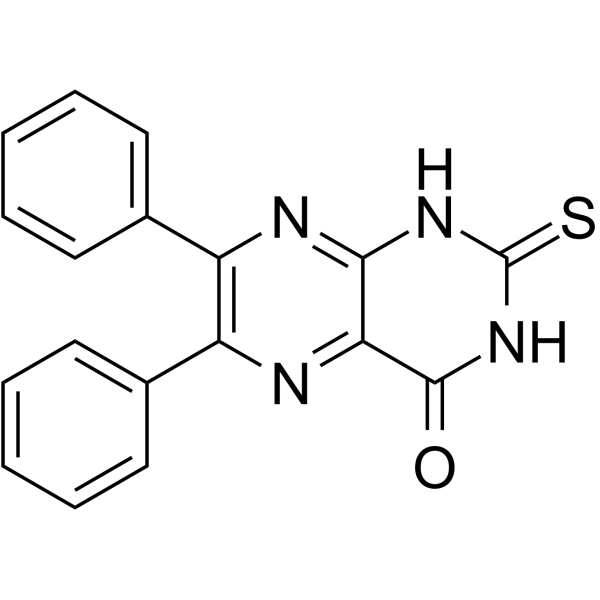
| DC7938 | SCR7 pyrazine Featured |
SCR7 pyrazine is a potent and selective inhibitor of non-homologous end joining (NHEJ),useful tool compound for CRISPR editing.
More description
|
|
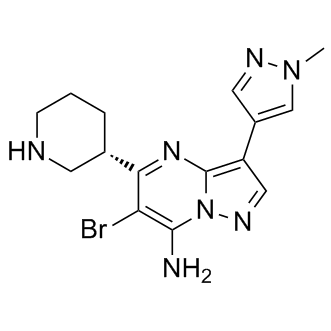
| DC8737 | SCH900776 S-isomer Featured |
SCH900776 (S-isomer) is the S-isomer form of SCH900776, which is a potent, selective and orally bioavailable inhibitor of checkpoint kinase Chk1 (IC50 = 3 nM), highly selective against Chk2 (IC50 = 1500 nM) and cyclin-dependent kinase CDK2 (IC50
More description
|
|
| DC7283 | SCH-772984 Featured |
SCH772984 is a novel, specific inhibitor of ERK1/2 with IC50 of 4 nM and 1 nM, respectively.
More description
|

|
| DC5024 | MK-8776 (SCH 900776) Featured |
SCH 900776 is a selective Chk1 inhibitor with IC50 of 3 nM. It shows 50-fold selectivity against Chk2. Phase 2.
More description
|

|
| DC8333 | SC-79 Featured |
SC-79 is an activator of Akt; binds to the pleckstrin homology domain of Akt.
More description
|

|
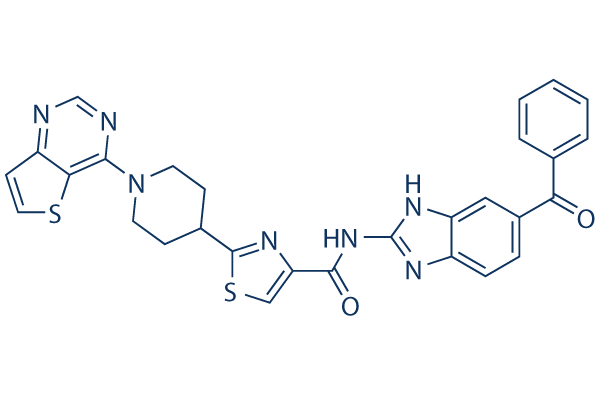
| DC10636 | SC75741 Featured |
SC75741 is a potent NF-κB inhibitor with EC50 of 200 nM.
More description
|
|
| DC9273 | SC-66 Featured |
SC-66 is an allosteric inhibitor of Akt; interferes with pleckstrin homology domain binding to PIP3 and facilitates Akt ubiquitination.
More description
|

|
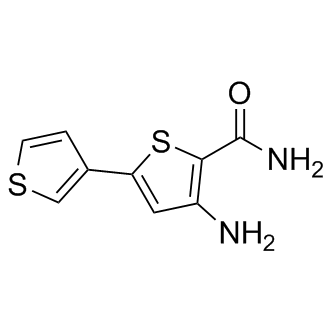
| DC7281 | SC-514 (GK 01140) Featured |
SC-514 (GK 01140), a small molecule, is a selective inhibitor of IKK-2; does not inhibit other IKK isoforms or other serine-threonine and tyrosine kinases.
More description
|
|
| DC8316 | SBI-0206965 Featured |
SBI-0206965 is a potent, selective and cell permeable autophagy kinase ULK1 inhibitor.
More description
|

|
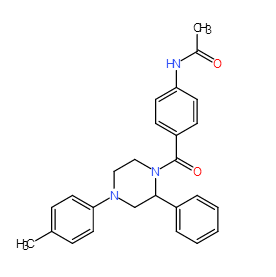
| DC10148 | SBC-110736 Featured |
SBC-110736 is a novel inhibitor of proprotein convertase subtilisin kexin type 9 (PCSK9), lowering cholesterol levels in mice.
More description
|
|
| DC10729 | SB9200(Inarigivir soproxil) Featured |
SB9200(Inarigivir soproxil) is a novel agonist of innate immunity, shows potent antiviral activity against resistant HCV variants.
More description
|

|
| DC8354 | Intepirdine (SB-742457, RVT-101) Featured |
SB-742457(RVT-101) is a selective 5-HT6 receptor antagonist with potential cognition, memory, and learning-enhancing effects.
More description
|

|
| DC9635 | SB-705498 Featured |
SB-705498 is a potent, selective and orally bioavailable transient receptor potential vanilloid 1 (TRPV1) receptor antagonist with a pIC50 of 7.1.
More description
|

|
| DC7279 | SB-590885 Featured |
SB590885 is a potent B-Raf inhibitor with Ki of 0.16 nM, 11-fold greater selectivity for B-Raf over c-Raf, no inhibition to other human kinases.
More description
|
|
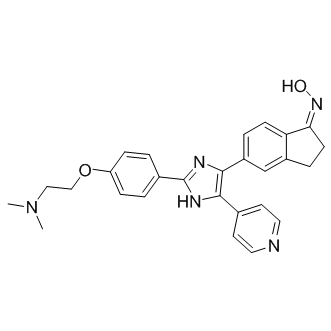
| DC6312 | SB525334 Featured |
SB525334 is a potent and selective inhibitor of TGFβ receptor I (ALK5) with IC50 of 14.3 nM, is 4-fold less potent to ALK4 than ALK5 and inactive to ALK2, 3, and 6.
More description
|

|
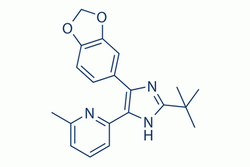
| DC7278 | SB-505124 Featured |
SB505124 is a selective inhibitor of TGFβR for ALK4, ALK5 with IC50 of 129 nM and 47 nM, respectively, also inhibits ALK7, but does not inhibit ALK1, 2, 3, or 6.
More description
|
|
| DC7670 | SB-3CT Featured |
SB-3CT is an effective and selective gelatinase inhibitor with Ki of 13.9 nM and 600 nM for MMP-2 and MMP-9, respectively.
More description
|

|
