 To enhance service speed and avoid tariff delays, we've opened a US warehouse. All US orders ship directly from our US facility.
| Cat. No. | Product Name | Field of Application | Chemical Structure |
|---|---|---|---|
| DC8379 | JH-II-127 Featured |
JH-II-127 is a highly potent, selective, and brain penetrant LRRK2 inhibitor.
More description
|

|
| DC10095 | JD5037 Featured |
JD5037 is an inverse agonist of peripheral cannabinoid 1 (CB1) receptors (Ki = 0.35 nM).
More description
|

|
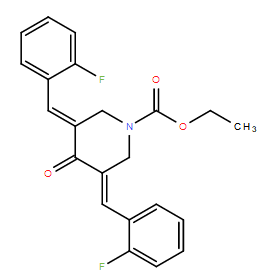
| DC11136 | JAK2 inhibitor G5-7 Featured |
JAK2 inhibitor G5-7 is a small molecule, allosteric JAK2 inhibitor that selectively inhibits JAK2-mediated phosphorylation and activation of EGFR and STAT3 by binding to JAK2.
More description
|
|
| DC7435 | J-147 Featured |
J-147 is a potent neuroprotective and neurotrophic compound.
More description
|

|
| DC7053 | IWR-1 Featured |
IWR-1 (endo-IWR 1) is a Wnt pathway inhibitor with IC50 of 180 nM, induces Axin2 protein levels and promotes β-catenin phosphorylation by stabilizing Axin-scaffolded destruction complexes.
More description
|

|
| DC5028 | IWP-2 Featured |
IWP-2 is an inhibitor of Wnt processing and secretion with IC50 of 27 nM, selective blockage of Porcn-mediated Wnt palmitoylation, does not affect Wnt/β-catenin in general and displays no effect against Wnt-stimulated cellular responses.
More description
|

|
| DC7434 | IWP-L6 Featured |
IWP L6 is a Porcn inhibitor with EC50 of 0.5 nM.
More description
|

|
| DC3153 | Ivabradine hydrochloride Featured |
Ivabradine, a new If inhibitor with IC 50 of 2.9 μM which acts specifically on the pacemaker activity of the sinoatrial node, is a pure heart rate lowering agent.
More description
|

|
| DC8028 | ITD-1 Featured |
ITD-1 is a novel and highly selective TGFβ pathway inhibitor. ITD-1 molecule turns stem cells into heart cells.
More description
|

|
| DC12378 | Itacitinib(INCB039110) Featured |
Itacitinib is a potent and selective inhibitor of JAK1, with >20-fold selectivity for JAK1 over JAK2 and >100-fold over JAK3 and TYK2; Itacitinib is used in the research of myelofibrosis.
More description
|

|
| DC8304 | Isoxazole 9(ISX9) Featured |
ISX-9 is a small molecule inducer of adult neural stem cell differentiation both in vitro and in vivo.
More description
|

|
| DCAPI1080 | Istradefylline (KW-6002) Featured |
Istradefylline(KW6002) is a very potent, selective and orally active adenosine A2A receptor antagonist(Ki=2.2 nM) in experimental models of Parkinson's disease.
More description
|

|
| DC7431 | ISRIB Featured |
ISRIB (trans-isomer), the trans-isomer of ISRIB, is a potent and selective PERK inhibitor with IC50 of 5 nM.
More description
|

|
| DC8934 | Irinotecan Featured |
Irinotecan(CPT-11) prevents DNA from unwinding by inhibition of topoisomerase 1.
More description
|

|
| DC4153 | Irinotecan hydrochloride trihydrate |
Irinotecan prevents DNA from unwinding by inhibition of topoisomerase 1.
More description
|

|
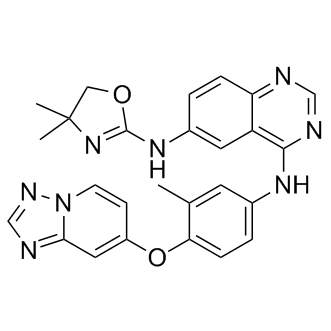
| DC8771 | Tucatinib (Irbinitinib,ARRY-380) Featured |
Irbinitinib(ARRY-380; ONT-380) is a potent and selective HER2 inhibitor with IC50 of 8 nM, equipotent against truncated p95-HER2, 500-fold more selective for HER2 versus EGFR.
More description
|
|
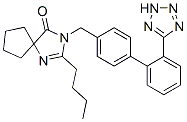
| DC7173 | Irbesartan Featured |
Irbesartan is a highly potent and specific angiotensin II type 1 (AT1) receptor antagonist with IC50 of 1.3 nM.
More description
|
|
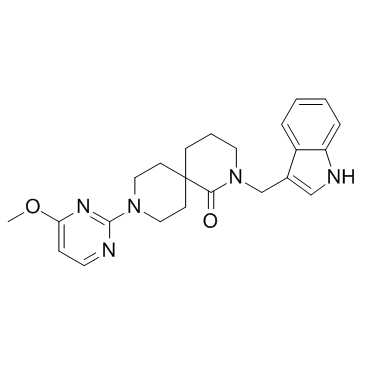
| DC10295 | IPSU Featured |
IPSU is a selective, orally available and brain penetrant OX2R antagonist with a pKi of 7.85.
More description
|
|
| DC7614 | IOX1 Featured |
IOX1 is a potent and broad-spectrum inhibitor of 2OG oxygenases, including the JmjC demethylases.
More description
|

|
| DC5070 | IOX2 Featured |
IOX 2 is a potent inhibitor of HIF-1α prolyl hydroxylase-2 (PHD2) (IC50 = 21 nM). IOX 2 displays over 100-fold selectivity for PHD2 over factor inhibiting HIF-1 (FIH-1) and histone demethylases.
More description
|

|
| DC8124 | ETH 2120(Sodium ionophore III) Featured |
Ionophore suitable for the assay of sodium activity in blood, plasma, serum. etc. with a solvent polymeric membrane electrode.
More description
|

|
| DC8328 | IRAK-1/4 Inhibitor Featured |
Interleukin-1 Receptor-Associated-Kinase-1/4 Inhibitor is a benzimidazole compound that acts as a cell-permeable, potent selective inhibitor of IL-1 kinases.
More description
|

|
| DC7430 | Obeticholic acid (INT-747) Featured |
INT-747(Obeticholic acid; 6-ECDCA) is a potent and selective FXR agonist(EC50=99 nM) endowed with anticholestatic activity.
More description
|

|
| DC7171 | INK-128(Sapanisertib) Featured |
INK 128 is a potent and selective mTOR inhibitor with IC50 of 1 nM; >200-fold less potent to class I PI3K isoforms.
More description
|

|
| DC7197 | ML 161 Featured |
Inhibitor of protease-activated receptor 1 (PAR1)-mediated platelet activation (IC50 = 0.26 μM for the inhibition of platelet P-selectin expression on human platelets). Thought to act allosterically. Also inhibits thrombin-induced platelet activation.
More description
|

|
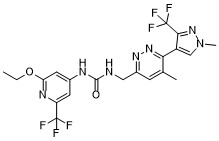
| DC57010 | GLPG2938 Featured |
GLPG2938 is an antagonists of sphingosine-1-phosphate (S1P) receptor for prophylaxis and/or treatment of diseases including fibrotic, inflammatory, autoimmune, metabolic, cardiovascular, and/or proliferative diseases. GLPG2938 displayed S1P inhibitory
More description
|
|
| DC42300 | GSK620 Featured |
GSK620 is a potent and orally active pan-BD2 with excellent broad selectivity, developability and in vivo oral pharmacokinetics. GSK620 is highly selective for the BET-BD2 family of proteins, with >200-fold selectivity over all other bromodomains. GSK620
More description
|

|
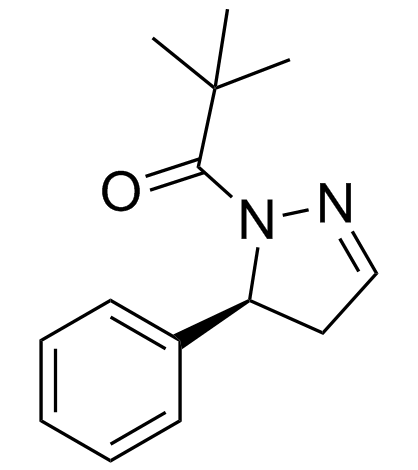
| DC39801 | GSK963 Featured |
GSK963 is a chiral, highly potent and selective inhibitor of RIP1 kinase, with an IC50 of 29 nM. GSK963 is a selective and potent inhibitor of necroptosis in murine and human cells in vitro.
More description
|
|
| DC39091 | IM156 Featured |
IM156, a metformin derivative, is a potent activator of AMPK that increases AMPK phosphorylation. IM156 blocks oxidative phosphorylation (OXPHOS) through the inhibition of complex I and increases apoptosis. IM156 ameliorates various types of fibrosis and
More description
|

|
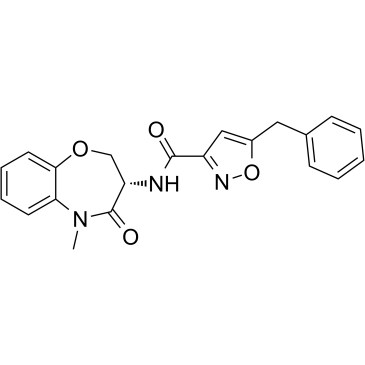
| DC32513 | GSK481 Featured |
GSK481 is a Highly Potent and Monoselective Receptor Interacting Protein 1 Kinase Inhibitor (RIP1 inhibitor). The recent discovery of the role of receptor interacting protein 1 (RIP1) kinase in tumor necrosis factor (TNF)-mediated inflammation has led to
More description
|
|
