 To enhance service speed and avoid tariff delays, we've opened a US warehouse. All US orders ship directly from our US facility.
| Cat. No. | Product Name | Field of Application | Chemical Structure |
|---|---|---|---|
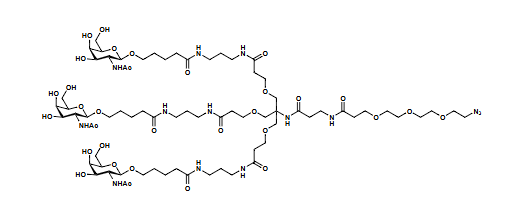
| DC68002 | Tris-β-GalNAc-β-Ala-PEG3-N3 Featured |
(β-D-GalNAc-sp)3-NHC(O)-(CH2)2-NHC(O)-PEG3-(CH2)2-N3 Tris-β-D-GalNAc ligands bind with asialoglycoprotein receptors (ASGPR) that are highly expressed on hepatocytes resulting in rapid endocytosis of the ligand along with conjugated payloads
More description
|
|
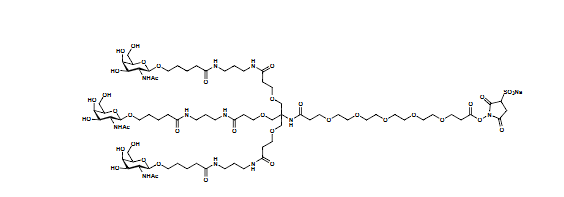
| DC68005 | Tris-GalNAc-PEG5-sulfo-NHS Ester Featured |
An amine-reactive asialo glycoprotein receptor (ASGPR) ligand.
More description
|
|
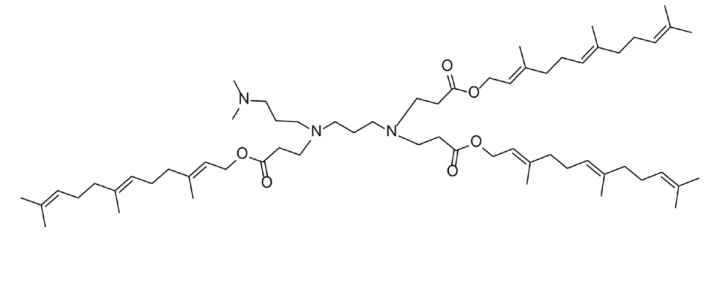
| DC60925 | Lipid H5T5 Featured |
H5T5 is a leading ionizable lipid nanoparticle (LNP) formulation optimized for in vivomRNA delivery, featuring a pKa of 6.51, a size of ~154 nm, and a narrow polydispersity index (PDI) of 0.05. It demonstrated superior in vitromRNA transfection efficiency in primary immune cells, such as bone marrow-derived macrophages. Following intravenous administration, H5T5 exhibits precise organotropism, predominantly targeting the spleen and bone marrow, where it effectively delivers mRNA to a broad spectrum of immune cells, including macrophages, dendritic cells, T cells, B cells, and NK cells. This capability enables its core application: the in vivogeneration of "pan-CAR" immune cells. When loaded with anti-HER2 CAR mRNA, the H5T5-based therapy achieved potent tumor regression and prolonged survival in multiple solid tumor models. Preliminary safety assessments indicated a manageable cytokine profile and no significant organ toxicity, positioning it as a promising platform for in vivocell engineering.
More description
|
|
| DC67556 | Sail Lipid 2308 Featured |
Sail Lipid 2308 is a novel ionizable lipid targeting to spleen developed by Sai Biomedicine.As described on US20250205167A1, Lipid 2308 was designed with a piperidine core (6-membered ring) and asymmetric C17/C11 chains, this lipid achieves unprecedented spleen-specificity. It demonstrates dominant spleen accumulation (Spleen RLU: 7.8E+06, 91.8% of total signal) with a record spleen-to-liver ratio of 112.7 (9× higher than 2231). Despite lower protein expression (hEPO: 11,000 ng/mL), near-zero liver uptake (Liver RLU: 66,000) makes Lipid 2308 unparalleled for vaccine/immunotherapy applications targeting splenic immune cells.
More description
|

|
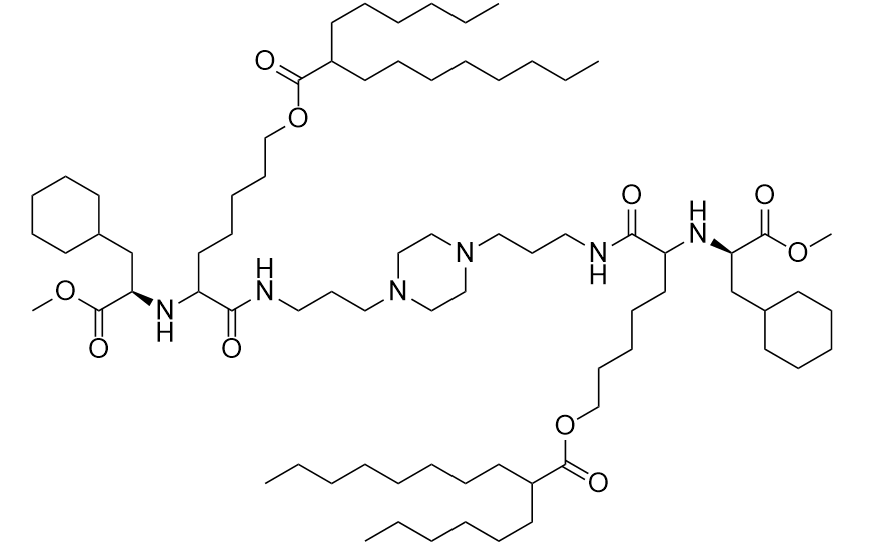
| DC68039 | CHCha-10 Featured |
CHCha-10 is an amino acid-derived ionizable lipid engineered for pulmonary gene therapy. Its optimal surface charge (-0.126 mV) enables efficient mucus penetration, while a pKa of ~7.0 facilitates endosomal escape. Its unique conical structure promotes membrane fusion and mRNA release. In animal models, CHCha-10-based LNPs achieved highly efficient and specific editing of lung epithelial cells, particularly stem-like basal cells (~44%), with effects persisting through tissue renewal. It also demonstrated excellent efficacy and safety in ferrets, a model closely mimicking human lung physiology.
More description
|
|
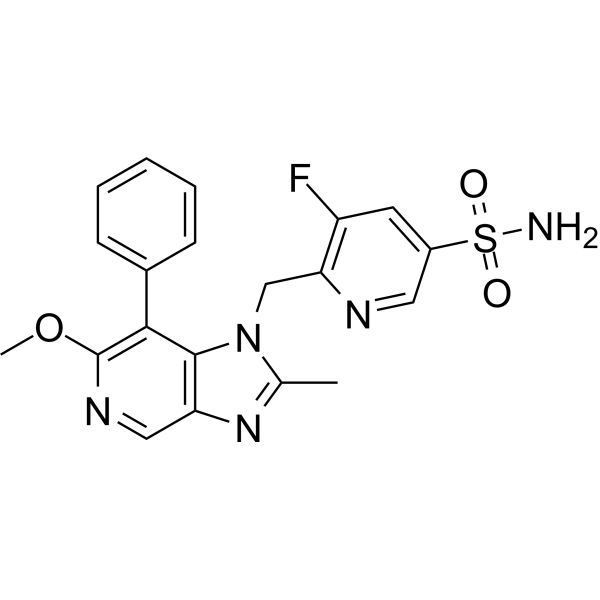
| DC78548 | ISM5939 Featured |
ISM5939 is an orally active and selective ENPP1 inhibitor with an IC50 of 0.63 nM for 2,3-cGAMP degradation and 9.28 nM for ATP hydrolysis. ISM5939 has antitumor activity.
More description
|
|
| DC58001 | BioE-11979(BioE1197) Featured |
BioE-1197 is a novel Pask inhibitor. BioE-1197 is a compound that enhances T cell function. Functionally, treatment with BIOE-1197 significantly boosts the ability of effector T cells (such as CD8+, Th1, and Th2 cells) to produce lineage-specific cytokines upon restimulation. BIOE-1197 is considered a novel agent with potential applications in tumor immunotherapy and enhancing vaccine efficacy.
More description
|

|
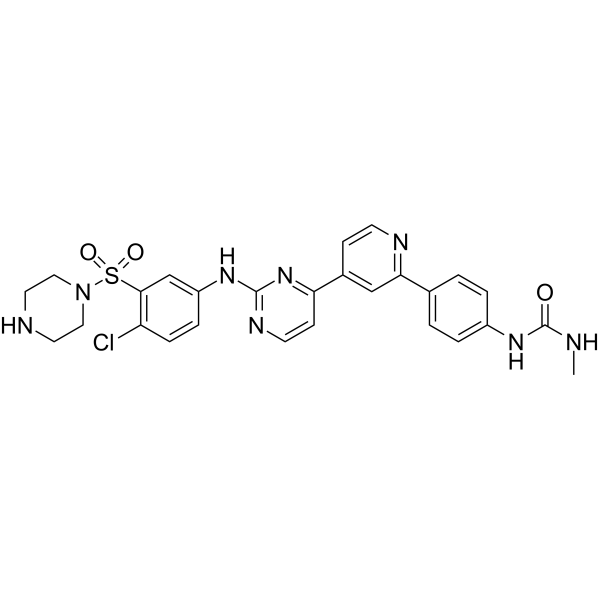
| DC77170 | Emupertinib Featured |
Emupertinib (example 37) is a potent EGFR inhibitor with IC50 values of <0.3 nM, 0.52 nM, 0.5 nM, 0.69 nM and 0.92 nM for EGFR (d746-750/T790M/C779S), EGFR (L858R/T790M/C797S), EGFR (d746-750/C797S), EGFR (L858R/C797S), and EGFR (wild-type), respectively.
More description
|
|
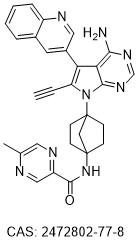
| DC74056 | KVS0001 Featured |
KVS0001 is a specific and bioavailable small molecule inhibitor of SMG1 kinase, disrupts nonsense mediated decay (NMD).
More description
|
|
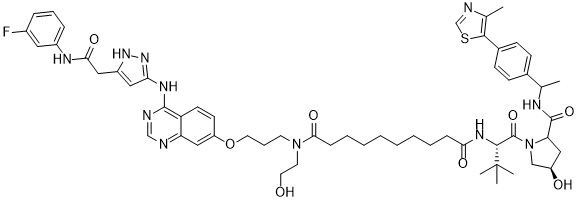
| DC68040 | AURKB PROTAC MS44 Featured |
AURKB PROTAC MS44 is a potent, selective, first-in-class Aurora B kinase (AURKB) PROTAC degrader with DC50 of 103 nM in HPAF-11 cells, Dmax of 89%.
More description
|
|
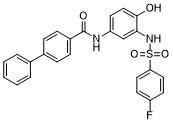
| DC60033 | SN-011 Featured |
STING inhbiitor, which inhibited the activation of the STING signal pathway and to prevent or treat a STING-mediated disease.
More description
|
|
| DC7489 | RO5126766(CH5126766) Featured |
RO5126766(CH5126766) is a Raf/MEK dual kinase inhibitor.
More description
|
|
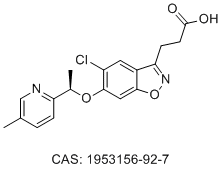
| DC74008 | GSK898 Featured |
GSK898 is a potent, highly selective kynurenine monooxygenase (KMO) inhibitor with pIC50 of 8.8.
More description
|
|
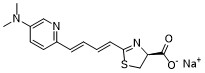
| DC68038 | seMpai sodium Featured |
seMpai is a high-performance near-infrared (NIR) luciferin analogue engineered for enhanced deep-tissue bioluminescence imaging, producing a robust 675 nm emission comparable to top-tier substrates. In vitro, it effectively supports mutant luciferase systems like Akaluc, while in vivo, it enables detection of pulmonary micro-metastases, overcoming traditional D-luciferin limitations. The compound features an optimized, neutral pH formulation that reduces hepatic background, ensuring superior signal-to-noise ratios without significant toxicity, making it ideal for longitudinal studies. For optimal solubility and performance, seMpai is a critical tool for preclinical imaging and drug discovery. Learn more at MedKoo. NOTE. seMpai (Cat#465342) is the free acid form and is less water soluble. seMpai Sodium (CAT#333158) is water soluble.
More description
|
|
| DC68037 | YXN47931 free acid Featured |
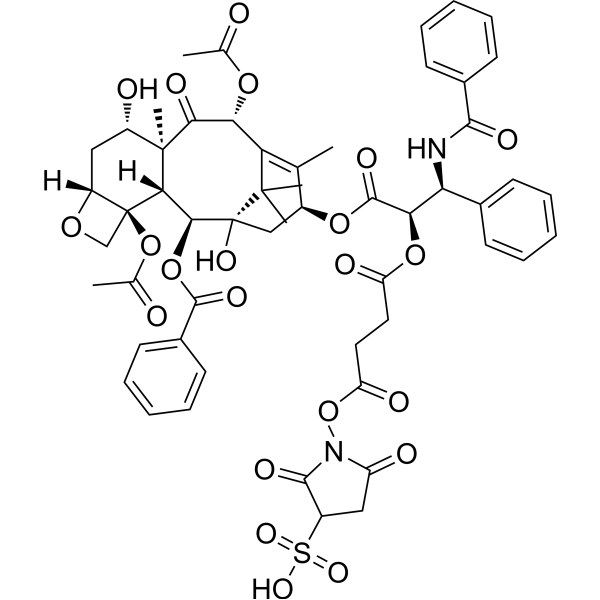
YXN47931, also known as Paclitaxel succinate sulfo-NHS ester, is a paclitaxel derivative with a succinic acid linker, in which the carboxy group is activated with an sulfo-NHS ester. The sulfo-NHS ester group is highly reactive to amino group or hydroxy group, and can be used to conjugate with other molecules such as peptides, proteins, antibodies or enzymes, or polymers. Paclitaxel-Succinic acid is a useful agent to make Paclitaxel-conjugate for drug delivery, nanodrug research. Note: Paclitaxel-Succinic acid (CAT#620101), Paclitaxel-Succinate-NHS (also called DCN10809, CAT#408092) are also in stock. This product has no formal name at the moment. For the convenience of communication, a temporal code name was therefore proposed according to MedKoo Chemical Nomenclature (see web page: https://www.medkoo.com/page/naming). NOTE: YXN47931 sodium (CAT#408203) is water soluble. YXN47931 free acid (CAT#408211) has very low solubility in water.
More description
|
|
| DC68036 | AM-001 Featured |
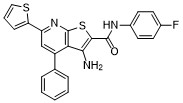
AM-001, a small-molecule EPAC1 (exchange protein directly activated by cAMP) inhibitor, showed potent in vitro antiviral activity against SARS-CoV-2 and influenza A in cultured cells. In Vero E6 cells, AM-001 reduced SARS-CoV-2 viral RNA and infectious titres with IC₅₀ ≈ 355–388 nM and in human lung Calu-3 cells with IC₅₀ ≈ 147–167 nM, achieving ~10⁴-fold suppression at 20 µM without cytotoxicity (CC₅₀ > 40 µM; selectivity index >100). AM-001 also inhibited influenza A replication in Calu-3 cells with IC₅₀ ~1 µM. These effects reflect host-targeted EPAC1 inhibition rather than direct virucidal action. No in vivo animal model data were included in the study’s antiviral evaluation.
More description
|
|
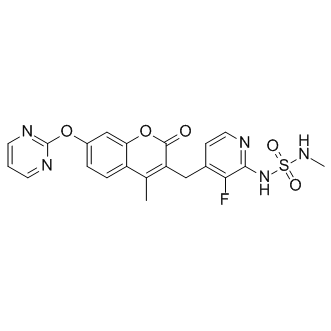
| DC78069 | CT-996 Featured |
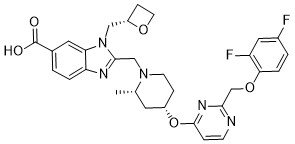
CT-996 is an orally active GLP-1RA agonist, with an EC50 of 0.49 nM. CT-996 reduces the β-arrestin recruitment and GLP-1R internalization. CT-996 suppresses postprandial blood glucose following a mixed meal tolerance test (MMTT) in mice expressing the human GLP-1 receptor and enhances glucose stimulated insulin secretion (GSIS) during an intravenous glucose challenge in obese monkeys. CT-996 can be used for the study of type 2 diabetes (T2D) and obesity.
More description
|
|
| DC29029 | Selumetinib sulfate Featured |
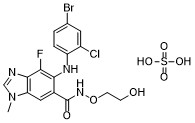
Selumetinib (AZD6244) is selective, non-ATP-competitive oral MEK1/2 inhibitor, with an IC50 of 14 nM for MEK1. Selumetinib (AZD6244) inhibits ERK1/2 phosphorylation.
More description
|
|
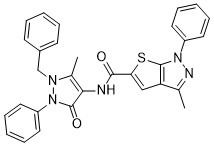
| DC68035 | Opitor-0 Featured |
Opitor-0 is a potent and selective inhibitor of the mitochondrial GTPase Optic atrophy protein 1 (OPA1) with an IC50 of approximately 3 µM. In cellular studies, Opitor-0 disrupts OPA1 oligomer stability, leading to mitochondrial fragmentation and remodeling of mitochondrial cristae. These structural changes facilitate the release of Cytochrome c from mitochondria into the cytosol, triggering apoptotic signaling. The compound exhibits significant pro-apoptotic and antitumor effects in cancer cell models. Importantly, Opitor-0 demonstrates strong synergistic activity with Bcl-2 inhibitors such as ABT-737 and Venetoclax, enhancing tumor cell death. These results suggest that Opitor-0 effectively targets mitochondrial dynamics and apoptosis pathways in cancer cells.
More description
|
|
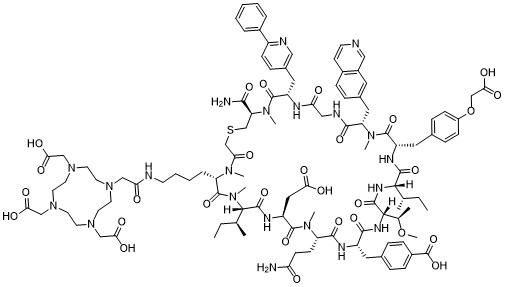
| DC68034 | DOTA-GPC3 Featured |
DOTA-GPC3 is a ligand for radiotracer targeting glypican GPC3 . DOTA-GPC3 molecule is consisted of a chelator DOTA for radioactive metal ions and a GPC targeting peptide for binding glypican GPC3. Glypican-3 (GPC3) is highly expressed in HCC but not in normal liver tissue, making it a promising target for PET-based molecular imaging, which may complement existing approaches for HCC diagnosis.
More description
|
|
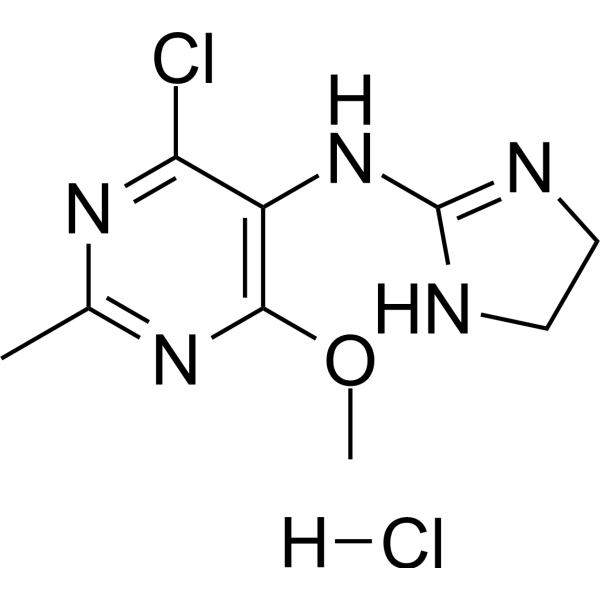
| DCAPI1572 | Moxonidine hydrochloride Featured |
Moxonidine (BDF5895) hydrochloride is an orally active imidazoline type 1 receptor (I1-R) agonist. Moxonidine hydrochloride activates imidazoline I1 receptors and α2 adrenoceptors, affecting oxidized low-density lipoprotein uptake. Moxonidine hydrochloride reduces atherosclerotic lesions and lowers blood pressure. Moxonidine hydrochloride can be used in the study of hypertension, heart failure, and atherosclerosis.
More description
|
|
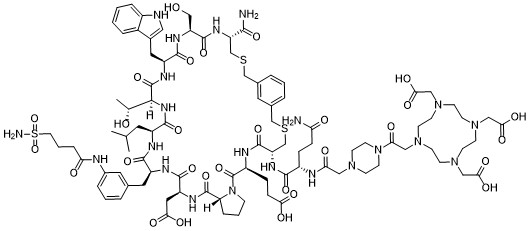
| DC68033 | DPI-4452 Featured |
DPI-4452 is a CAIX-targeting cyclic peptide with a DOTA chelator. DPI-4452 can be chelated with radionuclide for CAIX-expressing tumor PET-CT imaging. DPI-4452 was used to prepare [68Ga]Ga-DPI-4452, which is a first-in-class carbonic anhydrase IX-binding radiolabeled peptide, and is the imaging agent of a theranostic pair with [177Lu]Lu-DPI-4452, developed for selecting and treating patients with carbonic anhydrase IX-expressing tumors. [68Ga]Ga-DPI-4452 showed exceptional tumor uptake in patients with clear cell renal cell carcinoma, with very high tumor-to-background ratios and no significant adverse events, suggesting potential diagnostic and patient selection application.
More description
|
|
| DC73215 | Mortaparib Featured |
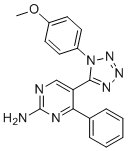
Mortaparib is a dual inhibitor of mortalin-PARP1 interaction, and a p53 activating cytotoxic compound, induces activation of growth arrest and apoptosis signaling in cancer cells in vitro and in vivo.
More description
|
|
| DC78592 | ZINC13000658 Featured |
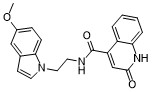
ZINC13000658 is a METTL inhibitor. ZINC13000658 exhibits significant anti proliferative activity in various cells and can induce G1 phase cell cycle arrest and apoptosis such as HepG2 (IC50 = 5.632 µM) and SNU-449 (IC50 = 6.184 µM) cells. ZINC13000658 may be related to the inhibition of the activity of multiple methyltransferases such as METTL1, 3, 6, 16, 18, etc. ZINC13000658 can be used for research on various types of cancer.
More description
|
|
| DC78073 | MKP10241 Featured |
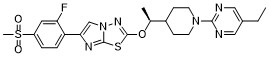
MKP10241 is an orally active GPR119 agonist. MKP10241 elevates cAMP levels in the GPR119 expressing cell line (EC50: 3.7 nM). MKP10241 reduces blood glucose levels and HbA1c in acute models and a chronic diabetic mouse model. MKP10241 also demonstrates excellent preclinical efficacy in acute as well as chronic rodent models of obesity, and MASH.
More description
|
|
| DC68032 | EV206 Featured |
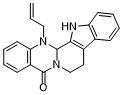
EV206 is a potent N14-allyl–substituted evodiamine derivative identified as a highly active heat shock protein 70 (Hsp70) inhibitor with significant anticancer efficacy in non-small cell lung cancer (NSCLC) models. In vitro, EV206 robustly suppresses proliferation across multiple NSCLC cell lines (H1299, A549, H460, H226B, PC9) with submicromolar IC₅₀ values (~0.20–0.46 µM), demonstrating ~10-fold greater potency than the parent compound evodiamine. It inhibits both anchorage-dependent and -independent colony formation and induces apoptosis via caspase-3 and PARP cleavage, while also reducing cancer stem cell phenotypes, including sphere formation and ALDH activity. Notably, EV206 retains equivalent activity in chemotherapy- and EGFR inhibitor–resistant cell lines. In vivo, intraperitoneal administration (10 mg/kg) significantly suppresses H460 xenograft tumor growth without measurable toxicity or body weight loss. Importantly, EV206 shows minimal cytotoxicity toward normal cells, highlighting a favorable therapeutic window and positioning it as a promising low-toxicity Hsp70-targeting anticancer lead compound.
More description
|
|
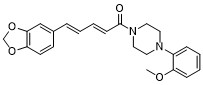
| DC68031 | HJ-4 Featured |
HJ-4 is a novel piperine-derived small molecule that demonstrates potent and selective anti-tumor activity in colorectal cancer models. In vitro, HJ-4 significantly inhibits proliferation of HCT116 cells with an IC₅₀ of 15.82 µM—approximately 2.6-fold more potent than piperine—while maintaining low cytotoxicity toward normal 293T cells, indicating favorable tumor selectivity. At 8–32 µM, HJ-4 markedly suppresses colony formation, DNA synthesis, cell adhesion, migration, and invasion in HCT116 and SW480 cells, with superior efficacy compared to the parent compound. Additionally, it disrupts angiogenic network formation, reducing vascular structures to <50% of control levels at higher concentrations. In vivo, using a chicken embryo chorioallantoic membrane (CAM) model, HJ-4 produces dose-dependent tumor growth inhibition, achieving >70% reduction in tumor weight at 32 µM and significantly decreasing vascular density. These findings demonstrate that HJ-4 exerts robust anti-proliferative, anti-metastatic, and anti-angiogenic effects, supporting its potential as a promising lead compound for colorectal cancer therapy.
More description
|
|
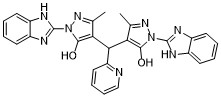
| DC78326 | XL-3156 Featured |
XL-3156 is a potent, selective, and cross-species cGAS inhibitor. XL-3156 can simultaneously occupy both allosteric and orthosteric sites, and inhibit the interaction and phase separation between cGAS and DNA by stabilizing the closed conformation of the activation loop. XL-3156 can be used in the research of autoimmune diseases, inflammatory conditions and other diseases.
More description
|
|
| DC7991 | Clozapine N-oxide Featured |
Clozapine N-oxide is a major metabolite of Clozapine noted to decrease SR-2A (5-HT2 serotonin receptor) density in vitro.
More description
|

|
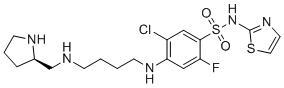
| DC70804 | SSCI-1 Featured |
SSCI-1 is a highly potent, selective NaV1.7 inhibitor with IC50 of 27 and 82 nM on human and rhesus Nav1.7 channels, respectively.SSCI-1 showed robust selectivity over other human and rhesus Nav channel paralogs, with the exception of Nav1.2 channels (IC50 252 nM for hNaV1.2), shows no other channels and receptors in 114 enzymatic, radioligand binding, and cellular assays.SSCI-1 also exhibits high potency in manual patch clamp experiments (IC50=66/295 nM for huma/rhesus Nav1.7 channels).SSCI-1 does not affect myelinated nerve excitability as measured by TT, SSCI-1 inhibits odorant-induced olfaction in the olfactory bulb of rhesus monkeys, measured by fMRI.SSCI-1 inhibits withdrawal responses to noxious heat in rhesus monkeys.
More description
|
|
