 To enhance service speed and avoid tariff delays, we've opened a US warehouse. All US orders ship directly from our US facility.
| Cat. No. | Product Name | Field of Application | Chemical Structure |
|---|---|---|---|
| DC72425 | Glucosylsphingosine |
Glucosylsphingosine (lyso-Gb1) is a deacylated form of glucosylceramide and is also degraded by the glucocerebrosidase. Glucosylsphingosine is a very promising, reliable and specific biomarker for monitoring Gaucher disease.
More description
|

|
| DC72424 | Sulfo-Cy3-Tetrazine |
Sulfo-Cy3-Tetrazine is a click chemistry reagent containing an tetrazine group. Sulfo-Cy3-Tetrazine is water soluble cyanine fluorescence dye, which is an inverse electron demand [4+2] cycloaddition that takes place between tetrazine and trans-cyclooctene or other strained olefin.
More description
|
|
| DC72423 | NA2 Glycan |
NA2 Glycan is NA2 N-linked oligosaccharide. NA2 is the asialo-substructure of A2 glycan. NA2 glycan can be isolated from mammalian serum glycoproteins, such as serum IgG.
More description
|
|
| DC72422 | DB02307 |
DB02307 is a dipeptide that contains a sequence of two alpha-amino acids joined by a peptide bond.
More description
|
|
| DC72421 | S-(p-Nitrobenzyl)glutathione |
S-(p-Nitrobenzyl)glutathione is a competitive glutathionase inhibitor. S-(p-Nitrobenzyl)glutathione is converted to the corresponding cysteine derivatives by rat kidney microsomes. S-(p-Nitrobenzyl)glutathione can be used for the research of metabolic breakdown of glutathione by the glutathionase system.
More description
|
|
| DC72420 | S-Benzylglutathione |
S-Benzylglutathione is a competitive glutathionase inhibitor. S-Benzylglutathione is converted to the corresponding cysteine derivatives by rat kidney microsomes. S-Benzylglutathione can be used for the research of metabolic breakdown of glutathione by the glutathionase system.
More description
|
|
| DC72419 | Trypanothione |
Trypanothione is a bis-glutathionyl derivative, found in trypanosomatids. Trypanothione shows the protection against oxidative stress.
More description
|
|
| DC72418 | 8-Hydroxyadenosine |
8-Hydroxyadenosine is a purine nucleoside.
More description
|
|
| DC72417 | 3-Methoxyphenylethylamine |
3-Methoxyphenylethylamine is an organic compound that is used as an intermediate for pharmaceuticals, dyestuffs, and liquid crystal materials.
More description
|
|
| DC72416 | Alkyne-SNAP |
Alkyne-SNAP (compound 3) is an Alkyne-conjugated benzylguanine. The benzylguanine moiety reacts with the SNAP-tag, allowing irreversible and covalent labeling of SNAP fusion proteins with an additional alkyne functionality for further click chemistry conjugation.
More description
|
|
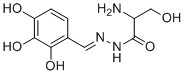
| DC12576 | CSRM617 Featured |
CSRM617 (CSRM-617) is a small-molecule inhibitor of the transcription factor ONECUT2 (OC2) with Kd of 7.43 uM in SPR assays, binds to OC2-HOX domain directly.
More description
|
|
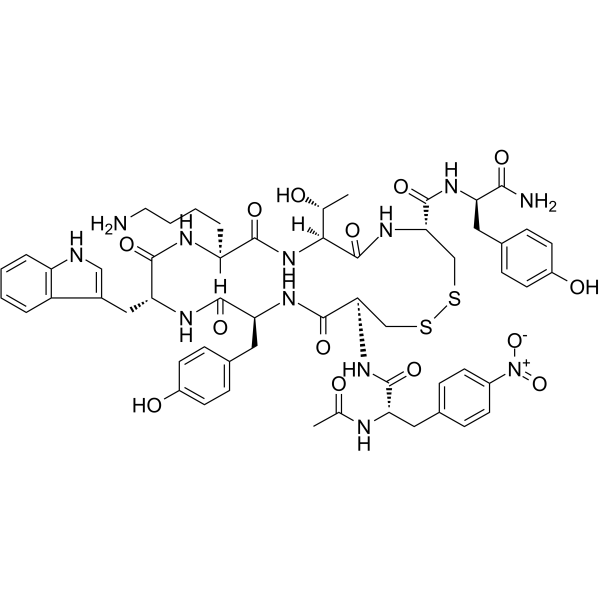
| DC26227 | CYN 154806 Featured |
CYN 154806 is a potent and selective somatostatin sst2 receptor antagonist. pIC50 values are 8.58, 5.41, 6.07, 5.76 and 6.48 for human recombinant sst2, sst1, sst3, sst4 and sst5 receptors respectively.
More description
|
|
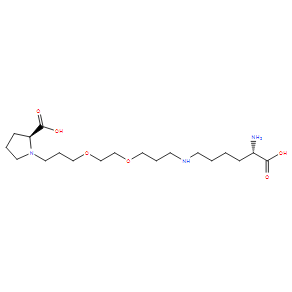
| DC11379 | Efpeglenatide |
Efpeglenatide is a new once-2eekly GLP-1 Injection for Type 2 Diabetes
More description
|
|
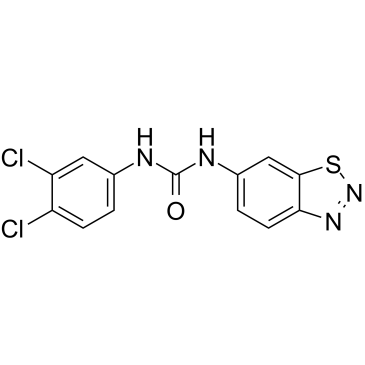
| DC32550 | BTdCPU Featured |
BTdCPU is an activator of HRI. The eIF2-alpha kinase HRI is a novel therapeutic target in multiple myeloma. Combination therapy with rapamycin, an mTOR inhibitor, and BTdCPU, an activator of HRI, demonstrated additive effects on apoptosis in dex-resistant cells. Thus, specific activation of the eIF2α kinase HRI is a novel therapeutic target in MM that can augment current treatment strategies.
More description
|
|
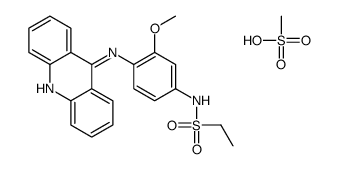
| DC21418 | NSC 243928 Featured |
NSC243928(NSC-243928 ) is a small molecule that potently inhibit ovarian cancer stem-like cells (CSC) growth with GI50 of 0.83 uM, which os consistent with cell death/apoptosis..
More description
|
|
| DC12176 | NFAT Transcription Factor Regulator Featured |
NFAT Transcription Factor Regulator is an IL-2 synthesis inhibitor with an IC50 of 182 nM.
More description
|

|
| DC23494 | GRI 977143 Featured |
A potent, specific and nonlipid agonist of LPA2 receptor with EC50 of 3.3 uM, does not activate any of the other LPA GPCRs (>10 uM).
More description
|

|
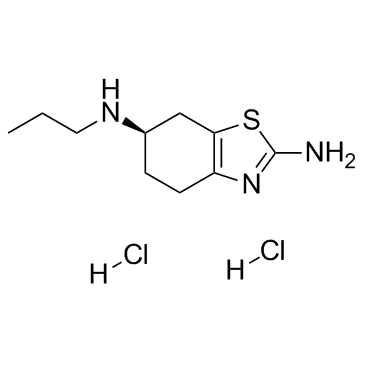
| DC22373 | Dexpramipexole dihydrochloride Featured |
Dexpramipexole 2Hcl(KNS-760704), also known as R-(+)-Pramipexole, is a neuroprotective agent and weak non-ergoline dopamine agonist. IC50 Value:Target: Dopamine ReceptorDexpramipexole has been found to have neuroprotective effects and is being investigated for treatment of amyotrophic lateral sclerosis (ALS). Dexpramipexole reduces mitochondrial reactive oxygen species (ROS) production, inhibits the activation of apoptotic pathways, and increase cell survival in response to a variety of neurotoxins and β-amyloid neurotoxicity. Compared to the S-(-) isomer, Dexpramipexole has much lower dopamine agonist activity.
More description
|
|
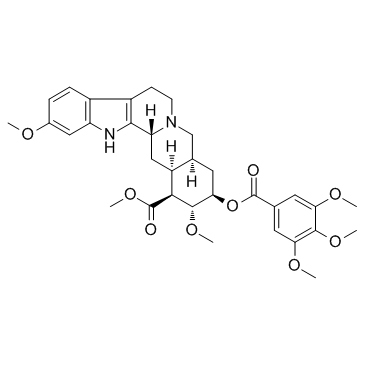
| DC82022 | Reserpine Featured |
Reserpine is an inhibitor of the vesicular monoamine transporter 2 (VMAT2).
More description
|
|
| DC47823 | Lepidiline A Featured |
Lepidiline A shows cytotoxic activity against HL-60 cells with an IC50 of 32.3 μM.
More description
|

|
| DC71242 | KCC009 Featured |
KCC009, a transglutaminase 2 (TG2) inhibitor, induces p53-independent radiosensitization.
More description
|

|
| DCAPI1097 | Allopurinol Sodium (Aloprim) Featured |
Allopurinol sodium is a potent xanthine oxidase inhibitor (IC50 values of 0.2 to 50 μM). Allopurinol sodium can be used for the research of hyperuricemia and gout. Antileishmanial effect[1][2].
More description
|

|
| DC72277 | Elvucitabine |
Elvucitabine is an L-nucleoside analogue. Elvucitabine is a potent nucleoside reverse transcriptase (RT) inhibitor. Elvucitabine can be used in research of viral infection.
More description
|
|
| DC72261 | A-446 |
A-446 is a potent glutaminase (GLS) inhibitor with an IC50 value of 31 nM.
More description
|
|
| DC72254 | BMT-090605 hydrochloride |
BMT-090605 hydrochloride is a potent, selective the adapter protein-2 associated kinase 1 (AAK1) inhibitor with an IC50 value of 0.6 nM. BMT-090605 hydrochloride shows antinociceptive activity. BMT-090605 hydrochloride inhibits BMP-2-inducible protein kinase (BIKE) and Cyclin G-associated kinase (GAK) with IC50 values of 45 nM and 60 nM, respectively. BMT-090605 hydrochloride can be used for the research of neuropathic pain.
More description
|
|
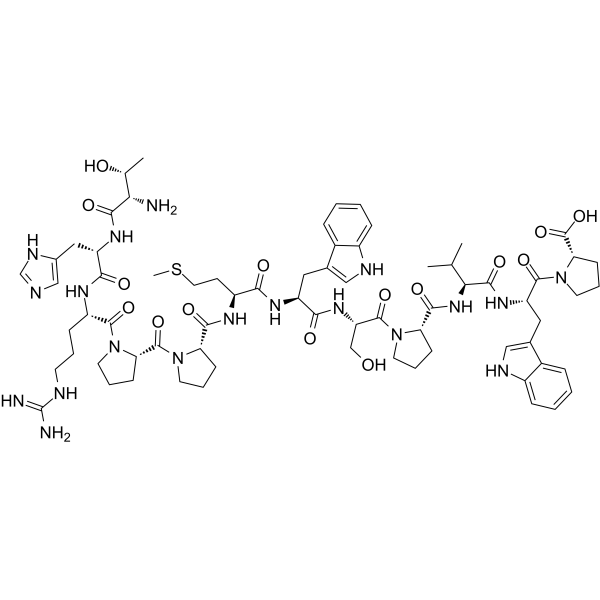
| DC41895 | TfR-T12 Featured |
TfR-T12 is a BBB-penetrated transferrin receptor (TfR) binding peptide, displaying a binding affinity in the nM range[1][2].
More description
|
|
| DC20386 | Pioglitazone Featured |
Pioglitazone is a potent and selective PPARγ agonist with high affinity binding to the PPARγ ligand-binding domain with EC50 of 0.93 and 0.99 μM for human and mouse PPARγ, respectively.
More description
|

|
| DC49139 | OAB-14 |
OAB-14, is a Bexarotene derivative, improves Alzheimer's disease-related pathologies and cognitive impairments by increasing β-amyloid clearance in APP/PS1 mice. OAB-14 effectively ameliorates the dysfunction of the endosomal-autophagic-lysosomal pathway in APP/PS1 transgenic mice.
More description
|
|
| DC40673 | 1,1,3-Tribromoacetone |
1,1,3-Tribromoacetone is an impurity of Methotrexate. Methotrexate, an antimetabolite and antifolate agent, inhibits the enzyme dihydrofolate reductase, thereby preventing the conversion of folic acid into tetrahydrofolate, and inhibiting DNA synthesis.
More description
|

|
| DC41438 | Ursonic acid methyl ester |
Ursonic acid methyl ester is an esterified derivative of Ursolic acid. Ursonic acid methyl ester shows growth inhibitory activity against four tumor cell lines, HL-60, BGC, Bel-7402 and Hela with ED50 values of >100 μg/ml.
More description
|

|
