 To enhance service speed and avoid tariff delays, we've opened a US warehouse. All US orders ship directly from our US facility.
| Cat. No. | Product Name | Field of Application | Chemical Structure |
|---|---|---|---|
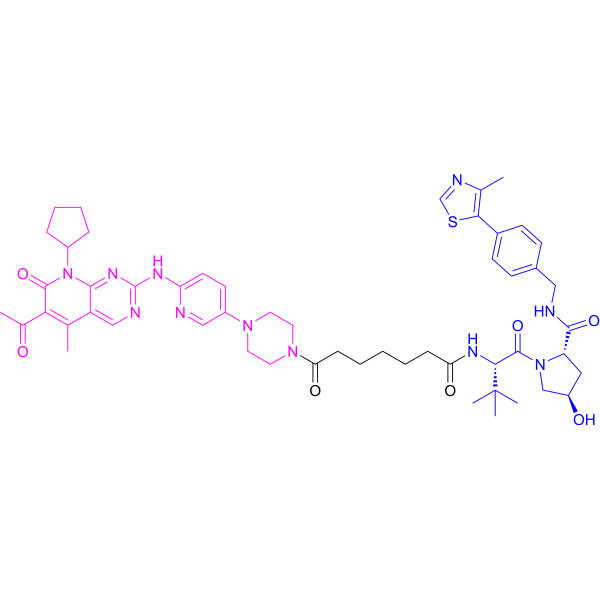
| DC28556 | XY028-133 Featured |
XY028-133 (example 14) is a PROTAC-based CDK4/6 degrader with anti-tumor activity, extracted from patent WO2018106870A1.
More description
|
|
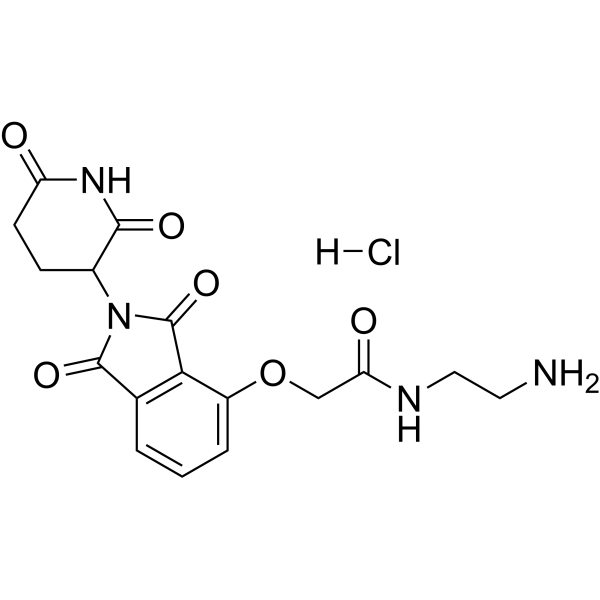
| DC67680 | Thalidomide-linker 10 Featured |
Thalidomide 4'-oxyacetamide-alkyl-C2-amine hydrochloride incorporates a cereblon (CRBN) ligand for the E3 ubiquitin ligase, and a linker. Thalidomide 4'-oxyacetamide-alkyl-C2-amine hydrochloride can be used to design the PROTACs.
More description
|
|
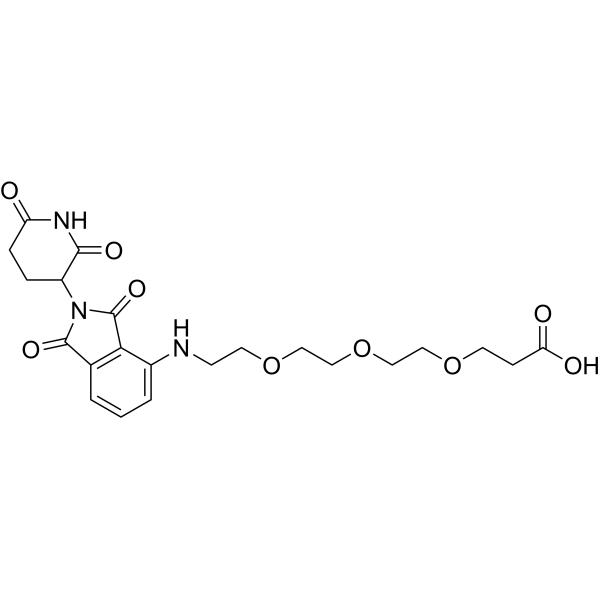
| DC67684 | Thalidomide-NH-PEG3-propionic acid Featured |
Thalidomide-NH-PEG3-propionic acid is a synthesized E3 ligase ligand-linker conjugate that incorporates the Thalidomide based cereblon ligand and 3-unit PEG linker used in PROTAC technology.
More description
|
|
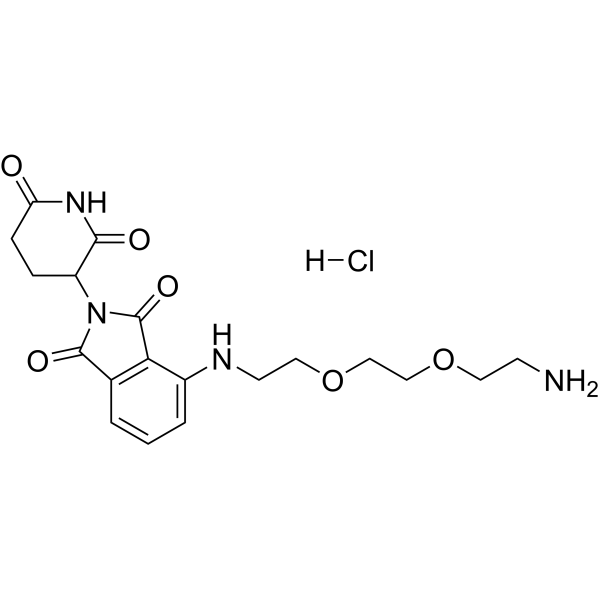
| DC67686 | Thalidomide-PEG2-C2-NH2 hydrochloride Featured |
Thalidomide-PEG2-C2-NH2 hydrochloride is a synthesized E3 ligase ligand-linker conjugate that incorporates the Thalidomide based cereblon ligand and 2-unit PEG linker used in PROTAC technology.
More description
|
|
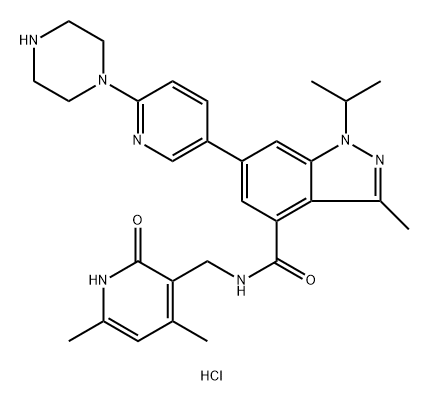
| DC67685 | 1H-Indazole-4-carboxamide, N-[(1,2-dihydro-4,6-dimethyl-2-oxo-3-pyridinyl)methyl]-3-methyl-1-(1-methylethyl)-6-[6-(1-piperazinyl)-3-pyridinyl]-, hydrochloride (1:1) Featured |
|
|
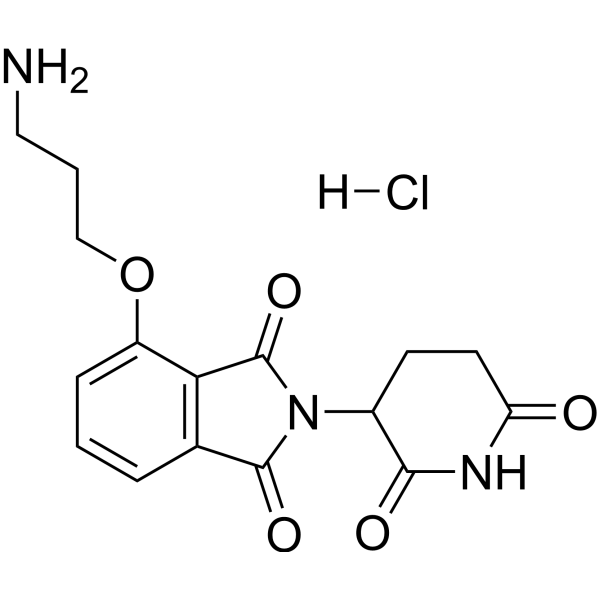
| DC67692 | Thalidomide-4-O-C3-NH2 hydrochloride Featured |
Thalidomide-4-O-C3-NH2 hydrochloride is a synthesized E3 ligase ligand-linker conjugate that incorporates the Thalidomide based cereblon ligand and a linker used in PROTAC technology.
More description
|
|
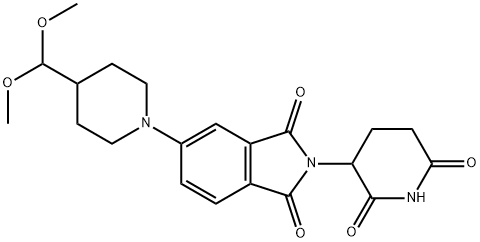
| DC67690 | 5-(4-(Dimethoxymethyl)piperidin-1-yl)-2-(2,6-dioxopiperidin-3-yl)isoindoline-1,3-dione Featured |
|
|
| DC21895 | DOTA-ADIBO Featured |
DOTA-ADIBO is a Click Chemistry intermidate used for antibody-drug conjugates..
More description
|

|
| DC67696 | 3-Bromo-N-(2-(2,6-dioxopiperidin-3-yl)-1,3-dioxoisoindolin-4-yl)propanamide Featured |
-1,3-dioxoisoindolin-4-yl)propanamide.GIF)
|
|
| DC67693 | (S,R,S)-AHPC-C8-NH2 dihydrochloride Featured |
(S,R,S)-AHPC-C8-NH2 dihydrochloride (VH032-C8-NH2 dihydrochloride) is a synthesized E3 ligase ligand-linker conjugate that incorporates the VH032 based VHL ligand and a linker used for AKT PROTAC degrader. (S,R,S)-AHPC-C8-NH2 is XF038-164A, example 8, extracted from patent WO2019173516A1.
More description
|
-AHPC-C8-NH2 dihydrochloride.gif)
|
| DC67697 | 3-(4-Amino-3-methyl-2-oxo-2,3-dihydro-1H-benzo[d]imidazol-1-yl)piperidine-2,6-dione Featured |

|
|
| DC67698 | VH032-OH Featured |
VH032-OH is the VH032-based VHL ligand. VH032-OH can be connected to the ligand for protein by a linker to form PROTACs.
More description
|

|
| DC67701 | 3-(1-oxo-5-(prop-2-yn-1-yloxy)isoindolin-2-yl)piperidine-2,6-dione Featured |
isoindolin-2-yl)piperidine-2,6-dione.GIF)
|
|
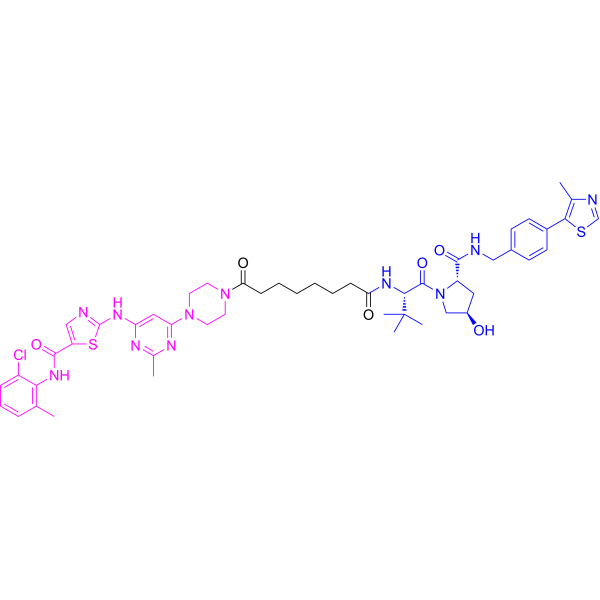
| DC28539 | SIAIS178 Featured |
SIAIS178 is a potent and selective BCR-ABL degrader based on PROTAC technology with an IC50 of 24 nM. SIAIS178 causes effective degradation of BCR-ABL protein by recruiting Von Hippel-Lindau (VHL) E3 ubiquitin ligase. SIAIS178 has anticancer activity.
More description
|
|
| DC67702 | 2-(2,6-Dioxo-3-piperidyl)-1-oxoisoindoline-5-carboxylic Acid Featured |
-1-oxoisoindoline-5-carboxylic Acid.GIF)
|
|
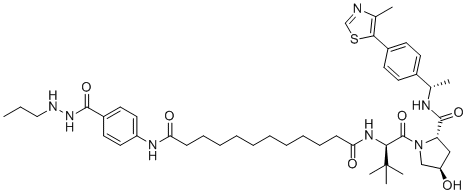
| DC74495 | HDAC3 PROTAC P7 Featured |
HDAC3 PROTAC P7 is a potent and selective HDAC3-directed PROTAC with IC50 of 40 nM (HDAC3 deacetylase activity), effectively induces HDAC3 degradation with DC50 of 0.6 nM in THP-1 cells (Emax=90%).
More description
|
|
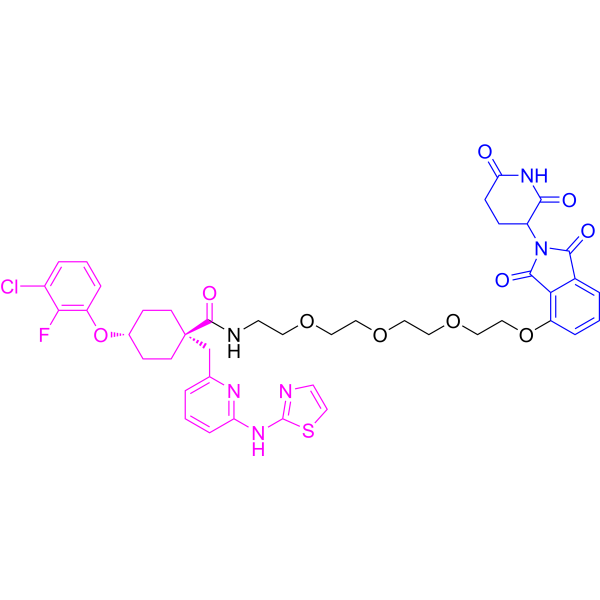
| DC79845 | SK2188 Featured |
SK2188 is a highly efficient and selective PROTAC degrader targeting AURKA (DC50 = 3.9 nM). SK2188 induces DNA damage and cell apoptosis. SK2188 indirectly degrades MYCN, inhibits tumor cell proliferation, and provides insights into the study of MYCN-amplified neuroblastoma.
More description
|
|
| DC67279 | Rhobo6 Featured |
Rhobo6 is a cell-impermeable small-molecule fluorophore designed for labeling the extracellular matrix (ECM) in live tissues. It contains a phenylboronic acid group that binds to diols commonly found in ECM glycans, resulting in a significant increase in fluorescence and a red shift in emission spectra. This property allows Rhobo6 to effectively visualize ECM architecture without perturbing native structures, making it suitable for long-term imaging studies. Additionally, Rhobo6's low affinity for monosaccharides enables reversible binding, which prevents photobleaching and allows for dynamic imaging of ECM components. While Rhobo6 does not specifically target individual ECM components, it provides a holistic view of ECM distribution and is particularly useful for studying ECM-related biological phenomena in samples that are not amenable to genetic manipulation or ex vivo culture.Rhobo6 is available under license from the Howard Hughes Medical Institute.
More description
|

|
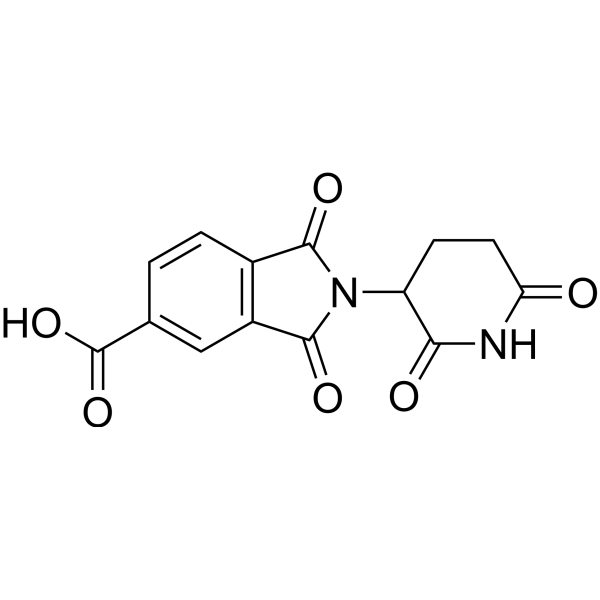
| DC46956 | Thalidomide-5-COOH Featured |
Thalidomide-5-COOH is the Thalidomide-based cereblon ligand used in the recruitment of CRBN protein. Thalidomide-5-COOH can be connected to the ligand for protein by a linker to form PROTACs.
More description
|
|
| DC67705 | (±)-JQ1 Featured |
(±)-JQ1 is the racemate of (+)-JQ-1 (HY-13030).
More description
|
-JQ1.gif)
|
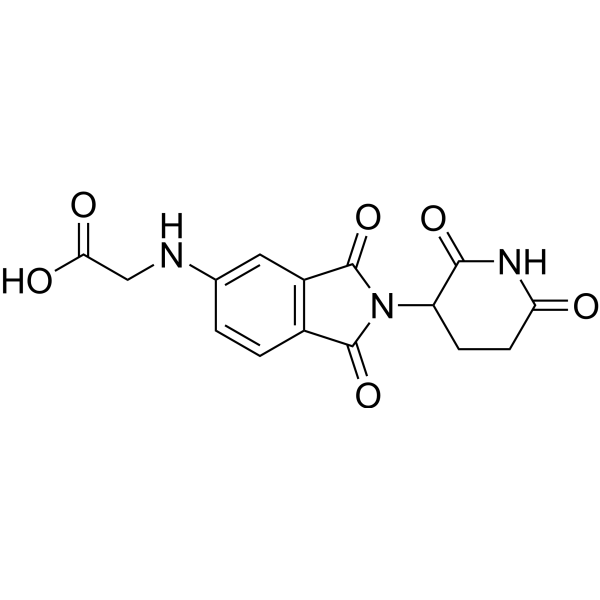
| DC47889 | Thalidomide-5-NH2-CH2-COOH Featured |
Thalidomide-5-NH2-CH2-COOH (compound 114) is a potent and selective inhibitor of tropomyosin receptor kinase (trk). Thalidomide-5-NH2-CH2-COOH is a ligand of E3 ligase. Thalidomide-5-NH2-CH2-COOH has the potential for the treatment of one or more diseases (extracted from patent WO2021170109A1) .
More description
|
|
| DC67706 | (R,S,S)-AHPC hydrochloride Featured |
-AHPC hydrochloride.gif)
|
|
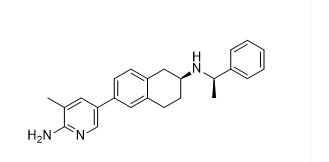
| DC67709 | UNC10225387B Featured |
UNC10225387B is a multi-kinase inhibitor, cocktail of UNC10225387B, UNC10225263A and UNC10225761A, promotes stem-cell-like chimeric antigen receptor T cells (CAR T cells).
More description
|
|
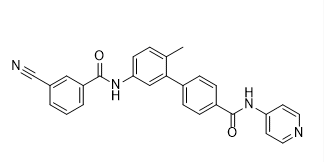
| DC67710 | UNC10225263A Featured |
UNC10225263A is a multi-kinase inhibitor, cocktail of UNC10225387B, UNC10225263A and UNC10225761A, promotes stem-cell-like chimeric antigen receptor T cells (CAR T cells).
More description
|
|
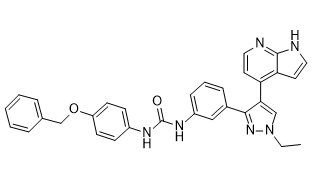
| DC67711 | UNC10225761A Featured |
UNC10225761A is a multi-kinase inhibitor, cocktail of UNC10225387B, UNC10225263A and UNC10225761A, promotes stem-cell-like chimeric antigen receptor T cells (CAR T cells).
More description
|
|
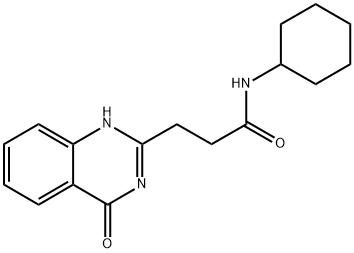
| DC67714 | WAY-620124 Featured |
|
|
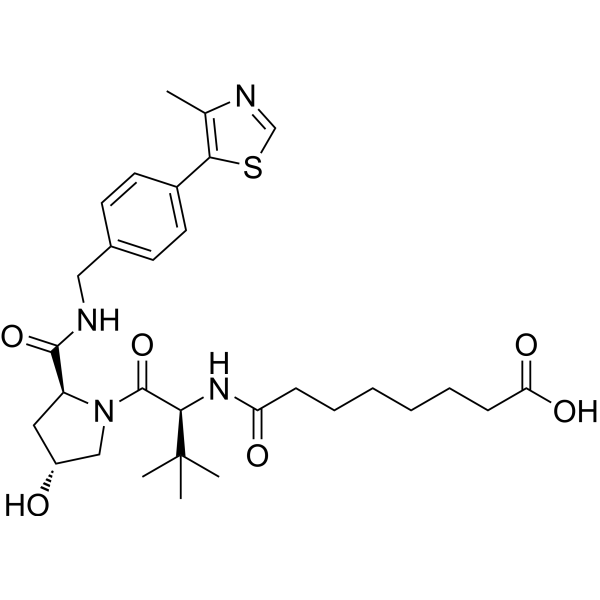
| DC67713 | VH 032 amide-alkylC6-acid Featured |
VH 032 amide-alkylC6-acid ((S,R,S)-AHPC-CO-C6-COOH) is a VH032 analog that acts as a ligand for VHL, recruiting von Hippel-Lindau (VHL) protein. VH 032 amide-alkylC6-acid can be used in the synthesis of PROTACs.
More description
|
|
| DC67716 | (S,R,S)-AHPC-PEG2-C4-Cl Featured |
(S,R,S)-AHPC-PEG2-C4-Cl (VH032-PEG2-C4-Cl) is a conjugate of ligands for E3 and 13-atom-length linker. The connector of linker is Halogen group. (S,R,S)-AHPC-PEG2-C4-Cl incorporates the (S,R,S)-AHPC based VHL ligand and an alkyl/ether-based linker. (S,R,S)-AHPC-PEG2-C4-Cl is capable of inducing the degradation of GFP-HaloTag7 in cell-based assays.
More description
|
-AHPC-PEG2-C4-Cl.gif)
|
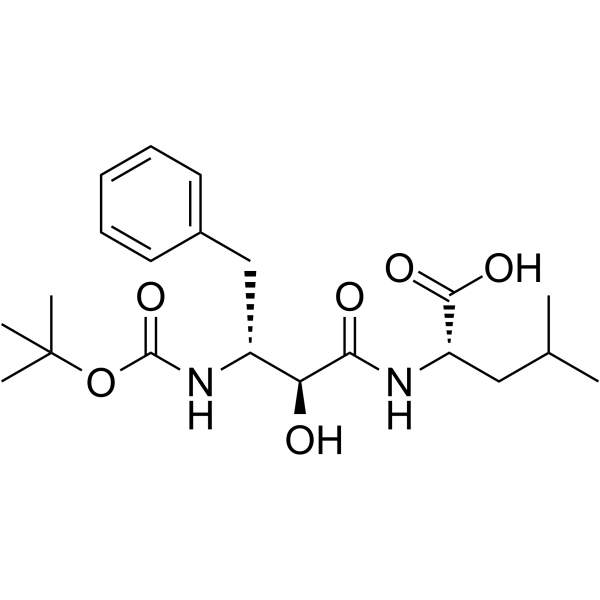
| DC67715 | E3 ligase Ligand 9 Featured |
E3 ligase Ligand 9 is a ligand for E3 ubiquitin ligase. E3 ligase Ligand 9 can be connected to the ligand for protein by a linker to form PROTACs or SNIPERs. PROTACs are inducers of ubiquitination-mediated degradation of cancer-promoting proteins.
More description
|
|
| DC67717 | 1H-Indazole-4-carboxamide, 6-bromo-N-[(1,2-dihydro-4,6-dimethyl-2-oxo-3-pyridinyl)methyl]-1-(1-methylethyl)- Featured |
methyl]-1-(1-methylethyl)-.gif)
|
