 To enhance service speed and avoid tariff delays, we've opened a US warehouse. All US orders ship directly from our US facility.
| Cat. No. | Product Name | Field of Application | Chemical Structure |
|---|---|---|---|
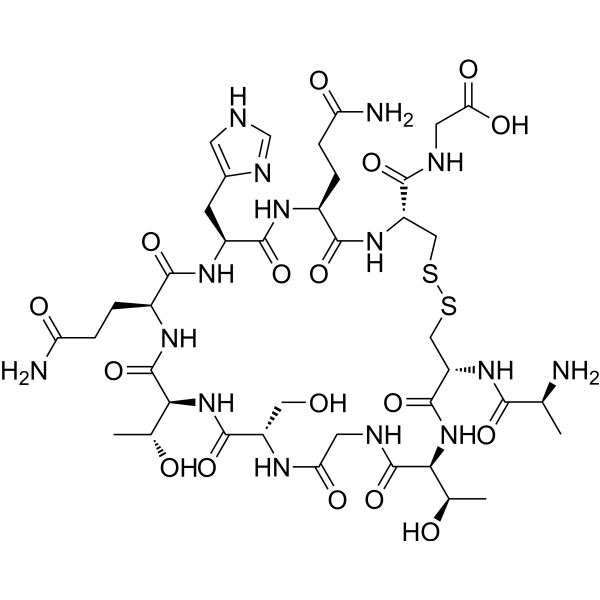
| DC10405 | SPACE peptide |
SPACE peptide is a skin penetrating peptide which facilitates the delivery of molecules through the skin.
More description
|
|
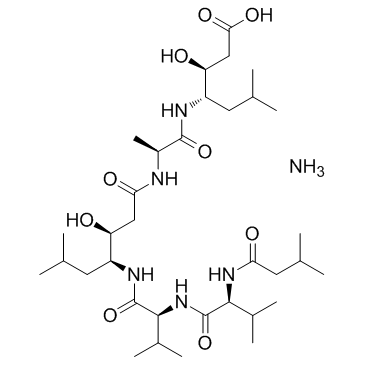
| DC12301 | Pepstatin Ammonium (Pepstatin A Ammonium) |
Pepstatin Ammonium is a specific aspartic protease inhibitor produced by actinomycetes, with IC50s of 4.5 nM, 6.2 nM, 150 nM, 290 nM, 520 nM and 260 nM for hemoglobin-pepsin, hemoglobin-proctase, casein-pepsin, casein-proctase, casein-acid protease and he
More description
|
|
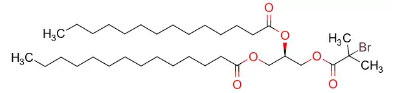
| DC65795 | 2-Bromoisobutyric acid((s)-1,2-dimyristoyl-SN-giycerol)ester Featured |
|
|
| DC60379 | HisChol Featured |

|
|
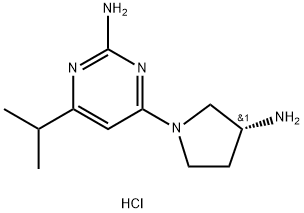
| DC67094 | JNJ-39758979 2HCl Featured |
JNJ-39758979 2HCl is an antagonist of histamine receptor H4.
More description
|
|
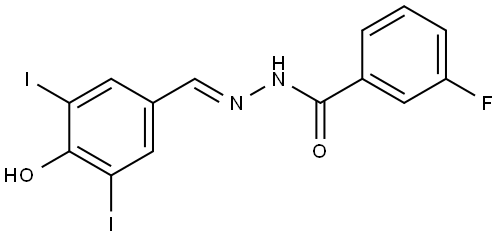
| DC67093 | Benzoic acid, 3-fluoro-, (2E)-2-[(4-hydroxy-3,5-diiodophenyl)methylene]hydrazide Featured |
|
|
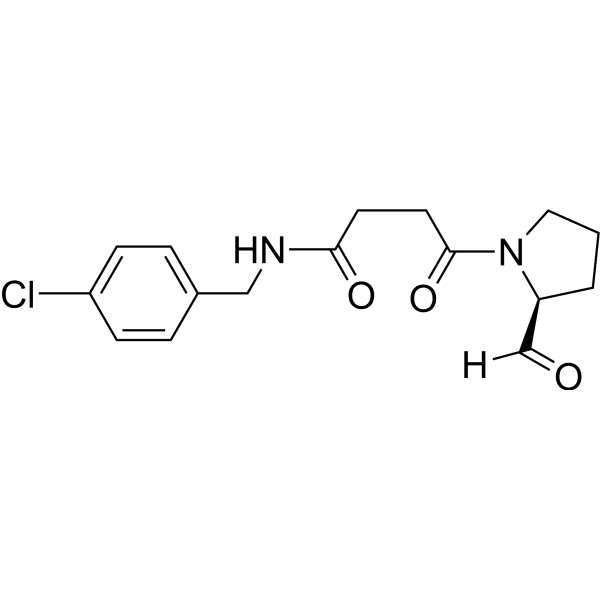
| DC68218 | ONO 1603 Featured |
ONO 1603, a novel prolyl endopeptidase inhibitor investigated as a potential antidementia drug, demonstrated neuroprotective and neurotrophic effects in cerebellar granule cells similar to tetrahydroaminoacridine (THA). At a concentration of 0.03 microM, ONO 1603 promoted neuronal survival, enhanced neurite outgrowth, increased m3-muscarinic acetylcholine receptor (mAChR) mRNA levels, and stimulated mAChR-mediated signaling pathways. These findings suggest that ONO 1603 shares pharmacological similarities with THA, indicating its potential as a therapeutic agent for Alzheimer's disease by enhancing cholinergic neurotransmission and neuronal function.
More description
|
|
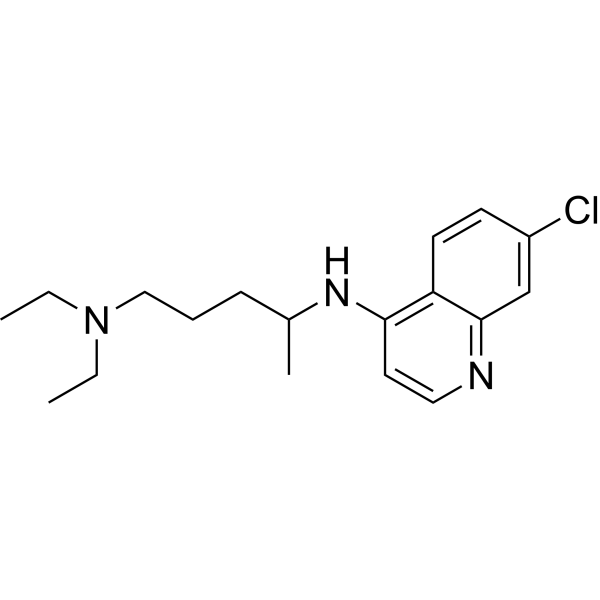
| DC37947 | Chloroquine Featured |
Chloroquine is a medication used to prevent and to treat malaria in areas where malaria is known to be sensitive to its effects. Certain types of malaria, resistant strains, and complicated cases typically require different or additional medication. It is also occasionally used for amebiasis that is occurring outside the intestines, rheumatoid arthritis, and lupus erythematosus. Chloroquine enters the red blood cell, inhibiting the parasite cell and digestive vacuole by simple diffusion. Chloroquine then becomes protonated (to CQ2+), as the digestive vacuole is known to be acidic (pH 4.7); chloroquine then cannot leave by diffusion. Chloroquine caps hemozoin molecules to prevent further biocrystallization of heme, thus leading to heme buildup.
More description
|
|
| DC70934 | ZH97 Featured |
ZH97 is a selective and covalent small-molecule inhibitor of BFL-1 protein with binding Ki of 0.41 uM, >200-fold selectivity over MCL-1.ZH97 does not bind to BCL-xL, BCL-2, TEAD2, TEAD4, MDM2, MDMX, BRD2 BD1, BRD2 BD2, BRD3 BD1, BRD3 BD2, BCL9, PD1/PD-L1 (Ki>400 uM).ZH97 modifies BFL-1 at the C55 residue, blocks BFL-1/BID interaction in vitro.ZH97 dose-dependently increased cytoplasmic cytochrome c level in U937 cells, has cell growth inhibition with IC50 of 2.8 uM, 5.5 uM, 7.7 uM, 6.8 uM, and 3.9 uM in U937, Kasumi-1, K562, MM.1S, and MV4-11 cell lines, respectively.ZH97 inhibits BFL-1/PUMA interaction in cell lysate and is effective in cancer cells that harboring highexpression level of BFL-1.
More description
|

|
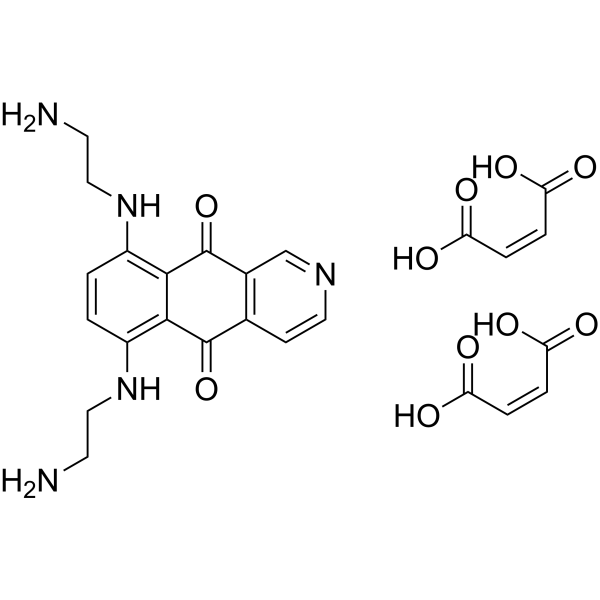
| DC31273 | Pixantrone Maleate Featured |
Pixantrone is a synthetic, noncardiotoxic aza-anthracenedione analogue with potential antineoplastic activity. Pixantrone intercalates into DNA and induces topoisomerase II-mediated DNA strand crosslinks, resulting in inhibition of DNA replication and tumor cell cytotoxicity. Pixantrone is a potentially more effective, less cardiotoxic alternative to doxorubicin for patients with aggressive non-Hodgkin lymphoma (aNHL).
More description
|
|
| DC73744 | ADAM9i Featured |
ADAM9i is a specific small molecule inhibitor of ADAM9 protein with binding KD of 5.9 uM and enzyme IC50 of 5.2 uM, promotes the selective degradation of KRAS and sensitizes pancreatic cancers to chemotherapy.
More description
|

|
| DC74360 | BC-DXI-32982 Featured |
BC-DXI-32982 is a potent inhibitor of the interaction between DX2 and KRAS4B with a half-maximal inhibitory concentration (IC50) of 0.18 μM, showing little effect on the PRKACA-PRKAR2A interaction.
More description
|

|
| DC70327 | CTIBD Featured |
CTIBD is a novel potent activator of the BKCa channel with EC50 of 3.9 uM.CTIBD showed significantly higher potency compared with three other known BKCa activators: NS 1619, NS 11021, and rottlerin.CTIBD induced a reversible potentiation of macroscopic outward currents of the BKCa channel, CTIBD activates both rSlo/rβ1 and rSlo/rβ4 coexpressed channels mainly by decreasing the closing rate of the channel.CTIBD concentration-dependently reduced ACh-induced contractions in isolated rat urinary bladder strips. CTIBD effectively restored frequent voiding contraction and lowered voiding volume without affecting other bladder function parameters in acetic acid-induced overactive bladder (OAB) model (i.p. 20 mg/kg).
More description
|

|
| DC67170 | 1-Hydroxy-3,6-bis[2-hydroxy-3-[methyl(phenylmethyl)amino]propoxy]-7-methoxy-2,8-bis(3-methyl-2-buten-1-yl)-9H-xanthen-9-one Featured |
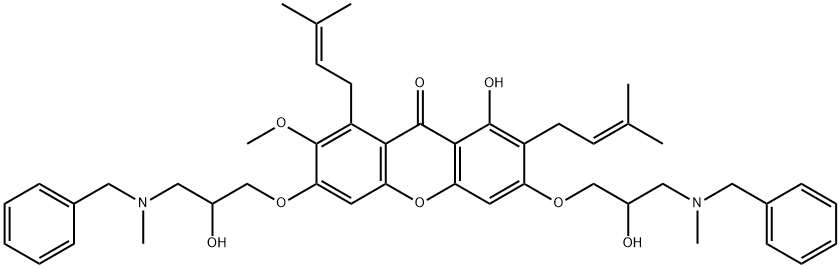
|
|
| DC67193 | N-(3S)-3-Piperidinyl-2-thiophenesulfonamide Featured |
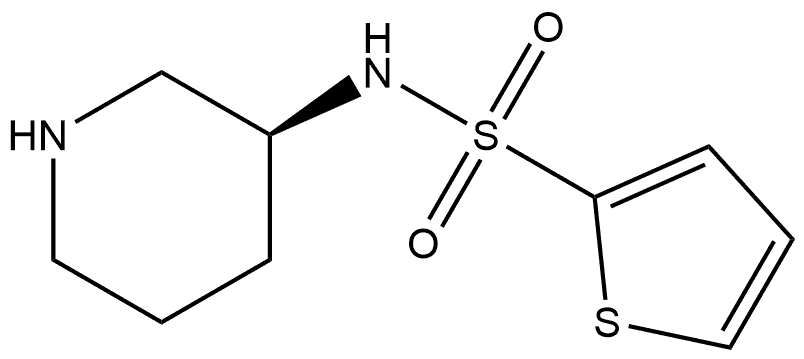
|
|
| DC67185 | EF24 HCl Featured |
EF24 HCl is a curcumin analogue with greater anti-tumor efficacy and oral bioavailability via deactivation of the MAPK/ERK signaling pathway in oral squamous cell carcinoma (OSCC). EF24 treatment increases the levels of activated caspase 3 and 9, and decreases the phosphorylated forms of MEK1 and ERK.
More description
|
|
| DC67194 | (5-pyrrolidin-1-ylsulfonyl-2-furyl)methanamine Featured |
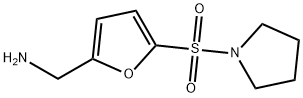
|
|
| DC28177 | Dazoxiben hydrochloride Featured |
Dazoxiben hydrochloride is a potent and orally active thromboxane (TX) synthase inhibitor.
More description
|

|
| DC60710 | Cysteine-vc-mmae Featured Featured |
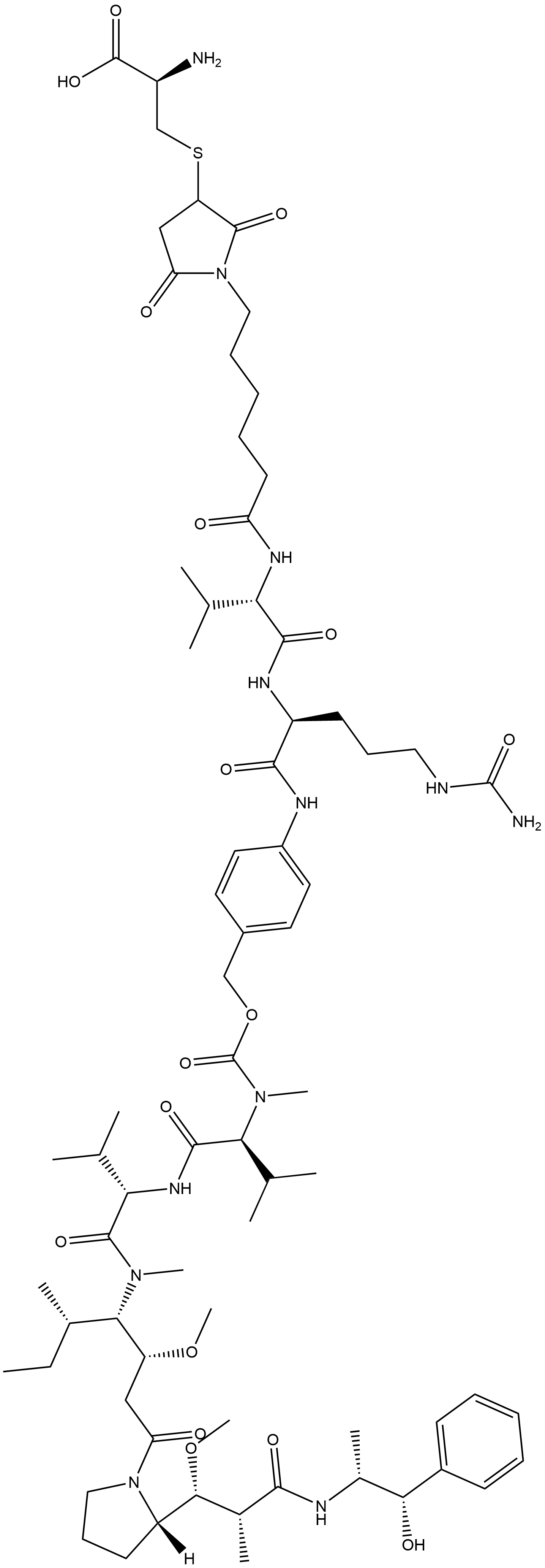
|
|
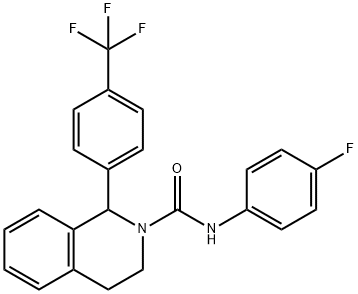
| DCC5057 | Tc-i 2000 Featured |
Novel TRPM8 channel blocker
More description
|
|
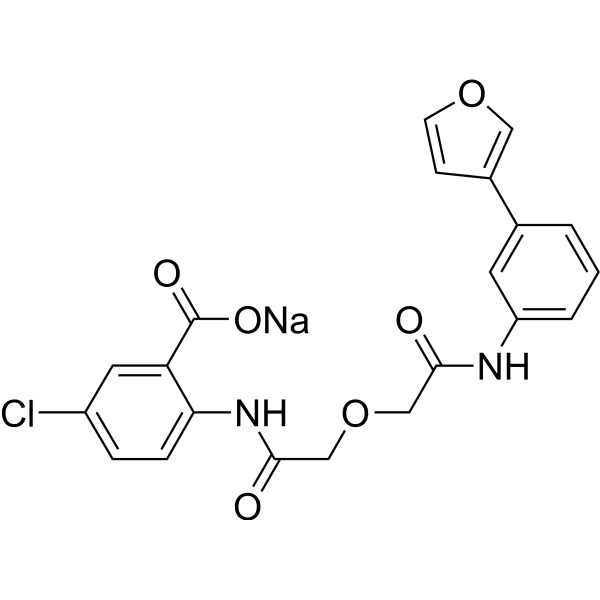
| DC60769 | TM5441 sodium Featured |
TM5441 is an orally bioavailable inhibitor of plasminogen activator inhibitor-1 (PAI-1), has IC50 values between 13.9 and 51.1 μM. TM5441 induces intrinsic apoptosis in several human cancer cell lines. TM5441 attenuates Nω-nitro-l-arginine methyl ester-induced cardiac hypertension and vascular senescence.
More description
|
|
| DC66555 | GalNAc-L96 Linker-Acid Featured |

|
|
| DC66550 | GalNAc-Cluster-COOH Featured |

|
|
| DC66557 | GalNAc-L96 Linker-Azide Featured |

|
|
| DC65559 | GalNAc-L96 Phosphoramidite Featured |

|
|
| DC66574 | Peracetylated GalNAc-L96-1 Featured |

|
|
| DC66549 | GalNAc-NAG-37 Phosphoramidite Featured |

|
|
| DC65562 | GalNAc-NAG-25 Phosphoramidite Featured |

|
|
| DC66559 | Peracetylated GalNAc PEG linker-Azide Featured |

|
|
| DC66575 | Peracetylated GalNAc PEG linker-Acid-2 Featured |

|
