 To enhance service speed and avoid tariff delays, we've opened a US warehouse. All US orders ship directly from our US facility.
| Cat. No. | Product Name | Field of Application | Chemical Structure |
|---|---|---|---|
| DC7573 | STF-118804 Featured |
STF-118804 is a highly specific NAMPT inhibitor.
More description
|

|
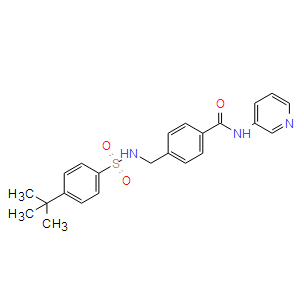
| DC8359 | STF-31 Featured |
STF-31 is an inhibitor of GLUT1 (IC50 = ~1 µM) that blocks glucose uptake.
More description
|
|
| DC10456 | STF-62247 Featured |
STF-62247 is a small molecule agonist that induces autophagy and selectively causes lethality in renal cell carcinoma (RCC) cells that have lost the von Hippel-Lindau (VHL) tumor suppressor activity (IC50 = 625 nM).
More description
|

|
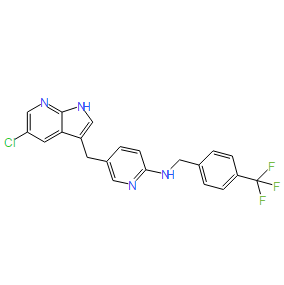
| DC9844 | STK321130(FLT3-IN-2) Featured |
STK321130(FLT3-IN-2)is potent FLT3 inhibitor
More description
|
|
| DC11264 | STO-609 (acetate) Featured |
STO-609 is a cell-permeable inhibitor of calcium/calmodulin-dependent kinase kinases (CaMKK) isoforms CaMKKα and CaMKKβ (Ki = 80 and 15 ng/ml, respectively).
More description
|

|
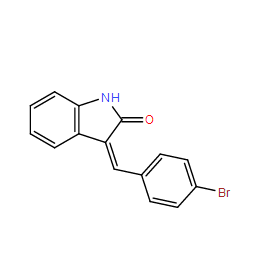
| DC10601 | SU 4942 Featured |
SU 4942 is a bioactive chemical.
More description
|
|
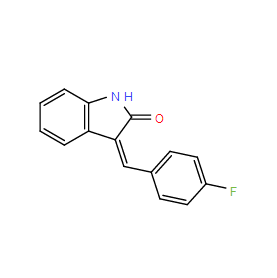
| DC10600 | SU 5205 Featured |
SU 5205 is a VEGFR2 inhibitor.
More description
|
|
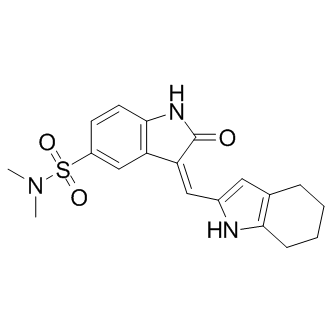
| DC8102 | SU6656 Featured |
SU 6656 is a selective inhibitor of Src kinases, Including Src, Yes, Lyn, and Fyn (IC50 = 280, 20, 130, 170 nM, respectively).
More description
|
|
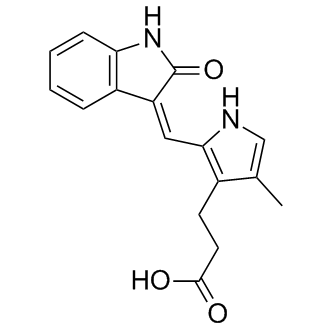
| DC7509 | SU1498 Featured |
SU1498 is a selective inhibitor of the VEGFR2; inhibits Flk-1with an IC50 of value of 700 nM.
More description
|
|
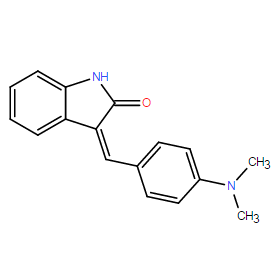
| DC9781 | SU4312(NSC86429) Featured |
SU4312(NSC86429) is a selective, cell-permeable inhibitor of VEGFR2 and PDGFR tyrosine kinases (IC50s = 0.8 and 19.4 μM, respectively).
More description
|
|
| DC5079 | Orantinib (TSU-68) Featured |
SU6668 has greatest potency against PDGFR autophosphorylation with Ki of 8 nM, but also strongly inhibits Flk-1 and FGFR1 trans-phosphorylation, little activity against IGF-1R, Met, Src, Lck, Zap70, Abl and CDK2; does not inhibit EGFR.
More description
|

|
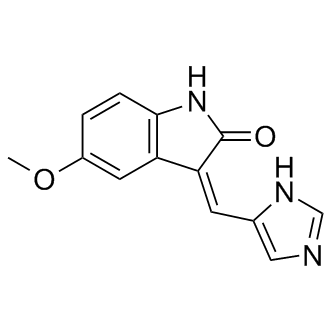
| DC7928 | SU9516 Featured |
SU-9516 is a selective CDK2 inhibtor with IC50 of 22 nM; less potent for CDK1/CDK4(IC50=40/200 nM), no inhibition on PKC, EGFR, p38MAPK etc.
More description
|
|
| DC10581 | Succinobucol(AGI 1067) Featured |
Succinobucol is a phenolic antioxidant with anti-inflammatory and antiplatelet effects.
More description
|

|
| DC10271 | SUN11602 Featured |
SUN11602 is a novel aniline compound, which mimics the neuroprotective mechanisms of basic fibroblast growth factor.
More description
|

|
| DC3145 | Sunitinib base Featured |
Sunitinib Malate (Sutent, SU11248) is a multi-targeted RTK inhibitor targeting VEGFR2 (Flk-1) and PDGFRβ with IC50 of 80 nM and 2 nM, and also inhibits c-Kit.
More description
|

|
| DC10733 | Sutezolid (PNU-100480) Featured |
Sutezolid (PNU-100480) is an oxazolidinone antimicrobial being developed for the treatment of tuberculosis.
More description
|

|
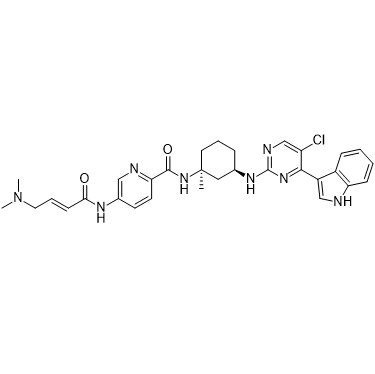
| DC24205 | SY-1365 Featured |
SY-1365 is a CDK7 inhibitor. In vitro, SY-1365 inhibited cell growth of many different cancer types at nanomolar concentrations.
More description
|
|
| DC10900 | Syk inhibitor II Featured |
Syk inhibitor II is a cell-permeable, pyrimidine-carboxamide compound that selectively and reversibly blocks Syk (IC50 = 41 nM) in an ATP-competitive manner.
More description
|

|
| DC8063 | T-00127-HEV1 Featured |
T-00127-HEV1 is a novel potent phosphoinositide kinases (PIK) inhibitor,T-00127-HEV1 inhibited PI4KB activity with a higher specificity for than other PI kinases.
More description
|

|
| DC9842 | T0901317 Featured |
T0901317 is a potent, high affinity liver X receptor (LXR) agonist (EC50 ~ 50 nM, Kd values are 7 and 22 nM for LXR-α and LXR-β respectively).
More description
|

|
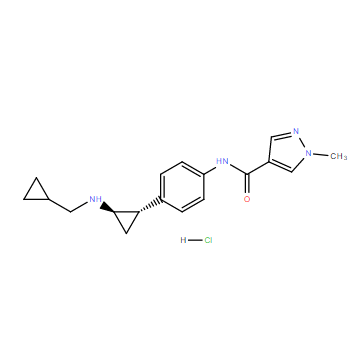
| DC11703 | T-3775440 hydrochloride Featured |
T-3775440 hydrochloride is a novel potent, selecitve, irreversible LSD1 inhibitor with IC50 of 2.1 nM.
More description
|
|
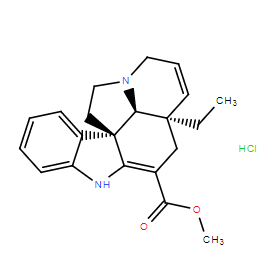
| DC22299 | Tabersonine Featured |
Tabersonine is a terpene indole alkaloid found in the medicinal plant Catharanthus roseus.
More description
|
|
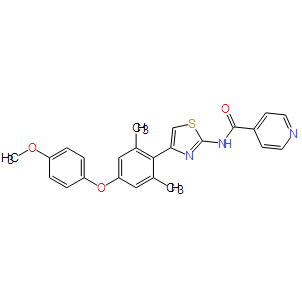
| DC8148 | TAI-1 Featured |
TAI-1 is a potent and specific Hec1 inhibitor, which disrupts Hec1-Nek2 protein interaction.
More description
|
|
| DC7945 | TAK-063 Featured |
TAK-063 is a highly potent, selective and orally active PDE10A inhibitor with IC50 of 0.30 nM; >15000-fold selectivity over other PDEs.
More description
|

|
| DC11208 | TAK-071 Featured |
TAK-071 is a novel, potent and highly selective muscarinic acetylcholine receptor 1 (M1R) positive allosteric modulator. EC50 of TAK-071 M1R agonist activities is 520 nM.
More description
|

|
| DC9311 | Serabelisib(TAK-117,INK1117,MLN1117) Featured |
TAK-117(INK1117,MLN1117) is an orally bioavailable inhibitor of the class I phosphoinositide 3-kinase (PI3K) alpha isoform with potential antineoplastic activity.
More description
|

|
| DC7306 | TAK-438 Featured |
TAK-438 is a novel P-CAB (potassium-competitive acid blocker) that reversibly inhibits H+/K+, ATPase with IC50 of 19 nM (pH 6.5), controls gastric acid secretion.
More description
|

|
| DC10523 | TAK-659 HCl Featured |
TAK-659 hydrochloride is a potent, selective and orally available spleen tyrosine kinase (Syk) inhibitor with an IC50 of 3.2 nM.
More description
|

|
| DC10661 | Takinib Featured |
Takinib is a Selective TAK1 Inhibitor, Broadens the Therapeutic Efficacy of TNF-α Inhibition for Cancer and Autoimmune Disease.
More description
|

|
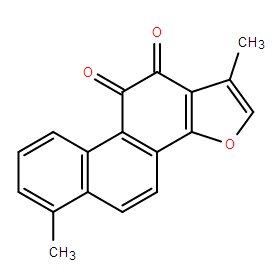
| DC23076 | Tanshinone I Featured |
Tanshinone I is an inhibitor of type IIA human recombinant sPLA2 (IC50=11 μM) and rabbit recombinant cPLA2 (IC50=82 μM).
More description
|
|
