 To enhance service speed and avoid tariff delays, we've opened a US warehouse. All US orders ship directly from our US facility.
| Cat. No. | Product Name | Field of Application | Chemical Structure |
|---|---|---|---|
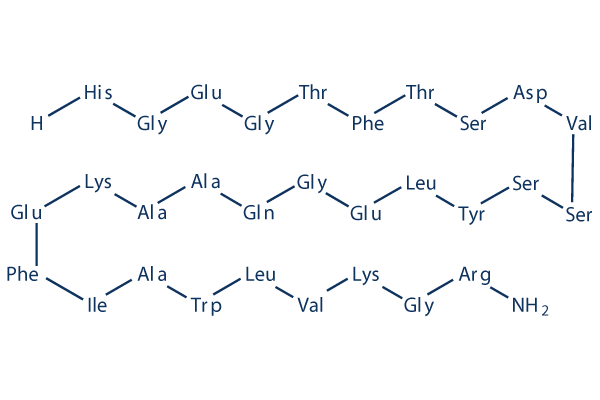
| DC45527 | Avexitide Featured |
Avexitide (Exendin (9-39)) is a specific and competitive antagonist of glucagon-like peptide-1 (GLP-1) receptor.
More description
|

|
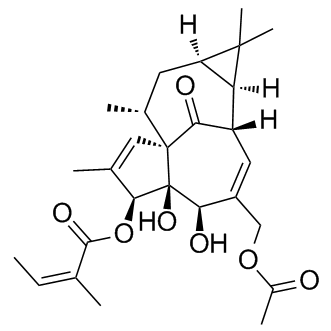
| DC9655 | 20-O-Acetylingenol-3-angelate Featured |
20-O-Acetylingenol-3-angelate is a diterpene ester that has been found in E. peplus and a derivative of ingenol-3-angelate
More description
|
|
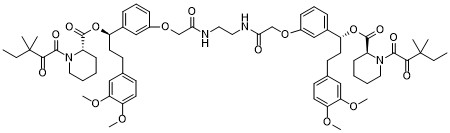
| DCC0661 | Ap1510 Featured |
AP1510 is a potent cell-permeable ligand for human FKBP12. AP1510 regulates protein-protein interactions through dimerization.
More description
|
|
| DC5078 | Tivozanib(AV-951) Featured |
Tivozanib (AV-951, KRN-951) is a potent and selective VEGFR inhibitor for VEGFR1/2/3 with IC50 of 0.21 nM/0.16 nM/0.24 nM, and also inhibits PDGFR and c-Kit, low activity observed against FGFR-1, Flt3, c-Met EGFR and IGF-1R.
More description
|

|
| DC71625 | Tivozanib hydrochloride hydrate Featured |
Tivozanib hydrochloride hydrate is a potent and selective and orally active VEGFR tyrosine kinase inhibitor with IC50是of 0.21, 0.16, 0.24 nM for VEGFR-1, VEGFR-2, VEGFR-3, respectively. Tivozanib hydrochloride hydrate inhibits angiogenesis and vascular permeability in tumor tissues and shows antitumor activity. Tivozanib hydrochloride hydrate has the potential for the research of metastatic renal cell carcinoma (RCC) .
More description
|

|
| DC31068 | Tivozanib (hydrate) Featured |
Tivozanib is an orally available, selective VEGFR inhibitor with IC50 values of 0.21, 0.16, and 0.24 nM for VEGFR1, VEGFR2, and VEGFR3, respectively.
More description
|

|
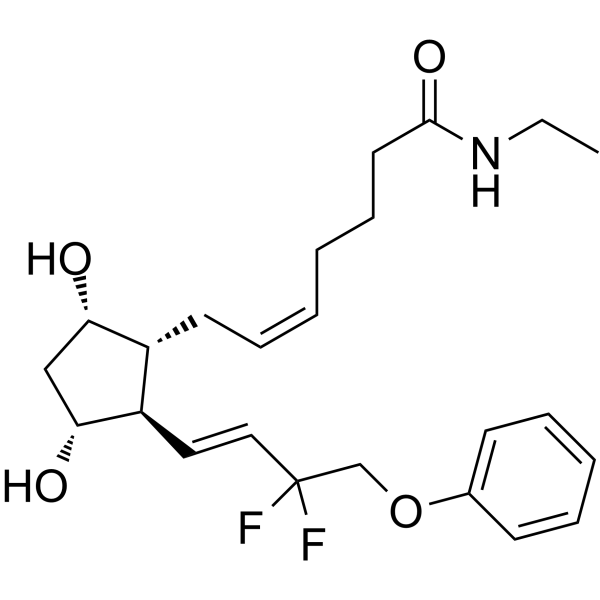
| DC36715 | Taflpostamide(Tafluprost ethyl amide) Featured |
Tafluprost ethyl amide is a prostaglandin derivative. Tafluprost ethyl amide is capable of intraocular pressure (IOP) reduction and influencing eyelash growth. Tafluprost ethyl amide can be used in antiglaucoma ophthalmic compositions or cosmetics.
More description
|
|
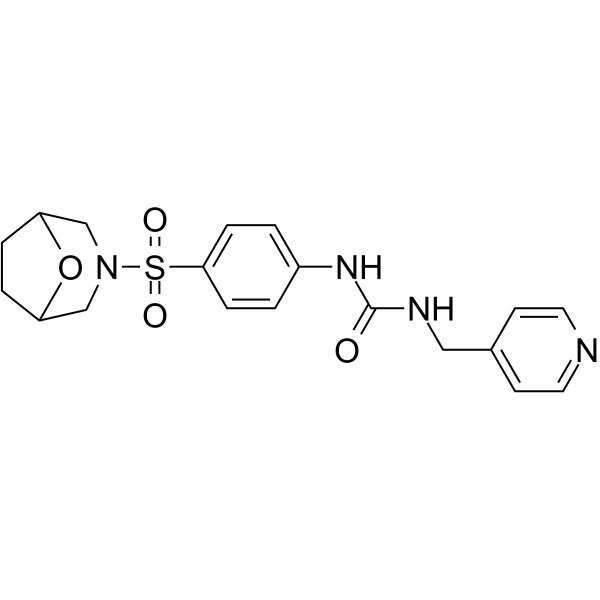
| DC43920 | SBI-797812 Featured |
SBI-797812 is an orally active nicotinamide phosphoribosyltransferase (NAMPT) activator. SBI-797812 shifts NAMPT to NMN formation, increases NAMPT affinity for ATP, stabilizes phosphorylated NAMPT, promotes consumption of the pyrophosphate by-product, and blunts feedback inhibition by NAD+. SBI-797812 increases intracellular nicotinamide mononucleotide (NMN) and elevates liver NAD+ in mice.
More description
|
|
| DC74569 | TEAD activator Q2 Featured |
TEAD activator Q2 (Quinolinol Q2) is a small molecule activator of TEAD with EC50 of 2.6 uM in TEAD dual-luciferase reporter (DLR) assays, inhibits TEAD-palmitate interaction with IC50 of 1.7 uM.
More description
|

|
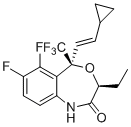
| DC22903 | SW-106 Featured |
SW106 is a potent, selective, competitive PTH/PTH-related peptide receptor (PPR) antagonist with IC50 of 0.99 uM.
More description
|
|
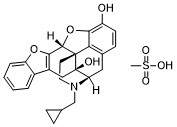
| DC33075 | Naltriben mesylate Featured |
Naltriben is a highly selective δ2 opioid receptor antagonist.Naltriben (NTB) has been used to differentiate the subtypes of delta opioid receptors, delta1 and delta2. NTB displaced the specific binding of [3H]DAMGO with Ki value of 19.79 +/- 1.12 nM in rat cortex membranes. Specific binding of [3H]diprenorphine ([3H]DIP) was inhibited by NTB with Ki value of 82.75 +/- 6.32 nM in the presence of DAMGO and DPDPE. Naltriben enhanced the MAPK/ERK signaling pathway, but not the PI3k/Akt pathway. Therefore, potentiated TRPM7 activity contributes to the devastating migratory and invasive characteristics of GBM.
More description
|
|
| DC11173 | DRAinh-A250 Featured |
DRAinh-A250 is a specific inhibitor of Cl-/anion exchanger SLC26A3 (DRA), fully and reversibly inhibits SLC26A3-mediated Cl- exchange with HCO3-, I-, and thiocyanate (SCN-) with IC50 of ~0.2 uM.
More description
|

|
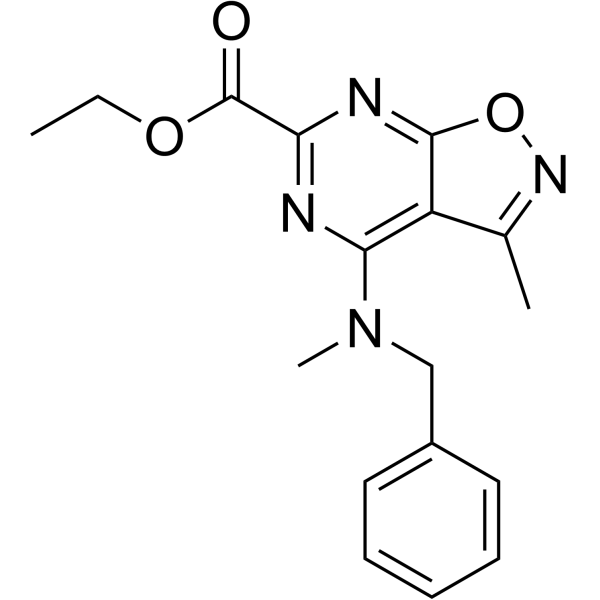
| DC74115 | PAT1inh-A0030 Featured |
PAT1inh-A0030 is a potent and selective SLC26A6 (putative anion transporter 1, PAT1) inhibitor with IC50 of 1.0 uM, shows no activity on relevant ion transporters/channels (SLC26A3, SLC26A4, SLC26A9, CFTR, TMEM16A).
More description
|
|
| DC22540 | Pasireotide Featured |
Pasireotide (SOM230), a long-acting cyclohexapeptide somatostatin analogue, can improve agonist activity at somatostatin receptors (subtypes sst1/2/3/4/5, pKi=8.2/9.0/9.1/<7.0/9.9, respectively). Pasireotide can suppress GH, IGF-I and ACTH secretion, indicating potential efficacy in acromegaly and Cushing's disease. Pasireotide also exhibits antisecretory, antiproliferative, and proapoptotic activity.
At equivalent molar concentrations, both the salt and free forms of a compound exhibit comparable biological activity. Nevertheless, the salt form (Pasireotide acetate) usually boasts enhanced water solubility and stability.
More description
|

|
| DC20174 | Albiglutide Featured |
Albiglutide is a glucagon-like peptide-1 agonist (GLP-1 agonist).
More description
|
|
| DC73605 | TMinh-23 Featured |
TMinh-23 is (Compound 10bm) is a potent, selective inhibitor of transmembrane protein 16A (TMEM16A or ANO1, DOG1, ORAOV2, TAOS-2) with IC50 of 30 nM in short-circuit current assays, weakly inhibits TMEM16B (IC50=400 nM, 13 -fold selectivity).
More description
|

|
| DC73792 | NSC74429 Featured |
NSC74429 is a CNS-active, small molecule PHLPP inhibitor with IC50 of <5 uM, shows neuroprotective activity in primary rat cortical neurons in STS assay.
More description
|

|
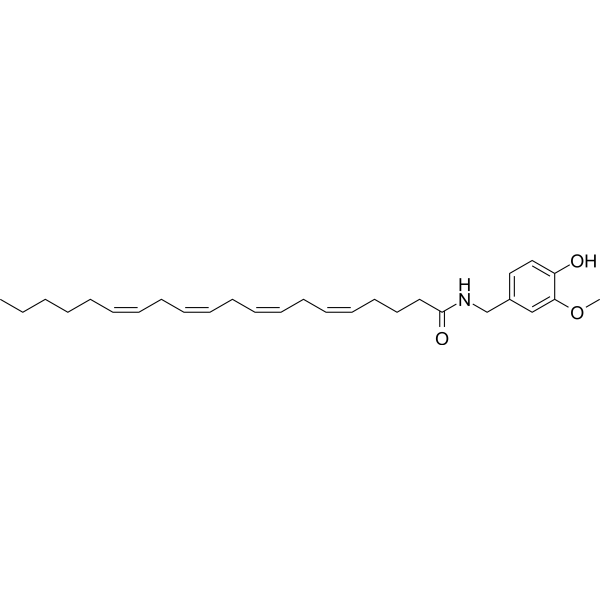
| DC33395 | Arvanil Featured |
Arvanil is a CB1 and TRPV1 agonist. It increases lung tidal volume, diaphragm activity, mean arterial blood pressure and inhibits lymphocyte proliferation.
More description
|
|
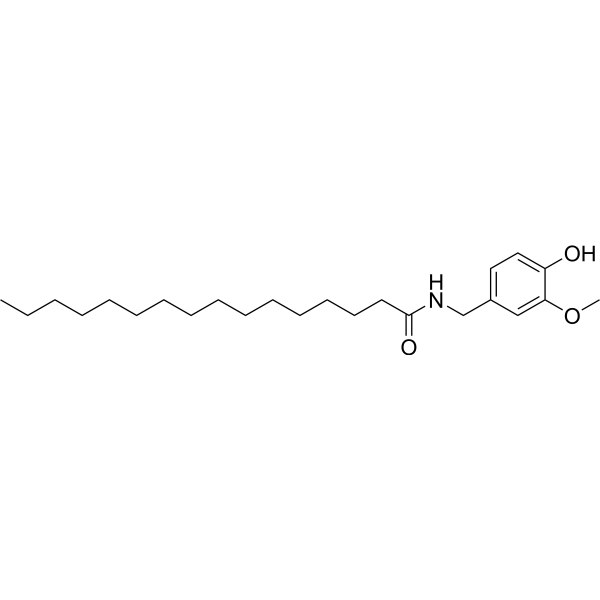
| DC71882 | Palvanil Featured |
Palvanil is a capsaicin analogue, shows strong desensitizing capability against the TRPV1 receptor. Palvanil shows anti-nociceptive and anti-inflammation effects.
More description
|
|
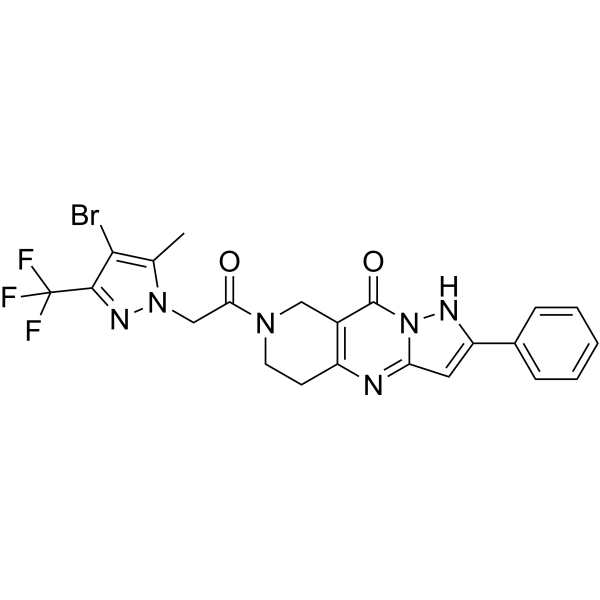
| DC74116 | PAT1inh-B01 Featured |
PAT1inh-B01 is a small-molecule, selective SLC26A6 (putative anion transporter 1, PAT1) inhibitor, could fully inhibit PAT1-mediated anion exchange with IC50 of 350 nM.
More description
|
|
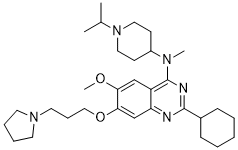
| DCC5325 | Unc0737 Featured |
UNC0737 is a negative control of UNC0638 and the N-methyl analog of UNC0638. UNC0737 was designed to eliminate the hydrogen bond interaction seen in the G9a-UNC0224 cocrystal structure between Asp1083 of G9a and the secondary amino group at the 4-position of UNC0224's quinazoline ring3. UNC0737 was >300-fold less potent than UNC0638 in G9a and GLP biochemical assays. As expected, UNC0737 was a poor inhibitor of G9a (IC50 = 5,000 ± 200 nM (n = 2)) and GLP (IC50 > 10,000 nM (n = 2)) in the SAHH-coupled assays.
More description
|
|
| DC11916 | FD-5180 Featured |
A novel protein kinase affinity probe...
More description
|

|
| DC71115 | SN38 NHS ester Featured |
SN38 NHS ester is the NHS ester derivative of SN38. SN-38 is an active metabolite of the Topoisomerase I inhibitor Irinotecan. SN-38 inhibits DNA and RNA synthesis. SN38 NHS ester can be used for the synthesis of antibody-drug conjugates (ADCs).
More description
|

|
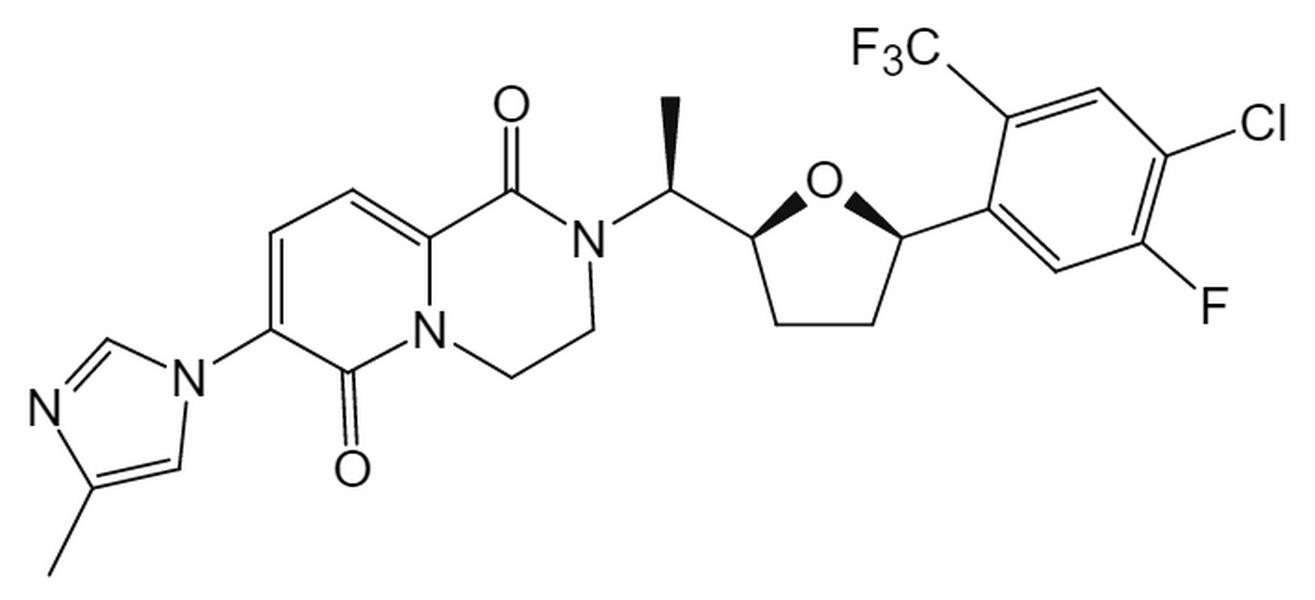
| DC21501 | PF-06648671 Featured |
PF-06648671 is a potent γ-secretase modulator with IC50 of 8.9 nM against Aβ42. PF-06648671 has favorable brain availability in rodent, which translated into excellent central exposure in human and robust reduction of amyloid β (Aβ) 42 in cerebrospinal fluid (CSF).
More description
|
|
| DC73526 | DFV890 Featured |
DFV890 (IFM-2427) is apotent, selective and orally active inhibitor of NLRP3 inflammasome, directly binds to NLRP3 and locks the protein in an inactive conformation,prevents NLRP3 inflammasome assembly in response to sterile danger signals.
More description
|

|
| DC70086 | GSK-484 Featured |
GSK-484 is a potent, highly selective and reversible protein arginine deiminase PAD4 inhibitor with IC50 of 80 nM in FP binding assay (0.2 mM Ca), 50 nM in PAD4 NH3 release inhibition assay.
More description
|

|
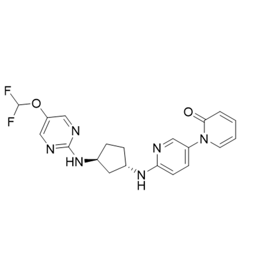
| DC60597 | AZD0780 Featured |
AZD0780 is the first oral small molecule PCSK9 inhibitor for the treatment of hypercholesterolemia.
More description
|
|
| DC42718 | G150 Featured |
G150 is a highly selective human cyclic GMP-AMP synthase (h-cGAS) inhibitor with an IC50 of 10.2 nM. G150 represses dsDNA-triggered interferon expression, and G150 can be used for the research of inflammatory.
More description
|

|
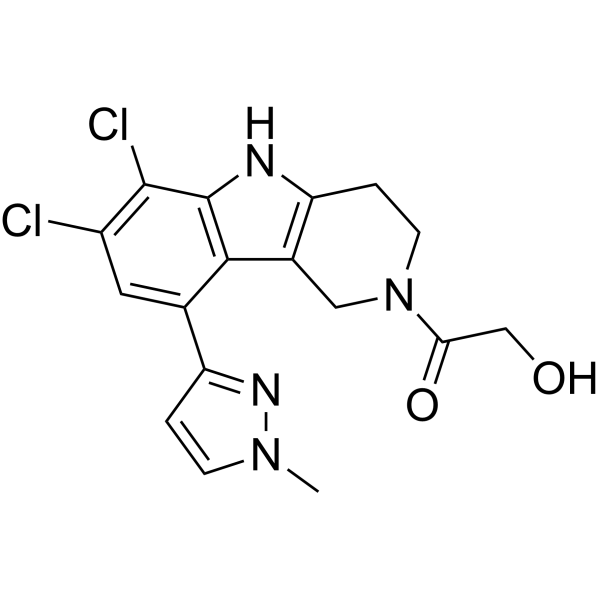
| DC42720 | G140 Featured |
G140 is a potent and selective inhibitor of cyclic GMP-AMP synthase (cGAS), with IC50s of 14.0 nM and 442 nM for h-cGAS and m-cGAS, respectively. G140 has anti-inflammatory activity.
More description
|
|
| DC50265 | GDC-1971 Featured |
GDC-1971 showed outstanding potency in biochemical and cell models, and it had a predicted human PK profile that suggested it would achieve target engagement at reasonable doses. GDC-1971 showed an IC50 below the limit of detection of the assay (≪0.001 μM), while that IC50 shifted to 0.17 μM in the same biochemical assay with the constitutively active E76K SHP2 mutant.
More description
|

|
