 To enhance service speed and avoid tariff delays, we've opened a US warehouse. All US orders ship directly from our US facility.
| Cat. No. | Product Name | Field of Application | Chemical Structure |
|---|---|---|---|
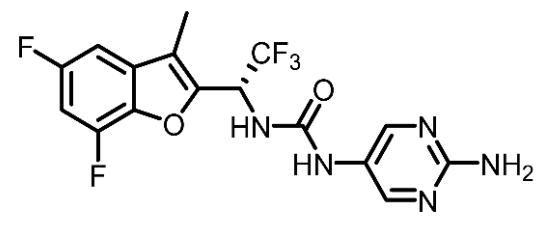
| DC60497 | STX-478 Featured |
STX-478 is an allosteric PI3Kα inhibitor that selectively targets prevalent PI3Kα helical- and kinase-domain mutant tumors. STX-478 provides robust efficacy while avoiding the metabolic dysfunction associated with the nonselective inhibitor alpelisib.
More description
|
|
| DC65664 | Palmitoyl tripeptide-38 Featured |
Palmitoyl tripeptide-38 is a bioactive peptide with anti-aging effect .
More description
|
.gif)
|
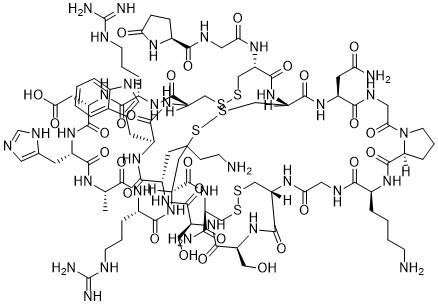
| DC65668 | Mu-conotoxin Featured |
μ-Conotoxin-CnIIIC is a 22-residue conopeptide that can be isolated from Conus consors. μ-Conotoxin-CnIIIC is a potent and persistent blocker of NaV1.4 channel. μ-Conotoxin-CnIIIC has analgesic, anaesthetic and myorelaxant properties.
More description
|
|
| DC28435 | Orvepitant maleate Featured |
Orvepitant maleate (GW823296 maleate) is potent, selective, orally active and well-tolerated neurokinin-1 receptor (NK-1) antagonist with a pKi of 10.2 for human neurokinin-1 receptor. Orvepitant maleate can across the blood-brain barrier. Orvepitant maleate has the potential for depressive disorder and chronic refractory cough (CRC) treatment.
More description
|

|
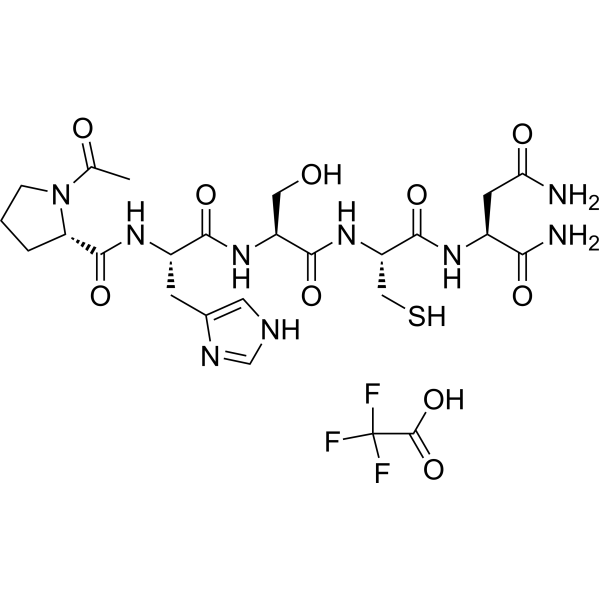
| DC31439 | ATN-161 TFA Featured |
ATN-161 is a small peptide antagonist of integrin alpha5beta1 with potential antineoplastic activity. ATN-161 selectively binds to and blocks the receptor for integrin alpha5beta1, thereby preventing integrin alpha5beta1 binding. This receptor blockade may result in inhibition of endothelial cell-cell interactions, endothelial cell-matrix interactions, angiogenesis, and tumor progression. Integrin alpha5beta1 is expressed on endothelial cells and plays a crucial role in endothelial cell adhesion and migration. Note: The Catalog number of ATN-161 TFA salt was changed from 200350B to 206976.
More description
|
|
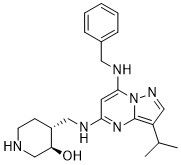
| DC47269 | Samuraciclib Featured |
Samuraciclib (CT7001) is a potent, selective, ATP-competitive and orally active CDK7 inhibitor, with an IC50 of 41 nM. Samuraciclib displays 45-, 15-, 230- and 30-fold selectivity over CDK1, CDK2 (IC50 of 578 nM), CDK5 and CDK9, respectively. Samuraciclib inhibits the growth of breast cancer cell lines with GI50 values between 0.2-0.3 µM. Samuraciclib has anti-tumor effects.
More description
|
|
| DC47894 | SR-0813 Featured |
SR-0813 is a potent and selective ENL/AF9 YEATS domain inhibitor. SR-0813 has IC50 and EC50 values of 25 nM and 205 nM for ENL YEATS domain, respectively. SR-0813 has IC50 and EC50 values of 311 nM and 76 nM (CETSA) for AF9 YEATS domain, respectively. SR-0813 binds MAP3K19 with over 100-fold lower affinity (Kd=3.5 μM) than ENL YEATS (Kd=30 nM). SR-0813 can be used for the research of acute leukemia.
More description
|

|
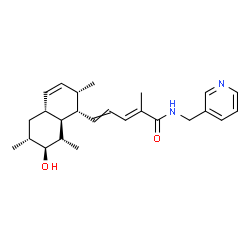
| DC20659 | (2E,4E)-5-((1S,2S,4aR,6R,7S,8S,8aS)-7-hydroxy-2,6,8-trimethyl-1,2,4a,5,6,7,8,8a-octahydronaphthalen-1-yl)-2-methyl-N-(pyridin-3-yl-methyl)penta-2,4-dienamide Featured |
A small-molecule compound that disrupts the Golgi apparatus by inhibiting the activation of ADP-ribosylation factor 1 (ARF1).
More description
|
|
| DC65704 | Mazdutide Featured |
Mazdutide (IBI-362; LY-3305677) is a long-acting synthetic oxyntomodulin analog. Mazdutide is also a glucagon-like peptide-1 (GLP-1R)/glucagon receptor GCGR co-agonist. Mazdutide has safety and tolerability, and it can be used for research in obesity and type 2 diabetes (T2D).
More description
|

|
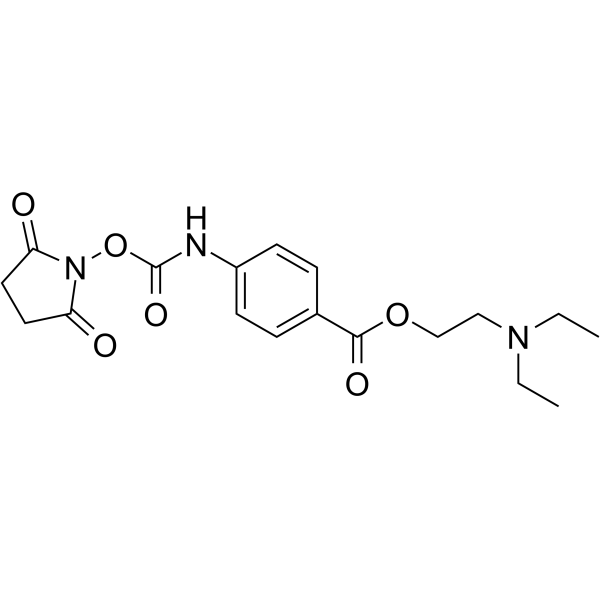
| DC71430 | NHS-NH-(diethylamino)ethyl benzoate Featured |
NHS-NH-(diethylamino)ethyl benzoate is a compound that can be used for N-glycan labeling.
More description
|
|
| DC36886 | DFHO Featured |
DFHO is a fluorogenic ligand of Corn fluorogenic aptamer. The RNA aptamer, Corn binds DFHO with a Kd value of 70 nM and converts it to a fluorescent form, enabling RNA imaging in cells.
More description
|

|
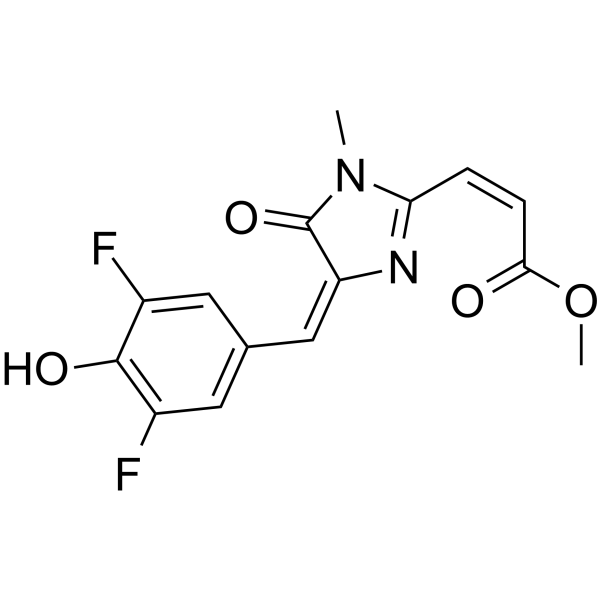
| DC65703 | DFAME Featured |
DFAME is a red fluorophore (Ex=508 nm, Em=641 nm). Beetroot and Corn are dimeric fluorogenic RNA aptamers that can bind to DFAME to form Beetroot-DFAME (Kd=460nM) and Corn-DFAME (Kd= 3600nM). Beetroot-DFAME (Kd=460nM) and Corn-DFAME can be used to form RNA assemblies in living cells. Creating RNA assemblies can be used for the study of RNA Nanostructures. DNA/RNA Nanostructures would be useful in cell and gene therapy (CGT) research.
More description
|
|
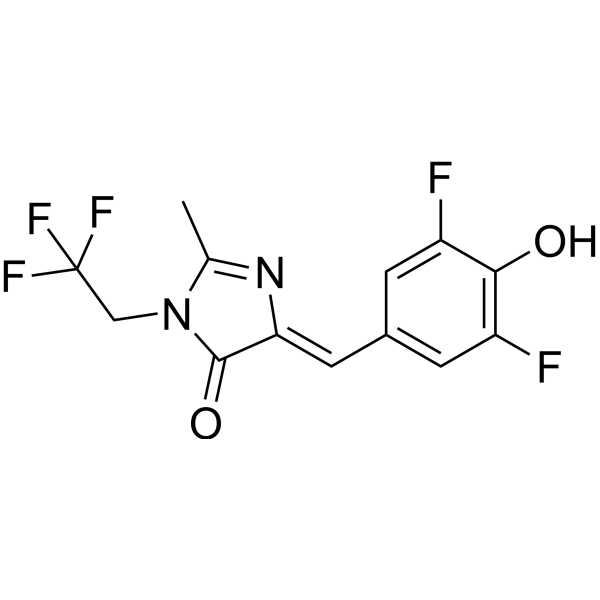
| DC65702 | DFHBI-1T Featured |
DFHBI-1T is a membrane-permeable RNA aptamers-activated fluorescence probe (ex/em=472 nm/507 nm). DFHBI-1T binds to RNA aptamers (Spinach, Spinach2, iSpinach, and Broccoli) and causes specific fluorescence and lower background fluorescence. DFHBI-1T is used to image RNA in live cells.
More description
|
|
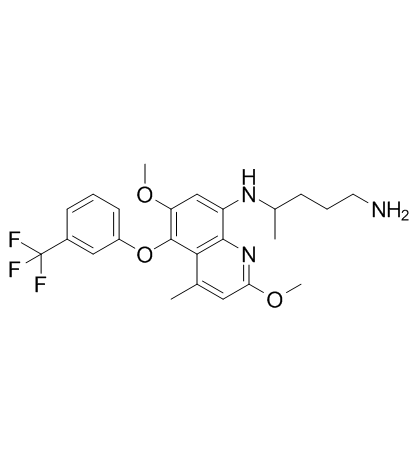
| DC21609 | Tafenoquine Featured |
Tafenoquine (SB-252263, Tafenoquine, WR 238605) is a long-acting, orally active anti-malarial agent to prevent malaria that is holoendemic for Plasmodium falciparum..
More description
|
|
| DC42609 | Zelpolib Featured |
Novel DNA polymerase inhibitor, inhibiting DNA replication in assays to assess global DNA synthesis or single-molecule bases by DNA fiber fluorography
More description
|

|
| DC41671 | HS014 Featured |
HS014 is a potent and selective melanocortin-4 (MC4) receptor antagonist, with Kis of 3.16, 108, 54.4 and 694 nM for human MC4, MC1, MC3 and MC5 receptors, respectively. HS014 modulates the behavioral effects of morphine in mice. HS014 increases food intake in free-feeding rats.
More description
|

|
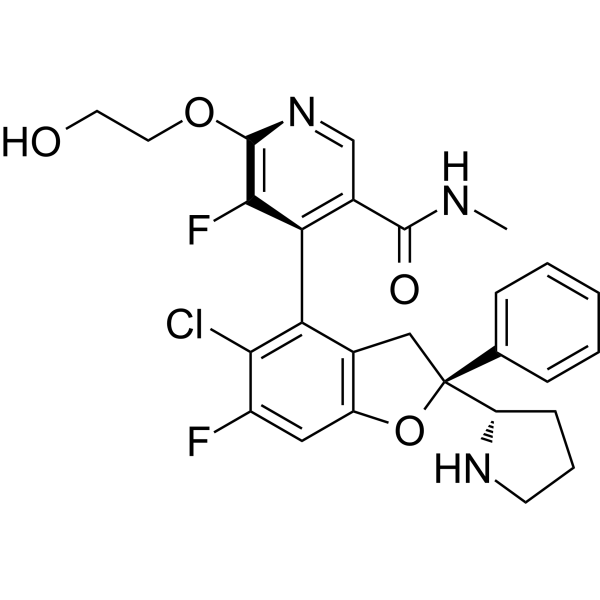
| DC60598 | IAG933 Featured |
IAG933 (IAG-933) is a potent, selective and orally efficacious YAP1/WWTR1(TAZ)-panTEAD protein-protein interaction inhibitor (YAP/TAZ-TEADs PPI), inhibits TEAD-driven transcriptional activity and displays anti-cancer effects.
More description
|
|
| DC20641 | J8-C8 Featured |
J8-C8 is a small-molecule inhibitor of bacterial N-acyl-homoserine lactone synthase (acyl-HSLs) TofI with IC50 of 35 uM for toxoflavin production.
More description
|

|
| DC8441 | Nitenpyram Featured |
Nitenpyram is a chemical frequently used as an insecticide in agriculture and veterinary medicine. The compound is an insect neurotoxin belonging to the class of neonicotinoids which works by blocking neural signaling of the central nervous system.
More description
|

|
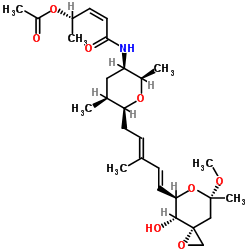
| DC23750 | Spliceostatin A Featured |
Spliceostatin A is a methylated derivative of FR-901464 that inhibits pre-mRNA splicing.
More description
|
|
| DC72770 | Zongertinib Featured |
Zongertinib is a potent tyrosine kinase inhibitor. Zongertinib can be used as an antineoplastic agent. Zongertinib also has been tested as pHER2 and EGFR inhibitor inhibiting a wide variety of cancers.
More description
|
.png)
|
| DC72833 | Muscarine Featured |
Muscarine ((+)-Muscarine) is a toxin that can stimulate the parasympathetic nervous system. Muscarine is an agonist of muscarinic acetylcholine receptor (mAChR).
More description
|

|
| DC20149 | (+)-Kavain Featured |
(+)-Kavain, a main kavalactone extracted from Piper methysticum, has anticonvulsive properties, attenuating vascular smooth muscle contraction through interactions with voltage-dependent Na+ and Ca2+ channels. (+)-Kavain is shown to bind at the α4β2δ GABA
More description
|

|
| DC12021 | (+)-JQ1 PA Featured |
(+)-JQ1 PA is a Click-activated (alkyne) version of the BET bromodomain inhibitor (+)-JQ1.
More description
|

|
| DC10625 | (+)-Bicuculline Featured |
(+)-Bicuculline is a competitive antagonist of GABAA receptors with IC50 of 2 μM, also blocks Ca(2+)-activated potassium channels.
More description
|

|
| DC7961 | (-)MK-801 maleate Featured |
(-)-MK 801 Maleate is the enantiomer of (+)-MK-801; (+)-MK-801 is a highly potent and selective non-competitive NMDA glutamate receptor antagonist .
More description
|

|
| DC22303 | (-)-Eburnamonine Featured |
(-)-Eburnamonine is a vasodilator that also acts as a cerebral metabolic stimulant.
More description
|

|
| DC20288 | (-)-CXL017 Featured |
(-)-CXL017 is a small molecule that has selective cytotoxicity toward MDR cancer cell lines in vitro, through inhibition of the sarco/endoplasmic reticulum Ca(2+)-ATPase (SERCA) with IC50 of 13.5 uM.
More description
|

|
| DC12277 | (-)-BAY-1251152 Featured |
(-)-BAY-1251152 is an enanthiomer of BAY-1251152 with rotation (-). BAY-1251152 is a potent and highly selective PTEF/CDK9 inhibitor.
More description
|
.png)
|
| DC20787 | (-) BI97D6 Featured |
(-) BI97D6 (BI112D1) is a potent, pan-active inhibitor of Bcl-2 family proteins with IC50 of 76, 31, 25, and 122 nM for Bcl-xL, Bcl-2, Mcl-1, and Bfl-1, respectively.
More description
|

|
