 To enhance service speed and avoid tariff delays, we've opened a US warehouse. All US orders ship directly from our US facility.
| Cat. No. | Product Name | Field of Application | Chemical Structure |
|---|---|---|---|
| DC70084 | GSK 2793660 |
GSK 2793660(GSK2793660) is a potent, selective, irreversible and orally bioavailable cathepsin C inhibitor, but not the activity of downstream neutrophil serine proteases, for the treatment of cystic fibrosis, non-cystic fibrosis bronchiectasis, ANCA-associated vasculitis and bronchiectasis..
More description
|

|
| DC70083 | PRN473 |
PRN473 (Atuzabrutinib, SAR 444727, PRN-473) is a potent, selective, covalent reversible BTK inhibitor.
More description
|
|
| DC70081 | GDC-0339 |
GDC-0339 (GDC0339) is a novel small molecule pan-Pim kinase inhibitor that was discovered as a potential treatment for multiple myeloma.
More description
|
|
| DC70079 | GSK2973980A |
GSK2973980A is a potent and selective DGAT1 inhibitor with IC50 of 3 nM, exhibits >2,900-fold selectivity over human DGAT2, ACAT1 and ACAT2 (IC50>10 uM).
More description
|
|
| DC70078 | GSK 2833503A |
GSK 2833503A (GSK2833503A, GSK503A) is a potent, and selective inhibitor of TRPC3/6 channels with IC50 of 4 nM/5 nM, respectively.
More description
|
|
| DC70077 | GSK-2485852 |
GSK-2485852 (GSK2485852, GSK5852) is a highly potent, selective HCV NS5B polymerase inhibitor with IC50 of 3.0 and 1.6 nM for HCV genotypes 1a and 1b in replicon assay, respectively.
More description
|
|
| DC70076 | Pyrotinib |
Pyrotinib (SHR-1258) is a potent and selective EGFR/HER2 dual inhibitor with IC50 of 13/38 nM, respectively.
More description
|
|
| DC70075 | ABC 294640 hydrochloride |
ABC 294640 (ABC294640, Opaganib) is a is a selective, competitive and orally bioavailable sphingosine kinase-2 (SphK-2) inhibitor with IC50 of 60 uM, Ki of 9.8 uM.
More description
|
|
| DC70074 | GSK-2324 |
GSK-2324 (GSK2324) is a potent, selective, full FXR agonist with EC50 of 120 nM in FRET assay.
More description
|
|
| DC70073 | (Ac)Phe-Lys(Alloc)-PABC-PNP |
A cathepsin cleavable ADC peptide linker.
More description
|
|
| DC70071 | THZ-1 hydrochloride |
THZ-1 hydrochloride is a potent, selective, covalent CDK7 inhibitor with IC50 of 3.2 nM.
More description
|
|
| DC70069 | PEAQX tetrasodium hydrate |
PEAQX (NVP-AAM077) is a potent, selective, NR2A-preferring NMDA receptor antagonist with IC50 of 270 nM (NR1A/2A), >100-fold selectivity over NR1A/2B receptor (IC50=29,600 nM).
More description
|
|
| DC70067 | NSC194598 |
NSC194598 is a specific small molecule inhibitor that inhibits p53 sequence-specific DNA binding in vitro (IC50=180 nM) and in vivo.
More description
|
|
| DC70066 | USP7i-1 |
USP7i-1 is a potent, selective USP7 inhibitor..
More description
|
|
| DC70065 | HS-276 |
HS-276 is a potent, highly selective and orally bioavailable TAK1 inhibitor with Ki of 2.5 nM.
More description
|
|
| DC70061 | 2GBI |
2GBI (2-guanidinobenzimidazole) is a guanidine derivative that inhibits voltage-gated proton channel Hv1 by binding to the VSD from its intracellular side..
More description
|
|
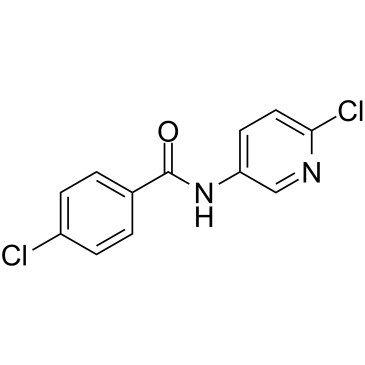
| DC26167 | ICA 110381 (Compound 16) Featured |
ICA 110381 (Compound 16) is a KCNQ2/Q3 potassium channel opener for the treatment of epilepsy. ICA 110381 is a KCNQ2/Q3 agonist (EC50=0.38 μM) as well as KCNQ1 antagonist (IC50=15 μM).
More description
|
|
| DC26164 | GW284543 (UNC10225170) Featured |
GW284543 (UNC10225170) is a selective MEK5 inhibitor. GW284543 (UNC10225170) reduces pERK5, and decreases endogenous MYC protein.
More description
|

|
| DC26146 | Fluorofenidone Featured |
Fluorofenidone is an inhibitor of nicotinamide adeninedinucleotide phosphate oxidase via PI3K/Akt pathway in the pathogenesis of renal interstitial fibrosis.
More description
|
|
| DC26143 | FGH10019 Featured |
FGH10019 is a novel sterol regulatory element-binding protein (SREBP) inhibitor with IC50 of 1 μM.
More description
|
|
| DC26160 | Ethosalamide Featured |
Etosalamide, also known as Ethosalamide, is an antipyretic and analgesics agent.
More description
|
|
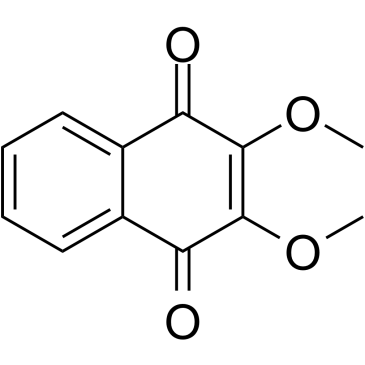
| DC26163 | DMNQ Featured |
DMNQ is a redox cycling agent that generates both superoxide and hydrogen peroxide intracellularly in a concentration dependent manner. DMNQ increases ROS generation.
More description
|
|
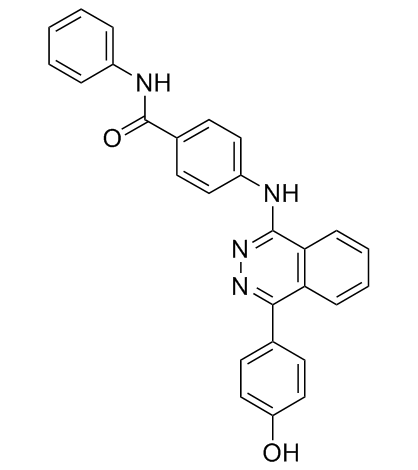
| DC26156 | ARN 272 Featured |
ARN 272 is a fAAH-like anandamide transporter (FLAT) inhibitor (IC50 = 1.8 μM); cytosolic variant of FAAH-1 that binds anandamide.
More description
|
|
| DC26174 | Adenosine Amine Congener Featured |
Adenosine Amine Congener is shown to be an aqueous-soluble Adenosine A1-R agonist.
More description
|

|
| DC26144 | A 438079 Featured |
A 438079 is a potent, and selective P2X7 receptor antagonist with pIC50 of 6.9.
More description
|
|
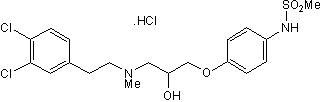
| DC26176 | AM 92016 Featured |
A specific blocker of the time dependent delayed rectifier potassium current, devoid of any β-adrenoceptor blocking activity. Exhibits proarrhythmic and prohypertensive activity in vivo.
More description
|
|
| DC8902 | PNU282987 Featured |
|
|
| DC12201 | NADP Featured |
|
|
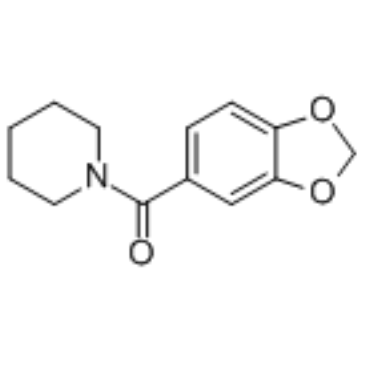
| DC26165 | 1-BCP Featured |
1-BCP is a centrally active drug that modulates AMPA receptor gated currents. 1-BCP is a memory-enhancing agent.
More description
|
|
| DC11144 | NBI-59159 Featured |
|
