 To enhance service speed and avoid tariff delays, we've opened a US warehouse. All US orders ship directly from our US facility.
| Cat. No. | Product Name | Field of Application | Chemical Structure |
|---|---|---|---|
| DC47044 | Onzigolide |
Onzigolide (BIM-23A760), a chimeric dopamine-somatostatin compound, shows potent agonist activity at both DA type 2 (D2R) and SST type 2 (SSTR2) receptors.
More description
|

|
| DC47014 | Medifoxamine |
Medifoxamine is a monoamine re-uptake inhibiting antidepressive drug which preferentially inhibits dopamine reuptake.
More description
|
|
| DC47011 | Elinzanetant |
Elinzanetant is a neurokinin receptors antagonist used for the research of Schizophrenia.
More description
|
|
| DC47006 | A2B receptor antagonist 2 |
A2B receptor antagonist 2 (compound 18) is an adenosine receptor A2B antagonist, with Ki values of 2.30 μM, 6.8 μM and 3.44 μM for rA1, rA2A and hA2B, respectively.
More description
|
|
| DC46996 | [Leu31,Pro34]-Neuropeptide Y (porcine) |
[Leu31,Pro34]- Neuropeptide Y (porcine), a Neuropeptide Y (NPY) analog, is a selective NPY Y1 receptor agonist. [Leu31,Pro34]- Neuropeptide Y (porcine) exhibits anxiolytic effects.
More description
|
|
| DC46980 | Litorin |
Litorin, an amphibian bombesin peptide derivative, is an bombesin receptor agonist. Litorin stimulates the contraction of smooth muscle, stimulates gastrin, gastric acid, and pancreatic secretion, and suppresses the nutriment in vivo.
More description
|
|
| DC46979 | Angiopeptin TFA |
Angiopeptin TFA, a cyclic octapeptide analogue of somatostatin, a weak sst2/sst5 receptor partial agonist with IC50 values of 0.26 nM and 6.92 nM, respectively. Angiopeptin TFA is a potent inhibitor of growth hormone release and insulin-like growth factor-1 (IGF-1) production. Angiopeptin TFA inhibit adenylate cyclase or stimulate extracellular acidification. Angiopeptin TFA has the potential for coronary atherosclerosis research.
More description
|
|
| DC3115 | ICI-118551 Featured |
ICI-118,551 is a selective beta-2 (β2) adrenergic receptor antagonist.ICI binds to the β2 subtype with at least 100 times greater affinity than β1 or β3, the two other known subtypes of the beta adrenoceptor.
More description
|

|
| DC11748 | LY2033298 Featured |
LY2033298 is a robust allosteric potentiator that is highly selective for the human M4 muscarinic acetylcholine receptor subtype. LY2033298 enhances inhibition by oxotremorine of light-induced phase shifts in hamster circadian activity rhythms.
More description
|

|
| DC11346 | Salbutamol (hydrochloride) Featured |
Salbutamol is an agonist of the β2-adrenergic receptor (β2-AR; Kd = 759 nM in a radioligand binding assay using CHO cells expressing the human receptor).
More description
|

|
| DC46970 | L-372662 |
L-372662 is a potent and orally active non-peptide oxytocin antagonist with a Ki value of 4.8. The Kd value of L-372662 for wild-type hOTR and [A318G]OTR is 5.8 nM and 73 nM. L-372662 shows selectivity to OTR:V1aR.
More description
|
|
| DC46942 | CCR4 antagonist 3 hydrochloride |
CCR4 antagonist 3 hydrochloride is an orally active, potent and selective CCR4 antagonist. CCR4 antagonist 3, featuring a novel piperidinyl-azetidine motif, has IC50s of 22 nM and 50 nM in the calcium flux and CTX assay. CCR4 antagonist 3 has antitumor activity.
More description
|
|
| DC46853 | BGC-20-1531 free base |
BGC-20-1531 (PGN 1531) free base is a potent and selective prostanoid EP4 receptor antagonist, with a pKb of 7.6. BGC-20-1531 free base has the potential for the research of migraine headache.
More description
|
|
| DC46852 | 2-Methylthio-AMP diTEA |
2-Methylthio-AMP (2-MeSAMP) diTEA is a selective and direct P2Y12 antagonist. 2-Methylthio-AMP diTEA is an inhibitor of ADP-dependent platelet aggregation.
More description
|
|
| DC46851 | Imnopitant |
Imnopitant is a NK1 receptor antagonist (WO2020132716, compound 1) .
More description
|
|
| DC46849 | L-AP3 |
L-AP3, metabotropic glutamate receptor (mGluR) antagonist, inhibits D-phosphoserine and L-phosphoserine with IC50s of 368 μM and 2087 μM, respectively.
More description
|
|
| DC46848 | UPF-523 |
UPF-523 (AIDA), a rigid (carboxyphenyl) glycine derivative, is a relatively potent and selective antagonist of group I metabotropic glutamate receptors (mGlu1a) with an IC50 of 214 μM. But UPF-523 has no effect on group II (mGlu2), group III (mGlu4) receptors or ionotropic glutamate receptors. UPF-523 has the potential for the research of the acute arthritis.
More description
|
|
| DC46847 | DH97 |
DH97 is a potent and selective antagonist of MT2 melatonin receptor, with a pKi of 8.03 for human MT2. DH97 shows 89- and 229-fold selectivity for human MT2 over human mt1 and Xenopus mel1c receptor subtypes. DH97 can inhibit melatonin-induced enhancement of electrically-evoked responses.
More description
|
|
| DC46846 | UCM 608 |
UCM 608 is a high affinity melatonin (MT) membrane receptor agonist. The pKi values for MT1 and MT2 are 10.7 and 10.4.
More description
|
|
| DC46845 | MCL0020 |
MCL0020 is a potent and selective melanocortin MC4 receptor antagonist, with an IC50 of 11.63 nM. MCL0020 dose-dependently and significantly attenuates restraint stress-induced anorexia without affecting food intake.
More description
|
|
| DC46843 | (S)-(+)-Dimethindene maleate |
(S)-(+)-Dimethindene maleate, an enantiomer, is a potent M2-selective muscarinic receptor antagonist (pA2 = 7.86/7.74; pKi = 7.78). (S)-(+)-Dimethindene maleate shows lower affinities for the muscarinic M1 (pA2 = 6.83/6.36; pKi = 7.08), the M3 (pA2 = 6.92/6.96; pKi = 6.70) and the M4 receptors (pKi = 7.00), respectively. (S)-(+)-Dimethindene maleate also is a histamine H1 receptor antagonist (pA2 = 7.8).
More description
|
|
| DC46842 | Cipralisant maleate |
Cipralisant (GT-2331) (maleate) is an orally active, low-toxicity, potent, selective, high affinity histamine H3 receptor full antagonist in vivo, and an agonist in vitro, with a pKi of 9.9 for histamine H3 receptor and a Ki of 0.47 nM for rat histamine H3 receptor. Cipralisant (maleate) has the potential for attention-deficit hyperactivity disorder research.
More description
|
|
| DC46841 | Quinelorane dihydrochloride |
Quinelorane dihydrochloride (LY163502) is a potent dopamine D3/D2 receptor agonist. Quinelorane has the potential for neurological and psychiatric disorders research.
More description
|
|
| DC46839 | (±)-Penbutolol-d9 hydrochloride |
(±)-Penbutolol-d9 ((Rac)-Penbutolol-d9) hydrochloride is a deuterium labeled (±)-Penbutolol hydrochloride. (+)-Penbutolol hydrochloride is a β-adrenoceptor antagonist, with an IC50 of 0.74 μM.
More description
|
|
| DC46838 | SB 258719 hydrochloride |
SB 258719 (hydrochloride) is a selective 5-HT7 receptor antagonist displayed high affnity (pKi=7.5) for the receptor. SB-258719 (hydrochloride) shows apparent partial inverse agonism.
More description
|
|
| DC46837 | Felcisetrag |
Felcisetrag (TD-8954) is an orally active, potent and selective 5-HT4 receptor agonist with gastrointestinal prokinetic properties. Felcisetrag has high affinity (pKi =9.4) for human 5-HT4(c) receptors.
More description
|
|
| DC9527 | Methylnaltrexone (Bromide) Featured |
Methylnaltrexone Bromide is a pheriphally-acting μ-opioid antagonist that acts on the gastrointestinal tract to decrease opioid-induced constipation.
More description
|

|
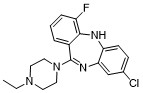
| DC44944 | JHU37160 Featured |
JHU37160 is a potent and brain-penetrant DREADD agonist, with EC50s of 18.5 nM and 0.2 nM for hM3Dq and hM4Di DREADDs in HEK-293 cells, respectively. JHU37160 exhibits selective [3H]Clozapine displacement from DREADDs and not from other Clozapine-binding sites in mice brain tissue.
More description
|
|
| DC46590 | Spexin TFA |
Spexin TFA is a potent galanin receptor 2/3 (GAL2/GAL3) agonist (EC50 values are 45.7 and 112.2 nM, respectively). Spexin TFA exhibits no significant activity at galanin receptor 1. Spexin TFA is an endogenous satiety-inducing peptide; Spexin TFA inhibits long chain fatty acid uptake by adipocytes and decreases food consumption in diet-induced obese mice and rats. Spexin TFA attenuates LH secretion in goldfish. Spexin TFA exhibits anxiolytic effects in vivo.
More description
|
|
| DC46589 | RFRP-1(human) TFA |
RFRP-1(human) TFA is a potent endogenous NPFF receptor agonist (EC50 values are 0.0011 and 29 nM for NPFF2 and NPFF1, respectively). Attenuates contractile function of isolated rat and rabbit cardiac myocytes. Reduces heart rate, stroke volume, ejection fraction and cardiac output, and increases plasma prolactin levels in rats.
More description
|
|
