 To enhance service speed and avoid tariff delays, we've opened a US warehouse. All US orders ship directly from our US facility.
| Cat. No. | Product Name | Field of Application | Chemical Structure |
|---|---|---|---|
| DC70634 | N8279 Featured |
N8279 (NCATS-SM8864) is a selective, brain-penetrant small molecule Gαq-biased GHSR1a agonist with binding IC50 of 1.3 uM.N8279 is nearly an order of magnitude (8.9-fold) more potent than the endogenous ligand ghrelin and is a full agonist.iCa2+ EC50 of N8279 is 41-fold more potent than its GHSR1a binding IC50, suggesting possible allosteric activity, which could be competitively inhibited by GHSR1a antagonists YIL781 and JMV2959.N8279 is a weak activator of GHSR1a-mediated, βarr2-dependent cellular responses relative to ghrelin.N8279 requires receptor sites and/or conformational states driven by the GHSR1a ECD that are distinct from ghrelin.N8279 is brain-penetrant and attenuates aberrant DAergic behavior in mice.
More description
|

|
| DC70788 | SMN2 splicing modulator TEC-1 Featured |
SMN2 splicing modulator TEC-1 is a novel specific, CNS penetrant small molecule SMN2 splicing modulator, increases the expression level of FL-SMN2 mRNA and decreases the expression level of Δ7 mRNA.TEC-1 showed higher selectively (>60-fold) on galactosylceramidase and huntingtin gene expression compared to previously reported compounds (e.g., SMN-C3) due to off-target effects on cryptic exon inclusion and nonsense-mediated mRNA decay.TEC-1 modulates SMN2 splicing and displays disease-modifying effects in motor neurons derived from SMA patient iPSCs (GM24468).|TEC-1 rescues the phenotype in a murine model of spinal muscular atrophy (SMA).
More description
|

|
| DC70373 | DX314 Featured |
DX314 is a potent, specific CYP26B1 inhibitor with IC50 of 108 nM, >15-fold selectivity over CYP26A1.DX314 potentiates all-trans-RA (atRA) gene expression effects in healthy and diseased reconstructed human epidermis (RHE).DX314 potentiates the effects of atRA on the expression and localization of keratin 10 (KRT10), protects barrier function in RHE.DX314 reduces comedonal number, induces epidermal thickening, and increases comedonal profile, while having no effect on transepidermal water loss (TEWL) in treated rhino mice.
More description
|

|
| DC70372 | DX308 Featured |
DX-308 is a potent, selective dual CYP26A1/B1 inhibitor and retinoic acid metabolism blocking agent.DX308 does not interact with off‐target nuclear receptors or CYP450s, is not genotoxic, and is stable in skin, despite vigorous hepatic metabolism.Topical DX308 induces comedolysis and epidermal thickening without apparent adverse effects in vivo.DX308 shows potent modulation of retinoid‐responsive genes by DX308 in both healthy and keratinization disorder keratinocytes (KCs).DX 308 may present an improved therapeutic alternative for the treatment of keratinization disorders and other retinoid‐responsive skin ailments.
More description
|

|
| DC70246 | BFL-1 inhibitor 4E14 Featured |
BFL-1 inhibitor 4E14 (4E14) is a potent, selective, covalent BFL-1 inhibitor that disrupt BH3-binding activity with IC50 of 1.3 uM, targets a unique C55 residue in the BFL-1 groove.4E14 blocks BFL-1 suppression of BAX-mediated mitochondrial apoptosis.
More description
|

|
| DC70175 | AEP07 Featured |
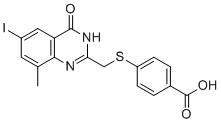
AEP07 (AEP 07) is a selective small molecule inhibitor of PARP4 (vPARP) inhibitor with IC50 of 0.8 uM, >12-fold selective over other PARP family members.
More description
|
|
| DC70750 | Rv1625c agonist V-59 Featured |
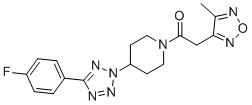
Rv1625c agonist V-59 (V-59) is a specific small molecule agonist of the Mtb adenylyl cyclase Rv1625c, inhibits Mtb growth in macrophages (EC50=0.3 uM) in an Rv1625c-dependent mechanism.V-59 inhibits Mtb growth in cholesterol media (EC50 0.70 uM), but not in media containing the two-carbon fatty acid acetate, or in standard rich growth media.V-59 stimulates Rv1625c to produce cAMP, which is necessary for V-59 to inhibit Mtb growth.Chemically activating Rv1625c via V-59 preferentially inhibits cholesterol utilization in WT Mtb, rather than equally inhibiting all lipid utilization by the bacterium.
More description
|
|
| DC70417 | Foldamer 33 Featured |
Foldamer 33 is a small molecule HSP110 inhibitor, directly binds to the nucleotide-binding domain (NBD) of HSP110, blocks HSP110 chaperone function and colorectal cancer growth.Foldamer 33 significantly inhibit HSP110 anti-aggregating activity with IC50 of 87.8 uM.Foldamer 33 disrupts HSP110-STAT3 interaction with IC50 of 35.9 uM in competitive BLI assays.Foldamer 33 inhibits SW480 colorectal cancer cell proliferation, and (5 mg/kg) Foldamer 33 displays an anti-tumor effect (TGI of 40% and 60%) in mice bearing a colorectal cancer.
More description
|

|
| DC12314 | SLLK, Control Peptide for TSP1 Inhibitor(TFA) Featured |
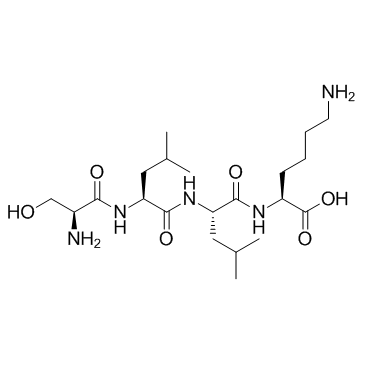
SLLK, Control Peptide for TSP1 Inhibitor (TFA) is a control peptide for LSKL, which is a Thrombospondin (TSP-1) inhibitor.
More description
|
|
| DC20288 | (-)-CXL017 Featured |
(-)-CXL017 is a small molecule that has selective cytotoxicity toward MDR cancer cell lines in vitro, through inhibition of the sarco/endoplasmic reticulum Ca(2+)-ATPase (SERCA) with IC50 of 13.5 uM.
More description
|

|
| DC28215 | A40926 Featured |
A40926, the precursor of Dalbavancin, is a second-generation glycopeptide antibiotic. A40926 inhibits gram-positive bacteria, and is very active against Neisseria gonorrhoeae.
More description
|
.gif)
|
| DC57050 | DZD9008 Featured |
DZD9008 is an oral, potent, irreversible, wild type-selective EGFR TKI against EGFR or HER2 Exon20ins and other mutations.
More description
|

|
| DC9739 | ReACp53(TFA salt) Featured |
ReACp53 is a cell-penetrating peptide,designed to inhibit p53 amyloid formation.
More description
|

|
| DC34739 | SMPH Crosslinker Featured |
SMPH Crosslinker is an alkyl/ether-based PROTAC linker that can be used in the synthesis of PROTACs.
More description
|

|
| DC11516 | Balovaptan Featured |
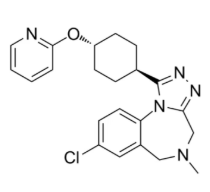
Balovaptan (RG7314, RG-7314) is a potent, selective vasopressin-1 receptor antagonist..
More description
|
|
| DC46361 | NP213 Featured |
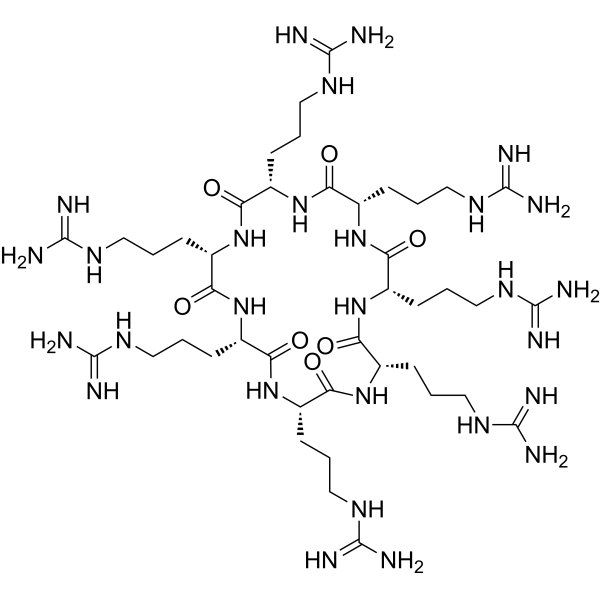
NP213 is a rapidly acting, novel, first-in-class synthetic antimicrobial peptide (AMP), has anti-fungal activities. NP213 targets the fungal cytoplasmic membrane and plays it role via membrane perturbation and disruption. NP213 is effective and well-tolerated in resolving nail fungal infections.
More description
|
|
| DC11200 | NGI-1 derivative C-19 Featured |
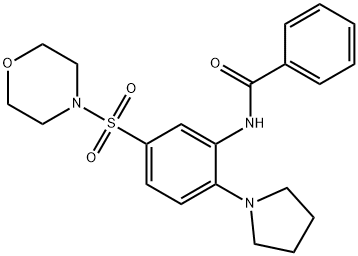
NGI-1 derivative C-19 is a specific, small-molecule inhibitor of oligosaccharyltransferase (OST) catalytic subunit STT3B, without effect on STT3A.
More description
|
|
| DC49089 | Cyanosafracin B Featured |
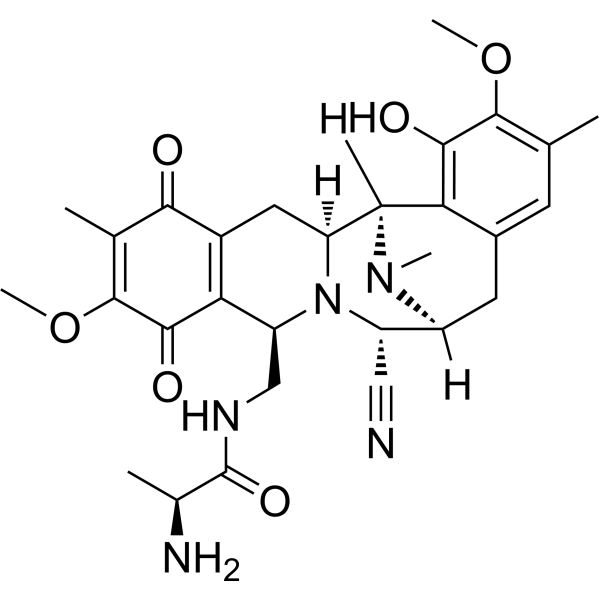
Cyanosafracin B is a starting material for synthesis of Ecteinascidin ET-743 and Phthalascidin Pt-650.
More description
|
|
| DC42510 | Ivacaftor-D9 Featured |
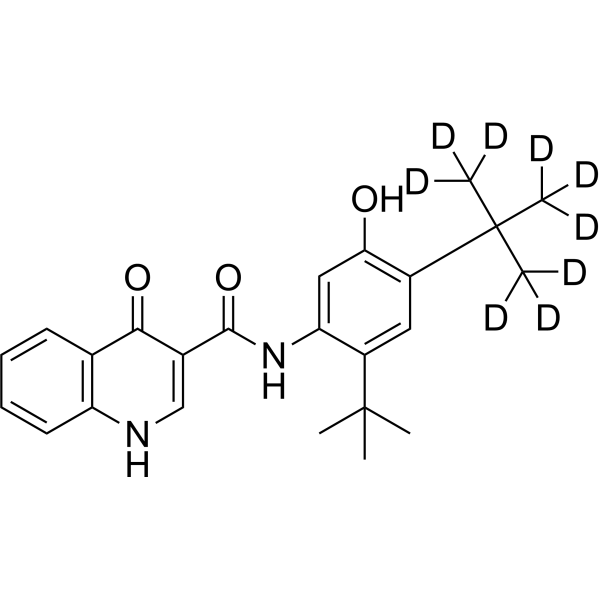
Ivacaftor-D9 (CTP-656) is a potent CFTR modulator and exhibits an EC50 value of 255 nM for CFTR potentiation in G551D/F508del HBE Cells. Ivacaftor-D9 acts as an orally active and improved deuterated Ivacaftor analog for cystic fibrosis research.
More description
|
|
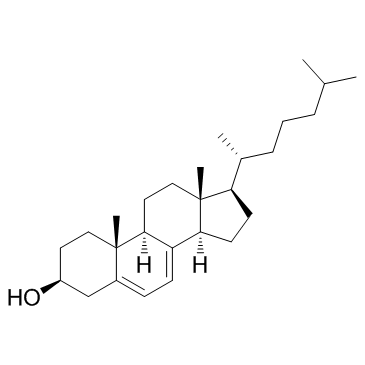
| DC12215 | 7-Dehydro Cholesterol Featured |
7-Dehydrocholesterol is biosynthetic precursor of cholesterol and vitamin D3.
More description
|
|
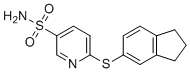
| DC22958 | RU-GIRK-1 Featured |
A potent GIRK2 inhibitor that inhibits GIRK2-mediated flux with an IC50 of 0.35 uM.
More description
|
|
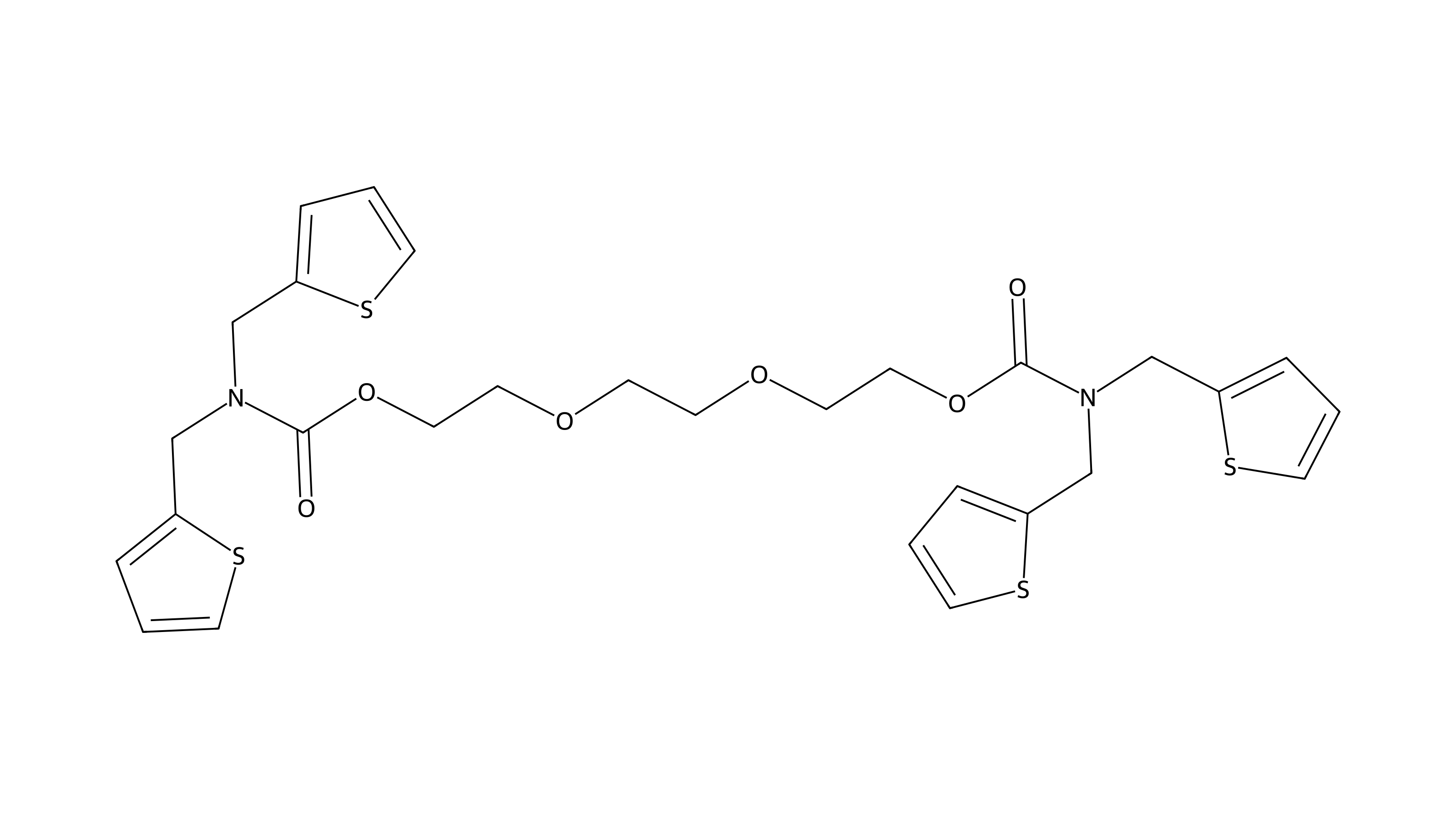
| DC73233 | Alintegimod (7HP349) Featured |
Alintegimod (7HP349) is a small molecule activator of the integrins αLβ2 (LFA-1) and α4β1 (VLA-4). 7HP349 directly activates integrin cell adhesion receptors crucial for the generation of an immune response.
More description
|
|
| DC70346 | DC-TEAD3in03 Featured |
DC-TEAD3in03 is a potent, selective, covalent TEAD3 inhibitor with IC50 of 0.16 uM, 100-fold selectivity over other TEAD isoforms (IC50>20 uM) in ABPP assays.DC-TEAD3in03 could significantly improve the thermal stability of TEAD3 protein, while it had minimal effect on widetype TEAD1, TEAD1 C359S and TEAD3 C371A mutants, demonstrated selective cellular engagement with Cys371 of TEAD3.DC-TEAD3in03 showed selective inhibitory effect on TEAD3 in GAL4-TEAD (1–4) reporter assays with IC50 of 1.15 uM in cellular assays.DC-TEAD3in03 reduced the growth rate of zebrafish caudal fins when administered to zebrafish juveniles.In the Hippo signaling pathway, the transcription factor TEA domains (TEADs) family proteins (TEAD1‒4) are the most important terminal regulators, which play an important role in development, cell proliferation, cell differentiation, tissue homeostasis, and regeneration.
More description
|

|
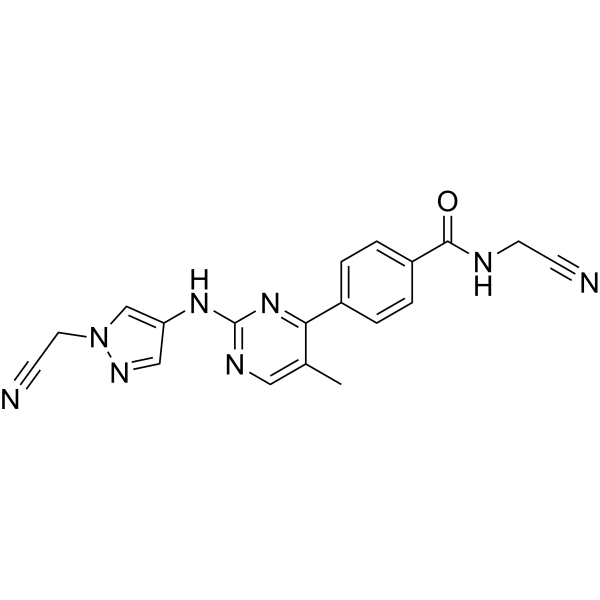
| DC74631 | LNK01003 Featured |
LNK01003(Example 4) is a selective and potent JAK inhibitor.
More description
|
|
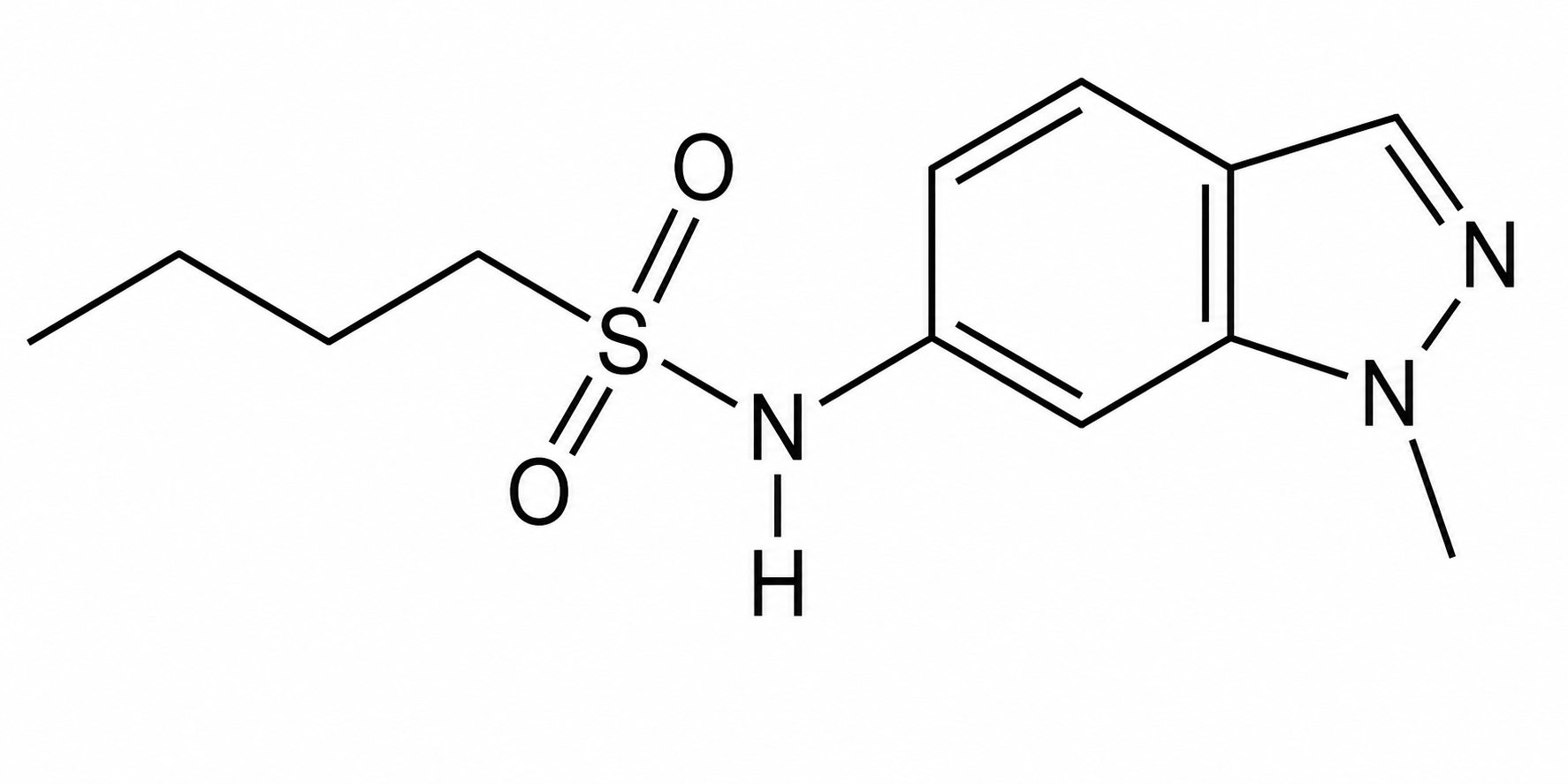
| DC70459 | GSK3011724A Featured |
GSK 3011724A (DG-167, GSK-3011724A) is a potent, specific inhibitor of β-ketoacyl-ACP synthase (KasA, Kd=9 nM), shows anti-tubercular activity (MIC H37Rv=0.8 uM); shows much weaker apparent dissociation constant for both Pks10 and Pks (Kd=1.4 uM); inhibits mycolic acid biosynthesis and shows negligible activity against a panel of unrelated proteins and 18 Gram-positive and Gram-negative bacterial species.
More description
|
|
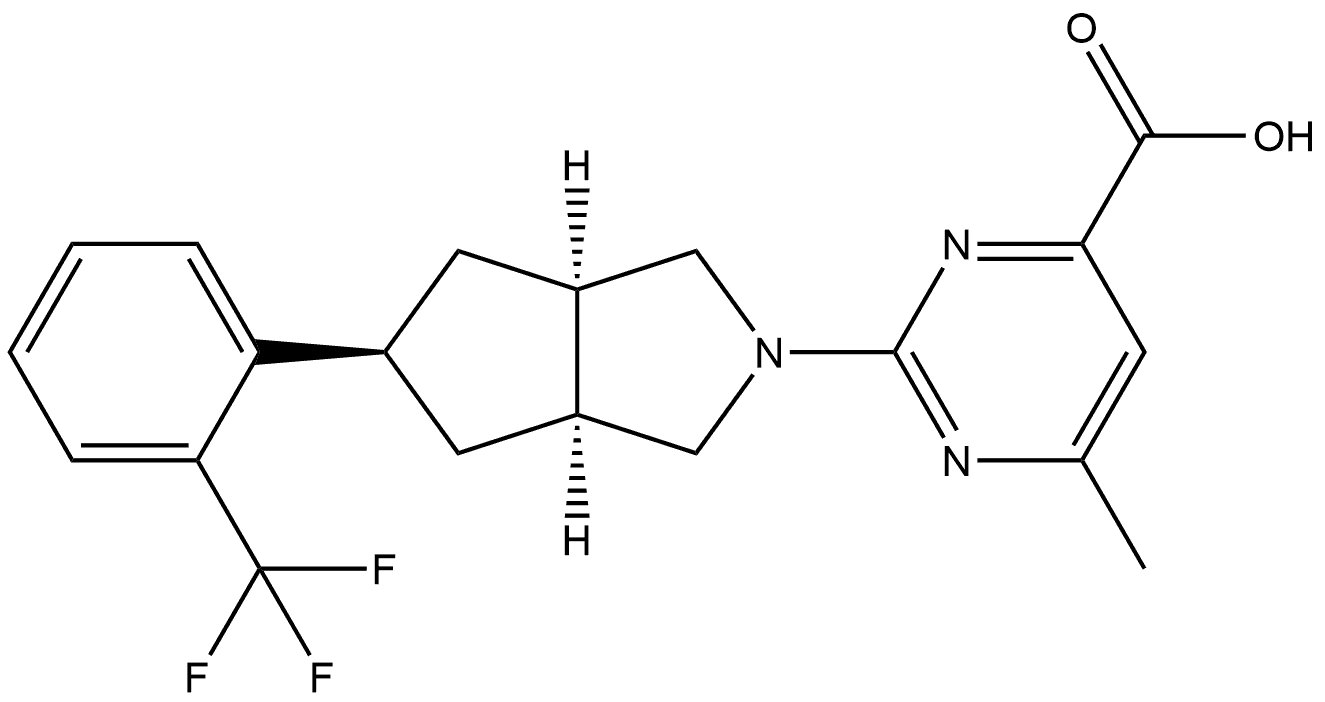
| DCC1108 | Bpn-14136 Featured |
Novel RBP4 antagonist with good in vitro potency and selectivity and optimal rodent pharmacokinetic (PK) and pharmacodynamic (PD) characteristics
More description
|
|
| DC74260 | cyclo-CRVLIR Featured |
cyclo-CRVLIR is a cyclic peptide that binds selectively to p110α RAS binding domain (p110α-RBD) with ITC Kd of 3 uM, blocks p110α/RAS interaction in vitro and KRAS cancer cell lines.
More description
|

|
| DC74205 | Tryptolinamide Featured |
Tryptolinamide (TLAM) is a small-molecule compound that activates mitochondrial respiration in cybrids generated from patient-derived mitochondria and fibroblasts from patient-derived iPSCs, inhibits phosphofructokinase-1 (PFK1) with an ATP-uncompetitive
More description
|
|
| DC73683 | LTGO-33 Featured |
LTGO-33 is a potent, selective inhibitor of voltage-gated sodium channel NaV1.8 with IC50 of 44 nM (hNaV1.8), 600-fold selectivity against NaV1.1-NaV1.7 and NaV1.9.
More description
|

|
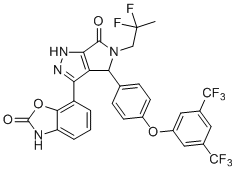
| DC73980 | DS55980254 Featured |
DS55980254 (DS 55980254) is potent, selective and orally active PTDSS1 (phosphatidylserine synthetase 1) inhibitor, suppresses phosphatidylserine (PS) production activity of PTDSS1 (IC50=100 nM) in cell-free assays, but not that of PTDSS2.
More description
|
|
