 To enhance service speed and avoid tariff delays, we've opened a US warehouse. All US orders ship directly from our US facility.
| Cat. No. | Product Name | Field of Application | Chemical Structure |
|---|---|---|---|
| DC73617 | NV-6297 Featured |
NV-6297 (NV6297) is a potent, selective mTORC1 pathway signaling inhibitor without inhibition on mTORC2, inhibits S6K1 phosphorylation (pS6K1 T389) in MCF7 cells with IC50 of 120 nM, directly and selectively targets GLUT-1.
More description
|

|
| DC70103 | MS.001 Featured |
MS.001 is a small molecule that inhibits both the chaperone binding and ubiquitin ligase activity of C-terminus of Hsc70 interacting protein (CHIP) at low micromolar concentrations (IC50=3.3 uM).
More description
|

|
| DC73066 | NBCoV2 Featured |
NBCoV2 is a highly potent small molecule viral fusion inhibitor with potential pan-Coronavirus activity (SARS-CoV IC50=13.8 nM, SARS-CoV-2 IC50=22.8 nM, MERS-CoV IC50=77 nM, cell-based single-cycle assays).
NBCoV2 also has potent antiviral activity against all mutant pseudoviruses carrying single-, double-, or triple-mutations featured in the B.1.1.7 UK, B.1.351 RSA, and B.1.617.2 Delta variants (IC50=30-80 nM).
NBCoV2 completely preventing the induction of any virus-induced CPE (IC100=1.25 uM, SARS-CoV-2 (US_WA-1/2020)).
NBCoV2 bind to the S2 subdomain of the SARS-CoV-2 trimer, thus, inhibits the fusion of CoVs with the cell membran, and is specific for the SARS-CoV-2 S protein.
More description
|

|
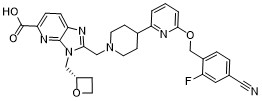
| DC90033 | Rgt1383 Featured |
RGT1383 is a novel GLP-1R agonist, an analog of PF-06882961.
More description
|
|
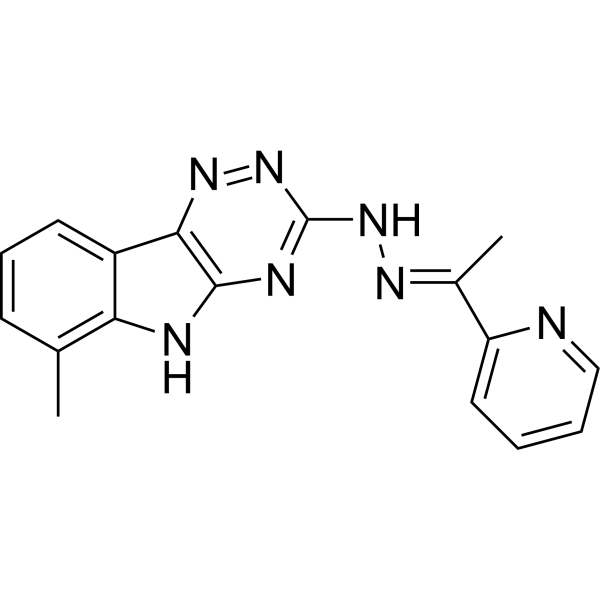
| DC34262 | VLX600 Featured |
VLX600 is a cell-permeable anticancer agent. It acts by reducing mitochondrial oxidative phosphorylation in tumor cells.
More description
|
|
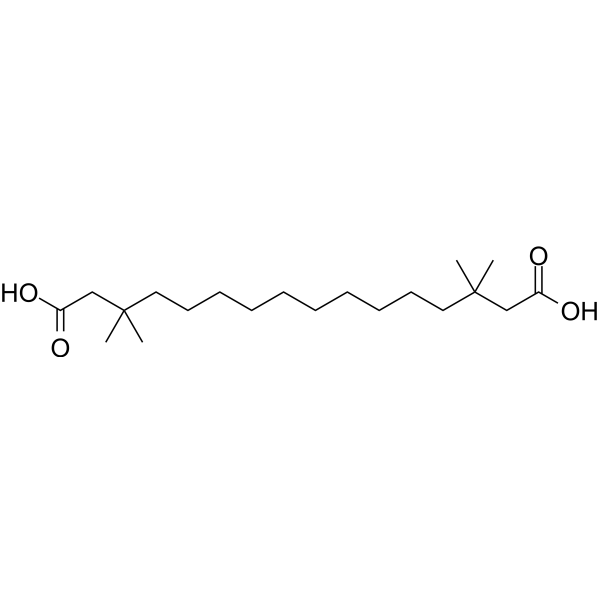
| DC34019 | MEDICA 16 Featured |
MEDICA16 is a GPR40 agonist. MEDICA 16 is a β,β'-dimethyl hexadecanedioic acid which exhibits hypolipidemic and antidiabetogenic effects in the rat.
More description
|
|
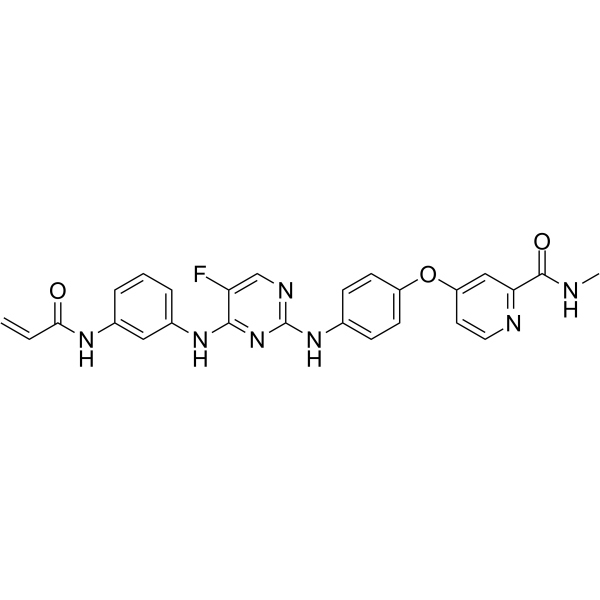
| DC7161 | CNX-774 Featured |
CNX-774 is a potent, selective, and orally available small molecule inhibitor of Btk (IC50< 1 nM) that forms a ligand-directed covalent bond with Cys-481, a non-conserved amino acid within the active site of the enzyme.
More description
|
|
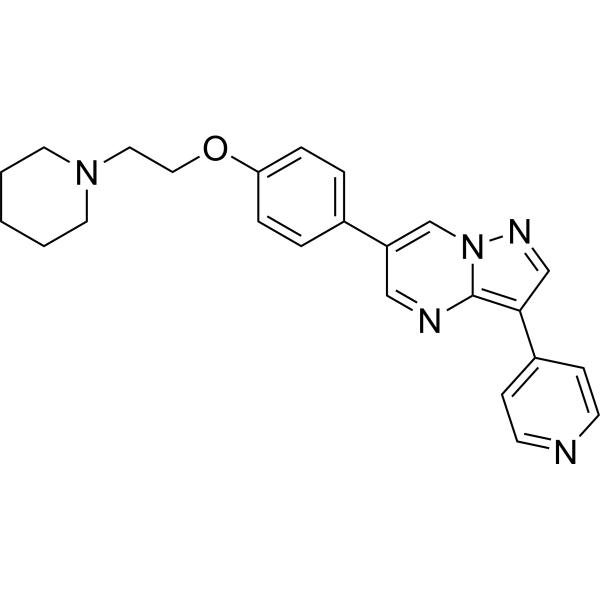
| DC8296 | Dorsomorphin(BML-275) Featured |
Dorsomorphin(Compound C; BML-275) has been shown to act as a potent and selective inhibitor of AMPK (AMP-activated protein kinase; Ki = 109 nM), induced by AICAR and metformin; also inhibits the bone morphogenetic protein type 1 receptors ACTR-I (ALK2), B
More description
|
|
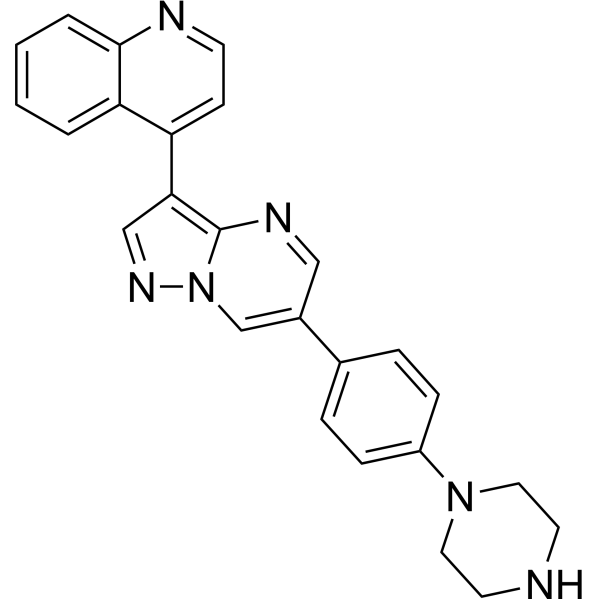
| DC8034 | LDN193189 free base Featured |
LDN193189 is a selective BMP signaling inhibitor, inhibits the transcriptional activity of the BMP type I receptors ALK2 and ALK3 with IC50 of 5 nM and 30 nM, respectively.
More description
|
|
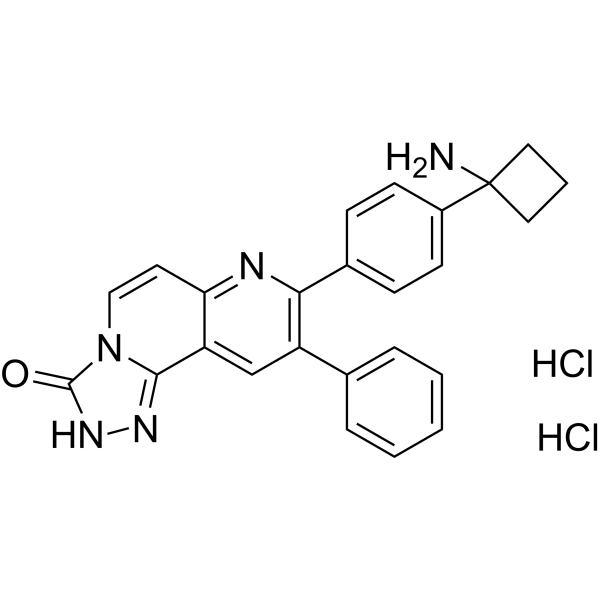
| DC7465 | MK-2206 2HCl Featured |
MK-2206 2HCl is a highly selective inhibitor of Akt1/2/3 with IC50 of 8 nM/12 nM/65 nM, respectively; no inhibitory activities against 250 other protein kinases observed. Phase 2.
More description
|
|
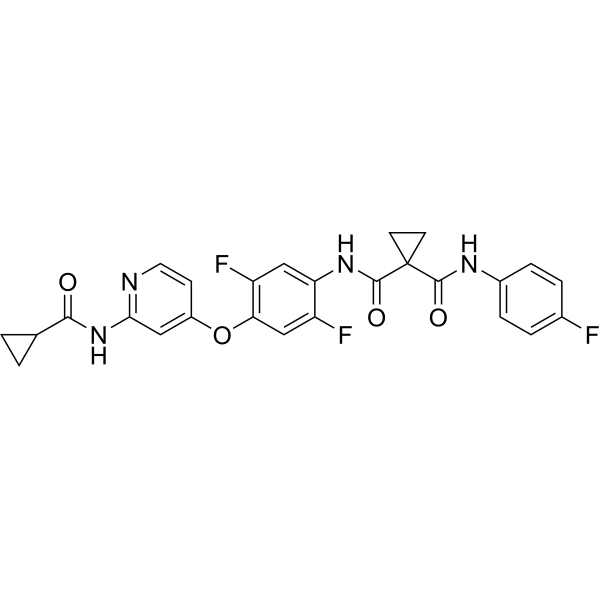
| DC8072 | Altiratinib(DCC-2701) Featured |
Altiratinib is a MET/TIE2/VEGFR2/TRK (A,B,C) kinase inhibitor in Phase 1 clinical development for the treatment of invasive solid tumors including glioblastoma.
More description
|
|
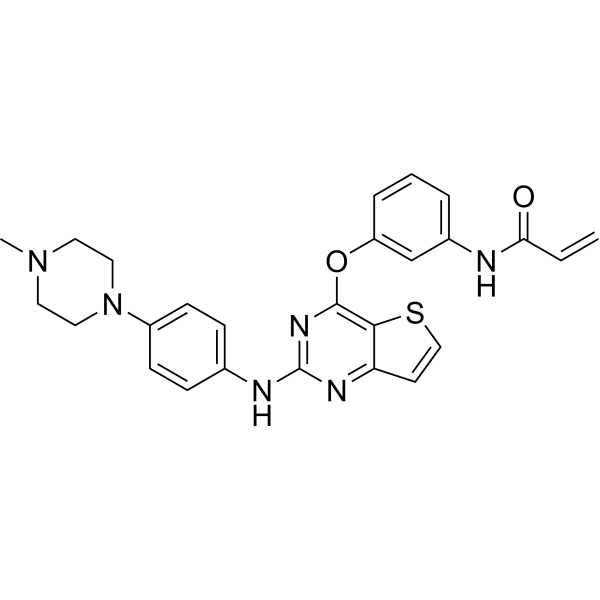
| DC8819 | Olmutinib (HM61713; BI-1482694) Featured |
HM-61713 (BI-1482694) is an orally available small molecule, mutant-selective inhibitor of epidermal growth factor receptor (EGFR) with potential antineoplastic activity.
More description
|
|
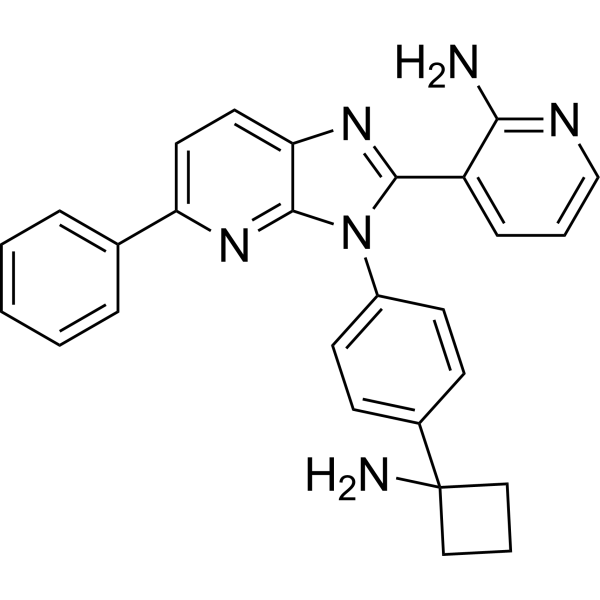
| DC9972 | ARQ-092(Miransertib) Featured |
ARQ 092 is an oral activie, potent and selective AKT inhibitor with IC50 values: 5.0 nM (AKT1); 4.5 nM (AKT2); 16 nM (AKT3).
More description
|
|
| DC70599 | miR-21 inhibitor 12 Featured |
miR-21 inhibitor 12 (miR-21-IN-12) is a small molecule inhibitor of microRNA-21 expression and inhibit miR-21 transcription.miR-21-IN-12 inhibited transcription of the miR-21 gene resulting in significant reductions in primary and mature miR-21 levels.miR-21-IN-12 demonstrated cytotoxicity in a cervical cancer cell line via induction of apoptosis and was capable of reducing microtumor formation in a long-term clonogenic assay.miR-21-IN-12 shows some level of selectivity for miR-21 and is not a general miRNA pathway inhibitor.
More description
|

|
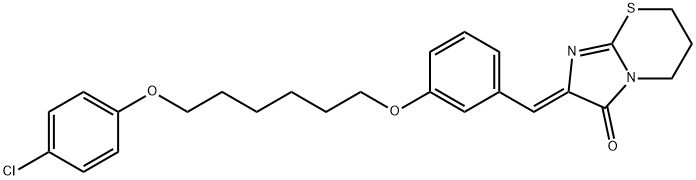
| DC74133 | PSB-CB-27 Featured |
PSB-CB-27 is a potent, selective antagonist of GPR18 with IC50 of 650 nM, shows no inhibition on GPR55 and low affinity for CB1/CB2 receptors.
More description
|
|
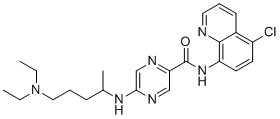
| DC73504 | JR1-157 Featured |
JR1-157 is a potent selective sigma 2 receptor (σ2R) ligand with Ki value of 47 nM, >10-fold selectivity over σ1R.
More description
|
|
| DC74438 | NRPa-308 Featured |
NRPa-308 is a neuropilin-1 (NRP-1) antagonist, inhibits the VEGF-A165/NRP-1 binding with IC50 of 42 uM, exerts in vitro anti-angiogenic activity.
More description
|

|
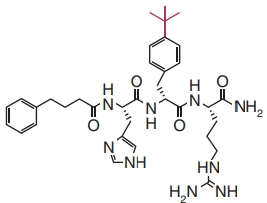
| DCC3108 | Lk-514 Featured |
Novel selective agonist of the human melanocortin 1 receptor (hMC1R) for sunless tanning and prevention of genotoxicity of UV in melanocytes
More description
|
|
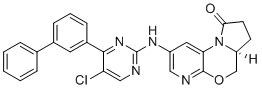
| DC74198 | TMX-4102 Featured |
TMX-4102 (TMX4102) is a highly potent, selective PIP4K2C binder with KD of 0.45 nM, shows no affinity for PIP4K2B and PIP4K2A (KD>10 uM).
More description
|
|
| DC73604 | TMEM16A blocker 1PBC Featured |
1PBC is a small molecule blocker of calcium-activated chloride channel TMEM16A, blocks TMEM16A completely with an IC50 of 4 uM at zero mV and saturating Ca2+ concentration (2 uM).
More description
|

|
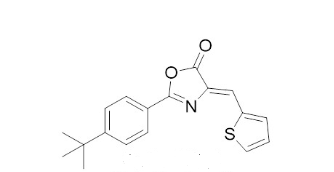
| DC42728 | YS-01 Featured |
Novel pendrin inhibitor, attenuating airway hyperresponsiveness and mucin expression in experimental murine asthma
More description
|
|
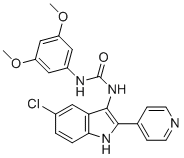
| DC74539 | L557-0155 Featured |
L557-0155 is a small molecule inhibitor of VSIG-8, prevents VSIG-8 binding to VISTA, promotes cytokine production and cell proliferation in PBMCs and suppresses melanoma growth.
More description
|
|
| DC72983 | ZINC20451377 Featured |
ZINC20451377 is a small molecule that binds to hepatitis B surface antigen (HBsAg) with high affinity (Kd=65.3 nM), reduces HBsAg levels and HBV virion secretion in cell culture model for HBV.
More description
|

|
| DC74459 | Z271-0326 Featured |
Z271-0326 is a first-in-class, potent and specifc inhibitor of NACK (Notch activation complex kinase) with SPR KD value of 0.89 uM, directly blocks NACK recruitment to the Notch ternary complex (NTC).
More description
|

|
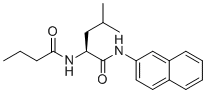
| DC73953 | CPAG-1 Featured |
CPAG-1 (PGRMC2 activator CPAG-1) is a small-molecule activator of PGRMC2.
CPAG-1 treatment had no effect on weight or food intake but treated mice had reduced fasting glycemia and insulin levels.
CPAG-1 decreased Rev-Erbα protein in BAT of CPAG-1-treated mice.
CPAG-1 also significantly increased labile heme in the nucleus of brown adipocytes from CPAG-1-treated mice within 4 days of treatment.
More description
|
|
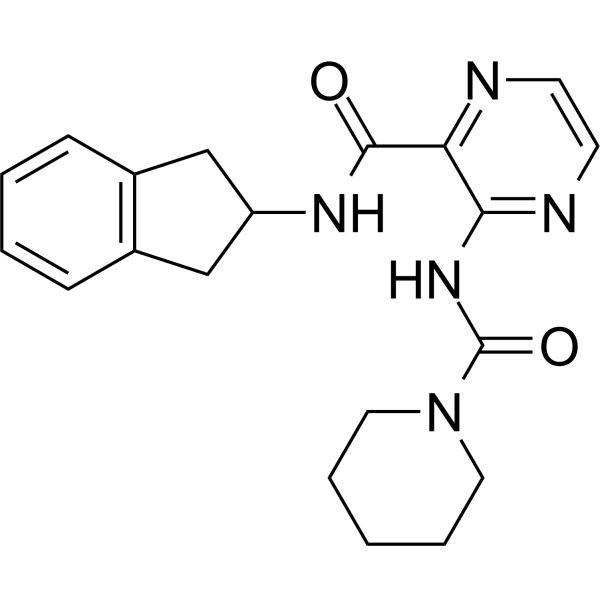
| DC79917 | NCP26 |
(Rac)-Opnurasib ((Rac)-JDQ-443; (Rac)-NVP-JDQ443) is the levorotomer of Opnurasib. Opnurasib is an orally active, potent, selective, and covalent KRAS G12C inhibitor (extracted from patent WO2021120890A1). Opnurasib shows antitumor activity.
More description
|
|
| DC73426 | F17464 Featured |
F17464 is a dopamine D3 receptor preferential antagonist exhibiting high affinity for human dopamine receptor subtype 3 (hD3) (Ki=0.17 nM) and 5-HT1a (Ki=0.16 nM) and a >50 fold lower affinity for the human dopamine receptor subtype 2 short and long form (hD2s/l) (Ki=8.9 and 12.1 nM, respectively).
F17464 is a D3 receptor antagonist, 5-HT1a receptor partial agonist.
F17464 blocks ketamine induced morphological changes, an effect D3 receptor mediated, in human dopaminergic neurons. F17464 increases dopamine release in the rat prefrontal cortex and mouse lateral forebrain-dorsal striatum and seems to reduce the effect of MK801 on % c-fos mRNA medium expressing neurons in cortical and subcortical regions.
F17464 also rescues valproate induced impairment in a rat social interaction model of autism, with dose range 0.32-2.5 mg/kg i.p. in both rats and mice
More description
|

|
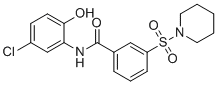
| DC20765 | BDT001 Featured |
BDT001 is a first-in-class, non-competitive FLT3 negative allosteric modulator, effectively prevents extracellular cytokine FL binding to FLT3 with IC50 of 11 uM.
More description
|
|
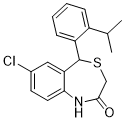
| DC43155 | ITH12575 Featured |
A potent and selective inhibitor of mitochondrial Na+/Ca2+ exchanger mNCX with neuroprotective activity. It was shown to reduce Ca2+ efflux from the mitochondria to the cytosol with an EC50 value of 690 nM and was shown to protect against Ca2+ overload an
More description
|
|
| DC73375 | QAF-805 Featured |
QAF-805 (QAF805) is a potent, dual adenosine-A2B receptor and adenosine-A3 receptor antagonist with Ki of 3.4 nM (A2B).
More description
|
.gif)
|
