 To enhance service speed and avoid tariff delays, we've opened a US warehouse. All US orders ship directly from our US facility.
| Cat. No. | Product Name | Field of Application | Chemical Structure |
|---|---|---|---|
| DC65390 | BP Lipid 135 Featured |
BP Lipid 135 is a well-designed ionizable lipid optimized for mRNA encapsulation and delivery. Its propanolamine headgroup, ester bonds at the C8 position, and 9-carbon tail contribute to efficient mRNA complexation, stability during delivery, and improved biodegradability. These properties make it a valuable component in LNPs for gene therapy and other mRNA-based therapeutic applications.
More description
|

|
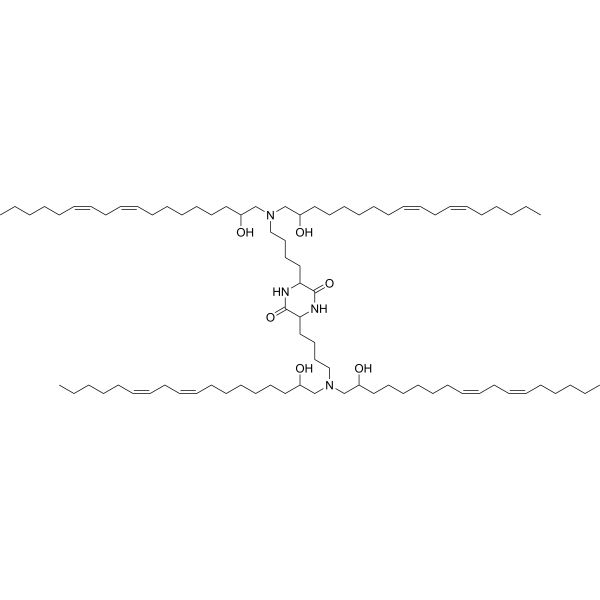
| DC49908 | OF-02 Featured |
OF-02 (OF-2) is an alkenyl amino alcohol (AAA) ionizable lipid for highly potent in vivo mRNA delivery.Alkenyl amino alcohols (AAA) are a functional group found in sphingosine and other bioactive molecules. It was used to prepare
AAA-based ionizable lipids through ring-opening reactions between alkenyl epoxides (AEs) and polyamine cores. These
AAA-based iLNPs could promote high-level protein expression Therefore, AAA-based ionizable lipids OF-00, OF-01,
OF-02, and OF-03 were prepared. The results of in vivo delivery
of human erythropoietin (hEPO) mRNA showed that the AAA
ionizable lipid OF-02 with the linoleic acid derivative
could effectively deliver hEPO mRNA. Compared with the positive
control CKK-E12, OF-02 showed an increased ability to
induce serum EPO protein expression by nearly twofold
(Figure 7b). Likewise, it outperformed two benchmark ionizable
lipids (503013 and C12-200) in the nucleic acid delivery field.
Furthermore, the mRNA delivered by OF-02 iLNPs was mainly
in vivo.translated into the liver. The liver-targeting ability of OF-02 iLNPs
improves their delivery efficiency. Therefore, the OF-02 iLNPs
may become excellent delivery vehicles for the treatment of liver
diseases without other side effects of damage to other organs
during the treatment
More description
|
|
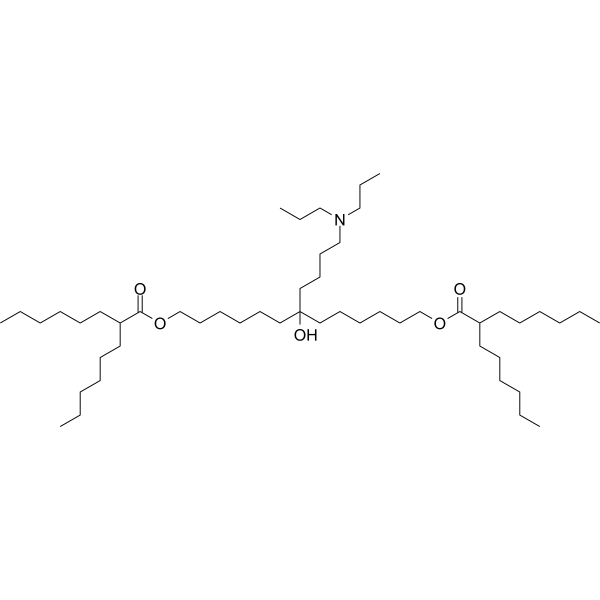
| DC60475 | CL4F8-6 Featured |
CL4F8-6 is an ionizable cationic lipid (pKa = 6.14) that has been used in combination with other lipids in the formation of lipid nanoparticles (LNPs).1 LNPs containing CL4F8-6 and encapsulating an mRNA reporter accumulate specifically in the mouse liver after intravenous administration. LNPs containing CL4F8-6 and encapsulating mRNA encoding the Cas9 nuclease (mCas9) and single-guide RNA (sgRNA) targeting Ttr (sgTtr), the gene encoding transthyretin, have been used to induce CRISPR-mediated gene knockdown in mice resulting in a reduction of serum levels of TTR.
More description
|
|
| DC70008 | CLinDMA |
CLinDMA, a cationic lipid known to potentially trigger inflammatory responses, is utilized in the synthesis of LNP201. This liposome-based assembly is specifically designed for the systemic delivery of siRNA.
More description
|

|
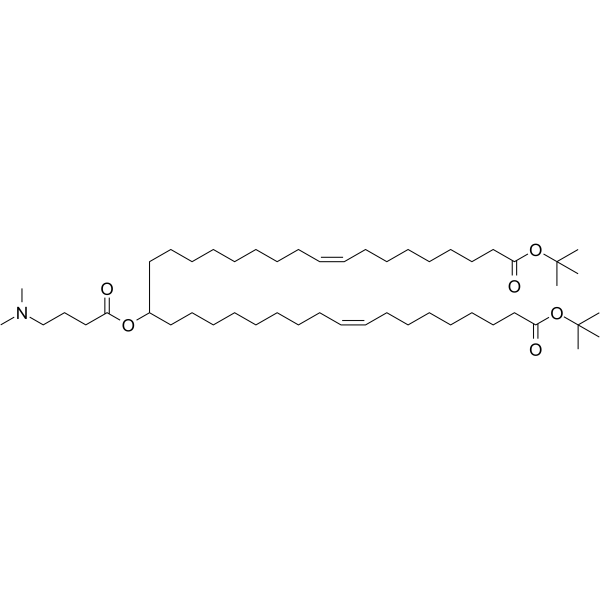
| DC49883 | L343 |
L-343 is an ionizable cationic lipidoid and can be used to synthetic liposomes for systemic delivery of RNAi therapeutics, Pka: 6.34.L343, with its sterically hindered tert-butyl esters, exhibited slower elimination from plasma and higher and more persistent levels in liver compared with L319.
More description
|
|
| DC71044 | Fluorescent DOTAP |
Fluorescent DOTAP, a cationic lipid, can be used for the research of nucleic acid and protein delivery.
More description
|

|
| DC60362 | DLenDMA |
DlenDMA is a lipid for RNA and vaccine delivery. DLenDMA showed better siRNA transfection efficiency than DODMA.
More description
|

|
| DC60421 | DC-6-14 |
DC-6-14 is a cationic lipid that can be used for drug delivery, gene transfection and vaccine delivery. DC-6-14 may be used for research into in vitro and in vivo nucleic acid and protein delivery. Reagent grade, for research use only.
More description
|
|
| DC65333 | A2-Iso5-4DC19 |
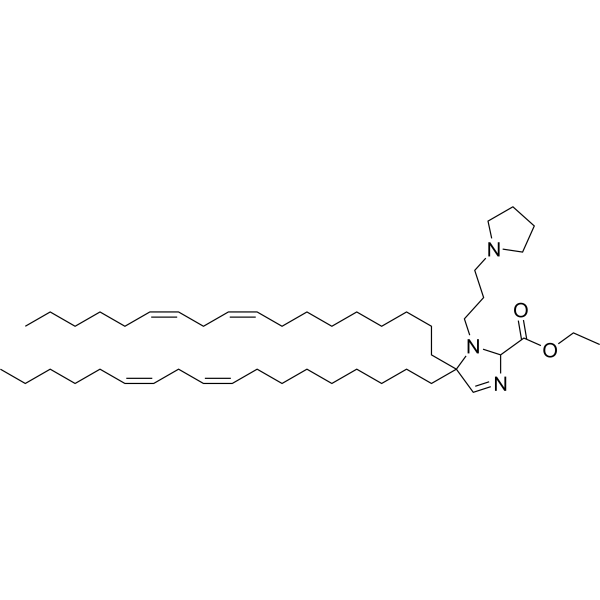
A2-Iso5-4DC19 is a lipidoid compound. A2-Iso5-4DC19 is an effective carrier for the delivery of an agent such as a polynucleotide to a cell.
More description
|
|
| DC65001 | 4A3-Cit |
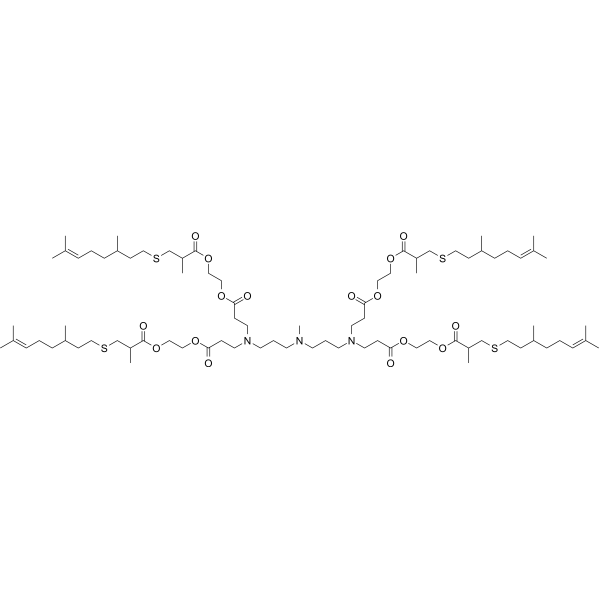
4A3-Cit is an ionizable lipid used for the generation of lipid nanoparticles (LNPs). To investigate the role of unsaturated lipid tails in iLNPs, the
nucleophilic amines were added to ester-based linkers, followed
by Michael’s addition to the thiols to construct a library of 91
amino ionizable lipids. Such ionizable lipids were composed
of an ionizable tertiary amine core, an ester-based degradable
linker, and an alkylthiol tail periphery. Through in vitro
and in vivo screening, the iLNPs with 4A3 core and citronellolbased
(Cit) periphery can significantly increase endosome escape
and delivery efficiency of mRNA, leading to 18-fold increase in
protein expression compared with iLNPs without Cit periphery.
Furthermore, the delivery efficiency of mRNA may be associated
with the location/configuration of the unsaturated bond(s) in
lipids. Although lipids with Cit periphery showed excellent
membrane fusion ability to facilitate endosome escape, the
fusion mechanism needs to be further clarified.
More description
|
|
| DC65335 | LNP Lipid-5 |
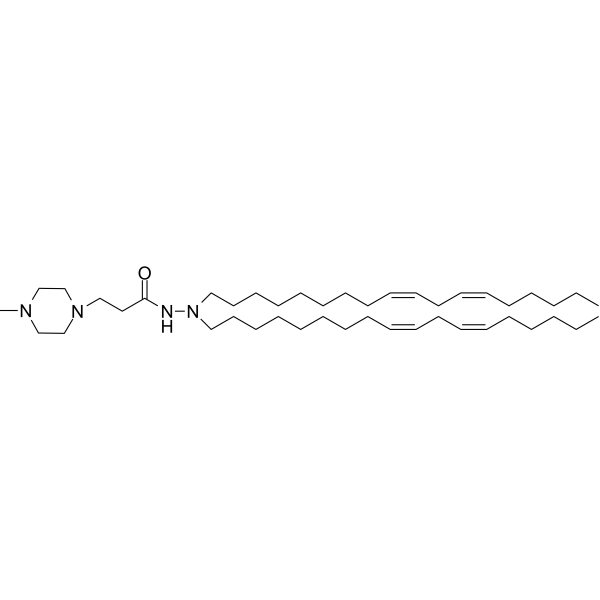
LNP Lipid-5 (Compound Lipid 2) is an ionizable lipid (amino lipid). LNP Lipid-5 can be used to prepare lipid nanoparticles .
More description
|
|
| DC67117 | 113-N16B |
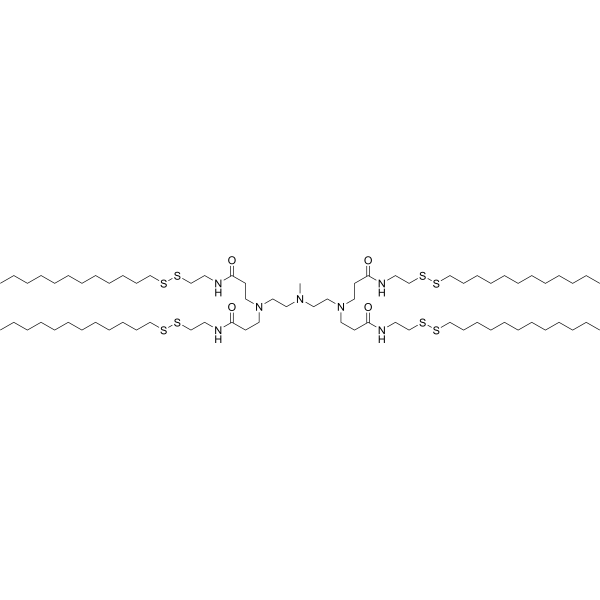
113-N16B is an ionizable cationic lipid used for the generation of lipid nanoparticles (LNPs). 113-N16B delivers mRNA preferentially to pulmonary endothelial cells.
More description
|
|
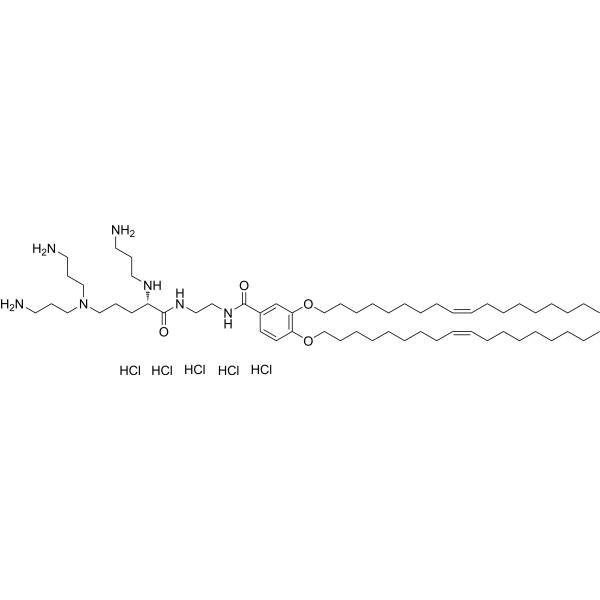
| DC52028 | MVL5 |
MVL5 is a new Multivalent Cationic Lipid for siRNA Delivery.Improved total gene silencing and Lower non-specific gene silencing,Lower toxicity.
More description
|
|
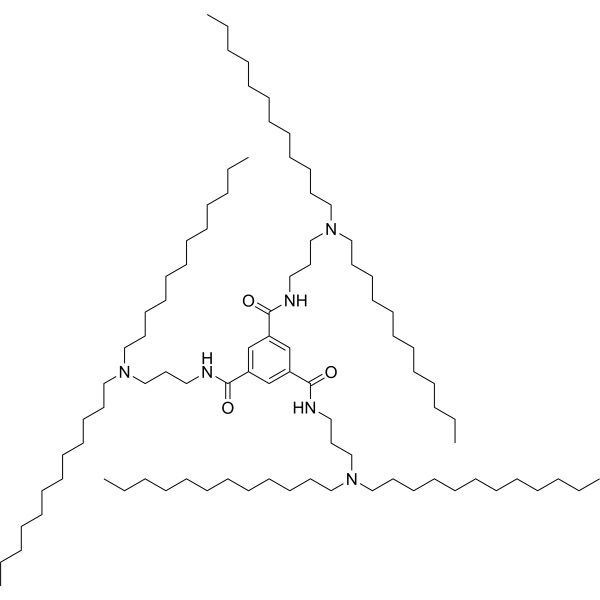
| DC49845 | TT3-LLN |
TT3 is an ionizable cationic amino lipid that has been used in combination with other lipids in the formation of lipid-like nanoparticles (LLNs). Administration of LLNs containing TT3 and encapsulating mRNA encoding human coagulation Factor IX induces human coagulation Factor IX expression in the plasma of mice.
More description
|
|
| DC67451 | 9C-SCC-10 |
9C-SCC-10 is a biodegradable ionizable lipid (pKa 6.42) with a unique crown-like structure, designed for hepatic mRNA delivery. When formulated into lipid nanoparticles (LNPs), it demonstrates selective liver accumulation in murine models, making it particularly suitable for liver-targeted therapeutic applications.
More description
|

|
| DC60702 | 31hP |
31hP is an asymmetric A3-lipid for mRNA delivery. 31hP LNP exhibits higher stability and durability compared with MC3 LNP and SM-102 LNP. 31hP LNP achieves more efficient hepatic mRNA delivery with a much higher gene editing efficiency than MC3 LNP and LP01 LNP.
More description
|

|
| DC67454 | BCP-NC2-C12 |
BCP-NC2-C12 is an ionizable cationic lipid designed for mRNA delivery, forming LNPs that predominantly localize to hepatic and splenic tissues in vivo. When formulated with CRISPR-Cas9 components (Cas9 mRNA and Pcsk9-targeting sgRNA), these LNPs effectively generate gene-editing indels and significantly lower circulating PCSK9 levels in murine models.
More description
|

|
| DC67453 | Lipid 114 |
Lipid 114 (pKa ~6.8) is an ionizable cationic lipid optimized for siRNA delivery via LNPs, demonstrating predominant hepatic accumulation with secondary renal uptake in murine models. When formulated with IL-1β-targeting siRNA, these LNPs effectively suppress pro-inflammatory cytokine expression in both macrophage cell lines and primary cells in a dose-dependent manner. In LPS/galactosamine-induced acute liver failure models, the therapeutic LNPs significantly reduce IL-1β levels in target organs while attenuating hepatic inflammation and injury markers.
More description
|

|
| DC67459 | Lipid A |
Lipid A represents a modified variant of ALC-0315, functioning as an ionizable cationic lipid with a pKa of 4.67 for optimized nucleic acid delivery applications.
More description
|

|
| DC67456 | Lipid U 105 |
Lipid U 105 is an ionizable cationic lipid (pKa 6.65) specifically designed for circular RNA delivery via LNPs. These formulations effectively enhance VEGF-A expression in HUVECs, promoting endothelial cell proliferation and migration. When applied topically in diabetic mouse models, the VEGF-A-encoding circular RNA LNPs significantly accelerate wound healing, demonstrating therapeutic potential for impaired tissue repair.
More description
|

|
| DC67241 | 4-O10b1 |
4-O10b1 is an ionizable lipid used to generate lipid nanoparticles (LNPs) for delivering RNA to cells. LNPs comprised of 4-O10b1 and conjugated with the macrophage antibody F4/80 were able to delivery siRNA targeting TAK1 to RAW264.7 cells resulting in suppressed activation of NF-kB. Intranasal administration reduced lung injury in an influenza mouse model.
More description
|
.jpg)
|
| DC67461 | 2N12B |
2N12B is a redox-responsive cationic lipid (pKa = 6.5) designed for siRNA delivery. Its LNPs mediate robust VEGFA knockdown in both cultured retinal cells and ex vivo mouse retina, while functionally impairing HUVEC motility. When administered in retinopathy models, the nanoparticles alleviate disease hallmarks including abnormal vessel growth and retinal vascular leakage.
More description
|

|
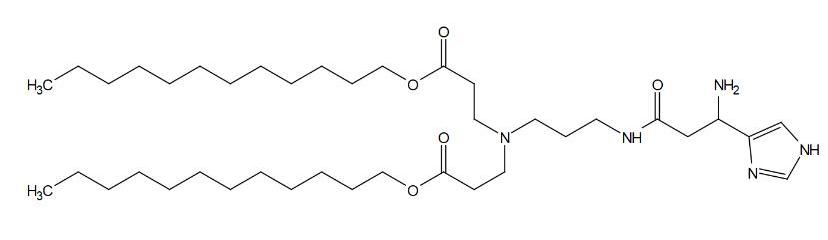
| DC60603 | O12-D3-I3 |
O12-D3-I3 is an imidazole-based lipid for siRNA delivery. O12-D3-I3-LNPs encapsulating FVII siRNA (FVII@O-LNP) elicites greater gene silencing than those with the DLin-MC3-DMA (MC3) due to its stronger endosomal escape.
More description
|
|
| DC67464 | CP-LC-1074 |
CP-LC-1074 is a homocysteine-derived ionizable cationic lipid that enables highly efficient in vivo delivery of various RNA therapeutics (including mRNA, cRNA, and saRNA) with robust protein expression. When formulated in standard LNP compositions (50:38.5:10:1.5 molar ratio of ionizable lipid:cholesterol:DOPE:PEG-lipid), it demonstrates superior lung-specific targeting compared to commercial alternatives following intravenous administration, while maintaining an excellent safety profile.
More description
|

|
| DC67466 | CP-LC-1447 |

|
|
| DC67468 | DSPE-Polysarcosine100 |
DSPE-polysarcosine100 represents an innovative amphiphilic conjugate, combining the phospholipid DSPE with a 100-unit polysarcosine chain terminated by an amine group. This polymer-modified lipid serves as a promising alternative to PEGylated compounds in nanoparticle formulations, offering reduced immunogenicity for both protein therapeutics and lipid-based delivery systems.
More description
|

|
| DC67467 | CP-LC-1073 |

|
|
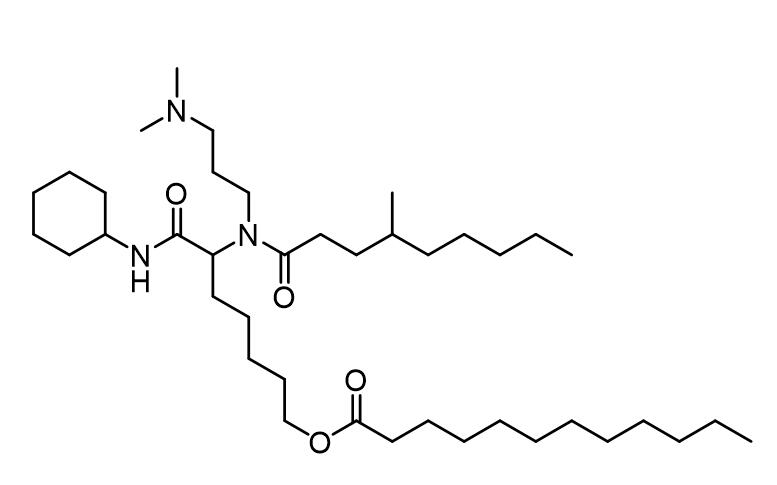
| DC60596 | H1L1A1B3 |
H1L1A1B3 is an ionizable lipid which demonstrates a fourfold increase in circRNA transfection efficiency in lung cancer cells over ALC-0315. H1L1A1B31 is capable of proactively stimulating innate immune activation upon injection.
More description
|
|
| DC66652 | CP-LC-0867 |
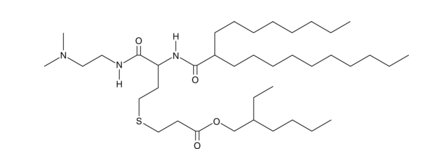
|
|
| DC67472 | Hexa Lipid 114 |
Hexa lipid 114 represents a structural derivative of lipid 114, engineered as an ionizable cationic compound for enhanced nucleic acid delivery applications.
More description
|

|
