 To enhance service speed and avoid tariff delays, we've opened a US warehouse. All US orders ship directly from our US facility.
| Cat. No. | Product Name | Field of Application | Chemical Structure |
|---|---|---|---|
| DCY-113 | Acevaltratum |
>98%,Standard References
More description
|

|
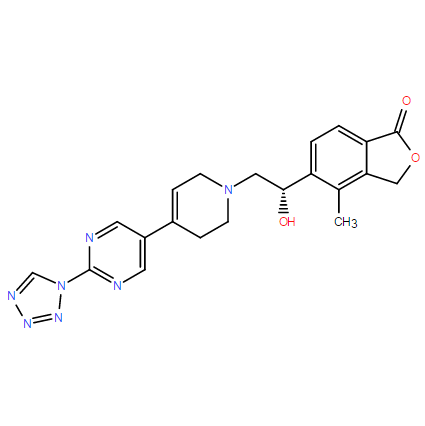
| DC9767 | SHR-1977 Featured |
SHR-1977 is a novel ROMK/hERG inhibitor, (ROMK IC50 = 44 nM, hERG IC50 = >100,000 nM)
More description
|
|
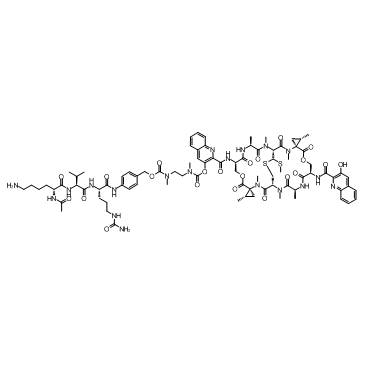
| DC20117 | SW-163D-AcLysValCit-PABC-DMAE |
SW-163D-AcLysValCit-PABC-DMAE is a Drug-Linker Conjugates for ADC which consists of a natural bis-intercalator, SW-163D, conjugated via an AcLysValCitPABC-DMAE linker.
More description
|
|
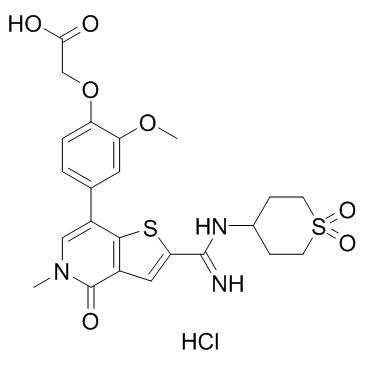
| DC20095 | Target Protein-binding moiety 6 hydrochloride |
Target Protein-binding moiety 6 hydrochloride is a compound that binds to BRD9, and used for inhibiting BRD9 activity, based on PROTAC.
More description
|
|
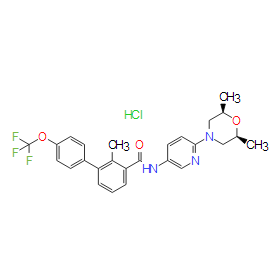
| DC9245 | LDE-225 HCl |
|
|
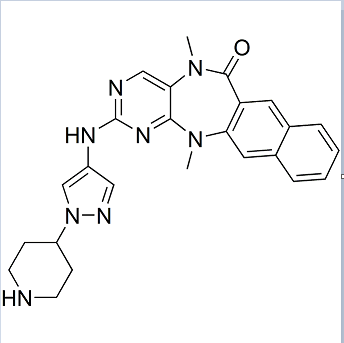
| DC7687 | XMD-18-42 Featured |
XMD-18-42 is a NUAK1-sepcific inhibitor.
More description
|
|
| DC12115 | Adrenomedullin (AM) (1-52), human TFA (Human adrenomedullin-(1-52)-NH2 (TFA)) |
Adrenomedullin (AM) (1-52), human (TFA) affects cell proliferation and angiogenesis in cancer.
More description
|
|
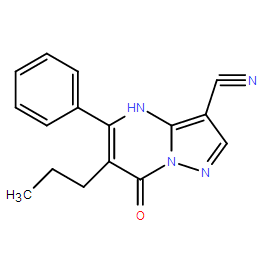
| DC10593 | CPI-455 analogue(KDM5 inhibitor) Featured |
CPI-455 analogue is a selective inhibitor of KDM5 demethylases.
More description
|
|
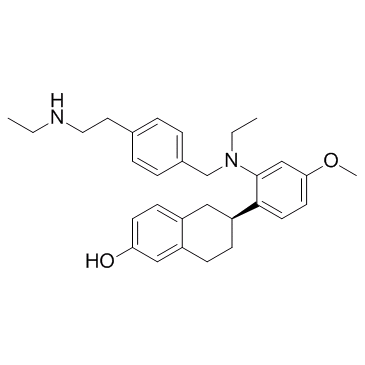
| DC10208 | Elacestrant S enantiomer |
Elacestrant S enantiomer is an low activity enantiomer of elacestrant. Elacestrant (RAD1901) is a selective and orally available estrogen receptor (ERR) degrader with IC50 values of 48 and 870 nM for ERα and ERβ, respectively.
More description
|
|
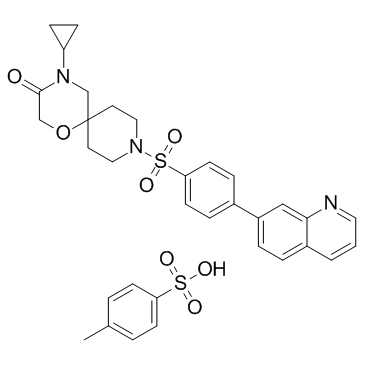
| DC10403 | FAS-IN-1 Tosylate |
FAS-IN-1 tosylate is a potent inhibitor of fatty acid synthase (FAS) extracted from patent WO 2012064642 A1, compound 29; has an IC50 of 10 nM.
More description
|
|
| DC8001 | CPI 169 R-enantiomer Featured |
CPI-169 R is a novel and potent EZH2 inhibitor with IC50 <1 nM(inhibition of the catalytic activity of PRC2.
More description
|
|
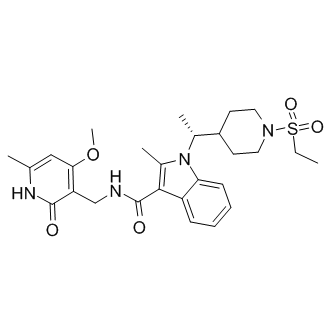
| DC20649 | AKB-9778 Featured |
AKB-9778 is a potent, selective inhibitor of vascular endothelial protein tyrosine phosphatase (VE-PTP) with IC50 of 17 pM.
More description
|

|
| DC20257 | KMN-159 Featured |
KMN-159 is a potent prostaglandin E2 type 4 (EP4) receptor agonist with Ki of 0.38 nM and shows five fold increase in potency versus KMN-80.
More description
|
|
| DC26194 | VU6003586 Featured |
VU6003586 is a novel allosteric modulators of mGlu5 with EC50 of 174 nM.
More description
|

|
| DC26190 | DS54360155 Featured |
DS54360155 is an orally potent analgesic without μ-opioid receptor agonist activity.
More description
|
|
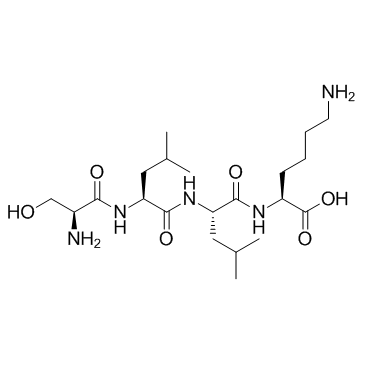
| DC12314 | SLLK, Control Peptide for TSP1 Inhibitor(TFA) Featured |
SLLK, Control Peptide for TSP1 Inhibitor (TFA) is a control peptide for LSKL, which is a Thrombospondin (TSP-1) inhibitor.
More description
|
|
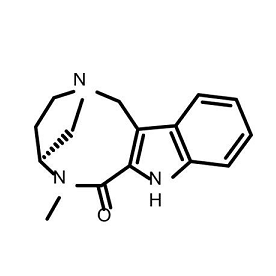
| DC20288 | (-)-CXL017 Featured |
(-)-CXL017 is a small molecule that has selective cytotoxicity toward MDR cancer cell lines in vitro, through inhibition of the sarco/endoplasmic reticulum Ca(2+)-ATPase (SERCA) with IC50 of 13.5 uM.
More description
|

|
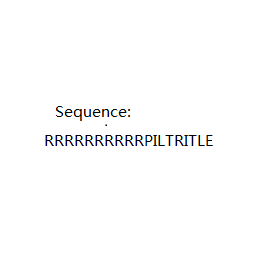
| DC9739 | ReACp53(TFA salt) Featured |
ReACp53 is a cell-penetrating peptide,designed to inhibit p53 amyloid formation.
More description
|
|
| DC34739 | SMPH Crosslinker Featured |
SMPH Crosslinker is an alkyl/ether-based PROTAC linker that can be used in the synthesis of PROTACs.
More description
|

|
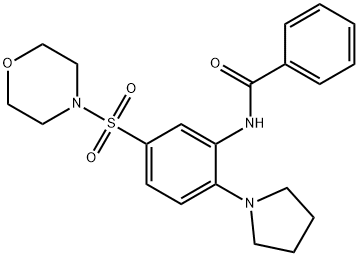
| DC11200 | NGI-1 derivative C-19 Featured |
NGI-1 derivative C-19 is a specific, small-molecule inhibitor of oligosaccharyltransferase (OST) catalytic subunit STT3B, without effect on STT3A.
More description
|
|
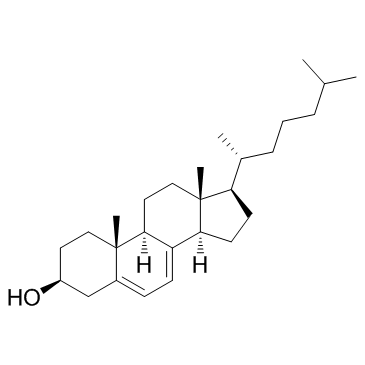
| DC12215 | 7-Dehydro Cholesterol Featured |
7-Dehydrocholesterol is biosynthetic precursor of cholesterol and vitamin D3.
More description
|
|
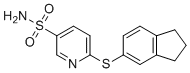
| DC22958 | RU-GIRK-1 Featured |
A potent GIRK2 inhibitor that inhibits GIRK2-mediated flux with an IC50 of 0.35 uM.
More description
|
|
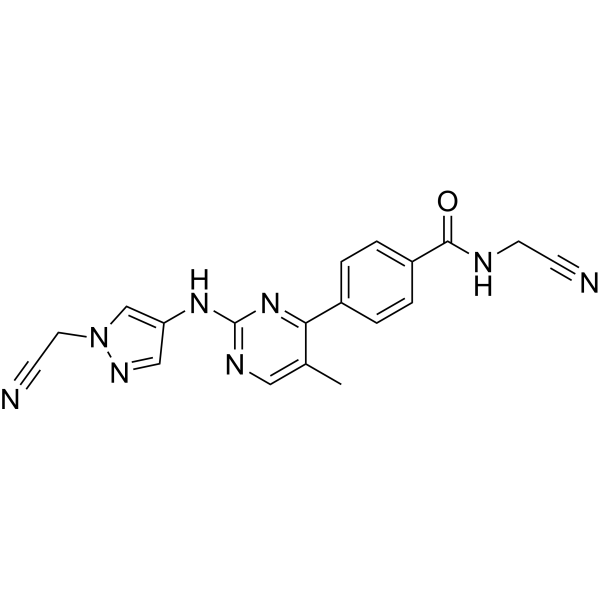
| DC74631 | LNK01003 Featured |
LNK01003(Example 4) is a selective and potent JAK inhibitor.
More description
|
|
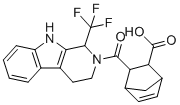
| DC74205 | Tryptolinamide Featured |
Tryptolinamide (TLAM) is a small-molecule compound that activates mitochondrial respiration in cybrids generated from patient-derived mitochondria and fibroblasts from patient-derived iPSCs, inhibits phosphofructokinase-1 (PFK1) with an ATP-uncompetitive
More description
|
|
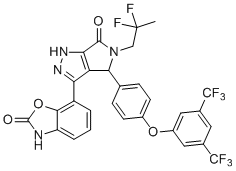
| DC73980 | DS55980254 Featured |
DS55980254 (DS 55980254) is potent, selective and orally active PTDSS1 (phosphatidylserine synthetase 1) inhibitor, suppresses phosphatidylserine (PS) production activity of PTDSS1 (IC50=100 nM) in cell-free assays, but not that of PTDSS2.
More description
|
|
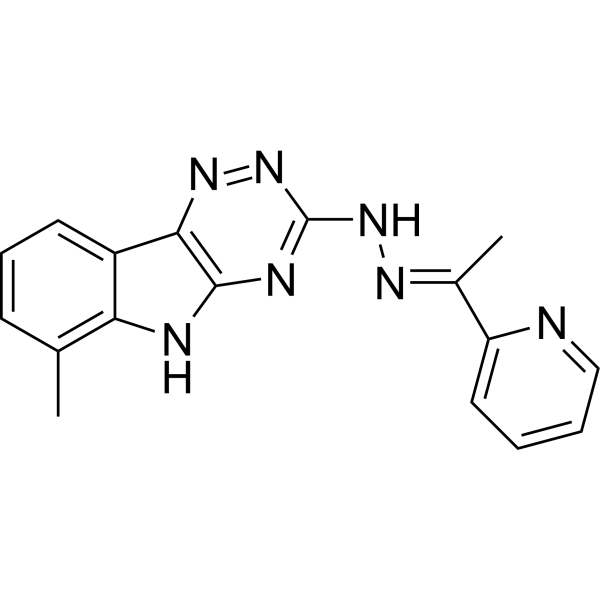
| DC34262 | VLX600 Featured |
VLX600 is a cell-permeable anticancer agent. It acts by reducing mitochondrial oxidative phosphorylation in tumor cells.
More description
|
|
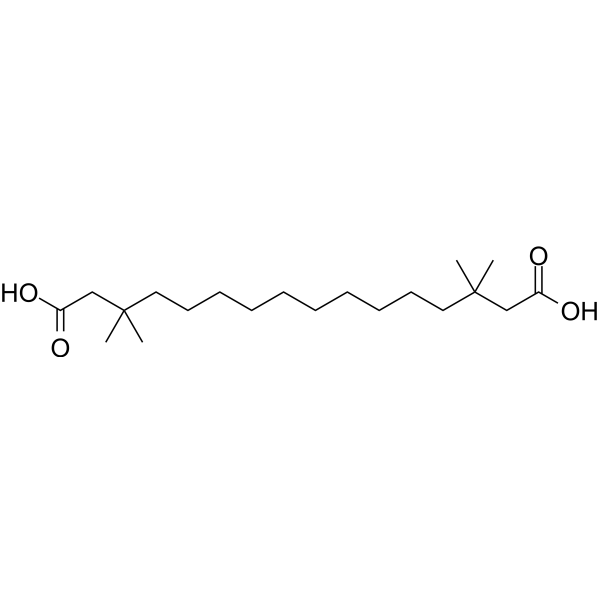
| DC34019 | MEDICA 16 Featured |
MEDICA16 is a GPR40 agonist. MEDICA 16 is a β,β'-dimethyl hexadecanedioic acid which exhibits hypolipidemic and antidiabetogenic effects in the rat.
More description
|
|
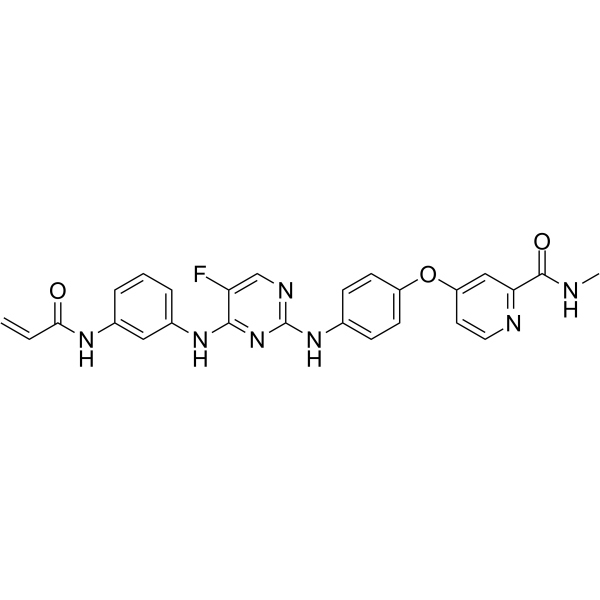
| DC7161 | CNX-774 Featured |
CNX-774 is a potent, selective, and orally available small molecule inhibitor of Btk (IC50< 1 nM) that forms a ligand-directed covalent bond with Cys-481, a non-conserved amino acid within the active site of the enzyme.
More description
|
|
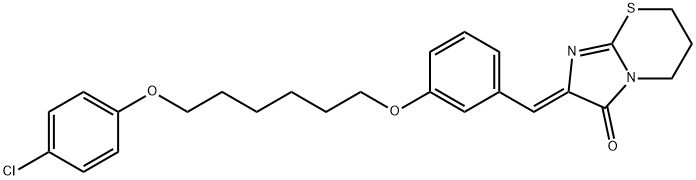
| DC74133 | PSB-CB-27 Featured |
PSB-CB-27 is a potent, selective antagonist of GPR18 with IC50 of 650 nM, shows no inhibition on GPR55 and low affinity for CB1/CB2 receptors.
More description
|
|
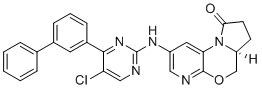
| DC74198 | TMX-4102 Featured |
TMX-4102 (TMX4102) is a highly potent, selective PIP4K2C binder with KD of 0.45 nM, shows no affinity for PIP4K2B and PIP4K2A (KD>10 uM).
More description
|
|
