 To enhance service speed and avoid tariff delays, we've opened a US warehouse. All US orders ship directly from our US facility.
| Cat. No. | Product Name | Field of Application | Chemical Structure |
|---|---|---|---|
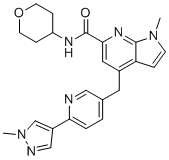
| DC12474 | VU6007477 Featured |
VU6007477 is a novel potent, selective, CNS penetrant M1 positive allosteric modulator (PAM) with EC50 of 230 nM, 93% ACh max with minimal M1 agonist activity.
More description
|
|
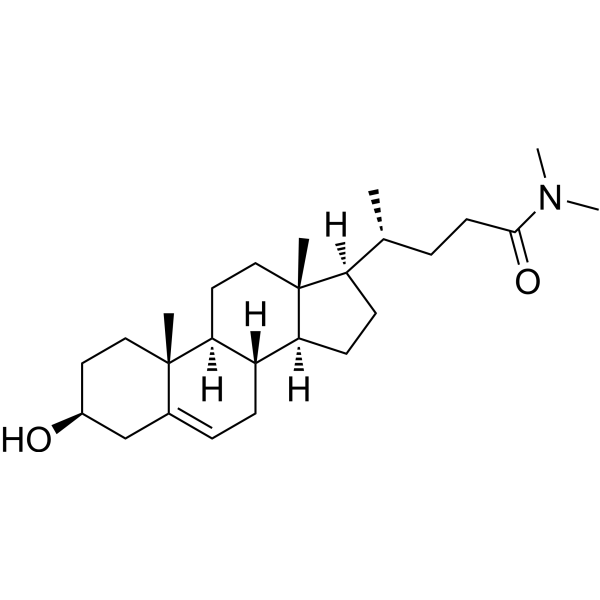
| DC43931 | DMHCA Featured |
Gene-selective LXR modulator that mediates potent transcriptional activation of ABCA1 gene expression while exhibiting minimal effects on SREBP-1c
More description
|
|
| DC68201 | 5-(2,3,4-Trihydroxyphenyl)-3-isoxazolecarboxylic acid Featured |
-3-isoxazolecarboxylic acid.GIF)
|
|
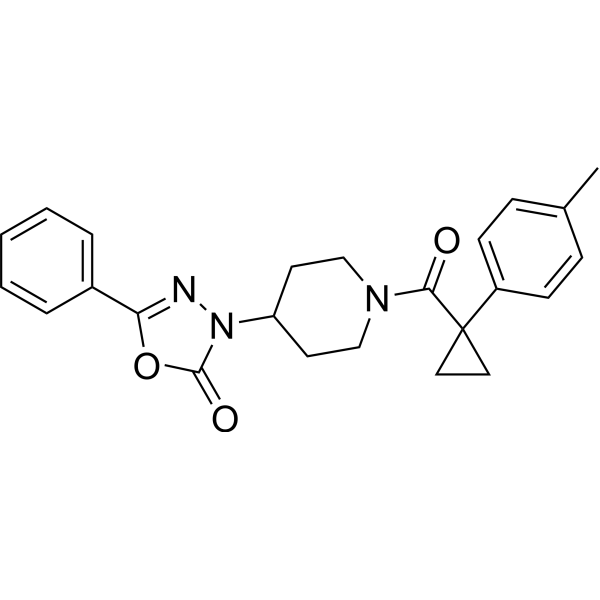
| DC22156 | ML-191 Featured |
ML-191 is a potent, selective GPR55 antagonist with 160 nM potency for GPR55 and >100-fold selectivity against GPR35, CB1 and CB2.
More description
|
|
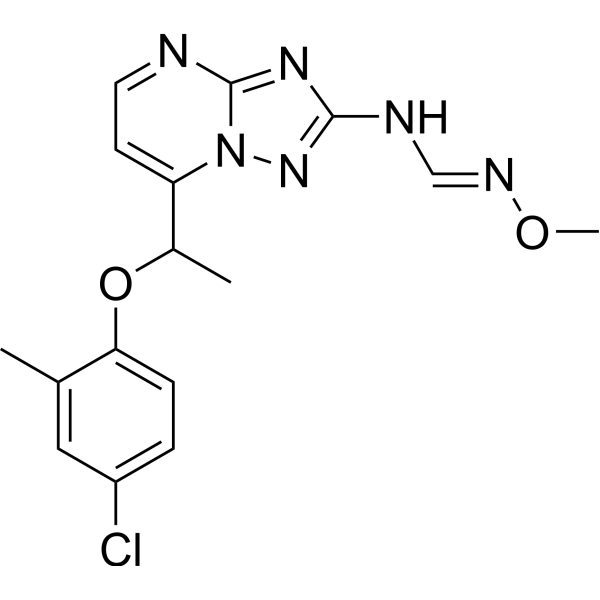
| DC90067 | (-)-cm-tpmf Featured |
CM-TPMF is a K(Ca)2 channel modulator with selective activation and inhibition of K(Ca)2.1 subtypes. CM-TPMF can act on K(Ca)2.1 channels as an activator or inhibitor, and its activity is affected by the stereochemical structure.
More description
|
|
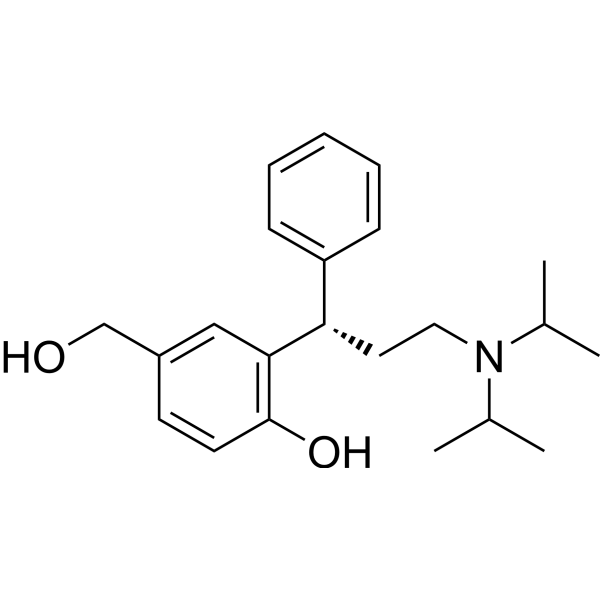
| DC68200 | Tolterodine impurity 1 Featured |
Tolterodine impurity 1 is an impurity of Tolterodine.
More description
|
|
| DC68199 | 2,2'-[(5,6,11,12-Tetradehydrodibenzo[a,e]cyclooctene-2,8-diyl)bis(oxy)]bis[N,N-dimethyl-ethanamine] dihydrochloride Featured |

|
|
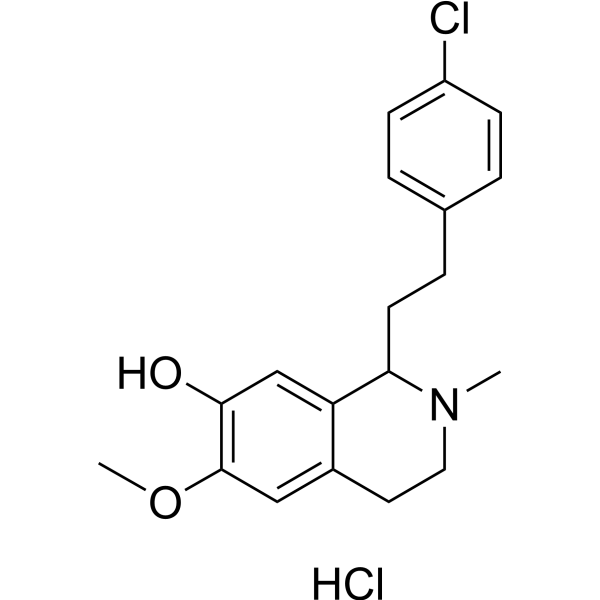
| DCC4446 | Ro 04-5595 Hydrochloride |
Selective antagonist of NMDA receptors NR2B subunits
More description
|
|
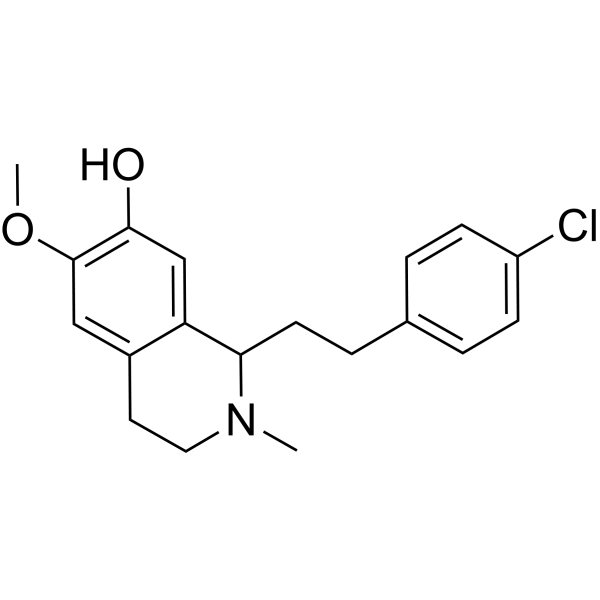
| DC68198 | Ro 04-5595 Featured |
Ro 04-5595 is a selective antagonist with specific activity against the NR2B subunit of the NMDA receptor. Ro 04-5595 exhibits favorable pharmacokinetic properties in in vitro and in vivo studies, with rapid uptake and clearance.
More description
|
|
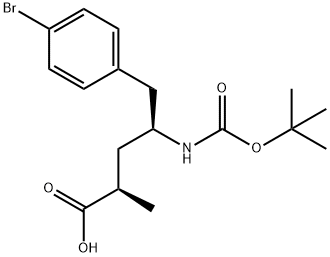
| DC68197 | (2R,4S)-5-(4-Bromophenyl)-4-(boc-amino)-2-methylpentanoic acid Featured |
|
|
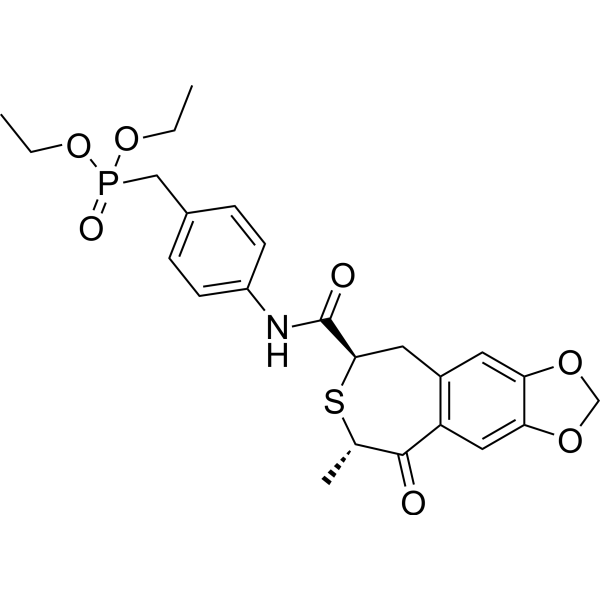
| DC68196 | TAK-778 Featured |
TAK-778 is a derivative of ipriflavone and has been shown to induce bone growth in in vitro and in vivo models.
More description
|
|
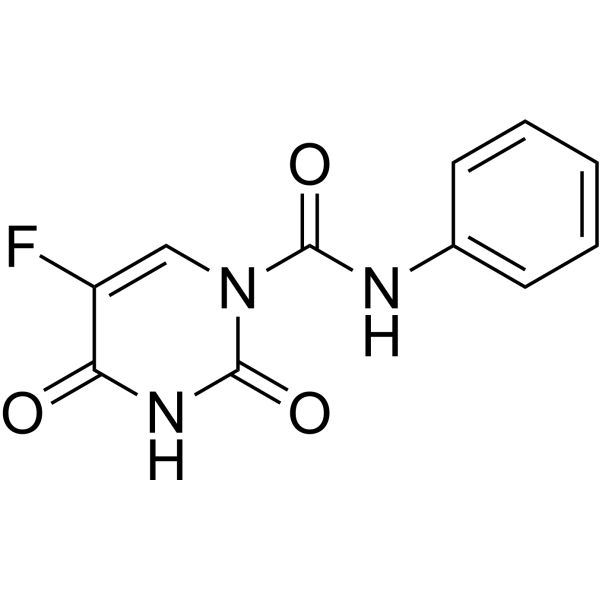
| DC44139 | PluriSIn #2 Featured |
PluriSIn #2 is a selective transcriptional inhibitor of topoisomerase II α (TOP2A). PluriSIn #2 is a compound that selectively eliminates undifferentiated human pluripotent stem cells (hPSCs).
More description
|
|
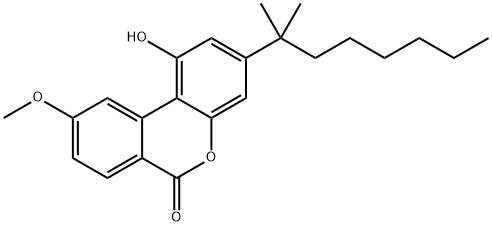
| DC68195 | AM1710 Featured |
|
|
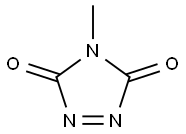
| DC68194 | N-Methyl-1,2,4-triazolinedione Featured |
|
|
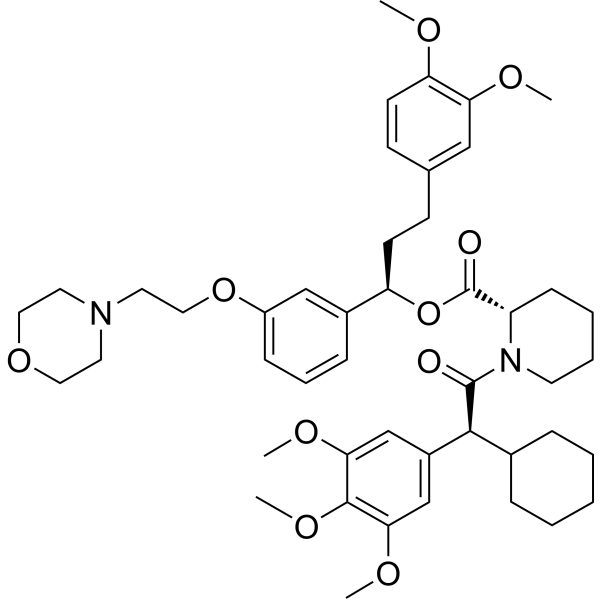
| DC34301 | SAFit2 Featured |
SAFit2 is a selective inhibitor of the ?FK506-binding protein 51 (FKBP51).
More description
|
|
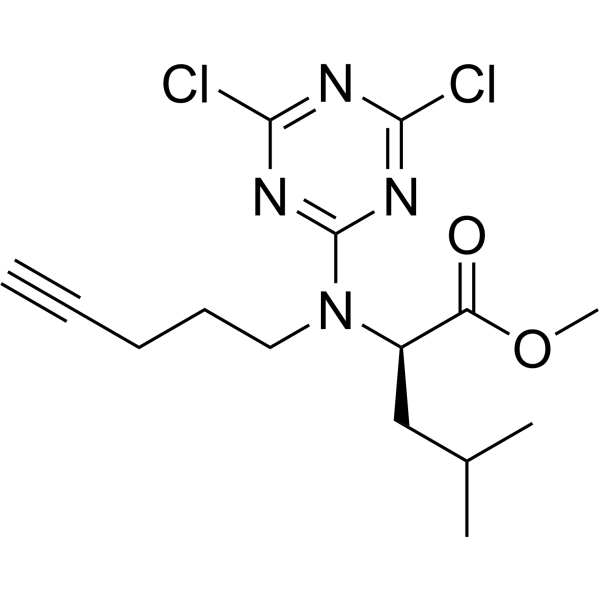
| DC43314 | LAS17 Featured |
Novel highly potent, selective, and irreversible GSTP1 inhibitor
More description
|
|
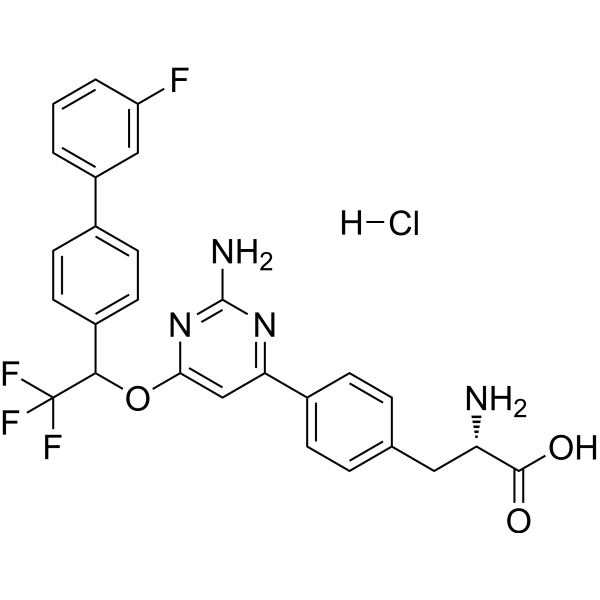
| DC9243 | LP533401 HCl Featured |
LP-533401 hydrochloride is a tryptophan hydroxylase 1 inhibitor that regulates serotonin production in the gut.
More description
|
|
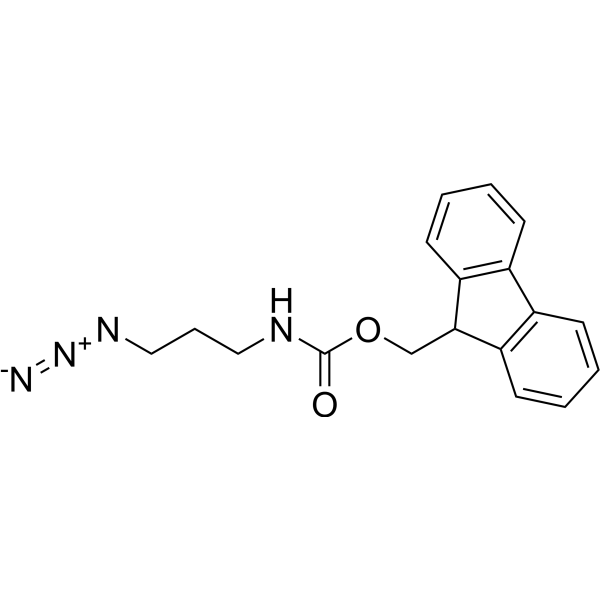
| DC68193 | Fmoc-DAP-N3 Featured |
Fmoc-DAP-N3 is a click chemistry reagent containing an azide group. Fmoc-DAP-N3 is a short, linear spacer molecule with Fmoc protected amino function. Fmoc-DAP-N3 can be used in click conjugation and amid bond formation either with small molecules or for bioconjugation with proteins and antibodies.
More description
|
|
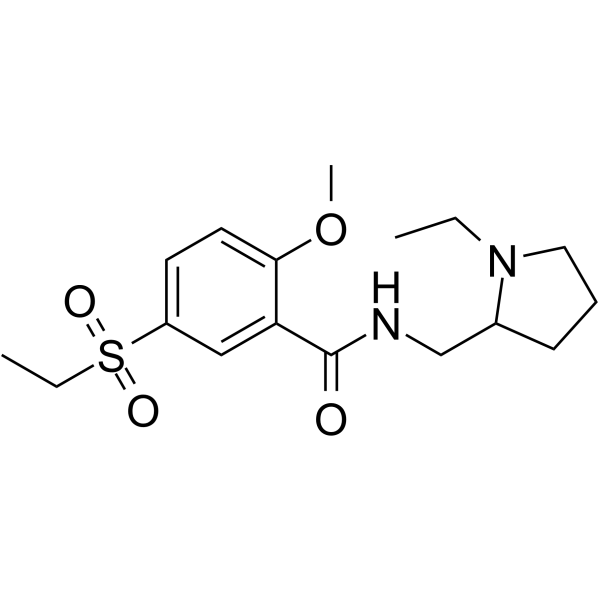
| DC68192 | Sultopride Featured |
Sultopride (LIN-1418) is a selective antagonist of dopamine D2 receptor.
More description
|
|
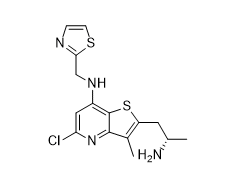
| DC77688 | PTC-700 Featured |
PTC-700 is a potent microtubule-associated protein tau (MAPT) splicing modulator. PTC-700 reduces 4R MAPT in both P301L and S305N neurons with EC50s of 1.3-1.8 nM, and 0.5-2.6 nM, respectively.
More description
|
|
| DC68191 | Clickable-TAT Azide Featured |
|
|
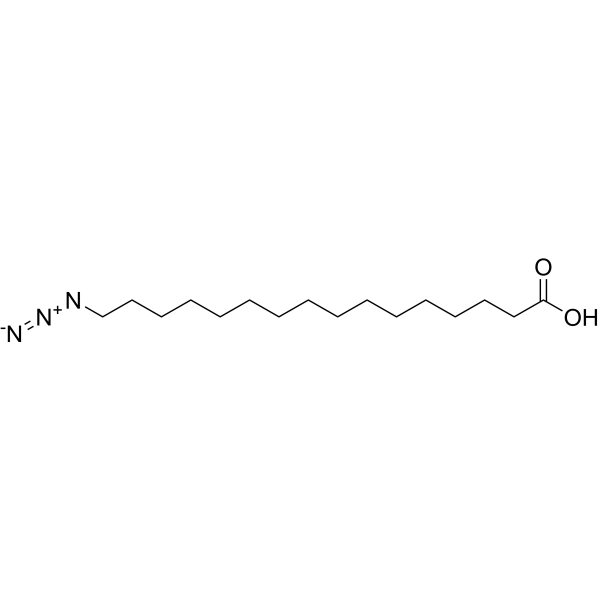
| DC71837 | 16-Azidohexadecanoic acid Featured |
16-Azidohexadecanoic acid, a synthetic fatty acid, can be used as a modification marker for nucleotides and a molecular probe for fatty acid metabolism.
More description
|
|
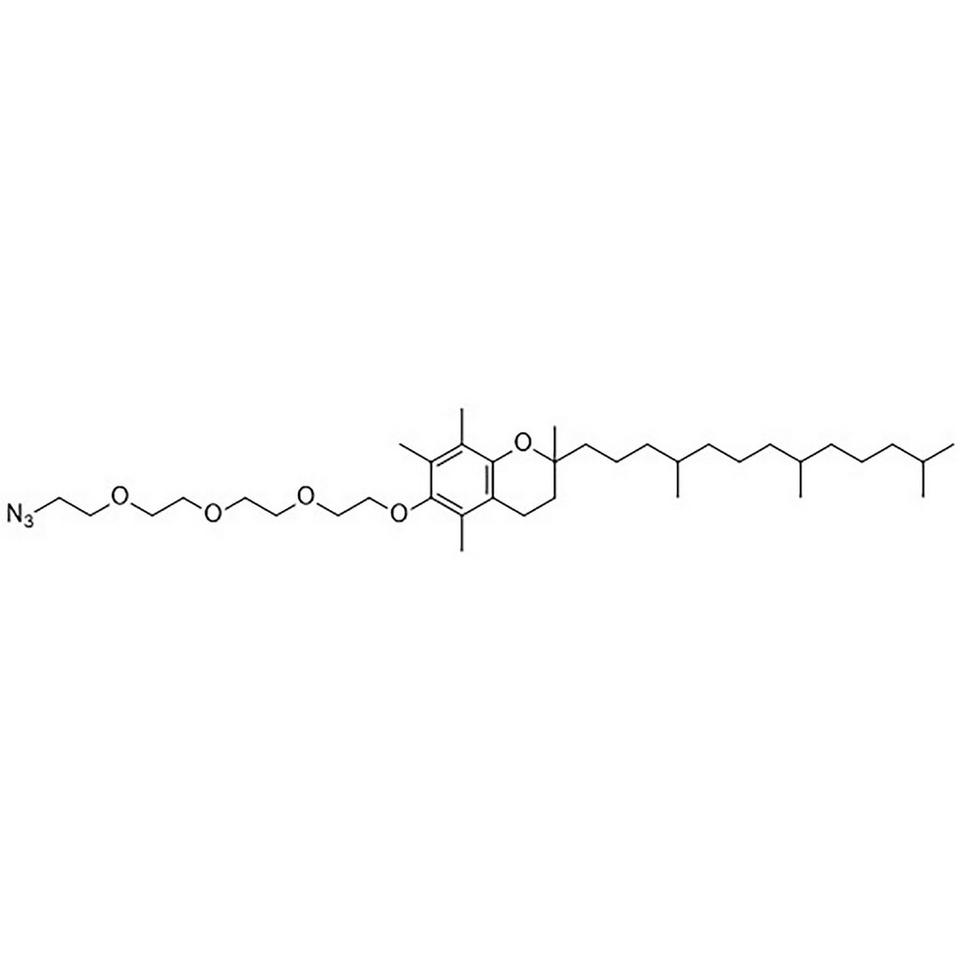
| DC68189 | Tocopherol-TEG Azide Featured |
|
|
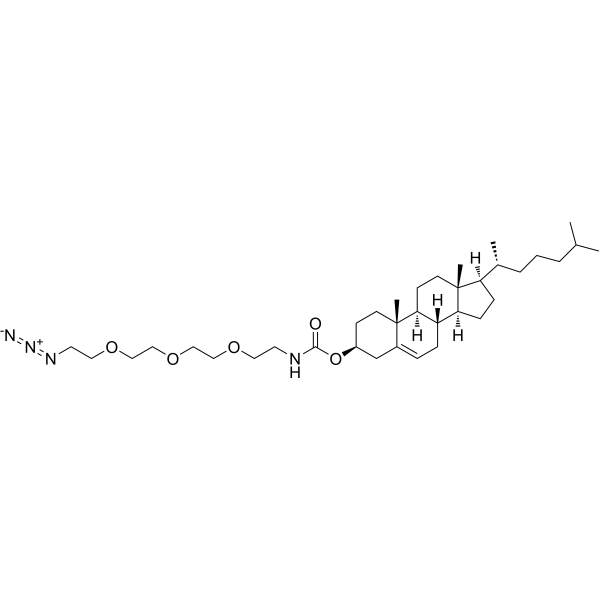
| DC68188 | Cholesteryl-TEG azide Featured |
Cholesteryl-Teg azide is a cholesterol azide and can be used as a ligand for bioconjugation. Cholesteryl-Teg azide can modify RNA strands.
More description
|
|
| DC68187 | Auphen Featured |
|
|
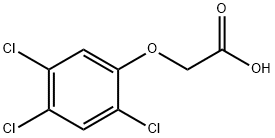
| DC37254 | 2,4,5-T Standard Featured |
2,4,5-T is an herbicide with strong irritant properties.
More description
|
|
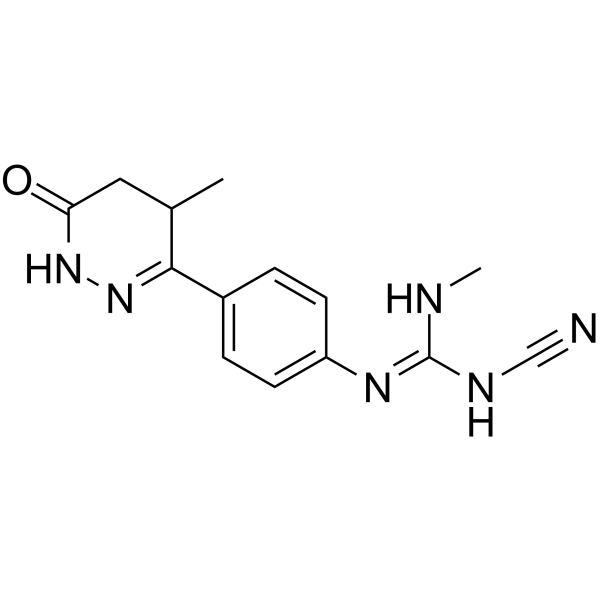
| DC29002 | Siguazodan Featured |
Siguazodan (SKF 94836) is a potent, selective and orally active phosphodiesterase III (PDE-III) inhibitor with an IC50 of 117 nM. Siguazodan increases cAMP accumulation in intact platelets with an EC50 of 18.88 μM. Siguazodan also inhibits phenylephrine-induced 5-HT release with an IC50 value of 4.2 μM.
More description
|
|
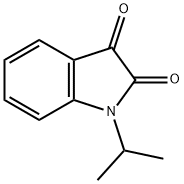
| DC68185 | 1-Isopropyl-1H-indole-2,3-dione Featured |
|
|
| DC73609 | ASP8062 Featured |
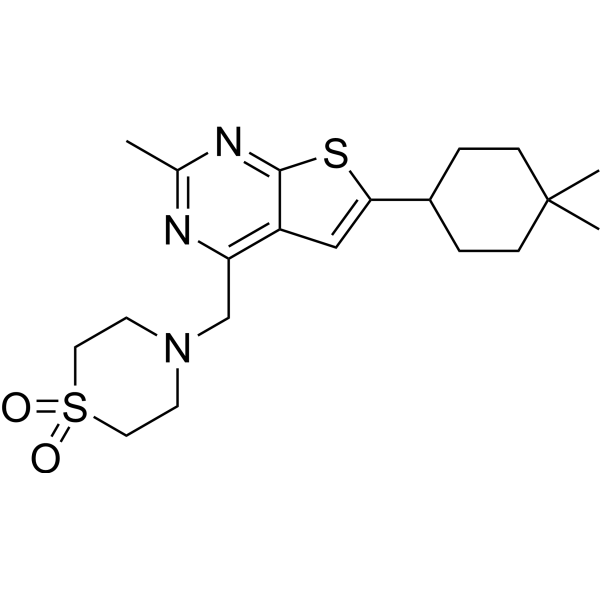
ASP8062 is a potent, selective GABA B receptor positive allosteric modulator (PAM), positive allosteric modulating activity for human and rat GABAB receptors, exerts analgesic effects in rat model of fibromyalgia.
More description
|
|
| DC12014 | NSC117079 Featured |
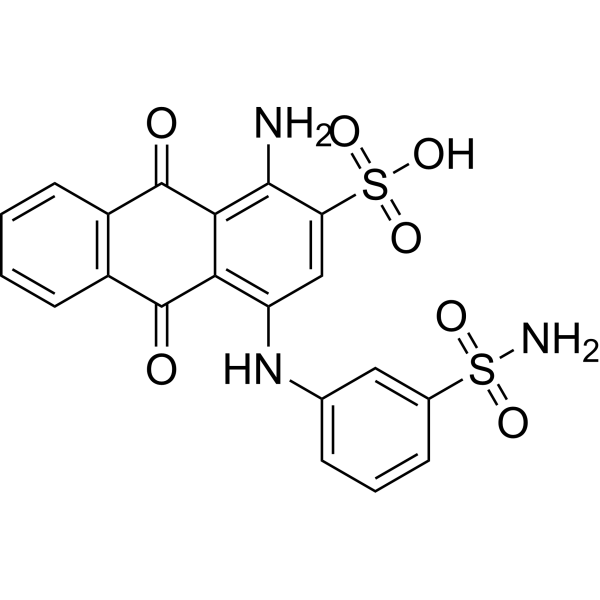
A selective protein phosphatase PHLPP inhibitor with IC50 of 4 uM for PP2C domain of PHLPP2.
More description
|
|
