 To enhance service speed and avoid tariff delays, we've opened a US warehouse. All US orders ship directly from our US facility.
| Cat. No. | Product Name | Field of Application | Chemical Structure |
|---|---|---|---|
| DC67546 | ALC-0307 Featured |
ALC 0307 is an ionizable amino lipid developed by Acuitas Therapeutics, serving as the critical functional component in lipid nanoparticles (LNPs) for targeted therapeutic delivery. As the core cationic lipid in specific LNP formulations (e.g., k-abe for CPS1-Q335X correction), its key feature is pH-dependent chargeability: it remains neutral at physiological pH but becomes positively charged in acidic environments like endosomes. This property enables efficient encapsulation of nucleic acid payloads (>97% efficiency, e.g., base editor mRNA/gRNA complexes) and facilitates endosomal escape via membrane disruption post-cellular uptake. Its optimized structure promotes selective hepatocyte targeting by binding endogenous apolipoprotein E (ApoE), which subsequently interacts with LDL receptors on liver cells. Preclinical studies show rapid clearance (>99.5% plasma reduction in 14 days) and manageable transient toxicity (mild, reversible cytoplasmic vacuolation in hepatocytes, short-term ALT/AST elevation). LNPs containing ALC0307, alongside helper lipids (cholesterol, DSPC, and PEG-lipid ALC-0159), form stable ~73 nm particles with low polydispersity. This combination enables repeatable, liver-directed delivery of gene editing therapeutics with minimized off-target effects, underpinning its use in individualized in vivo gene correction therapies.
More description
|

|
| DC57006 | L319 Featured |
L319 (LIPID 319) is a novel ionizable, biodegradable lipid for delivery of short interfering RNAs (siRNAs). L319-LPN displays rapid elimination with pKa of 6.38 and also shows well tolerated up to 10 mg/kg.
More description
|

|
| DC60211 | TCL053 Featured |
TCL053 is an ionizable amino lipid.1 It has been used in the generation of lipid nanoparticles (LNPs) and has a pKa value of 6.8. LNPs containing TCL053 and encapsulating mRNA encoding the Cas9 nuclease, in combination with LNPs containing TCL053 and encapsulating single-guide RNA (sgRNA) targeting the Rosa26 locus, have been used to induce CRISPR-mediated gene editing in the mouse gastrocnemius muscle.TCL053 is an ionizable lipid that has received FDA approval
for preparing mRNA vaccines. It is a three-tailed ionizable lipid
to overcome the disadvantage of nonrepeatable administration of
AAV vectors. In addition, combined with limb perfusion administration,
TCL053 iLNPs could transiently deliver CRISPR-Cas9
mRNA and sgRNA to multiple muscle tissues, reducing
immunogenicity and increasing the safety of iLNPs. It is
great progress for treating Duchenne muscular dystrophy and
other diseases that require multiple doses.
More description
|

|
| DC70010 | 98N12-5 Featured |
98N12-5 is an ionizable cationic lipid. It has been used in combination with other lipids in the generation of lipid nanoparticles (LNPs). LNPs containing 98N12-5 and encapsulating proprotein convertase subtilisin kexin type 9 (PCSK9) siRNA selectively accumulate in the liver and reduce total serum cholesterol levels in mice and rats and serum LDL levels in cynomolgus monkeys.
More description
|

|
| DC67567 | ARV-T1 Featured |
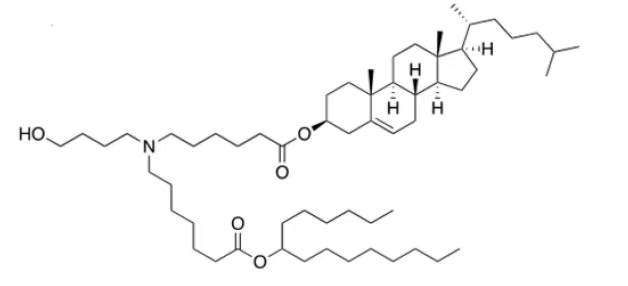
ARV-T1 is a novel ionizable lipid featuring a cholesterol moiety incorporated in its tail, designed to enhance mRNA delivery efficiency. With a pKa of 6.73, it exhibits optimal pH-dependent ionization for endosomal escape and mRNA release. Structurally, ARV-T1 contains a tertiary amine head group and ester-linked lipid tails, enabling rapid in vivo metabolism and improved biocompatibility.Compared to SM-102 (used in Moderna's vaccine), LNPs formulated with ARV-T1 demonstrate superior physicochemical properties: smaller particle size (~80 nm vs. 90 nm), lower polydispersity index (0.09 vs. 0.10), and higher absolute zeta potential (-10 mV vs. -5 mV). These characteristics correlate with >90% mRNA encapsulation efficiency and enhanced stability, maintaining performance for 12 weeks at -20°C.In vitro, ARV-T1 LNPs showed 7-fold higher protein expression than SM-102 LNPs. In vivo, they prolonged luciferase expression (>72 hours vs. <48 hours for SM-102) and induced 10-fold higher neutralizing antibodies against SARS-CoV-2 spike protein at low doses. The cholesterol tail promotes endosomal membrane fusion, while ester linkages facilitate metabolic clearance, yielding an excellent safety profile in toxicity studies. This combination of efficacy and safety positions ARV-T1 as a promising platform for mRNA vaccines and therapeutics.
More description
|
|
| DC82125 | lipid 14 Featured |
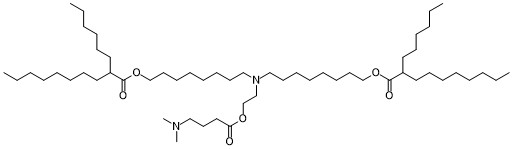
LIPID 14 is a novel ionizable lipid used for mRNA delivery.In 2021, Elia et al. used lipid 2 LNPs and lipid 14 LNPs to deliver mRNA encoding SARSCoV-2 human Fc-conjugated receptor binding domain (RBDhFc
mRNA). While both lipid 274 LNP RBD-hFc mRNA and
lipid 14 LNP RBD-hFc mRNA induced equal cellular and
humoral responses in mice at an mRNA dose of 5 μg, only lipid
14 LNP RBD-hFc mRNA exhibited strong immunogenicity
following intradermal administration. Both intradermal administration
and intramuscular administration of lipid 14 LNPs
could activate antigen presenting cells (APCs), thus inducing
cellular responses.
More description
|
|
| DC86070 | 304O13 Featured |
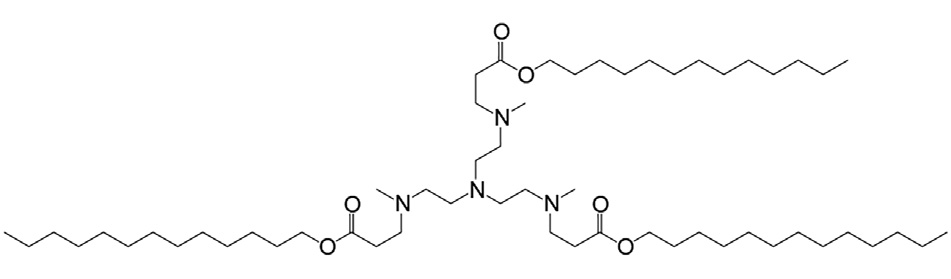
304O13 is a novel Biodegradable lipidoid for RNA delivery.
More description
|
|
| DC67292 | IAJD34 Featured |
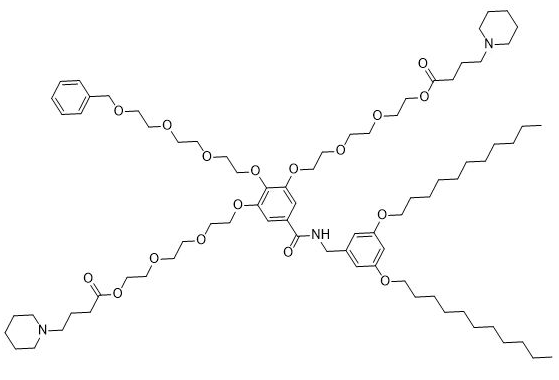
IAJD-34 is a one-component ionizable amphiphilic Janus dendrimer specifically engineered for targeted mRNA delivery to the lung parenchyma, as described by Meshanni et al. in Nature Communications article "Targeted delivery of TGF-β mRNA to murine lung parenchyma using one-component ionizable amphiphilic Janus Dendrimers" . This synthetic nanoparticle self-assembles with mRNA through simple mixing in acetate buffer, forming stable dendrimersomes approximately 93-97 nm in size with high encapsulation efficiency (>95%) and a positive zeta potential (~48 mV). Its defining feature, highlighted in the study, is exceptional lung tropism after intravenous injection, enabling significantly higher luciferase expression in murine lungs compared to other organs. As demonstrated by Meshanni et al., IAJD 34 effectively delivers therapeutic mRNA (e.g., TGF-β mRNA) to the lower lung, inducing transient protein production with minimal systemic toxicity at appropriate doses (e.g., 10 µg), offering a promising strategy for treating parenchymal lung diseases.
More description
|
|
| DC57100 | Acuitas A9 Featured |
Lipid A9 is an ionizable cationic lipid (pKa = 6.27) that has been used in the generation of lipid nanoparticles (LNPs) for the delivery of mRNA and siRNA in vivo. LNPs containing lipid A9 and encapsulating non-stimulatory siRNA increase plasma levels of chemokine (C-C motif) ligand 2 (CCL2), indicating activation of the innate immune response, and decrease body weight in mice.
More description
|

|
| DC60509 | 4A3-SCC-PH Featured |
4A3-SCC-PH is a groundbreaking linker-degradable ionizable lipid (LDIL) that features a glutathione (GSH)-responsive cone-shaped molecular structure. This unique architecture enables superior endosomal escape and rapid mRNA release, making it highly effective for mRNA delivery. In vivo studies have highlighted its exceptional performance, showing a 176-fold increase in mRNA delivery efficiency to the liver compared to DLin-MC3-DMA, a widely used benchmark lipid. Both 4A3-SCC-PH and its structural analog, 4A3-SCC-10, also demonstrated significantly enhanced mRNA delivery efficacy compared to their non-disulfide-containing parent compounds and disulfide-containing controls with modified lipid tails.
More description
|

|
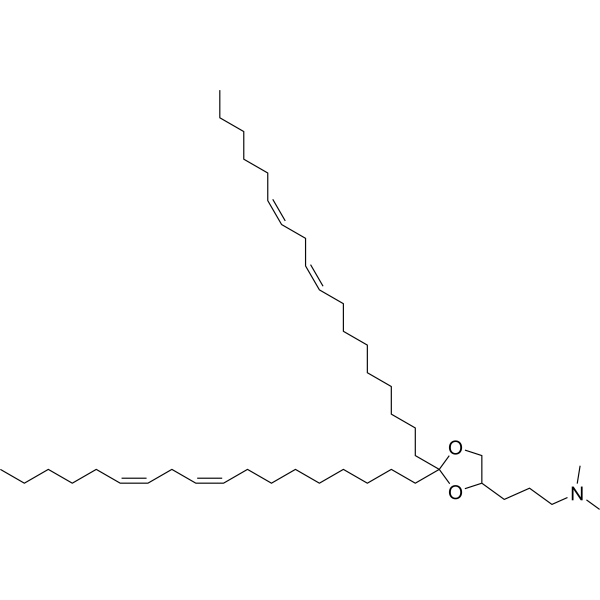
| DC49257 | DLin-K-C3-DMA Featured |
DLin-KC3-DMA, a nucleic acid, shows in vivo silencing activity. DLin-K-C3-DMA can be used in the synthesis of nucleic acid-lipid particle to delivery of nucleic acid.
More description
|
|
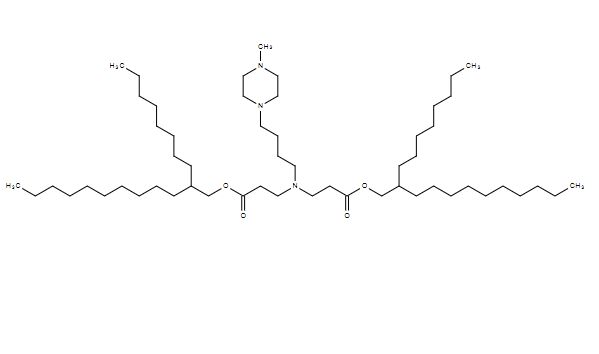
| DC57002 | LIPID C24 Featured |
C24 is a novel multiprotic ionizable lipid. C24 lipid nanoparticle (LNP) has a multistage protonation behavior resulting in greater endosomal protonation and greater translation compared to the standard reference MC3 LNP. C24 LNP also lower injection site inflammation and higher stability compared to MC3 LNP.
More description
|
|
