 To enhance service speed and avoid tariff delays, we've opened a US warehouse. All US orders ship directly from our US facility.
| Cat. No. | Product Name | Field of Application | Chemical Structure |
|---|---|---|---|
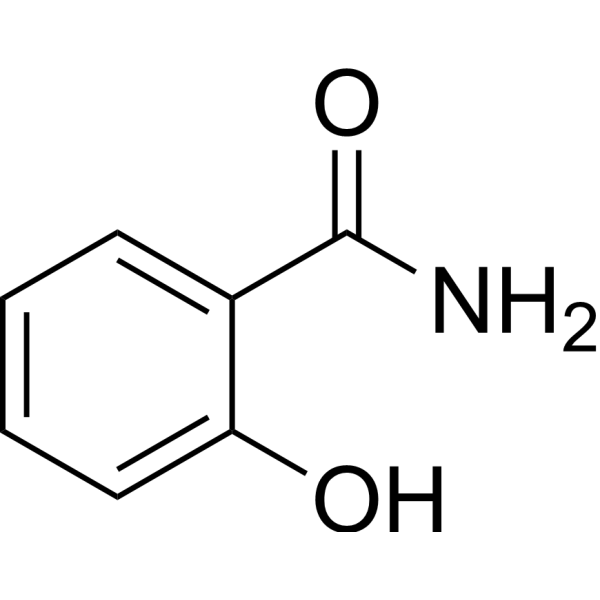
| DC36742 | Salicylamide Featured |
Salicylamide is a non-steroidal anti-inflammatory agent with analgesic and antipyretic properties. Its medicinal uses are similar to those of aspirin.
More description
|
|
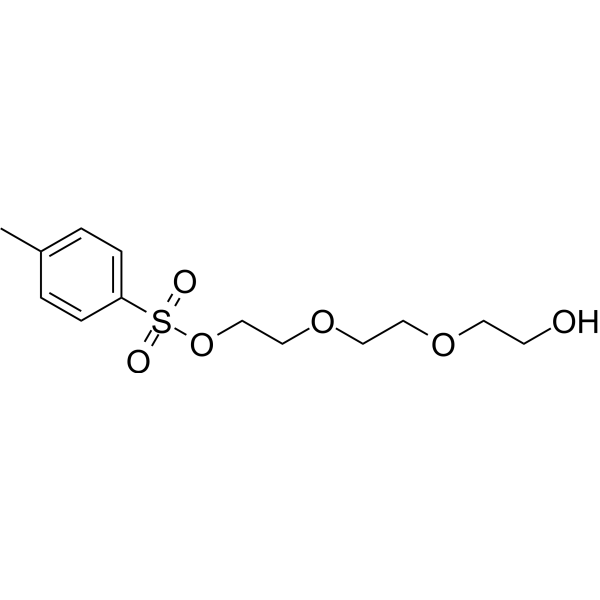
| DC35435 | PEG3-Tos Featured |
PEG3-Tos is a PEG derivative containing a hydroxyl group and a tosyl group. The hydrophilic PEG spacer increases solubility in aqueous media. The hydroxyl group enables further derivatization or replacement with other reactive functional groups. The tosyl group is a very good leaving group for nucleophilic substitution reactions.
More description
|
|
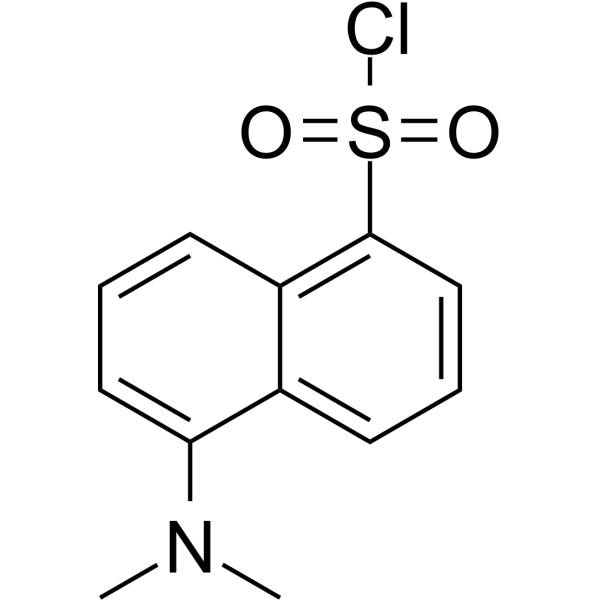
| DC36339 | Dansyl chloride Featured |
Dansyl chloride is a reactive probe for the derivatization of primary amines, including those on amino acids, peptides, and polyamines, for detection by HPLC. It has also been used for the derivatization of compounds containing phenol groups, such as steroids, for detection by MS/MS. Dansyl chloride is a fluorescent probe for proteins and enzymes. It displays excitation/emission maxima of 340/535 nm, respectively, in acetone.
More description
|
|
| DC36551 | Calcium phosphate Featured |
Dicalcium phosphate is the calcium phosphate with the formula CaHPO4 and its dihydrate. The "di" prefix in the common name arises because the formation of the HPO42– anion involves the removal of two protons from phosphoric acid, H3PO4. It is also known as dibasic calcium phosphate or calcium monohydrogen phosphate. Dicalcium phosphate is used as a food additive, it is found in some toothpastes as a polishing agent and is a biomaterial.[
More description
|

|
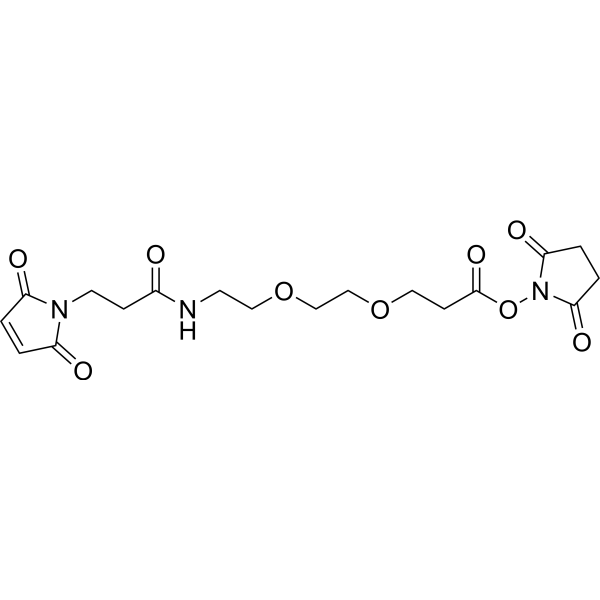
| DC35833 | Mal-amido-PEG2-NHS Featured |
Mal-amido-PEG2-NHS is a PEG derivative containing a maleimide group and an NHS ester. The hydrophilic PEG spacer increases solubility in aqueous media. The NHS ester can be used to label the primary amines (-NH2) of proteins, amine-modified oligonucleotides, and other amine-containing molecules. The maleimide group will react with a thiol group to form a covalent bond, enabling the connection of biomolecule with a thiol.
More description
|
|
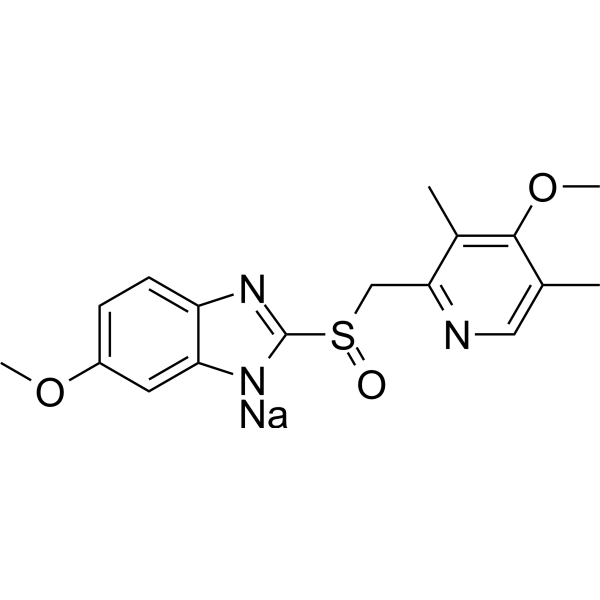
| DC38062 | Omeprazole sodium Featured |
Omeprazole sodium is the salt analogue of Omeprazole, which binds covalently to proton pump. It inhibits gastric secretion. Used as an anttiulcerative.
More description
|
|
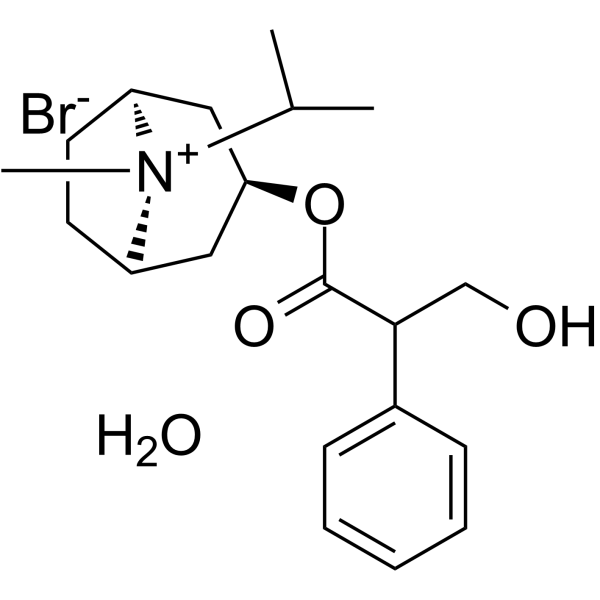
| DC44703 | Ipratropium bromide monohydrate Featured |
Ipratropium bromide (Atrovent, Sch 1000) monohydrate is an antagonist of muscarinic acetylcholine receptors (mAChR) with IC50 of 2.9 nM, 2.0 nM, and 1.7 nM for M1, M2, and M3 receptors, respectively.
More description
|
|
| DC44763 | Elastase from porcine pancreas Featured |
Elastase from porcine pancreas is a single polypeptide chain of 240 amino acid residues. Elastase from porcine pancreas is a serine protease that can hydrolyze proteins and polypeptide. Elastase from porcine pancreas can induce emphysema in hamsters.
More description
|

|
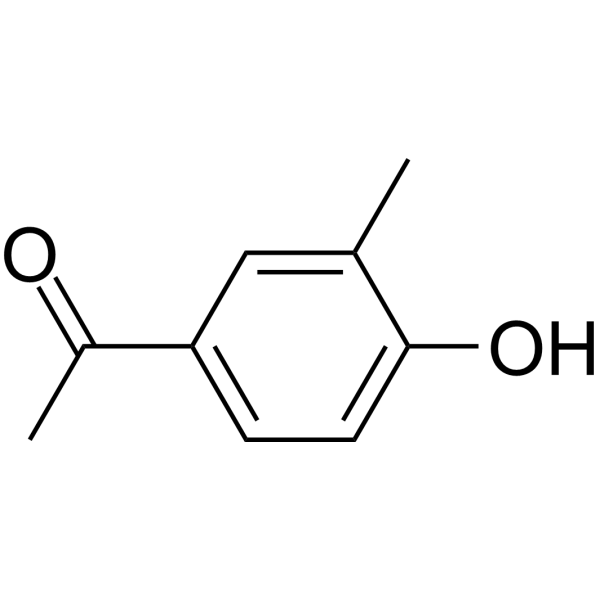
| DC44819 | 4'-Hydroxy-3'-methylacetophenone Featured |
4'-Hydroxy-3'-methylacetophenone, a phenolic volatile compound, is isolated from Hawaiian green coffee beans (Coffea Arabica L.). 4'-Hydroxy-3'-methylacetophenone has potent antioxidant activities. 4'-Hydroxy-3'-methylacetophenone also can be used to synthesize heterocyclic compounds which have antimycobacterial activity.
More description
|
|
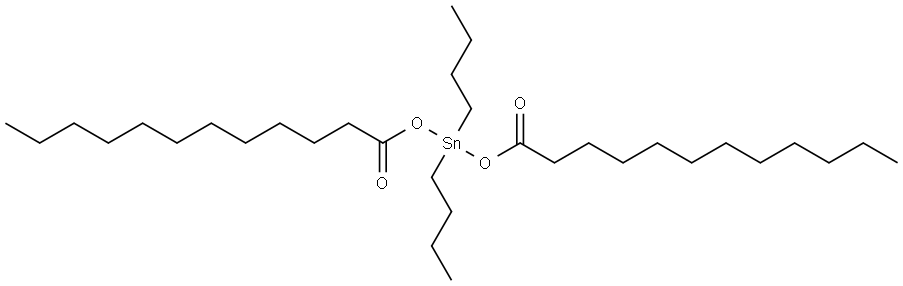
| DC37942 | Dibutyltin dilaurate Featured |
Dibutyltin dilaurate is used in prevention of parasitic dieases in cattle and sheep.
More description
|
|
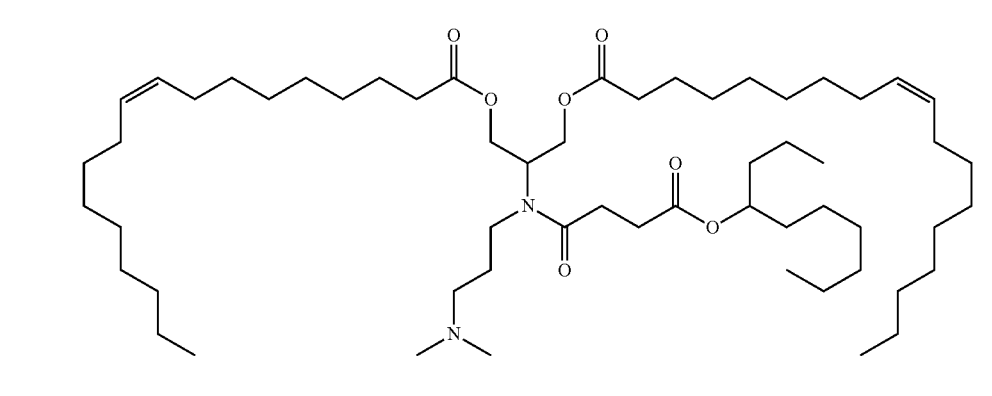
| DC67601 | Sanofi Lipid 15 Featured |
Lipid 15 is the lead ionizable cationic lipid (ICL) for CD8-targeted mRNA-LNPs. As the core LNP component, Lipid 15 yields ~100 nm uniform particles with near-neutral surface charge at physiological pH, while becoming strongly cationic in acidic endosomes—reducing hepatic off-target uptake and enabling efficient endosomal escape to release mRNA. Versus other ICL candidates, Lipid 15 achieves far higher mRNA transfection efficiency in primary human CD8⁺ T cells, supports robust transient CAR expression, and triggers minimal cytokine release in immunogenicity assays. It retains structural and functional stability after freeze storage. When formulated into anti-CD8 VHH-conjugated LNPs carrying CD22 CAR mRNA, Lipid 15 drives specific in vivo reprogramming of circulating CD8⁺ T cells into functional CAR-T cells, delivering potent tumor suppression in humanized hematological malignancy models without overt toxicity.
More description
|
|
| DC68076 | BG-BRD4-P07 Featured |
|
|
| DC68075 | BRU-SHP2-P06 Featured |
|
|
| DC68074 | LLY-ESR1-P05 Featured |
|
|
| DC68073 | AST-AR-P04 Featured |
|
|
| DC68072 | NOV-EP001 Featured |
|
|
| DC68071 | JHU-MDM2-P03 Featured |
|
|
| DC68070 | CAS-FAK-P02 Featured |
|
|
| DC68069 | MDA-S24-P01 Featured |
|
|
| DC68068 | TB-008 Featured |
|
|
| DC68067 | ARV-863 Featured |
|
|
| DC65211 | KT-474 Featured |
KT-474 is a highly active and selective, orally bioavailable IRAK4 degrader being developed for the treatment of toll-like receptor (TLR)/interleukin-1 receptor (IL-1R)-driven immune-inflammatory diseases.
More description
|

|
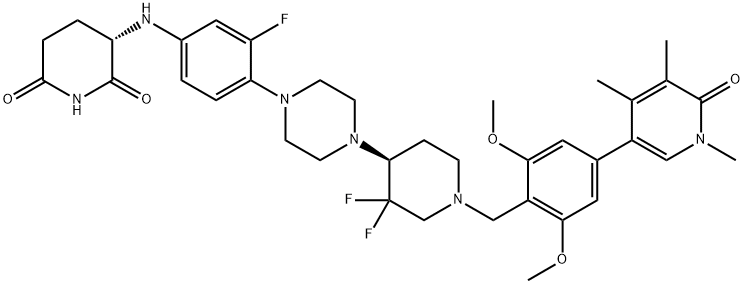
| DC65207 | CFT-8634 Featured |
CFT8634 is an oral activity degrader targeting BRD9 extracted from patent WO2021178920A1 compound 174. CFT8634 can be used for the research of synovial sarcoma and SMARCB1-deleted solid tumors.
More description
|
|
| DC68066 | NRX-0305 Featured |
|
|
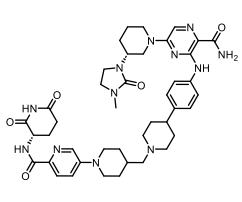
| DC60530 | BTK-IN-24(NX-5948) Featured |
NX-5948,be also known as BTK-IN-24,is an oral BTK degrader.
More description
|
|
| DC68065 | XNW34017 Featured |
XNW34017 is a PROTAC targeting Aurora A. It binds both Aurora A and the E3 ligase CRBN, leading to ubiquitination of Aurora A by CRBN, followed by specific degradation via the ubiquitin-proteasome system (UPS). This results in cell cycle arrest and apoptosis, thereby killing tumor cells.
More description
|
|
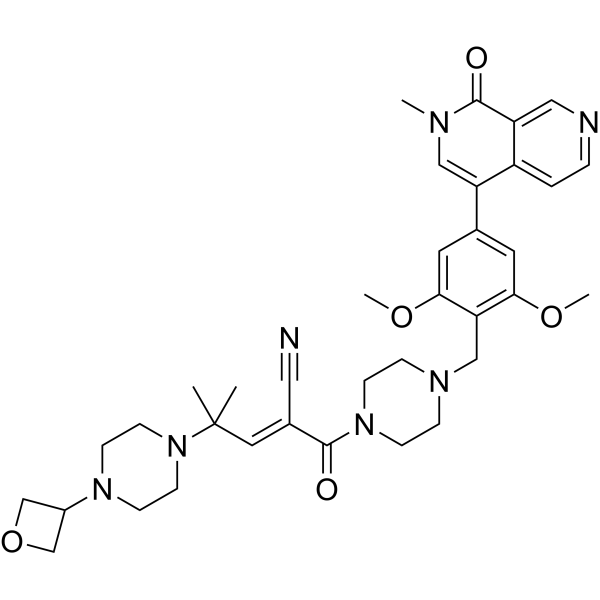
| DC68064 | ZZ7-23-022(ZZ7) Featured |
ZZ7-23-022 (ZZ7) is a selective BRD9 molecule glue degrader. ZZ7-23-022 effectively degrades BRD9 in synovial sarcoma cells, but does not affect cardiomyocytes. ZZ7-23-022 can be used for the research of cancer.
More description
|
|
| DC68063 | AMP-SM2-G02 Featured |
|
|
| DC68062 | AMP-TEAD-G01 Featured |
|
|
| DC68053 | AMX-883 Featured |
AMX-883 a selective and orally active BRD9 molecular glue degrader that drives differentiation in acute myeloid leukaemia. AMX-883 shows selectivity over all other bromodomain containing proteins and proteome wide. AMX-883 does not employ the commonly used E3 ligases (cereblon, VHL) but instead drives degradation via DCAF16 as a targeted glue. AMX-883 can be used for the study of acute myeloid leukaemia (AML).
More description
|
|
