 To enhance service speed and avoid tariff delays, we've opened a US warehouse. All US orders ship directly from our US facility.
| Cat. No. | Product Name | Field of Application | Chemical Structure |
|---|---|---|---|
| DC48072 | Zinc acetate dihydrate Featured |
Zinc acetate dihydrate (Acetic acid zinc salt dihydrate, Dicarbomethoxyzinc dihydrate) contributes to the antiviral activity of microbicide gel through zinc targeting the reverse transcriptase.
More description
|

|
| DC48073 | Magnesium chloride Featured |
Magnesium chloride can reduce the activated thromboplastin times.
More description
|
|
| DC48074 | Polytetrafluoroethylene Featured |
Polytetrafluoroethylene (PTFE) is a biomedical material and has excellent non-stick properties with an exceptionally low coefficient of friction.
More description
|

|
| DC49407 | Serratia marcescens nuclease Featured |
Serratia marcescens nuclease is a nonspecific nuclease. Serratia marcescens nuclease has broad utility due to its potent digestive activity toward both DNA and RNA.
More description
|
|
| DC49409 | Glucose oxidase Featured |
Glucose oxidase is used in the food and beverage industry as a preservative and stabilizer and is commonly derived from the fungus Aspergillus niger. Glucose oxidase can react with intracellular glucose and oxygen (O2) to produce hydrogen peroxide (H2O2) and gluconic acid, which can cut off the nutrition source of cancer cells and consequently inhibit their proliferation.
More description
|
|
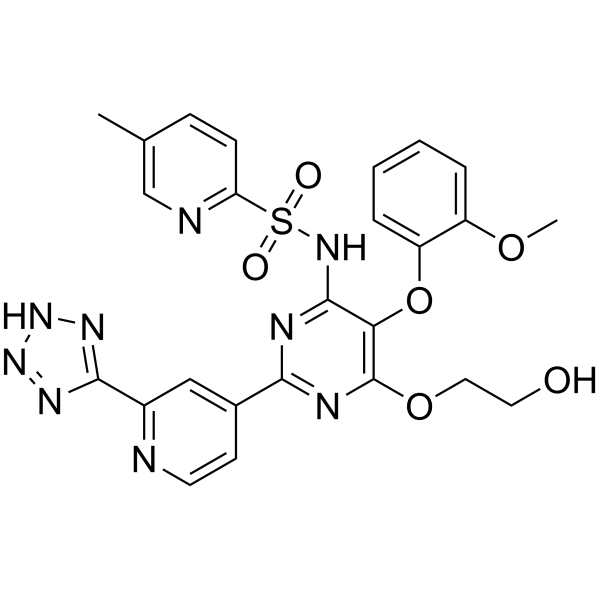
| DC72191 | Clazosentan Featured |
Clazosentan (Ro 61-1790) is a selective endothelin A (ETA) receptor antagonist. Clazosentan inhibits ET-1-mediated vasoconstriction. Clazosentan prevents cerebral vasospasm, vasospasm-related cerebral infarction.
More description
|
|
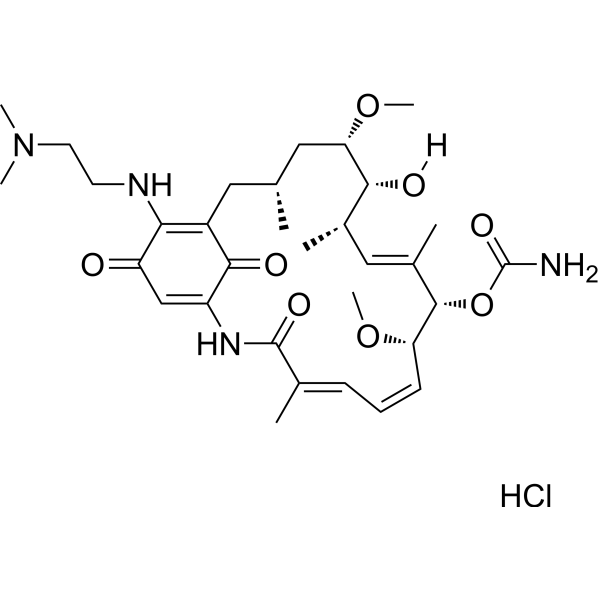
| DCC0565 | Alvespimycin Hydrochloride Featured |
Inhibitor of HSP90, leading to the degradation and depletion of its client proteins such as kinases and transcription factors involved with cell cycle regulation and signal transduction
More description
|
|
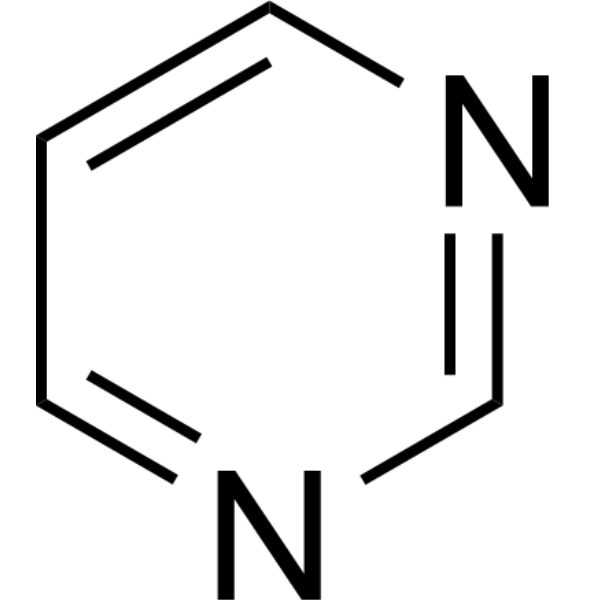
| DC74586 | Pyrimidine Featured |
Pyrimidine is an endogenous metabolite. It is used to study the photoinduced ion chemistry of the halogenated pyrimidines, a class of prototype radiosensitizing molecules, and is also used to assess pyrimidine/purine asymmetry quantitatively.
More description
|
|
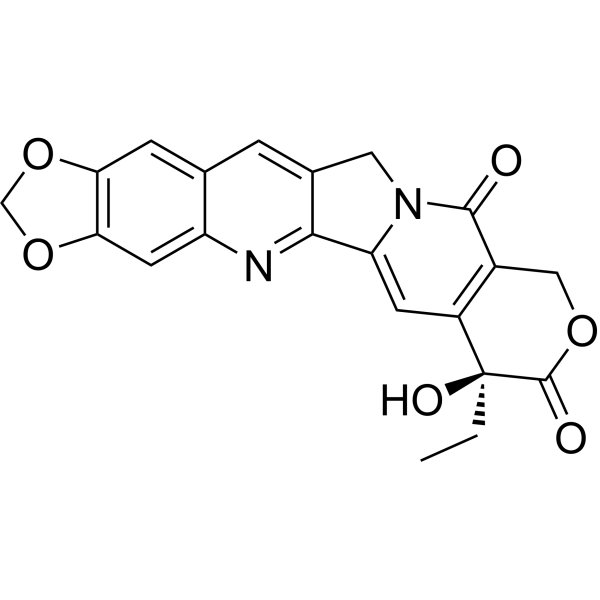
| DC74588 | FL118 Featured |
FL118(10,11-(Methylenedioxy)-20(S)-camptothecin), a Camptothecin analog, is a potent and orally active inhibitor of Survivin. FL118 also selectively and independently inhibits three additional cancer-associated survival genes Mcl-1, XIAP, and cIAP2 in a p53 status-independent manner. FL118 displays potent antitumor activity and can be used in cancer research.
More description
|
|
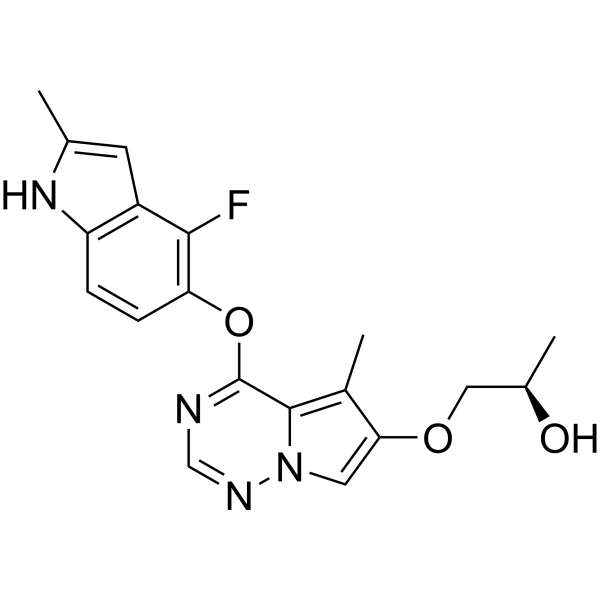
| DC2019 | Brivanib (bms-540215) Featured |
Brivanib is an ATP-competitive inhibitor against human VEGFR2 and FGFR with IC50 of 25 nM and 148 nM, respectively.
More description
|
|
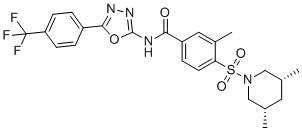
| DC72931 | HSGN-189 Featured |
HSGN-189 is a potent lipoteichoic acid (LTA) biosynthesis inhibitor, exhibits potent antibacterial activity against both MRSA and VRE strains with MICs of 1 ug/mL.
More description
|
|
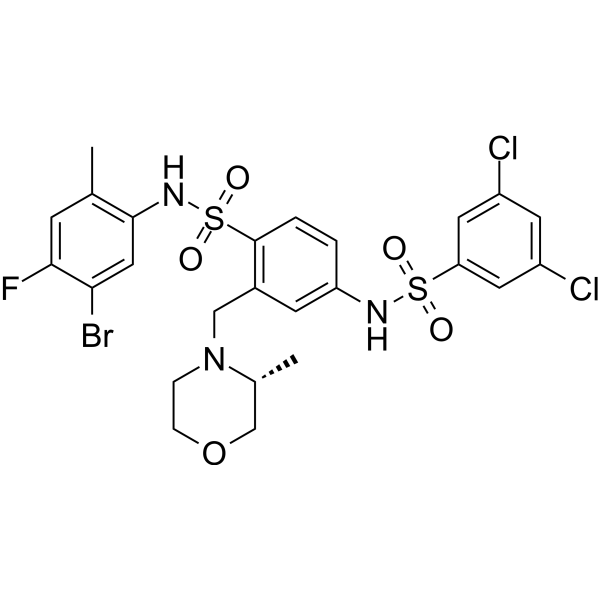
| DC73354 | MDL-811 Featured |
MDL-811 (MDL811) is a potent, selective and allosteric SIRT6 activator with EC50 of 5.7 uM (activated SIRT6 deacetylation), two-fold greater activity than MDL-800 (EC50=12.3 uM, Cat# 35760).
More description
|
|
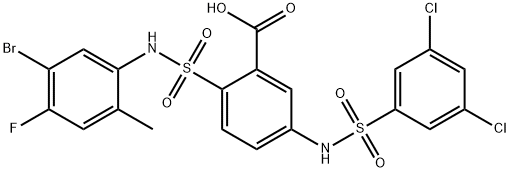
| DC42689 | MDL-801 Featured |
Novel activator of SIRT6 deacetylation
More description
|
|
| DC74589 | p-Toluic acid Featured |
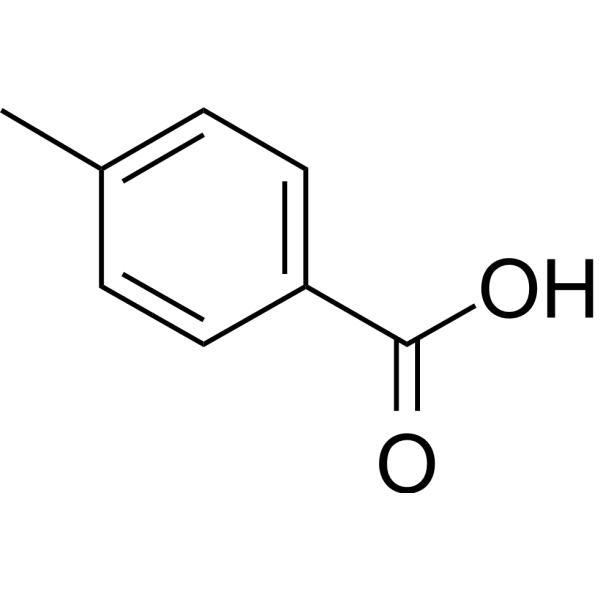
p-Toluic acid (4-Methylbenzoic acid) is a methylbenzoic acid and can be used as an intermediate for the synthesis of para-aminomethylbenzoic acid (PAMBA), p-tolunitrile, etc. It also exhibits hepatotoxicological potential in humanised-liver mice.
More description
|
|
| DCC2388 | GSK3830052 Featured |
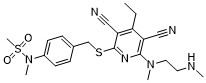
GSK3830052 is a novel DNMT1-selective inhibitor (IC50 = 0.11 ± 0.02 µM). In in vitro assays, compounds in this series, including GSK3830052, inhibit human DNMT1 activity selectively over DNMT3A/3B, produce robust DNA hypomethylation, and trigger transcriptional reactivation and anti‑proliferative effects in leukemia cell lines at low‑micromolar concentrations. In animal models, analogs of this series achieve significant tumor regression and survival benefit in acute myeloid leukemia xenografts with improved tolerability compared to decitabine, demonstrating dose‑dependent antitumor efficacy with reduced hematologic toxicity, although specific numeric IC₅₀/ED₅₀ values for GSK3830052 alone aren’t detailed in the open article.
More description
|
|
| DC73528 | FK 565 Featured |
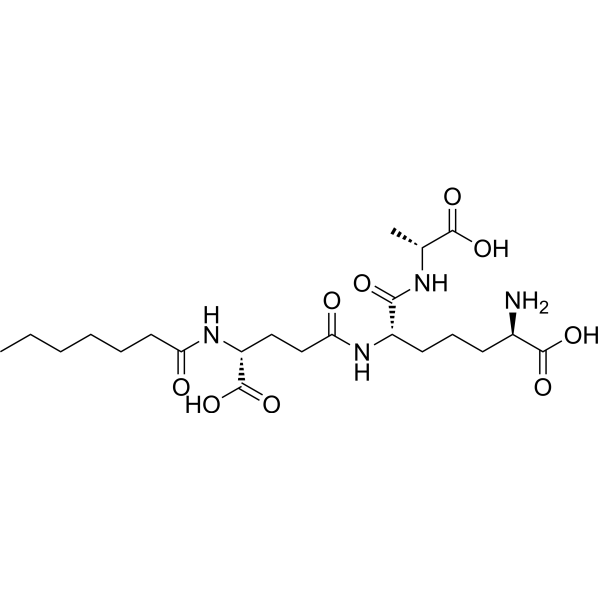
FK565 is an immunoactive peptide and a nucleotide-binding oligomerization domain (Nod)-1 ligand agonist.
More description
|
|
| DCC4292 | Psb-18422 Featured |
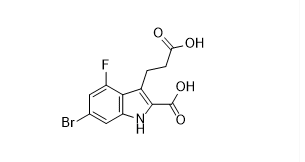
Novel Potent Agonist of the Orphan G Protein-Coupled Receptor GPR17 (EC 50 27.9 nM)
More description
|
|
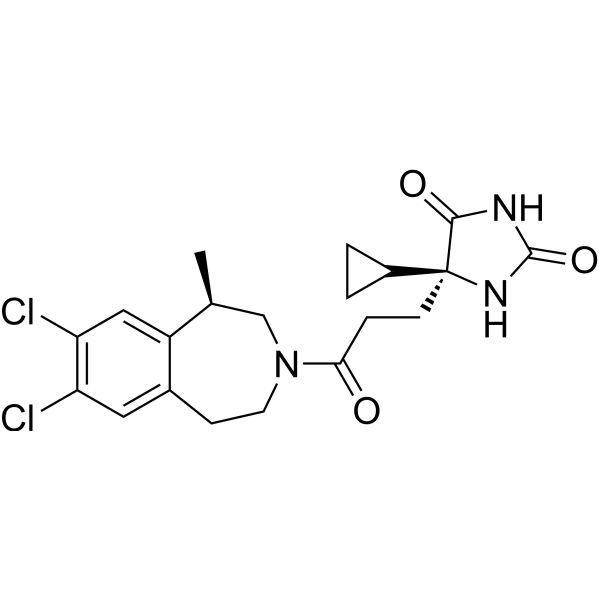
| DC49962 | ADAMTS-5-IN-3 Featured |
ADAMTS-5-IN-3 (Example 37-2) is a potent inhibitor of ADAMTS-5 and ADAMTS-4 with IC50s of 8 and 12 nM, respectively. ADAMTS-5-IN-3 can be used for the research of diseases involving degradation of cartilage or disruption of cartilage homeostasis, in particular osteoarthrosis and/or rheumatoid arthritis.
More description
|
|
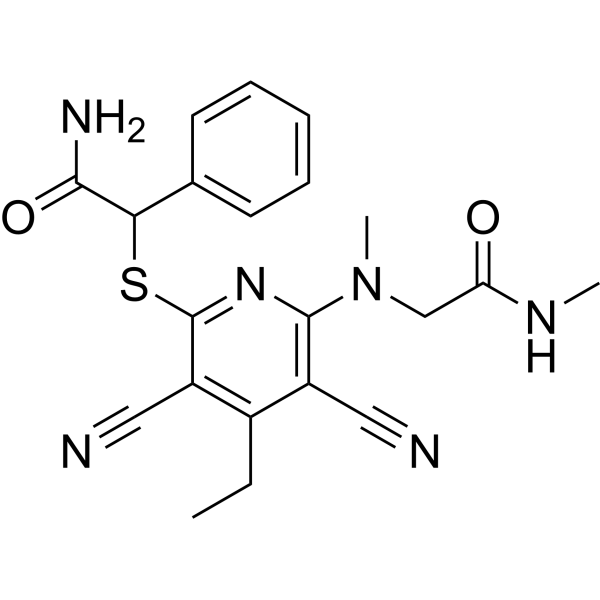
| DC77616 | MS9024 Featured |
MS9024 is the degrader for DNA methyltransferase 1 that degrades DNMT1 in cell HCT116 through the ubiquitin-proteasome pathway with a DC50 of 35 nM (DC50 in MDA-MB-468 and H1299 is 254 nM and 101 nM). MS9024 also inhibits DNMT1 with an IC50 of 0.43 μM.
More description
|
|
| DC71417 | YSK 05 Featured |
YSK 05 is a pH-sensitive cationic lipid. YSK 05 improves the intracellular trafficking of non-viral vectors. YSK 05-MEND shows significantly good gene silencing activity and hemolytic activity. YSK 05 overcomes the suppression of endosomal escape by PEGylation. YSK 05 effectively enhances siRNA delivery both in vitro and in vivo.
More description
|

|
| DC70010 | 98N12-5 Featured |
98N12-5 is an ionizable cationic lipid. It has been used in combination with other lipids in the generation of lipid nanoparticles (LNPs). LNPs containing 98N12-5 and encapsulating proprotein convertase subtilisin kexin type 9 (PCSK9) siRNA selectively accumulate in the liver and reduce total serum cholesterol levels in mice and rats and serum LDL levels in cynomolgus monkeys.
More description
|

|
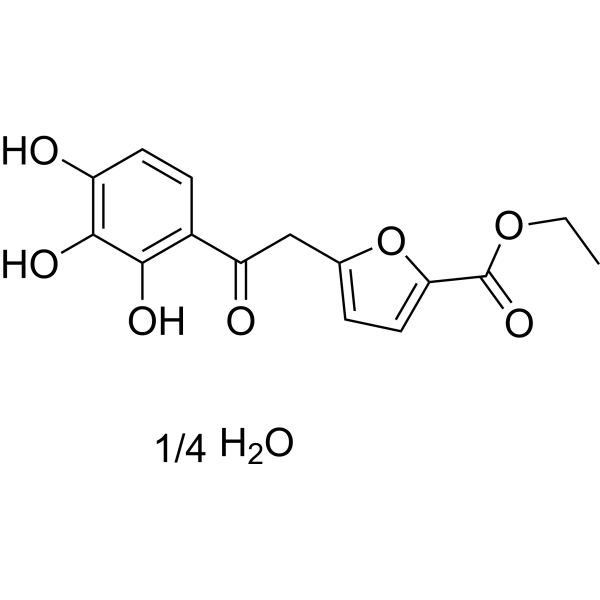
| DC40153 | MMG-11 quarterhydrate |
MMG-11 quarterhydrate is a potent and selective human TLR2 antagonist with low cytotoxicity. MMG-11 quarterhydrate inhibits both TLR2/1 and TLR2/6 signaling with IC50s of 1.7?μM for Pam3CSK4-induced hTLR2/1 and 5.7?μM for Pam2CSK4-induced hTLR2/6 responses.
More description
|
|
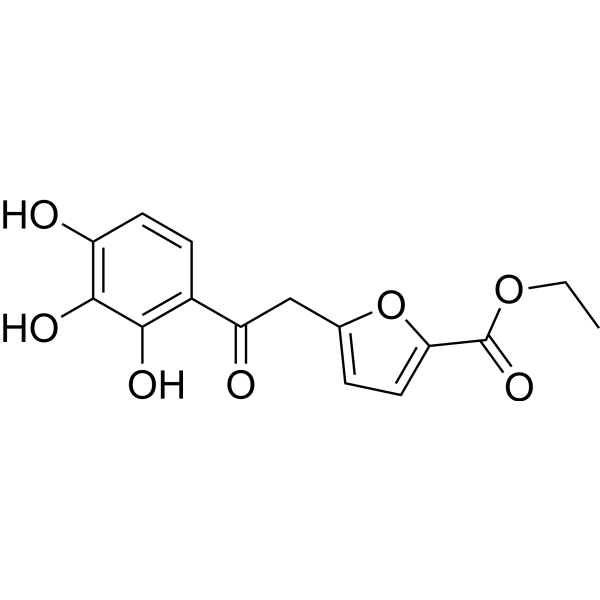
| DC34527 | MMG-11 |
MMG-11 is a potent and selective dual inhibitor of TLR2/1 and TLR2/6 signaling with low cytotoxicity.
More description
|
|
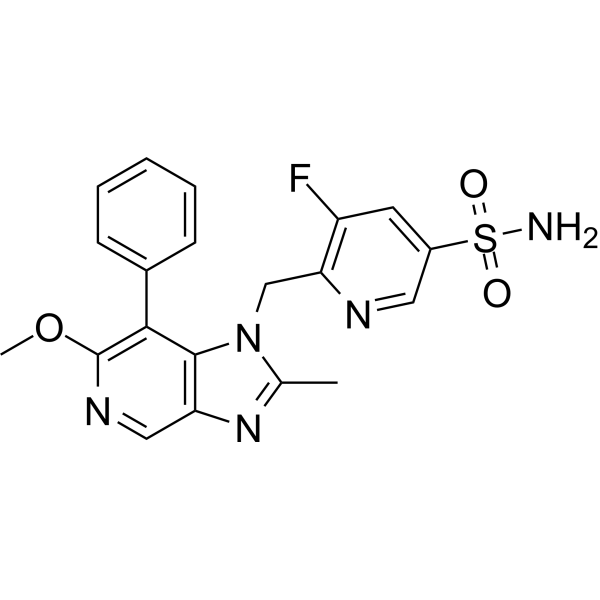
| DC78548 | ISM5939 Featured |
ISM5939 is an orally active and selective ENPP1 inhibitor with an IC50 of 0.63 nM for 2,3-cGAMP degradation and 9.28 nM for ATP hydrolysis. ISM5939 has antitumor activity.
More description
|
|
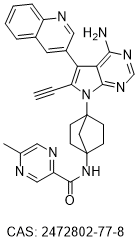
| DC77170 | Emupertinib Featured |
Emupertinib (example 37) is a potent EGFR inhibitor with IC50 values of <0.3 nM, 0.52 nM, 0.5 nM, 0.69 nM and 0.92 nM for EGFR (d746-750/T790M/C779S), EGFR (L858R/T790M/C797S), EGFR (d746-750/C797S), EGFR (L858R/C797S), and EGFR (wild-type), respectively.
More description
|
|
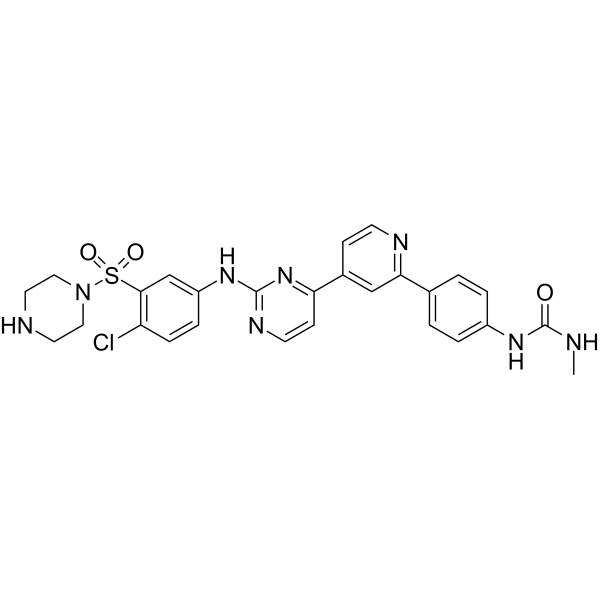
| DC74056 | KVS0001 Featured |
KVS0001 is a specific and bioavailable small molecule inhibitor of SMG1 kinase, disrupts nonsense mediated decay (NMD).
More description
|
|
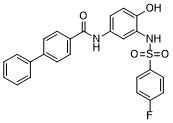
| DC60033 | SN-011 Featured |
STING inhbiitor, which inhibited the activation of the STING signal pathway and to prevent or treat a STING-mediated disease.
More description
|
|
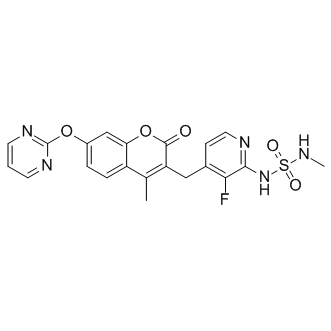
| DC7489 | RO5126766(CH5126766) Featured |
RO5126766(CH5126766) is a Raf/MEK dual kinase inhibitor.
More description
|
|
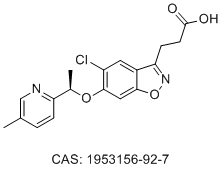
| DC74008 | GSK898 Featured |
GSK898 is a potent, highly selective kynurenine monooxygenase (KMO) inhibitor with pIC50 of 8.8.
More description
|
|
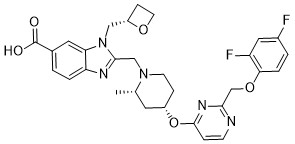
| DC78069 | CT-996 Featured |
CT-996 is an orally active GLP-1RA agonist, with an EC50 of 0.49 nM. CT-996 reduces the β-arrestin recruitment and GLP-1R internalization. CT-996 suppresses postprandial blood glucose following a mixed meal tolerance test (MMTT) in mice expressing the human GLP-1 receptor and enhances glucose stimulated insulin secretion (GSIS) during an intravenous glucose challenge in obese monkeys. CT-996 can be used for the study of type 2 diabetes (T2D) and obesity.
More description
|
|
