 To enhance service speed and avoid tariff delays, we've opened a US warehouse. All US orders ship directly from our US facility.
| Cat. No. | Product Name | Field of Application | Chemical Structure |
|---|---|---|---|
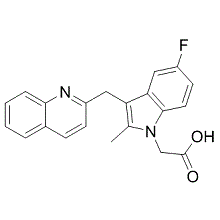
| DC1026 | OC000459(Timapiprant) Featured |
OC000459, a Potent, Selective, and Orally Active D Prostanoid Receptor 2 Antagonist.
More description
|
|
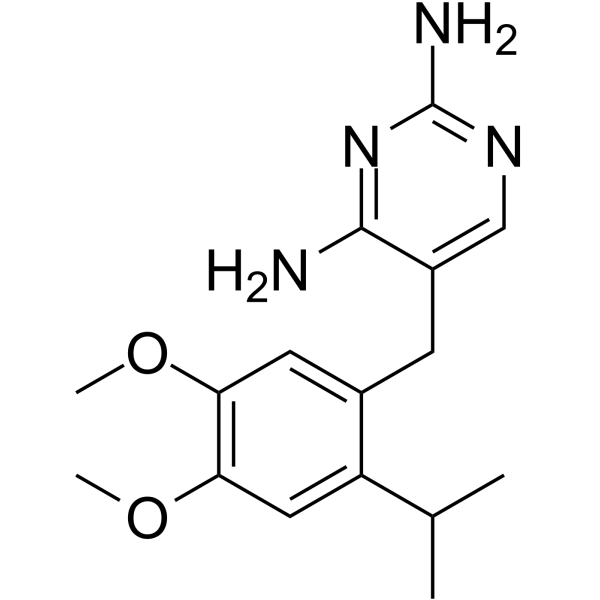
| DC26028 | RO-3 Featured |
RO-3 is a potent, CNS-penetrant, and orally active P2X3 and P2X2/3 antagonist with pIC50s of 5.9 and 7.0 for human homomultimeric P2X3 and heteromultimeric P2X2/3 receptors, respectively. RO-3 shows selectivity for P2X3 and P2X2/3 over all other functional homomultimeric P2X receptors (IC50 >10 μM at P2X1,2,4,5,7)[1].
More description
|
|
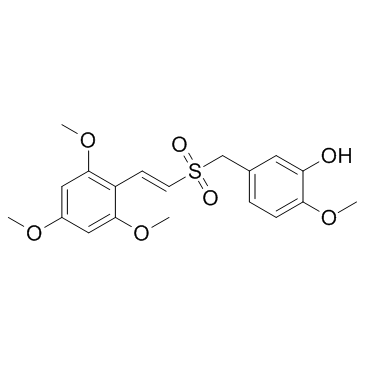
| DC12164 | ON-013100 Featured |
ON-013100, an antineoplastic drug, acts a mitotic inhibitor that could inhibit Cyclin D1 expression.
More description
|
|
| DC11417 | ONC 212 Featured |
ONC212, a fluorinated-ONC201 analogue, is a promising anti-cancer drug and also a selective agonist of GPR132.
More description
|

|
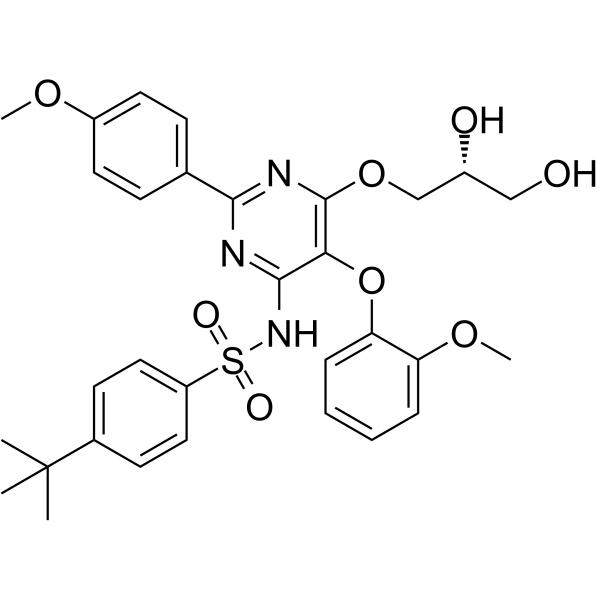
| DC33038 | RO 46-8443 Featured |
RO 46-8443 is the first non-peptide endothelin ETB receptor selective antagonist. RO 46-8443 displays up to 2000-fold selectivity for ETB receptors both in terms of binding inhibitory potency and functional inhibition. The observed parallel rightward shift of concentration-response curves with different antagonist concentrations is consistent with a competitive binding mode. Since R0 46-8443 selectively inhibits ETB receptor mediated responses, it is a valuable tool for clarifying the role of ETB receptors in pathology.
More description
|
|
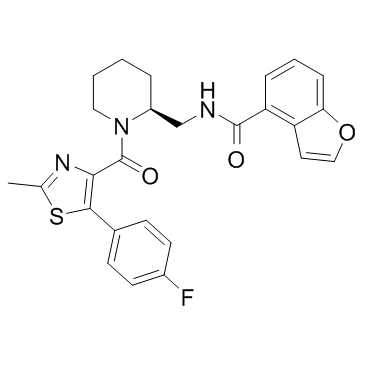
| DC21607 | SB-649868 Featured |
SB-649868 is a potent and selective orally active orexin (OX) 1 and OX2 receptor antagonist (pKi =9.4 and 9.5 at the OX1 and OX2 receptor, respectively).
More description
|
|
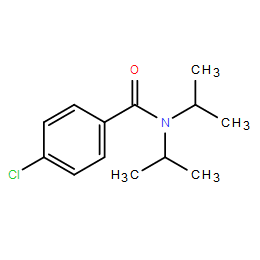
| DC10702 | OR59402;NSC 48107 Featured |
OR59402;NSC 48107 is a bioactive compound.
More description
|
|
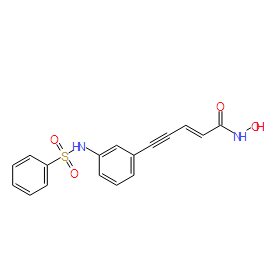
| DC10480 | Oxamflatin Featured |
Oxamflatin is a potent inhibitor of histone deacetylases (IC50 = 15.7 nM).
More description
|
|
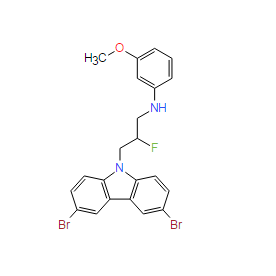
| DC7677 | P7C3-A20 Featured |
P7C3-A20 is an analogue of P7C3,a proneurogenic, neuroprotective agent.
More description
|
|
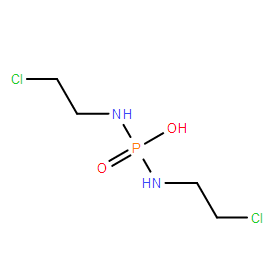
| DC7659 | Palifosfamide Featured |
Palifosfamide is a novel molecule for the treatment of sof tissue sarcoma.
More description
|
|
| DC10893 | Parimifasor Featured |
Parimifasor is an immunomodulator, with anti-inflammatory activity.
More description
|

|
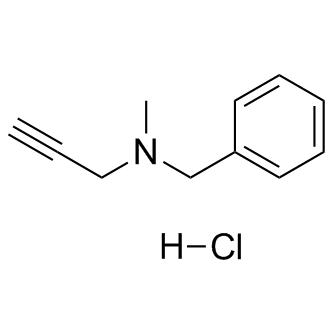
| DC10604 | PARGYLINE HYDROCHLORIDE Featured |
Pargyline is an irreversible inhibitor of monoamine oxidase (MAO; Kis = 15 and 1.8 μM for MAO-A and MAO-B, respectively).
More description
|
|
| DC9865 | Paulownin Featured |
Paulownin can highly inhibit the growth of H. pylori and exhibits strong inhibitory specificity against H. pylori related to E. coli.
More description
|

|
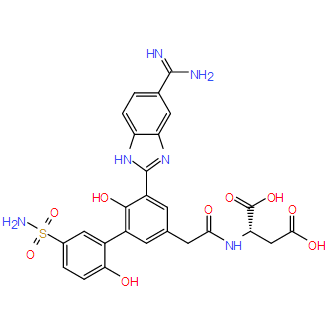
| DC8844 | PCI-27483 Featured |
PCI-27483 is a selective small molecule inhibitor of activated coagulation factor VII (FVIIa), which is in preclinical development as a novel anti-cancer agent.
More description
|
|
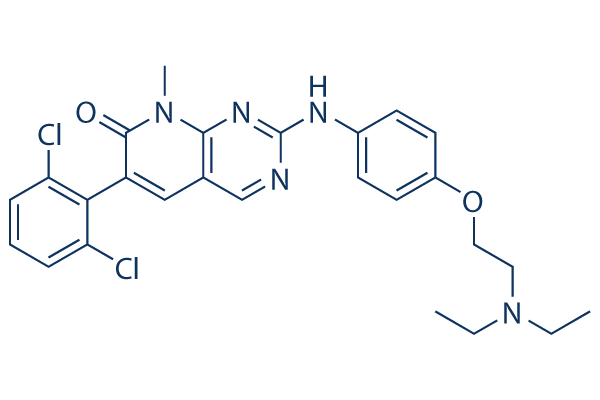
| DC9744 | PD0166285 Featured |
PD0166285 is a potent Wee1 and Chk1 inhibitor with activity at nanomolar concentrations.PD0166285 is a novel G2 checkpoint abrogator.
More description
|
|
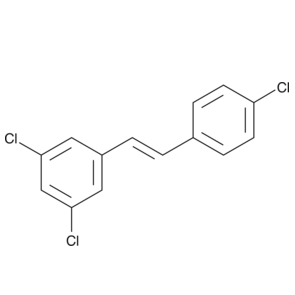
| DC10904 | PDM2 Featured |
PDM 2 is an analog of resveratrol acting as a potent and selective aryl hydrocarbon receptor (AhR) antagonist, with a Ki of 1.2 nM.
More description
|
|
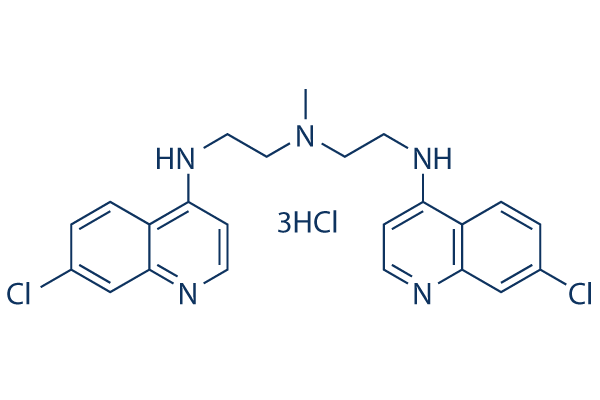
| DC10507 | Pentamidine dihydrochloride Featured |
Pentamidine Dihydrochloride(MP601205 dihydrochloride) is an antimicrobial agent.
More description
|
|
| DC23998 | BMX-IN-1 Featured |
BMX-IN-1 is a selective, irreversible inhibitor of bone marrow tyrosine kinase on chromosome X (BMX) that targets Cys496 in the BMX ATP binding domain with an IC50 of 8 nM, also targets the related Bruton’s tyrosine kinase (BTK) with an IC50 value of 10.4 nM, but is more than 47-656-fold less potent against Blk, JAK3, EGFR, Itk, or Tec activity.
More description
|

|
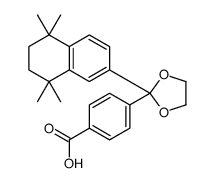
| DC26069 | SR-11237 Featured |
SR-11237 is a selective pan retinoid X receptor (RXR) agonist with no retinoid A receptor (RAR) activity. .
More description
|
|
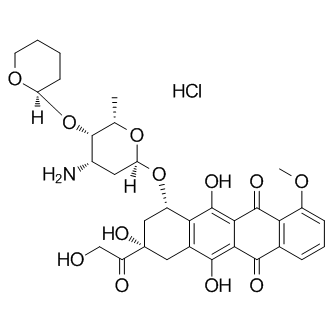
| DC8112 | Pirarubicin(THP) Featured |
Pirarubicin is an analogue of the anthracycline anti-neoplastic doxorubicin, which is an inhibitor of Topo II.
More description
|
|
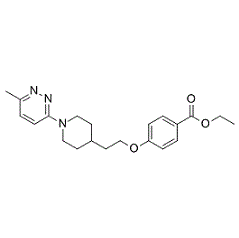
| DC7155 | Pirodavir (R 77975) Featured |
Pirodavir (R 77975) is the prototype of a novel class of broad-spectrum antipicornavirus compounds; potent human rhinovirus (HRV) capsid-binding inhibitor.
More description
|
|
| DCAPI1470 | Pitavastatin Calcium Featured |
Pitavastatin Calcium is a competitive inhibitor of the enzyme HMGCR (HMG-CoA reductase) results in a reduction in LDL cholesterol synthesis. Alternate studies show that pitavastatin can suppress oxygen production in endothelial cells by inhibiting NADPH o
More description
|

|
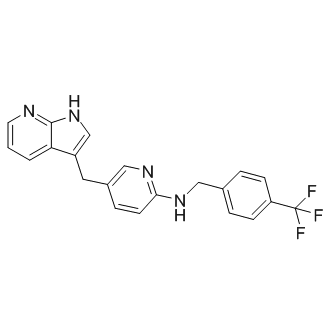
| DC8107 | PLX647 Featured |
PLX647 is a highly specific dual FMS/KIT kinase inhibitor with IC50 of 28/16 nM respectively.
More description
|
|
| DC10760 | Pocapavir Featured |
Pocapavir is an investigational enterovirus (EV) capsid inhibitor.
More description
|

|
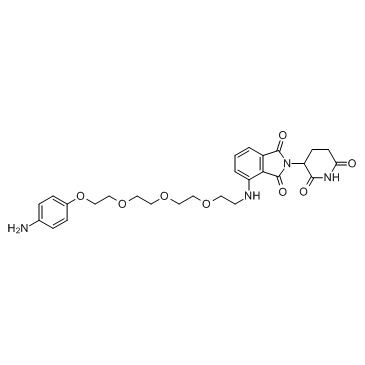
| DC26126 | Cereblon Ligand-Linker Conjugates 9(E3 Ligase Ligand-Linker Conjugates 2) Featured |
Pomalidomide-PEG4-Ph-NH2 is a synthesized E3 ligase ligand-linker conjugate that incorporates the Pomalidomide based cereblon ligand and 4-unit PEG linker used in PROTAC technology.
More description
|
|
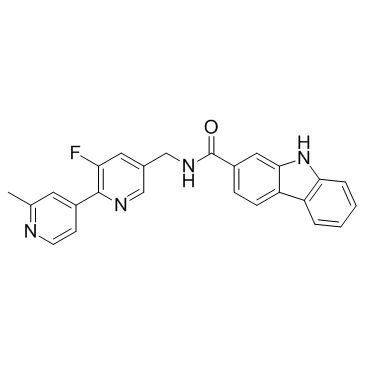
| DC10829 | Porcupine-IN-1 Featured |
Porcupine-IN-1 is potent porcupine inhibitor with an IC50 of 0.5±0.2 nM.
More description
|
|
| DC23003 | hypocrellin A Featured |
Potent PKC inhibitor. Photosensitizing agent. Potent antileishmanial agent.
More description
|

|
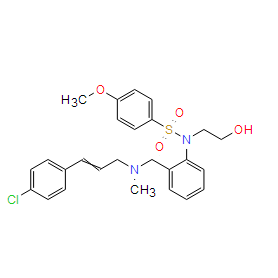
| DC8484 | KN-93(free base) Featured |
Potent, cell permeable inhibitor of CaM kinase II (IC50 = 0.37 μM).
More description
|
|
| DC24206 | KN-93 HCl Featured |
Potent, cell permeable inhibitor of CaM kinase II (IC50 = 0.37 μM).
More description
|

|
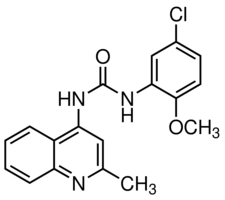
| DC2083 | PQ401 Featured |
PQ 401 is an IGF-1R inhibitor with IC50 of <1 μM.
More description
|
|
