 To enhance service speed and avoid tariff delays, we've opened a US warehouse. All US orders ship directly from our US facility.
| Cat. No. | Product Name | Field of Application | Chemical Structure |
|---|---|---|---|
| DC78450 | FCN-338 |
FCN-338 (LOXO-338) is an orally active and selective Bcl-2 inhibitor with an IC50 of 4.5 nM for Bcl-2/BAK interaction. FCN-338 potently inhibits tumor growth in follicular lymphoma (FL), acute myeloid leukemia (AML), and acute lymphoblastic leukemia (ALL) xenograft mice model without significant weight loss. FCN-338 has a broad-spectrum anti-cancer activity, such as FL, CLL/SLL, AML, and ALL.
More description
|

|
| DC78435 | TK-684 |
TK-684 is a potent and selective allosteric SHP2 inhibitor with IC50 values of 2.1, >1000 nM for SHP2WT, SHP22PTP, respectively. TK-684 inhibits cell proliferation and induces apoptosis. TK-684 decreases the protein expression of p-AKT, p-ERK.
More description
|
|
| DC78386 | FPFS-1169 hydrochloride |
FPFS-1169 (hydrochloride) is a proto-oncogene protein c-bcl-2 stimulant. FPFS-1169 (hydrochloride) can increase the impulse-evoked release of monoamine neurotransmitters. FPFS-1169 (hydrochloride) can be studied in research on Parkinson’s disease.
More description
|
|
| DC78376 | L-threo-PPMP hydrochloride |
L-threo-PPMP hydrochloride is a GlcT (UDP-Glc: Ceramide β1,1glucosyltransferase) inhibitor. L-threo-PPMP hydrochloride inhibits glycosphingolipid biosynthesis and induces apoptosis. L-threo-PPMP hydrochloride has anti-cancer activity.
More description
|
|
| DC78361 | Jacaric acid methyl ester |
Jacaric acid methyl ester is a methyl ester form of the conjugated PUFA jacaric acid. Jacaric acid can induce apoptosis selectively in human prostate cancer cells. Jacaric acid induces concentration- and time-dependent LNCaP cell death. Jacaric acid methyl ester can be studied in anticancer research.
More description
|
|
| DC78265 | afi-FSP1-1 |
afi-FSP1-1 is a Ferroptosis suppressor protein 1 (FSP1) inhibitor with an Ki of 0.283 μM. afi-FSP1-1 has a superior binding capacity to FSP1-FAD-NAD+. afi-FSP1-1 can induces ferroptosis in cancer cells. afi-FSP1-1 can be used for cancers research.
More description
|
|
| DC78256 | c-MYC/BCL2 ligand 1 iodide |
c-MYC/BCL2 ligand 1 iodide is a dual-targeting c-MYC/Bcl-2 G4 ligand with Kd values of 0.90 μM (c-MYC G4) and 0.56 μM (Bcl-2 G4). c-MYC/BCL2 ligand 1 iodide inhibits c-MYC and Bcl-2 gene transcription by binding to G4-forming sequences and downregulates their protein expression. c-MYC/BCL2 ligand 1 iodide inhibits suppresses migration, induces caspase-dependent apoptosis, and triggers cell cycle G1 arrest in MCF-7 cells. c-MYC/BCL2 ligand 1 iodide significantly suppresses tumor growth in a 4T1 syngeneic model with no observable toxicity. c-MYC/BCL2 ligand 1 iodide can be used for the research of breast cancer.
More description
|
|
| DC78249 | ASX-173 |
ASX-173 is an orally active inhibitor of asparagine synthetase (ASNS) (IC50 = 0.113 μM, Ki = 0.4 nM). ASX-173 enhances the anticancer activity of L-asparaginase (ASNase). ASX-173 disrupts nucleotide synthesis and induces leukemia cell cycle arrest, apoptosis and autophagy in leukemia cells in combination with ASNase. ASX-173 slows the growth of OCI-AML2 xenografts in combination with ASNase. ASX-173 is indicated for the study of acute lymphoblastic leukemia, acute myeloid leukemia, colorectal cancer, and other cancers.
More description
|
|
| DC78245 | c9,t11,c15-CLNA |
c9,t11,c15-CLNA is a conjugated linolenic acid (CLNA) isomer produced by Lactobacillus plantarum ZS2058. c9,t11,c15-CLNA has significant anti-proliferation activity against colon cancer cells (IC50: 18.26 μM). c9,t11,c15-CLNA induces pyroptosis by activating the canonical pyroptosis pathway mediated by caspase-1. c9,t11,c15-CLNA can be used in the study of colon cancer.
More description
|
|
| DC78244 | t9,t11,c15-CLNA |
t9,t11,c15-CLNA is a conjugated linolenic acid (CLNA) isomer produced by Lactobacillus plantarum ZS2058. t9,t11,c15-CLNA has the main activities of anti-inflammatory, antioxidant and improving intestinal barrier function. The regulatory mechanism of t9,t11,c15-CLNA includes upregulation of tight junction proteins, inhibition of pro-inflammatory cytokines (such as TNF-α, IL-6) and activation of antioxidant enzymes (such as SOD, CAT). t9,t11,c15-CLNA can be used in the study of inflammatory bowel diseases (such as colitis).
More description
|
|
| DC78229 | GDC-0152-acetamide |
GDC-0152-acetamide is a pan-inhibitor of apoptosis protein (IAP) antagonist. GDC-0152-acetamide induces cIAP1/2 autoubiquitination and degradation, activating the non-canonical NF-κB pathway to promote TNF-α secretion and tumor cell apoptosis. GDC-0152-acetamide is promising for research of ERα-positive breast cancer.
More description
|
|
| DC78177 | Patrinoside aglucone |
Patrinoside aglucone (Compound 8) is an iridoid glucoside that can be isolated from the Valeriana tuberosa. Patrinoside aglucone has potent anticancer activity with G2/M phase tumor cell cycle arrest and apoptosis induction. Patrinoside aglucone also significantly inhibits the proliferation of cancer stem cells (such as MDA-MB-231 and U-251MG cells). Patrinoside aglucone has great anti-inflammatory activity by inhibiting NO release (IC50: 43.44 μM) and significantly reduces the level of TNF-α, IL-1β, IL-6, PGE2 and COX-2.
More description
|
|
| DC78162 | DTUN |
DTUN is a lipophilic hyponitrite radical initiator and can initiates lipid peroxidation. DTUN is a tool for research of ferroptosis.
More description
|
|
| DC78161 | Mesutoclax |
Mesutoclax (ICP-248) (Compound 5) is a selective BCL-2 inhibitor with an IC50 of 1.54 nM. Mesutoclax has weak activity against BCL-XL (IC50: >1000 nM). Mesutoclax can inhibit the activity of RS4;11 cells with an IC50 of 2.75 nM. Mesutoclax can be used in the study of cancer.
More description
|
|
| DC78142 | SUN-N8075 dimethanesulfonate |
SUN-N8075 (dimethanesulfonate) is a radical scavenger with antioxidant and neuroprotective effect. SUN-N8075 (dimethanesulfonate) can inhibit apoptosis and ROS production. SUN-N8075 (dimethanesulfonate) can protect against 6-OHDA-induced cell death. SUN-N8075 (dimethanesulfonate) can be used for the research of neurological disease, such as Parkinson's disease.
More description
|
|
| DC78127 | UNC9750 |
UNC9750 is an inositol phosphate multikinase (IPMK) inhibitor with IC50 values of 31.6 and 374 nM for IPMK and IP6K2, respectively.. UNC9750 inhibits cellular accumulation of InsP5, the direct product of IPMK kinase activity, while having no effect on either InsP6 or InsP7 levels. UNC9750 has ≥ 75% inhibition of four kinases (DAPK1, DYRK1B, PDGFR, and KDR). UNC9750 can be used for the study of glioblastoma.
More description
|
|
| DC78109 | [Ru(dpp)(bpy)(mtmp)](PF6)2 |
[Ru(dpp)(bpy)(mtmp)](PF6)2 (Compound 5) is a trisheteroleptic ruthenium complex. [Ru(dpp)(bpy)(mtmp)](PF6)2 has a light-activated anticancer activity. [Ru(dpp)(bpy)(mtmp)](PF6)2 can selectively cleave off upon green light irradiation, thereby releasing a phototoxic ruthenium-based photoproduct that binds to nuclear DNA, induces DNA damage and apoptosis in cancer cells. [Ru(dpp)(bpy)(mtmp)](PF6)2 can be used for phototherapy of cancers like conjunctival melanoma research.
More description
|
|
| DC78106 | (S)-Edelfosine |
(S)-Edelfosine ((S)-ET-18-OCH3) is the (S)-enantiomer of Edelfosine (ET-18-OCH3). Edelfosine is a selective antitumour lipid targeting apoptosis through intracellular activation of Fas/CD95 Death receptor.
More description
|
|
| DC78077 | WHN-11 |
WHN-11 is an amino-Artemisinin derivative with anti-cancer activity against various cancer cell lines. WHN-11 deprives the cell of ATP, activates autophagy, and causes subsequent cell death by apoptosis. WHN-11 alters cellular protein homeostasis pathways to induce mitochondrial fission and dysfunction. WHN-11's anti-cancer activity is independent of substantive ROS production. WHN-11 can be used for the study of triple-negative breast cancer (TNBC).
More description
|
|
| DC78060 | HBS-101 |
HBS-101 is a selectively, orally active, brain-penetrant, Midkine (MDK) inhibitor (KD = 38.4 nM). HBS-101 significantly reduces cell viability, clonogenic survival, and invasiveness and increases apoptosis. HBS-101 involves suppression of the Akt/mTOR, STAT3, and NF-κB pathways. HBS-101 can be used for the study of Triple-negative breast cancer (TNBC).
More description
|
|
| DC78001 | VR11 aptamer |
VR11 aptamer is a DNA-based TNF-α inhibitor with a KD of 7.0 nM. VR11 aptamer prevents TNFα-induced apoptosis and NO production. VR11 aptamer has non-immunogenicity and does not raise immune responses when injected intraperitoneally into C57BL/6 mice model. VR11 aptamer can be used for inflammatory diseases research.
More description
|
|
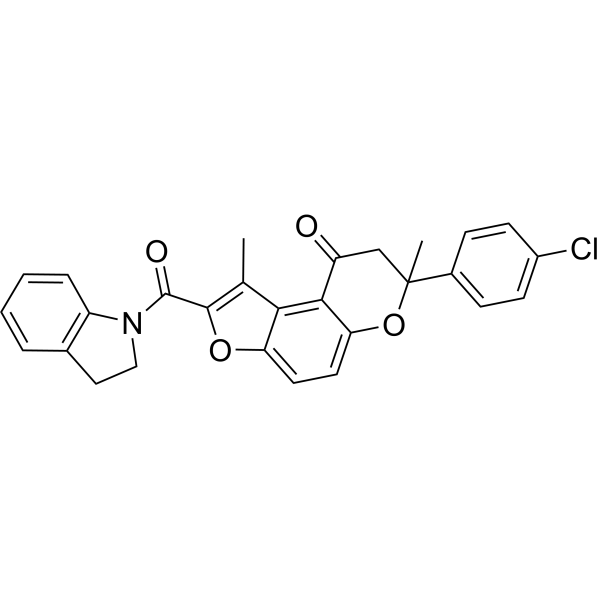
| DC72584 | M47 Featured |
M47 is a small molecule that selectively destabilizes Cryptochrome 1 (CRY1) and increases degradation of the CRY1 in the nucleus. M47 enhances apoptosis in Ras-transformed P53-deficient mouse skin fibroblast lines and enhances life span in p53 knockout mice. M47 can be used in research of cancer.
More description
|
|
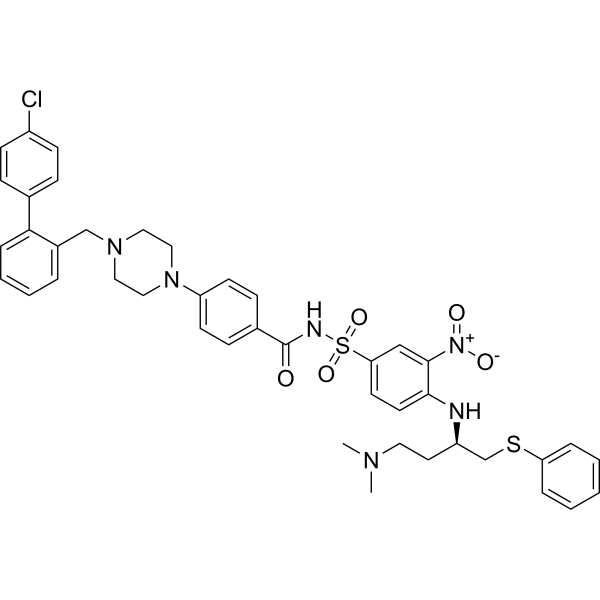
| DC1022 | ABT-737 Featured |
ABT-737 is a BH3 mimetic inhibitor of Bcl-xL, Bcl-2 and Bcl-w with EC50 of 78.7 nM, 30.3 nM and 197.8 nM, respectively.
More description
|
|
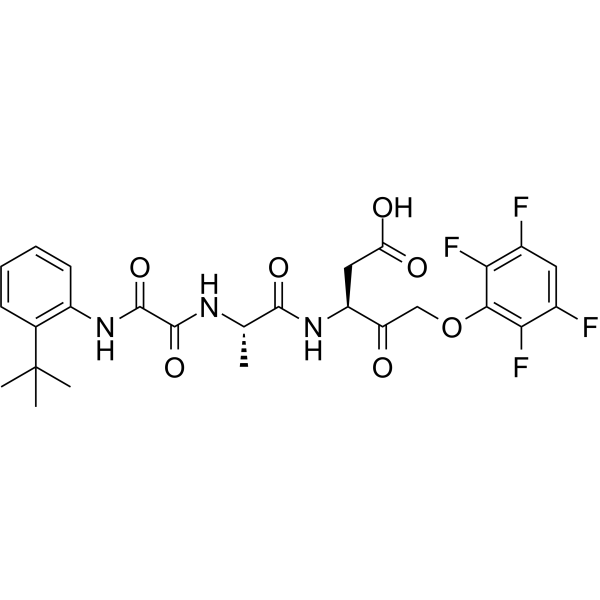
| DC9762 | Emricasan Featured |
Emricasan (IDN-6556, PF-03491390) is a potent irreversible pan-caspase inhibitor.
More description
|
|
| DC73101 | GSK137 Featured |
GSK137 is a potent, small-molecule BCL6 inhibitor binding to BCL6 BTB-POZ domain, displaces peptides derived from the human SMRT co-repressor from the BCL6 BTB-POZ domain in a TR-FRET assay with a pIC50 of 8.0.
More description
|

|
| DC76161 | Resolvin D2 n-3 DPA |
Resolvin D2 n-3 DPA is a specialized proresolving mediator (SPM). Resolvin D2 n-3 DPA (1 nM) can reduce the chemotaxis and adhesion of human neutrophils induced by TNF-α. Resolvin D2 n-3 DPA (100 ng/mouse; intravenous injection) can reduce neutrophil infiltration in the peritoneum and the levels of IL-6 and the chemokine (C-C motif) ligand 2 (CCL2) in a mouse model of inflammation induced by zinc oxide.
More description
|
|
| DC76160 | NSC 15830 hydrochloride |
NSC 15830 (S-(1,2-Dichlorovinyl)-L-cysteine) hydrochloride is a nephrotoxin and metabolite of trichloroethylene. NSC 15830 hydrochloride inhibits pathogen-stimulated TNF-α.
More description
|
|
| DC76159 | MG-C-30 |
MG-C-30 is an orally active agonist for CD27 with an EC50 of 0.84 μM. MG-C-30 activates NK cells and T cell co-stimulatory signals, and enhances immune response. MG-C-30 exhibits antitumor efficacy in mouse EG7-OVA model.
More description
|
|
| DC76158 | CC-1069 |
CC-1069, a structural analog of thalidomide in rats.
More description
|
|
| DC76157 | 2-O-Methyl PAF C-16 |
2-O-Methyl PAF C-16 (ET-18-O-OCH3), a structural analog of the mediator of inflammation platelet-activating factor (PAF), is a cytotoxic ether lipid. 2-O-Methyl PAF C-16 stimulates TNF-α release in murine macrophages.
More description
|
|
