 To enhance service speed and avoid tariff delays, we've opened a US warehouse. All US orders ship directly from our US facility.
| Cat. No. | Product Name | Field of Application | Chemical Structure |
|---|---|---|---|
| DC80364 | CAB7-3 |
CAB7-3 is an orally active HBV capsid assembly modulator (CAM). CAB7-3 exhibits an exceptional antiviral efficacy reducing HBV DNA with an EC50 = 70 nM, CC50 = 32.3 μM in HepDES19 cells. CAB7-3 exhibits significant anti-HBV activity in HBV-integrated HepDES19 (EC50 = 70 nM), HepAD38 (EC50 = 1 nM) and HBV-infected HLCZ01 cells (EC50 = 2 nM), respectively. CAB7-3 effectively reduces Hepatic HBV core protein levels and suppresses viral replication in vivo. CAB7-3 demonstrates a favorable drug-like and safety profile. CAB7-3 can be used for Hepatitis B Virus (HBV) research.
More description
|

|
| DC80288 | Azimexon |
Azimexon (BM 12.531) is an orally active immunomodulator with radioprotective and antitumor activities. Azimexon prolongs survival in multiple mouse models, enhances immunity and hematopoiesis, and alleviates radiation injury and tumor metastasis. Azimexon causes reversible hemolytic anemia in rats and dogs, and exerts therapeutic activity against adjuvant-induced arthritis in rats. Azimexon can be used for the research of lung carcinoma, leukemia, multiple myeloma, lung tumor, arthritis, breast cancer and AIDS‑related complex.
More description
|
|
| DC80226 | Antioxidant agent-22 |
Antioxidant agent-22 is a paraben derivative tetracyclic spermine cyclotriphosphazene compound. Antioxidant agent-22 exhibits antioxidant, anti-Inflammatory, and apoptotic activities. Antioxidant agent-22 significantly upregulates CAT, SOD, caspase-3 and IL-6 expression, suppresses GSH, IL-1β, and reduces BCL-2 and BAX levels. Antioxidant agent-22 can be used for the research of cancer, such as lung cancer.
More description
|
|
| DC80189 | AMC-3-030 |
AMC-3-030 is a selective and potent dual inhibitor targeting HDAC6 and chymotrypsin-like proteasome with IC50 values of 884 and 4.17 nM. AMC-3-030 has a proliferation inhibitory effect. AMC-3-030 can reduce α-tubulin and β-actin levels. AMC-3-030 can be used for research of multiple myeloma.
More description
|
|
| DC80172 | Akt3 ligand-1 |
Akt3 ligand-1 is an Akt3 inhibitor (IC50 = 0.1 nM) and a ligand for the target protein for PROTAC (Akt3). Akt3 ligand-1 can be used to synthesize PROTAC Akt3 Degrader-1.
More description
|
|
| DC80138 | AB-22 |
AB-22, a vinyl sulfate compound, is an orally active antifungal agent. AB-22 inhibits hyphal growth and biofilm initiation by inhibiting the gene expression of ALS3, HWP1, and ECE1 in Candida albicans SC5314 cells. AB-22 can be used for the research of infrction, such as systemic candidiasis.
More description
|
|
| DC80101 | 5-Ethynyl-2'-deoxyuridine-13C2 |
5-Ethynyl-2'-deoxyuridine-13C2 (EdU-13C2) is the 13C-labeled 5-Ethynyl-2'-deoxyuridine. 5-Ethynyl-2'-deoxyuridine (EdU), a thymidine analogue, is incorporated into cellular DNA during DNA replication and the subsequent reaction of EdU with a fluorescent azide in a “Click” reaction. EdU staining is a fast, sensitive and reproducible method to study cell proliferation. 5-Ethynyl-2'-deoxyuridine is an alkyl chain-based PROTAC linker that can be used in the synthesis of PROTACs. 5-Ethynyl-2'-deoxyuridine is a click chemistry reagent, it contains an Alkyne group and can undergo copper-catalyzed azide-alkyne cycloaddition (CuAAc) with molecules containing Azide groups.
More description
|
|
| DC80041 | 2-Iminopiperidine hydrochloride |
2-Iminopiperidine (compound 13) hydrochloride is an orally active inducible nitric oxide synthase inhibitor. 2-Iminopiperidine (hydrochloride) can be used to investigate NO-mediated arthritis, inflammatory bowel disease, diabetes, allodynia, cerebral ischemia and other central nervous system diseases.
More description
|
|
| DC80010 | 1-Naphthylacetamide |
1-Naphthylacetamide is an orally active nonsteroidal anti-inflammatory agent (NAIA) and also an indole-type auxin plant growth regulator. 1-Naphthylacetamide inhibits inflammatory response-related pathways and modulates plant hormone signaling, exhibiting anti-inflammatory, local anesthetic, antispasmodic, analgesic, and diuretic activities. 1-Naphthylacetamide promotes plant cell expansion, differentiation, and fruit enlargement. Additionally, 1-Naphthylacetamide induces central nervous system (CNS) depression in mice, characterized by reduced spontaneous activity, decreased irritability, decreased muscle tone, and attenuated ear-cuff reflex, ipsilateral flexor reflex, and corneal reflex[1][2].
More description
|
|
| DC79978 | 10-PAHSA-13C4 |
10-PAHSA-13C4 is the 13C-labeled 10-PAHSA. 10-PAHSA is an endogenous lipid that belongs to a collection of branched fatty acid esters of hydroxy fatty acids (FAHFAs).
More description
|
|
| DC80068 | 3'-O-(2-Nitrobenzyl)-dGTP |
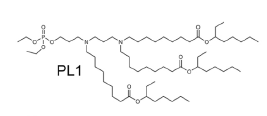
3'-O-(2-Nitrobenzyl)-dGTP is a reversible terminator. 3'-O-(2-Nitrobenzyl)-dGTP can be recognized and incorporated by DNA polymerases, thereby temporarily terminating DNA primer extension; after the 2-nitrobenzyl blocking group is removed via laser irradiation, a free 3'-OH can be regenerated to allow subsequent polymerase-mediated extension. 3'-O-(2-Nitrobenzyl)-dGTP can be used in DNA sequencing studies.
More description
|
|
| DC22335 | E3 ligase Ligand 1A Featured |
E3 ligase Ligand 1A is a ligand of E3 ligase, used in PROTAC technology; E3 ligase Ligand 1A can be used in the research of cancer.
(S,R,S)-AHPC-Me (VHL ligand 2) is the (S,R,S)-AHPC-based VHL ligand used in the recruitment of the von Hippel-Lindau (VHL)
More description
|

|
| DC11578 | VHL Ligand 3 Featured |
A VHL ligand for PROTAC..
More description
|

|
| DC11579 | VH032 Featured |
VH-032 (VHL ligand 1) is a VHL ligand for PROTAC and potent, small molecule inhibitor of the VHL/HIF-1α interaction with Kd of 185 nM..
More description
|

|
| DC12028 | MDK7526(Protein degrader 1) Featured |
MDK7526, also known as VHL Ligand 1; Protein degrader 1, is a potent and selective protein degrader.
More description
|
-AHPC monohydrochloride.gif)
|
| DC26119 | VHL ligand 2 hydrochloride Featured |
VHL ligand 2 hydrochloride) is the (S,R,S)-AHPC-based VHL ligand used in the recruitment of the von Hippel-Lindau (VHL) protein. (S,R,S)-AHPC-Me hydrochloride can be used to synthesize ARV-771, a von Hippel-Landau (VHL) E3 ligase-based BET PROTAC degrader.
More description
|

|
| DC50061 | Pomalidomide-C2-NH2(E3 ligase Ligand 17) Featured |
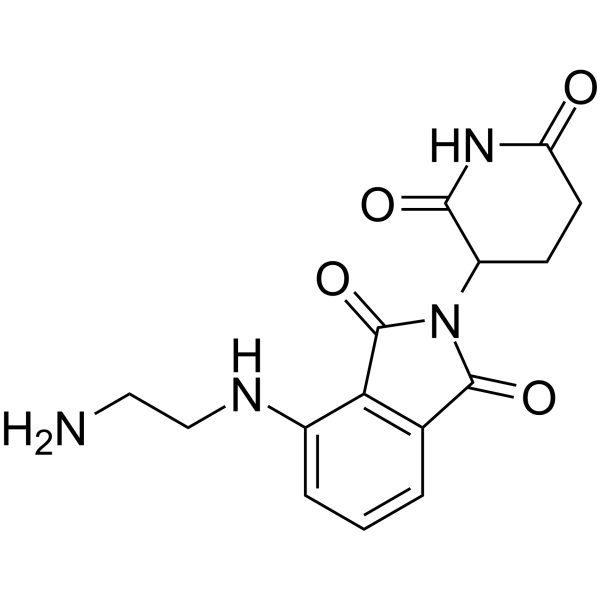
E3 ligase Ligand 17 is a ligand for E3 ubiquitin ligase. E3 ligase Ligand 17 can be connected to the ligand for protein by a linker to form PROTACs or SNIPERs. PROTACs are inducers of ubiquitination-mediated degradation of cancer-promoting proteins[1].
More description
|
|
| DC45698 | Lenalidomide-4-aminomethyl hydrochloride Featured |
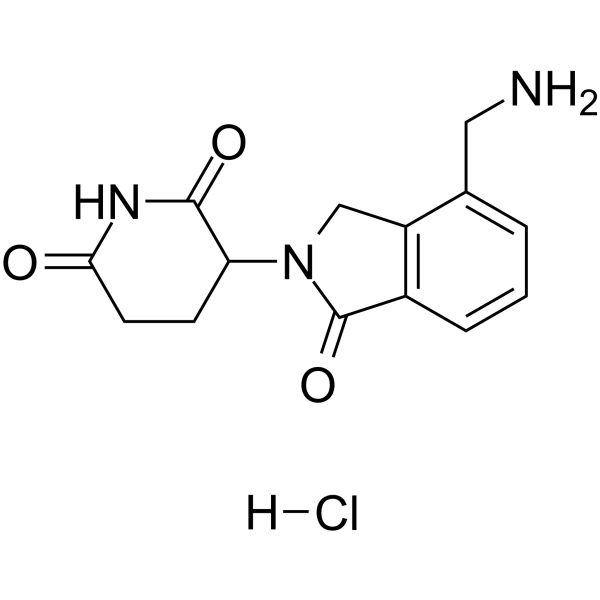
Lenalidomide-4-aminomethyl hydrochloride is the Lenalidomide-based cereblon (CRBN) ligand used in the recruitment of CRBN protein. Lenalidomide-4-aminomethyl hydrochloride can be connected to the ligand for protein by a linker to form PROTAC
More description
|
|
| DC86101 | VH032-cyclopropane-F Featured |
E3 ligase Ligand 19 is a ligand for E3 ubiquitin ligase. E3 ligase Ligand 19 can be connected to the ligand for protein (e.g., SMARCA BD ligand) by a linker to form PROTACs (e.g., PROTAC 1). PROTAC 1 is a partial degrader of SMARCA2 and SMARCA4[1]
More description
|

|
| DC42463 | Thalidomide-NH-CH2-COOH |
Thalidomide-NH-CH2-COOH is the Thalidomide-based cereblon ligand used in the recruitment of CRBN protein. Thalidomide-NH-CH2-COOH can be connected to the ligand for protein by a linker to form PROTACs, such as THAL-SNS-032.
More description
|

|
| DC47889 | Thalidomide-5-NH2-CH2-COOH Featured |
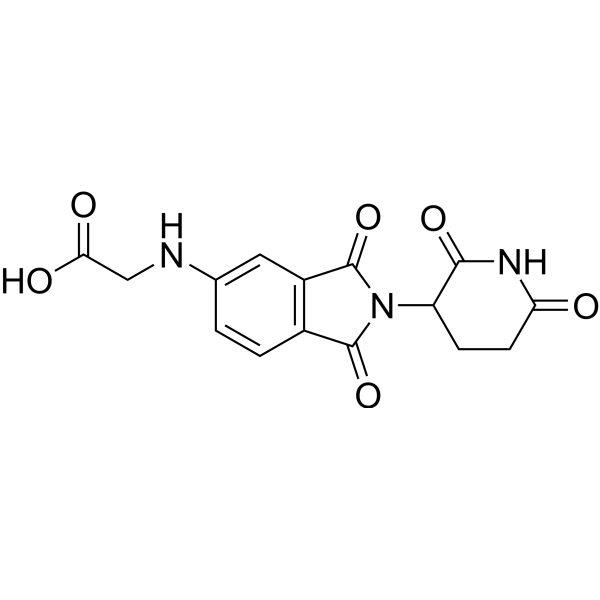
Thalidomide-5-NH2-CH2-COOH (compound 114) is a potent and selective inhibitor of tropomyosin receptor kinase (trk). Thalidomide-5-NH2-CH2-COOH is a ligand of E3 ligase. Thalidomide-5-NH2-CH2-COOH has the potential for the treatment of one or more diseases (extracted from patent WO2021170109A1) .
More description
|
|
| DC51007 | Lenalidomide-5-aminomethyl hydrochloride Featured |
Lenalidomide-5-aminomethyl hydrochloride is the Lenalidomide-based cereblon (CRBN) ligand used in the recruitment of CRBN protein. Lenalidomide-5-aminomethyl hydrochloride can be connected to the ligand for protein by a linker to form PROTAC
More description
|

|
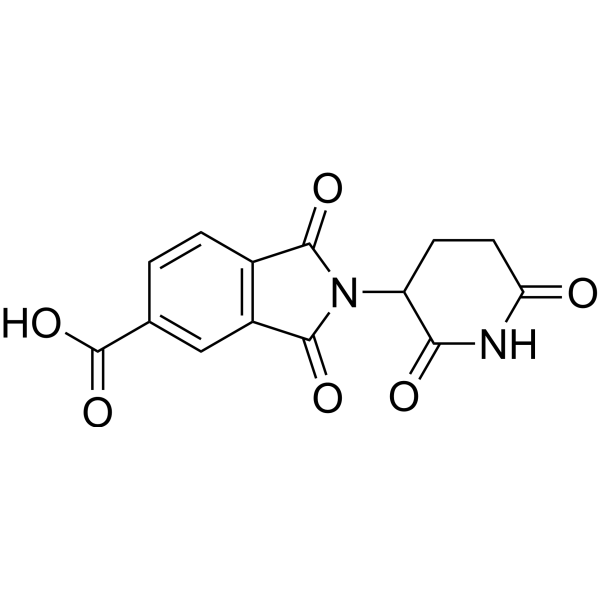
| DC46956 | Thalidomide-5-COOH Featured |
Thalidomide-5-COOH is the Thalidomide-based cereblon ligand used in the recruitment of CRBN protein. Thalidomide-5-COOH can be connected to the ligand for protein by a linker to form PROTACs.
More description
|
|
| DC79781 | (S,S,S)-VH032-cyclopropane-F |
(S,S,S)-VH032-cyclopropane-F is a ligand for E3 ubiquitin ligases. (S,S,S)-VH032-cyclopropane-F can be linked to target protein ligands via a linker to form the PROTAC cis-VZ185.
More description
|
|
| DC79732 | 4-[(1E)-2-Nitroethenyl]benzoic acid |
4-[(1E)-2-Nitroethenyl]benzoic acid is an E3 ligase ligand. 4-[(1E)-2-Nitroethenyl]benzoic acid can be used for synthesis of PROTAC BRD4 Degrader-38.
More description
|
|
| DC79656 | E3 ligase Ligand 67 |
E3 ligase Ligand 67 (Compound 5) is a STUB1/CHIP ligand with a Kd of 8.9 μM for CHIP in fluorescence polarization assay. E3 ligase Ligand 67 is an E3 ligase ligand that can be used for synthesis of PROTACs.
More description
|
|
| DC79467 | KLHDC2 ligand 1 |
KLHDC2 ligand 1 is an E3 ligase ligand. KLHDC2 ligand 1 can be used for synthesis of PROTAC BRD4 Degrader-31.
More description
|
|
| DC79443 | LC3 liagnd-2 |
LC3 liagnd-2 is an E3 ligase ligand. LC3 liagnd-2 can be used for synthesis of PROTAC PDEδ autophagic degrader 1.
More description
|
|
| DC79357 | (S,S,S)-AHPC |
(S,S,S)-AHPC is an E3 ligase ligand. (S,S,S)-AHPC can be used for synthesis of PROTAC AH081.
More description
|
|
| DC79342 | CRBN ligand-184 |
CRBN ligand-184 is a ligand for CRBN-type E3 ubiquitin ligases. CRBN ligand-184 can be used to synthesize PROTAC AU-24118.
More description
|
|
