 To enhance service speed and avoid tariff delays, we've opened a US warehouse. All US orders ship directly from our US facility.
| Cat. No. | Product Name | Field of Application | Chemical Structure |
|---|---|---|---|
| DC60814 | Setmelanotide acetate Featured |
Setmelanotide (RM-493, BIM-22493, CAM 4072) is a cyclic peptide full agonist of melanocortin-4 receptor (MC4R) with an EC50 of 0.27 nM and a Ki of 2.1 nM.
More description
|

|
| DC60812 | SHA 68 Featured |
SHA 68 is a potent and selective non-peptide neuropeptide S receptor (NPSR) antagonist with IC50s of 22.0 and 23.8 nM for NPSR Asn107 and NPSR Ile107, respectively. SHA 68 has limited the blood-brain barrier (BBB) penetration and the activity in neuralgia.
More description
|

|
| DC60810 | Lipid head 503 (1,3-Propanediamine, N,N'-bis(2-aminoethyl)-N,N'-dimethyl-) Featured |

|
|
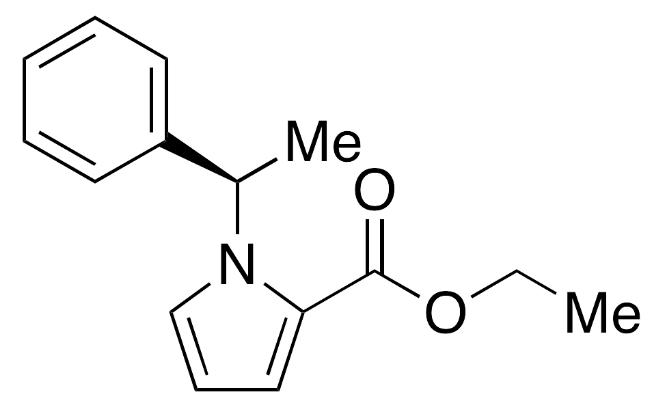
| DCC1216 | Carboetomidate Featured |
Analog of etomidate that interacts weakly with 11β-hydroxylase
More description
|
|
| A531 | Fox Chase patent anti-TEM7R Biosimilar(Anti-TEM7R / PLXDC2 Reference Antibody) Featured |

|
|
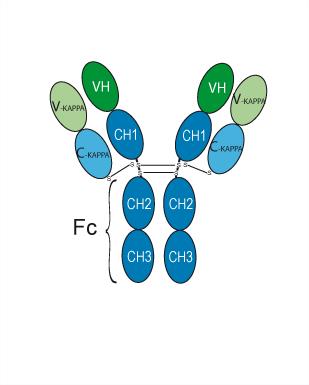
| A530 | Ontuxizumab Biosimilar(Anti-TEM1 / Endosialin / CD248 Reference Antibody) Featured |
Ontuxizumab (MORAb-004) is a humanized IgG1/κ anti-endosialin (TEM-1 or CD248) monoclonal antibody with antitumor effects. Ontuxizumab can be used for the research of cancer.
More description
|
|
| A529 | NKTT320 Biosimilar(Anti-TCR Reference Antibody) Featured |
|
|
| A528 | TOL101 Biosimilar(Anti-TCR Reference Antibody) Featured |
|
|
| A527 | LY3022859 Biosimilar(Anti-TBFbR2 Reference Antibody) Featured |
|
|
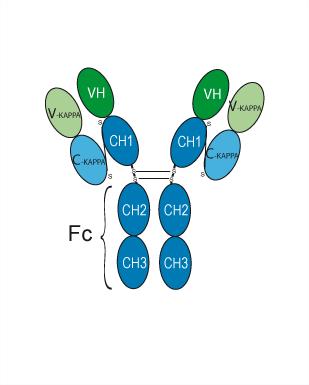
| A526 | Gosuranemab Biosimilar(Anti-Tau Reference Antibody) Featured |
Gosuranemab (BMS-986168) is a humanised IgG4 anti-tau monoclonal antibody. Gosuranemab binds to human N-terminal tau residues 15-22. Gosuranemab has the potential for the research of alzheimer’s disease (AD).
More description
|
|
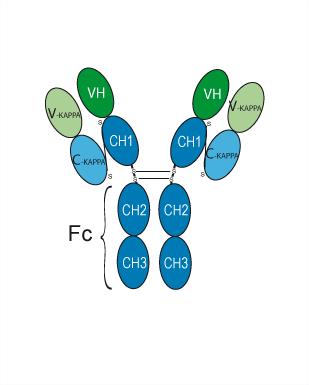
| A525 | Bepranemab Biosimilar(Anti-Tau Reference Antibody ) Featured |
Bepranemab (UCB 0107) is a humanized, full-length IgG4 monoclonal antibody that binds to a central tau epitope (amino acids 235-250). Bepranemab can be used for Alzheimer’s disease (AD) research.
More description
|
|
| A524 | Semorinemab Biosimilar(Anti-Tau Reference Antibody) Featured |
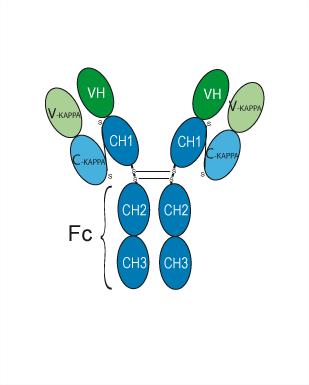
Semorinemab (RG 6100) is an anti-Tau humanized IgG4 monoclonal antibody, targets the N-terminal portion of the Tau protein (amino acid residues 6-23). Semorinemab binds with human Tau with a Kd value of 3.8 nM. Semorinemab can be used for the research of Alzheimer's Disease.
More description
|
|
| A523 | Tilavonemab Biosimilar(Anti-Tau Reference Antibody) Featured |
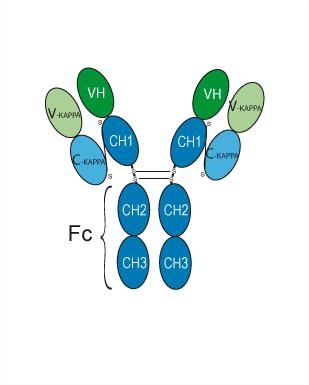
Tilavonemab (ABBV-8E12) is a humanized anti-tau antibody that targets the extracellular form of pathological tau protein aggregates by binding to the N-terminal 25-30 amino acid residues of tau protein. Tilavonemab blocks the ability of human and mouse neurons to take up tau aggregates, reduces the loss of brain volume, slows the progression of tau pathology, and improves cognitive abilities in transgenic mice expressing mutant human tau. Tilavonemab is used in Alzheimer's disease research.
More description
|
|
| A522 | Zagotenemab Biosimilar(Anti-Tau Reference Antibody) Featured |
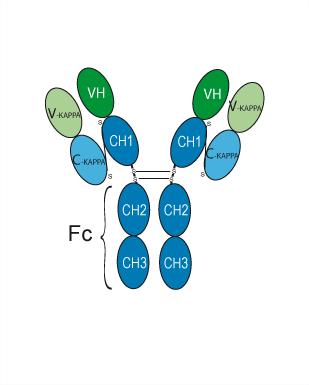
Zagotenemab (LY3303560) is a humanised anti-tau antibody that selectively binds and neutralises tau deposits in the brain. Zagotenemab can be used in Alzheimer's disease research.
More description
|
|
| A521 | Genentech patent anti-TAT226 Biosimilar(Anti-TAT226 Reference Antibody) Featured |
|
|
| A520 | Indatuximab Biosimilar(Anti-Syndecan-1 / CD138 Reference Antibody) Featured |
|
|
| A519 | Genentech patent anti-STOP-1 Biosimilar(Anti-STOP1 Reference Antibody) Featured |
|
|
| A518 | vandortuzumAb Biosimilar(Anti-STEAP1 Reference Antibody) Featured |
|
|
| A517 | Bexmarilimab Biosimilar(Anti-STAB1 Reference Antibody) Featured |
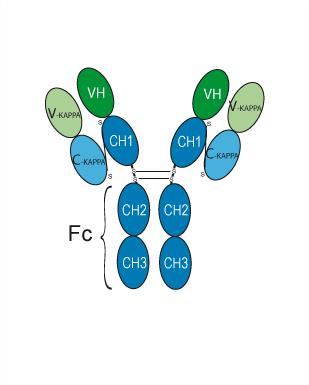
Bexmarilimab (FP-1305) is a potent humanized anti-CLEVER-1 IgG4-antibody with an IC50 value of 4.51 nM. Bexmarilimab is capable of inducing a phenotypic M2 to M1 immune switch of tumor-associated macrophages. Bexmarilimab can be used in research of cancer.
More description
|
|
| A516 | Expression DD patent anti-SIP Biosimilar(Anti-Sphingosine-1-phosphate Reference Antibody) Featured |
|
|
| A515 | Sonepcizumab Biosimilar(Anti-Sphingosine-1-phosphate Reference Antibody) Featured |
Sonepcizumab (LT 1009) is a fully human anti-S1P monoclonal antibody. Sonepcizumab has the potential for the research of metastatic renal cell carcinoma (mRCC).
More description
|
|
| DC70536 | KARI 201 Featured |
KARI-201 is a multifunctional small molecule that demonstrates dual activity as a highly selective inhibitor of acid sphingomyelinase (ASM) and an agonist of the ghrelin receptor. It operates as a competitive inhibitor by binding directly to the active site of ASM. Studies reveal that the incorporation of KARI-201 into ASM decreases in a concentration-dependent manner with sphingomyelin, resulting in KM values of 332.5, 433.9, and 572.6 μM at KARI-201 concentrations of 1, 10, and 100 μM, respectively. In preclinical models, KARI-201 has shown efficacy in reducing amyloid pathology and reversing cognitive deficits in APP/PS1 mice. Additionally, it enhances autophagy degradation by promoting lysosomal biogenesis in neuronal cells. As a ghrelin receptor agonist, KARI-201 also supports hippocampal neurogenesis and improves synaptic plasticity, making it a promising therapeutic candidate for neurodegenerative conditions.
More description
|

|
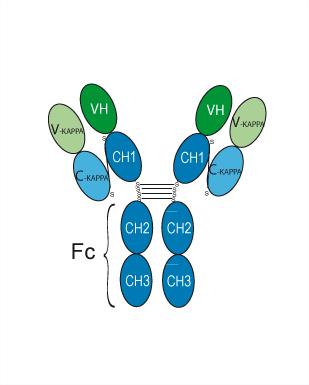
| A514 | Romosozumab Biosimilar(Anti-SOST / Sclerostin Reference Antibody) Featured |
Romosozumab is a humanized monoclonal anti-sclerostin antibody, it promotes bone formation and inhibits bone resorption by inhibiting sclerostin. Romosozumab can be used for the research of osteoporosis.
More description
|
|
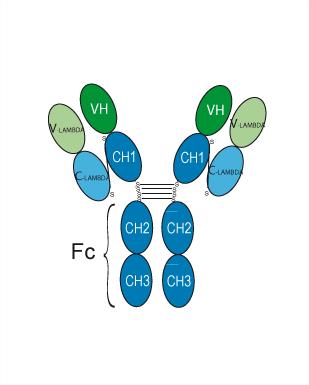
| A513 | Setrusumab Biosimilar(Anti-SOST / Sclerostin Reference Antibody) Featured |
Setrusumab (BPS 804) is a fully human monoclonal antibody targets sclerostin. Setrusumab efftively improves bone strength. Setrusumab can be used for the resesrch of Osteogenesis Imperfecta (OI) and cancer.
More description
|
|
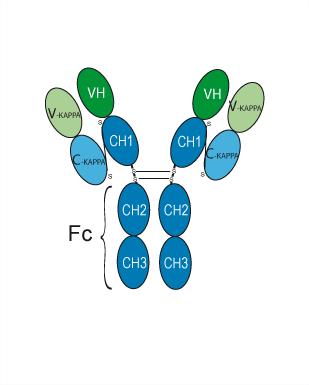
| A512 | Blosozumab Biosimilar(Anti-SOST / Sclerostin Reference Antibody) Featured |
Blosozumab (LY2541546) is an anti-Human sclerostin (SOST) antibody inhibitor. Blosozumab stimulates bone formation and reduces bone resorption. Blosozumab can be used in the research of Osteoporosis.
More description
|
|
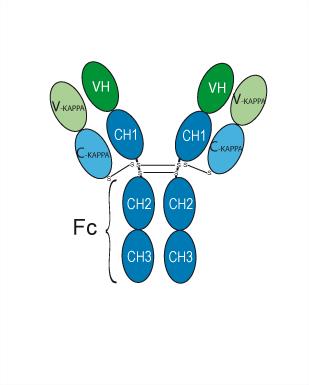
| A511 | Latozinemab Biosimilar(Anti-Sortilin / SORT1 Reference Antibody) Featured |
Latozinemab (AL001) is a recombinant human anti-Sortilin monoclonal antibody. Latozinemab effectively binds Sortilin with a high affinity and blocks the interaction between progranulin protein (PGRN) and Sortilin receptor. Latozinemab has the potential for progranulin gene (GRN) mutations causative of Frontotemporal dementia (FTD) (FTD-GRN) research.
More description
|
|
| A510 | Sirtratumab Biosimilar(Anti-SLITRK6 Reference Antibody) Featured |
Sirtratumab is a human Igγ2 monoclonal antibody against SLIT and NTRK-like family 6 (Slitrk6). Sirtratumab can be used in research of cancer.
More description
|
|
| A509 | Agilvax Patent Anti-Slc7A11 Biosimilar(Anti-SLC7A11 Reference Antibody) Featured |
|
|
| A508 | ASG-5ME Biosimilar(Anti-SLC44A4 Reference Antibody) Featured |
|
|
| A507 | Amgen patent anti-Ferroportin Biosimilar(Anti-SLC40A1 Reference Antibody) Featured |
|
