 To enhance service speed and avoid tariff delays, we've opened a US warehouse. All US orders ship directly from our US facility.
| Cat. No. | Product Name | Field of Application | Chemical Structure |
|---|---|---|---|
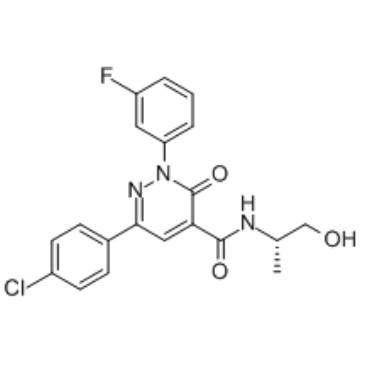
| DC26020 | BAY2335218(BAY-218) Featured |
BAY2335218(BAY-218) is the first-in-class AhR antagonist for overcoming tumor-mediated immunosuppression.
More description
|
|
| DC7761 | Brincidofovir (CMX-001) Featured |
CMX001 (Brincidofovir; HDP-CDV) was developed as an orally active, lipophilic form of cidofovir (CDV); has enhanced activity in vitro and in vivo compared to CDV against certain herpesviruses, adenoviruses and orthopoxviruses.IC50 Value: 5.5 nM (EC50, in PDA at 7 dpi) [3]Target: anti-CMVCMX001 is currently in Phase II clinical studies for development as a therapeutic agent for human CMV, adenovirus and BK virus infections, as well as, for adverse events following smallpox vaccinations.in vitro: In PDA at 7 dpi, the CMX001 50% effective concentration (EC50) was 5.55 nM, the 50% cytotoxic concentration (CC50) was 184.6 nM, and the 50% selectivity index (SI50) was 33.3. The EC90 was 19.7 nM, the CC90 was 5,054 nM, and the SI90 was 256.1. In COS-7 cells, JCV replication was faster and the EC50 and EC90 were 18- and 37-fold higher than those in PDA, i.e., 0.1 μM and 0.74 μM (CC50, 0.67 μM; SI50, 6.7; CC90, 12.2 μM; SI90, 16.5) at 5 dpi [3].in vivo: CMX001 and CDV are equally efficacious at protecting mice from mortality following high ectromelia virus doses (10,000 x LD(50)) introduced by the intra-nasal route or small particle aerosol. Using CMX001 at a 10mg/kg dose followed by 2.5mg/kg doses every other-day for 14 days provided solid protection against mortality and weight loss following an intra-nasal challenge of (100-200) x LD(50) of ectromelia virus [1]. When CMX001 was administered orally to mice infected with HSV-1, mortality was reduced significantly (p≤0.001) with all three dose levels when treatments were initiated 24 h post viral inoculation. When treatments were started 48 h post viral inoculation, 5 and 2.5 mg/kg significantly reduced mortality (p≤ 0.001). If treatments were delayed until 72 h post viral inoculation, CMX001 did not reduce mortality or increase the mean day to death. When mice were infected intranasally with HSV-1 and treatments initiated 24 h post viral inoculation using CMX001 at 5 mg/kg or ACV at 100 mg/kg, virus replication in target organs was reduced by both CMX001 and ACV when compared to vehicle treated mice [2]. Toxicity: Diarrhea was the most common adverse event in patients receiving CMX001 at doses of 200 mg weekly or higher and was dose-limiting at 200 mg twice weekly. Myelosuppression and nephrotoxicity were not observed [4].
More description
|

|
| DC24104 | Almorexant Featured |
Almorexant(ACT078573) is a potent and competitive dual orexin 1 receptor (OX1)/orexin 2 receptor (OX2) antagonist with Ki values of 1.3 and 0.17 nM for OX1 and OX2, respectively.IC50 value: 1.3/0.7 nM(OX1/OX2 receptor) [1] [2]Target: Dual OX!/OX2 receptorin vitro: [(3)H]Almorexant bound to a single saturable site on hOX(1) and hOX(2) with high affinity (K(d) of 1.3 and 0.17 nM, respectively. In Schild analyses using the [(3)H]inositol phosphates assay, almorexant acted as a competitive antagonist at hOX(1) and as a noncompetitive-like antagonist at hOX(2). In binding kinetic analyses, [(3)H]almorexant had fast association and dissociation rates at hOX(1), whereas it had a fast association rate and a remarkably slow dissociation rate at hOX(2) [1]. in vivo: During the 12-h dark period after dosing, ALM(Almorexant) exacerbated cataplexy in TG mice and increased nonrapid eye movement sleep with heightened sleep/wake fragmentation in both genotypes. ALM showed greater hypnotic potency in WT mice than in TG mice. The 100 mg/kg dose conferred maximal promotion of cataplexy in TG mice and maximal promotion of REM sleep in WT mice. In TG mice, ALM (30 mg/ kg) paradoxically induced a transient increase in active wakefulness [3]. Almorexant 200 mg showed significantly less 'Drug Liking' than both zolpidem doses (p < 0.01), and almorexant 400 mg had smaller effects than zolpidem 20 mg (p < 0.05), while almorexant 1,000 mg was not different from either zolpidem dose [4].
More description
|

|
| DC60184 | AZ194 Featured |
AZ-194 is a first-in-class, orally active inhibitor of CRMP2-Ubc9 interaction and inhibitor of NaV1.7 (IC50=1.2 μM). AZ194 blocks SUMOylation of CRMP2 to selectively reduce the amount of surface-expressed NaV1.7. Antinociceptive effects[1].
More description
|

|
| DC48369 | AGB1 Featured |
AGB1 is a fast, highly selective, and potent bump-and-hole (B&H)-PROTAC degrader for BromoTag. AGB1 exhibits degradation for Ab:Brd4BD2 L387A and Ab: BromoTag-Brd2 with pDC50s of 7.8 and 7.9. AGB1 exhibits binary affinity to VHL (Kd=125 nM). AGB1 exhibits favorable pharmacokinetic profile in mice with the DC50, 6 h of ∼13 nM.
More description
|

|
| DC23277 | AA-115 Featured |
AA-115 (APG 115) is a potent and orally active MDM2 inhibitor with Ki <1 nM, potently inhibits SJSA-1 cell growth with IC50 of 60 nM.
More description
|

|
| DC60243 | felezonexor(SL-801) Featured |
Felezonexor, also known as CBS9106, SL-801, and BMS566419, is a novel reversible oral CRM1 inhibitor with CRM1 degrading activity. CRM1 plays an important role in the nuclear export of cargo proteins bearing nuclear exporting signal sequences. CBS9106 inhibits CRM1-dependent nuclear export, causing arrest of the cell cycle and inducing apoptosis in a time- and dose-dependent manner for a broad spectrum of cancer cells, including multiple myeloma cells. CBS9106 reduces CRM1 protein levels significantly without affecting CRM1 mRNA expression. Oral administration of CBS9106 significantly suppresses tumor growth and prolongs survival in mice bearing tumor xenograft without a significant loss in body weight.
More description
|

|
| DC24007 | R-1479 Featured |
A potent, specific inhibitor of HCV NS5B polymerase and HCV replication (IC50=1.28 uM, replicon assay).
More description
|

|
| DC20410 | Hydrazinocurcumin Featured |
Hydrazinocurcumin is a synthetic curcumin derivative that inhibits the proliferation of bovine aortic endothelial cells (BAECs) with IC50 of 520 nM without cytotoxicity, inhibits STAT3 phosphorylation and downregulates an array of STAT3 downstream targets.
More description
|

|
| DC9819 | Guanoclor Featured |
Guanoclor is a sympatholytic drug. It is known to bind to non-adrenergic sites in pig kidney membranes.
More description
|

|
| DC10645 | Phorbol 12-myristate 13-acetate (PMA) Featured |
Phorbol 12-myristate 13-acetate (PMA) is a PKC-activating phorbol ester, increases the intracellular Ca2+ concentration ([Ca2+]i) in a dose-dependent manner, with an EC50 of 11.7 nM.
More description
|

|
| DC31458 | Tipranavir Featured |
Tipranavir is a nonpeptidic protease inhibitor. Tipranavir has the ability to inhibit the replication of viruses that are resistant to other protease inhibitors and it recommended for patients who are resistant to other treatments. Resistance to tipranavir itself seems to require multiple mutations. Tipranavir was approved by the Food and Drug Administration (FDA) on June 22, 2005, and was approved for pediatric use on June 24, 2008. Like lopinavir and atazanavir, it is very potent and is effective in salvage therapy for patients with some drug resistance.
More description
|

|
| DC45688 | Atrovastatin-PEG3-FITC Featured |
Atrovastatin-PEG3-FITC (compound S31) is a KRAS-PDEδ interaction inhibitor. Atrovastatin-PEG3-FITC acts as a ligand in fluorescence anisotropy assay.
More description
|

|
| DC65347 | A-674563 HCl Featured |
A-674563 is a potent and selective Akt1 inhibitor with Ki of 11 nM. A-674563 suppressed the activation of the NLRP3 inflammasome in cardiomyocytes following β-adrenoceptor activation, suggesting that AKT1 is a critical regulator molecule upstream of the NLRP3 inflammasome. A-674563 suppresses CDK2 activity, inhibits human NSCLC cell growth more effectively than the pan-AKT inhibitor, MK-2206
More description
|

|
| DC71974 | BE1218 Featured |
BE1218 is a liver X receptor (LXR) inverse agonist with IC50 values of 9 nM and 7 nM against LXRα and LXRβ, respectively.
More description
|

|
| DC65346 | ZM-226600 Featured |
ZM-226600 is a potent Kir6 (KATP) channel opener (EC50 = 0.5 μM), devoid of antiandrogen properties. ZM226600 is more active than oxybutynin in reducing bladder overactivity, and it is devoid of vascular side effects observed with pinacidil. Its short duration of action (about 1 h) is probably the main problem to solve, in order to consider this compound a valid alternative to antimuscarinics in the therapy of bladder overactivity.
More description
|

|
| DC65345 | TRV-7019 Featured |
TRV-7019 is a BBB-penetrable radioligand for brain imaging that target butyrylcholinesterase. TRV-7019 can be used for the diagnosis of an amyloid disease, multiple sclerosis, a brain tumor, or butyrylcholinesterase activity.
More description
|

|
| DC72535 | TUG-499 Featured |
TUG-499 is a selective free fatty acid receptor 1 (FFAR1 or GPR40) (Free Fatty Acid Receptor) agonist with a pEC50 of 7.39. TUG-499 exhibits >100-fold selectivity over the related receptors FFA2, FFA3, and the nuclear receptor PPARγ and other diverse receptors, ion channels, and transporters. TUG-499 can be used for the research of type 2 diabetes.
More description
|
.png)
|
| DC22429 | 4-BBPB Featured |
A highly potent agonist of σ1 receptor with Ki of 0.8 nM.
More description
|

|
| DC65344 | KWCN-41 Featured |
KWCN-41 is a selective and efficient inhibitor of RIPK1 kinase with an IC50 value of 88 nM. KWCN-41, specifically inhibiting cell necroptosis but not apoptosis, protects cell survival by blocking the necroptotic pathway, which inhibits the phosphorylation of essential proteins of the necroptosis. It also prevented the development of inflammation and reduced the level of inflammatory factors in mice. KWCN-41 is expected to be a lead compound for further studies in inflammatory diseases.
More description
|

|
| DC11127 | HS94 Featured |
HS94 (DAPK3 inhibitor HS94) is a selective DAPK3 inhibitor with Ki of 126 nM, >20-fold selectivity over Pim kinases..
More description
|

|
| DC65343 | SU-5616 Featured |
SU-5616 is a biochemical reagent. SU 5616 potentially modulates tyrosine kinase signal transduction, and regulates abnormal cell proliferation.
More description
|

|
| DC42600 | GPX4-Activator-1d4 Featured |
Novel Potent Allosteric Activator for Ferroptosis Regulator Glutathione Peroxidase 4 (GPX4)
More description
|

|
| DC71028 | DAUDA Featured |
DAUDA (11-(dansylamino) undecanoic acid) is an environment-sensitive fluorescent fatty acid analogue. DAUDA alters its intensities and fluorescent emission spectra on entry into binding proteins. DAUDA is used to determine the relative affinity of natural fatty acids for polymorphs of the Schistosoma mansoni Sm14 fatty acid-binding protein.
More description
|

|
| DC65342 | Fmoc-Cit-PAB-OH Featured |
Fmoc-Cit-PABA is a peptide linker useful for drug conjugate synthesis or ADC synthesis.
More description
|

|
| DC48112 | Ac-YVAD-cmk Featured |
Ac-YVAD-cmk (Caspase-1 Inhibitor II) is a selective caspase-1 (IL-1beta converting enzyme, ICE)) inhibitor with neuroprotective and anti-inflammatory effects. Ac-YVAD-cmk effectively suppresses the expression of IL-1β and IL-18. Ac-YVAD-cmk inhibits pyroptosis in many diseases.
More description
|

|
| DC45548 | Boc-Asp(OMe)-fluoromethyl ketone Featured |
Boc-Asp(OME)-Fluoromethyl Ketone is a broad range caspase inhibitor that inhibits Fas-mediated phagocytosis and oxidative rupture inhibition, but does not affect the chemotactic activity of IL-8.
More description
|
.png)
|
| DC65337 | DUPA(OtBu)-OH Featured |
DUPA(OtBu)-OH is a DUPA precursor. DUPA is used as the targeting moiety to actively deliver Docetaxel (DTX) for treatment of Prostate-Specific Membrane Antigen (PSMA) expressing prostate cancer.
More description
|

|
| DC65321 | BAY-297 Featured |
BAY-297 is a potent and selective PIP4K2A inhibitor. BAY-297 can serve as valuable chemical probes to study PIP4K2A signaling and its involvement in pathophysiological conditions such as cancer.
More description
|

|
| DC70502 | IACS-15414 Featured |
IACS-15414 (IACS 15414) is a potent, selective, orally bioavailable SHP2 inhibitor with IC50 of 122 nM;
IACS-15414 potently suppressed the mitogen-activated protein kinase (MAPK) pathway signaling and tumor growth in RTK-activated and KRASmut xenograft models in vivo.
IACS-15414 potently suppressed the mitogen-activated protein kinase (MAPK) pathway signaling and tumor growth.
IACS-15414 had excellent PK properties across species but a narrow hERG window.
More description
|

|
