 To enhance service speed and avoid tariff delays, we've opened a US warehouse. All US orders ship directly from our US facility.
| Cat. No. | Product Name | Field of Application | Chemical Structure |
|---|---|---|---|
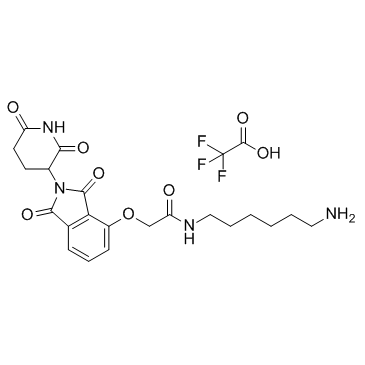
| DC12181 | E3 Ligase Ligand-Linker Conjugates 25 Trifluoroacetate Featured |
E3 Ligase Ligand-Linker Conjugates 25 Trifluoroacetate is a synthesized compound that incorporates an E3 ligase ligand and a linker used in PROTAC technology.
More description
|
|
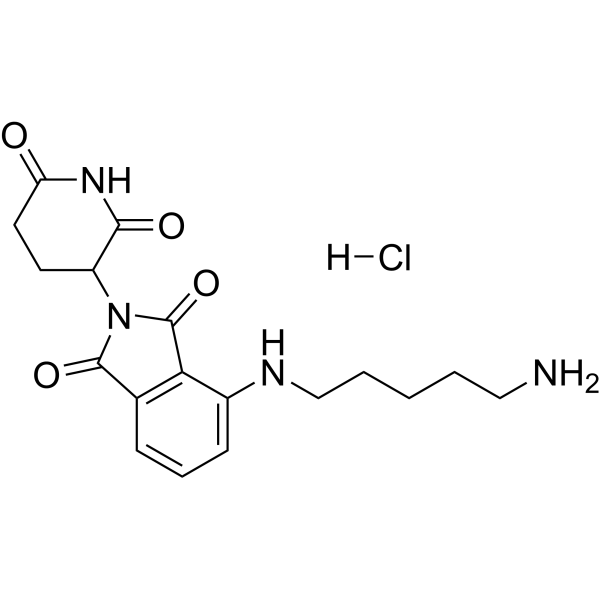
| DC67683 | Thalidomide-NH-C5-NH2 hydrochloride Featured |
Thalidomide-NH-C5-NH2 hydrochloride is a synthesized E3 ligase ligand-linker conjugate that incorporates the Thalidomide based cereblon ligand and a linker used in PROTAC technology.
More description
|
|
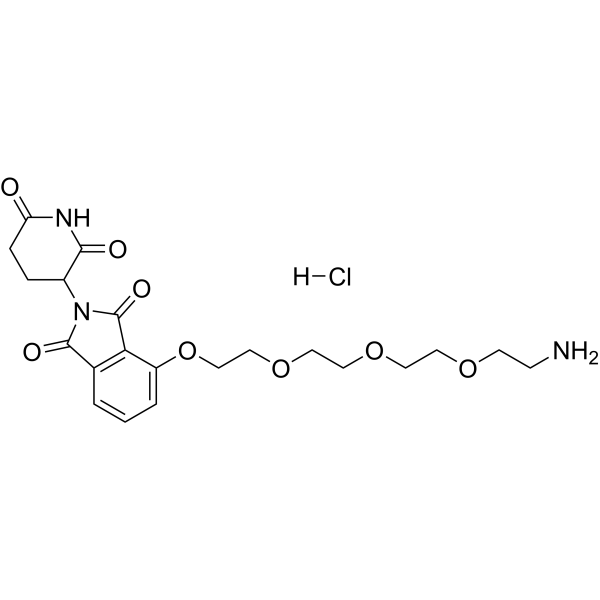
| DC67682 | Thalidomide-PEG4-NH2 hydrochloride Featured |
Thalidomide-PEG4-NH2 hydrochloride is a synthesized E3 ligase ligand-linker conjugate that incorporates the Thalidomide based cereblon ligand and a linker used in PROTAC technology.
More description
|
|
| DC40302 | Lenalidomide-C5-NH2 hydrochloride Featured |
Lenalidomide-C5-NH2 hydrochloride is the Lenalidomide-based Cereblon ligand used in the recruitment of CRBN protein. Lenalidomide-C5-NH2 can be connected to the ligand for protein by a linker to form PROTACs, such as MDM2 PROTAC degrader.
More description
|

|
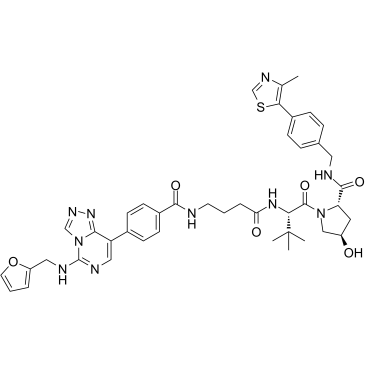
| DC28688 | UNC6852 Featured |
UNC6852 is a selective rolycomb repressive complex 2 (PRC2) degrader based on PROTAC and contains an EED (embryonic ectoderm development) ligand and a VHL ligand, with an IC50 of 247 nM for EED.
More description
|
|
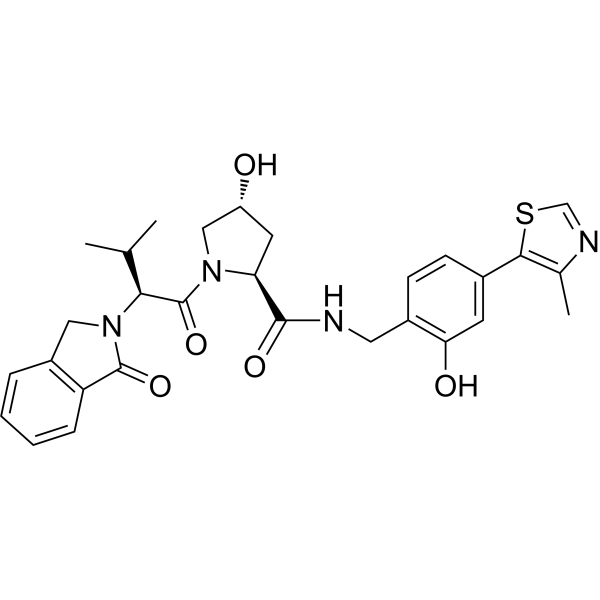
| DC67681 | VL285 Phenol Featured |
VL285 Phenol is a phenol-based VL285 analog. VL285 is an E3 ubiquitin ligase VHL ligand and can be used in the synthesis of HaloPROTAC3, degrading HaloTag7 fusion protein (IC50=0.34 μM).
More description
|
|
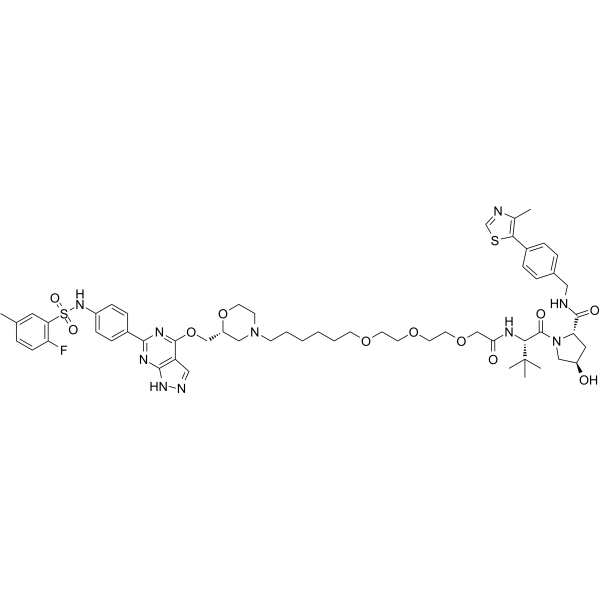
| DC50038 | PROTAC SGK3 degrader-1 Featured |
PROTAC SGK3 degrader-1 (SGK3-PROTAC1), is a potent SKG3 degrader based on PROTAC. PROTAC SGK3 degrader-1 (0.3 μM) induces 50% degradation of endogenous SGK3 within 2 hours, with maximal 80% degradation observed within 8 hours, accompanied by a loss of phosphorylation of NDRG1 (an SGK3 substrate).
More description
|
|
| DC12191 | JQ-35-(S) Featured |
JQ-35, (S)- is an inhibitor of the Bromodomain and Extra-Terminal (BET) family bromodomain-containing proteins with potential antineoplastic activity.
More description
|

|
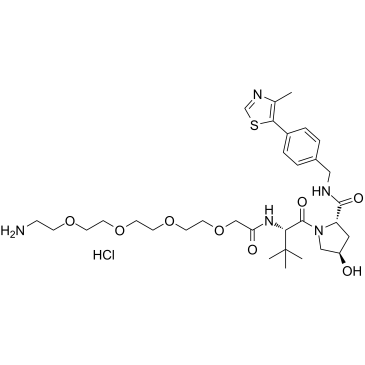
| DC39625 | (S,R,S)-AHPC-PEG4-NH2 hydrochloride Featured |
VH 032 Linker 2 is a derivative of the proteolysis-targeting chimera technology (PROTAC) building block VHL ligand 1.
More description
|
|
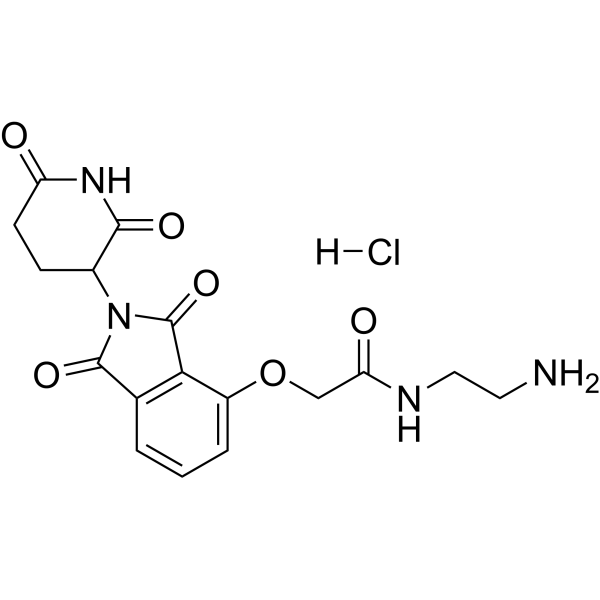
| DC67680 | Thalidomide-linker 10 Featured |
Thalidomide 4'-oxyacetamide-alkyl-C2-amine hydrochloride incorporates a cereblon (CRBN) ligand for the E3 ubiquitin ligase, and a linker. Thalidomide 4'-oxyacetamide-alkyl-C2-amine hydrochloride can be used to design the PROTACs.
More description
|
|
| DC45705 | Thalidomide-NH-PEG1-NH2 hydrochloride Featured |
Thalidomide-NH-PEG1-NH2 hydrochloride is a synthesized E3 ligase ligand-linker conjugate that incorporates the Thalidomide based cereblon ligand and a linker used in PROTAC technology.
More description
|

|
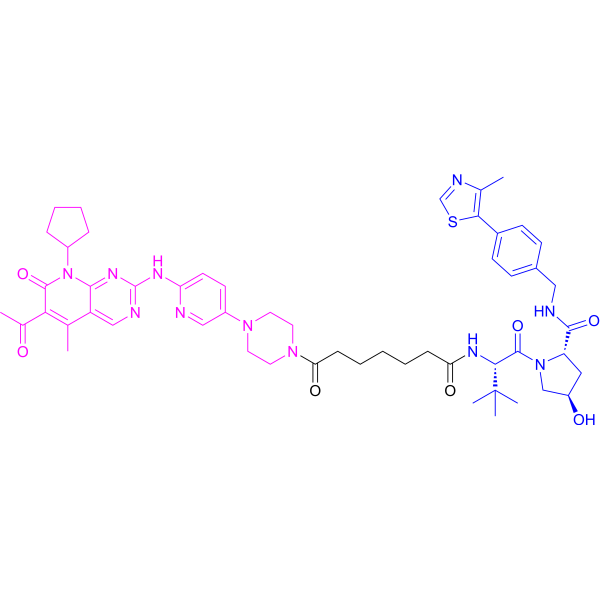
| DC28556 | XY028-133 Featured |
XY028-133 (example 14) is a PROTAC-based CDK4/6 degrader with anti-tumor activity, extracted from patent WO2018106870A1.
More description
|
|
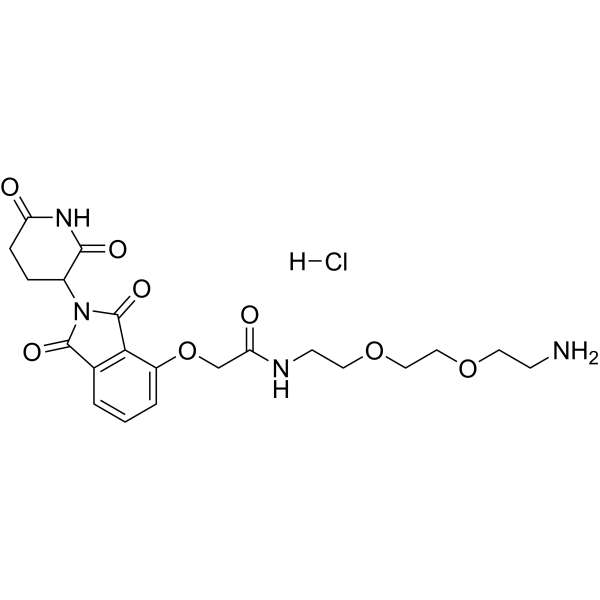
| DC67679 | Thalidomide-linker 14 Featured |
Thalidomide-O-amido-PEG2-C2-NH2 hydrochloride incorporates an E3 ligase ligand and a linker, can be an immunomodulater for the treatment of cancer.
More description
|
|
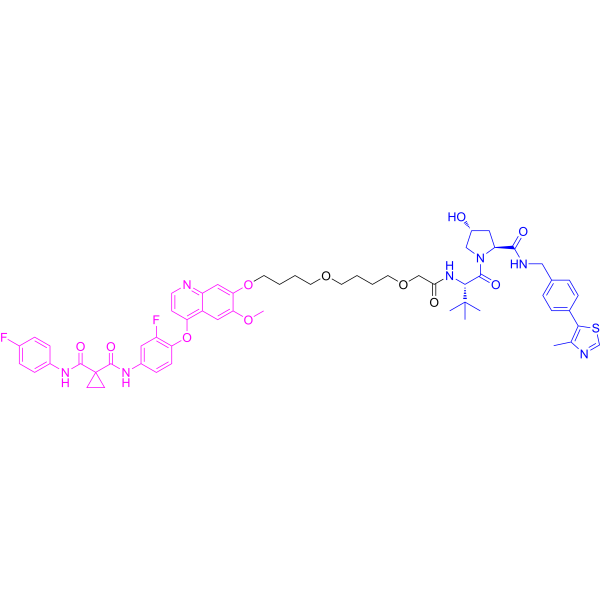
| DC67678 | SJFα Featured |
SJFα is a selective p38α PROTAC degrader with a DC50 of 7.16 nM and Dmax of 97.4%. SJFα is far less effective at degrading p38δ (DC50 = 299 nM). SJFαcan be used for the research of cancer, such as breast cancer.
More description
|
|
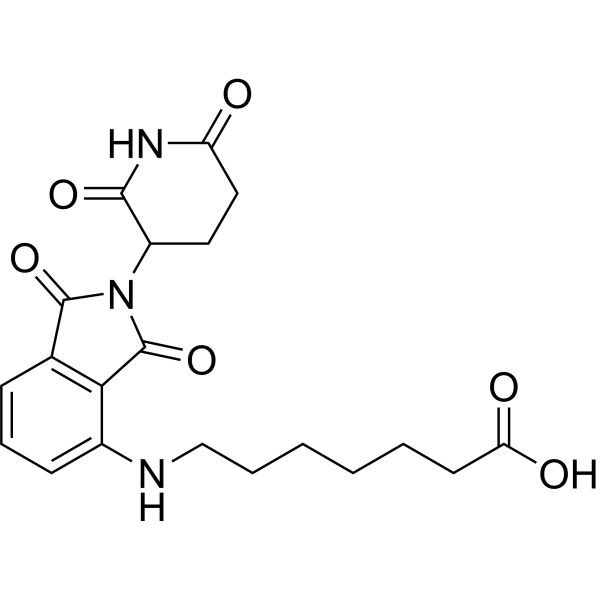
| DC67677 | Pomalidomide-C6-COOH Featured |
Pomalidomide-C6-COOH is the pomalidomide-based cereblon (CRBN) ligand used in the recruitment of CRBN protein. Pomalidomide-6-OH can be connected to the ligand for protein by a linker to form PROTAC.
More description
|
|
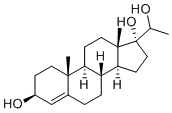
| DC73960 | CW4142 Featured |
CW4142 (CW 4142) is a small molecule SC4MOL inhibitor that enhances oligodendrocyte formation.
More description
|
|
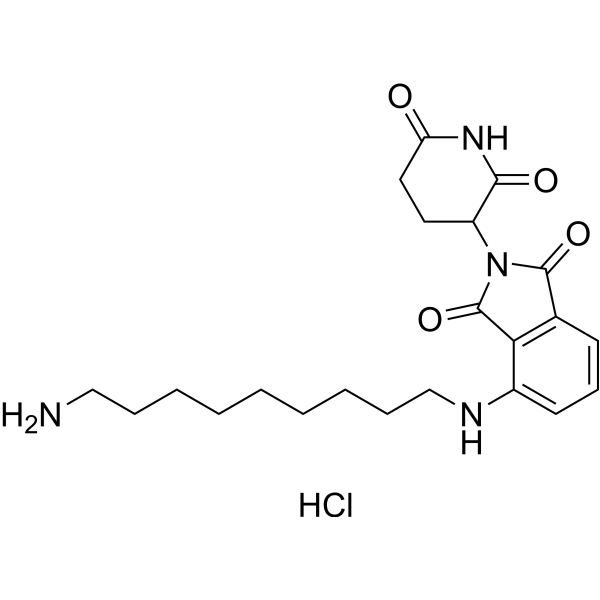
| DC67676 | Thalidomide-NH-C9-NH2 (hydrochloride) Featured |
Thalidomide-NH-C9-NH2 hydrochloride is the Thalidomide (HY-10984)-based cereblon ligand used in the recruitment of CRBN protein.Thalidomide-NH-C9-NH2 hydrochloride can be connected to the ligand for protein by a linker to form PROTACs.
More description
|
|
| DC67675 | 2-(4,4-Difluoropiperidin-1-yl)-6-methylpyrimidin-4-amine Featured |
-6-methylpyrimidin-4-amine.GIF)
|
|
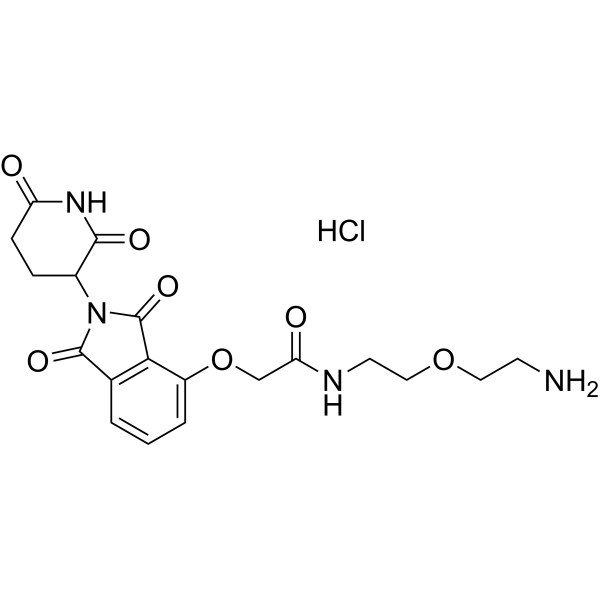
| DC67674 | Thalidomide-O-amido-PEG-C2-NH2 hydrochloride Featured |
Thalidomide-O-amido-PEG-C2-NH2 hydrochloride, a synthesized E3 ligase ligand-linker conjugate that incorporates the Thalidomide based cereblon ligand and a linker, can be used in the synthesis of PROTACs.
More description
|
|
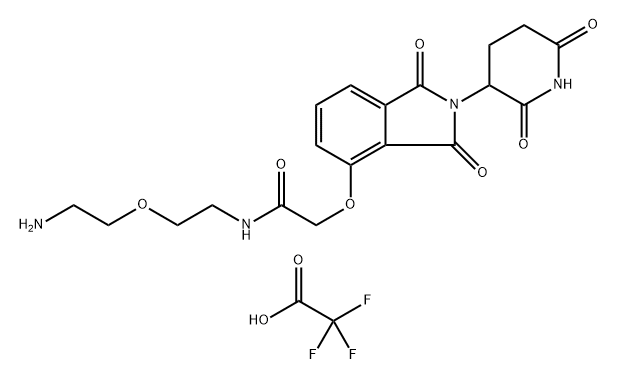
| DC67673 | Acetamide, N-[2-(2-aminoethoxy)ethyl]-2-[[2-(2,6-dioxo-3-piperidinyl)-2,3-dihydro-1,3-dioxo-1H-isoindol-4-yl]oxy]-, 2,2,2-trifluoroacetate (1:1) Featured |
|
|
| DC67672 | 5-amino-N-(2,6-dioxopiperidin-3-yl)picolinamide Featured |
picolinamide.gif)
|
|
| DC73618 | NUCC-0200590 Featured |
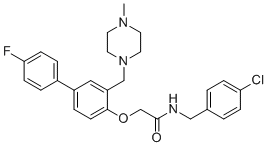
NUCC-0200590 is a small-molecule inhibitor of the TRIP8b-HCN interaction with IC50 of 7.0 uM in AlphaScreen assays, effectively disrupts the TRIP8b-HCN interaction in vitro and in vivo.
More description
|
|
| DC46940 | AZD4694 Featured |
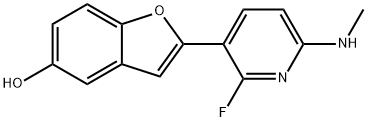
AZD4694, a fluorinated β-amyloid (Aβ) plaque neuroimaging PET radioligand, shows high affinity for Aβ fibrils (Kd = 2.3 nM).
More description
|
|
| DC28634 | Azido-PEG7-amine Featured |
Amino-PEG8-Azido is a non-cleavable 8 unit PEG ADC linker used in the synthesis of antibody-drug conjugates (ADCs).
More description
|

|
| DC22200 | PMX53 Featured |
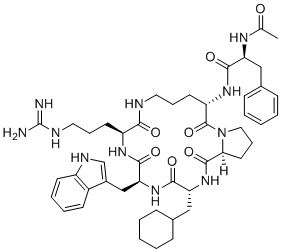
PMX53 (Ac-Phe-cyclo(Orn-Pro-D-Cha-Trp-Arg)) is a potent C5a receptor (CD88) antagonist with IC50 of 20 nM, also is an agonist for Mas-related gene 2 (MrgX2) in human mast cells; PMX-53 (10 nM) inhibited C5a-induced Ca(2+) mobilization in HMC-1 cells, but at higher concentrations (>30 nM) it caused degranulation in LAD2 mast cells, CD34(+) cell-derived mast cells, and RBL-2H3 cells stably expressing MrgX2; inhibits zymosan-, carrageenan-, LPS- and antigen-induced hypernociception in rats.
More description
|
|
| DC31423 | DM4 Featured |
Maytansinoid DM4, a chemical derivative of maytansine, is a potent and selective cytotoxic agent with promising anticancer properties. Anticancer properties of maytansinoids have been attributed to their ability to disrupt microtubule function. Maytansin
More description
|

|
| DC67671 | Pomalidomide 4'-alkylC4-acid Featured |
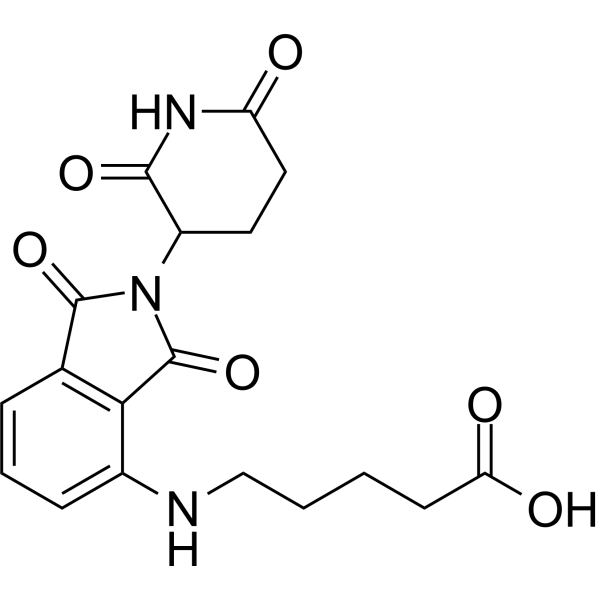
Pomalidomide 4'-alkylC4-acid (linker 16) is a E3 ligase ligand-linker conjugate. Pomalidomide 4'-alkylC4-acid contains a cereblon ligand, an alkylC4 chain, and a terminal acid. Pomalidomide 4'-alkylC4-acid can be used to couple with target protein ligands to synthesize PROTAC.
More description
|
|
| DC67670 | Pomalidomide-PEG4-N3 Featured |
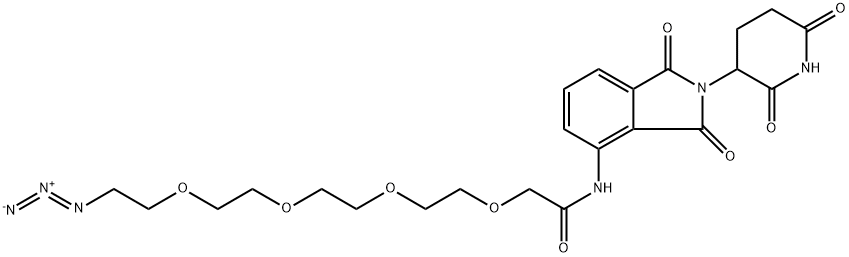
|
|
| DC67669 | (S,R,S)-AHPC-C4-NH2 (dihydrochloride) Featured |
(S,R,S)-AHPC-C4-NH2 dihydrochloride is a synthesized E3 ligase ligand-linker conjugate that incorporates the (S,R,S)-AHPC based VHL ligand and a linker used for EED-Targeted PROTAC.
More description
|
-AHPC-C4-NH2 dihydrochloride.gif)
|
| DC67668 | Thalidomide-4-NH-C11-COOH Featured |
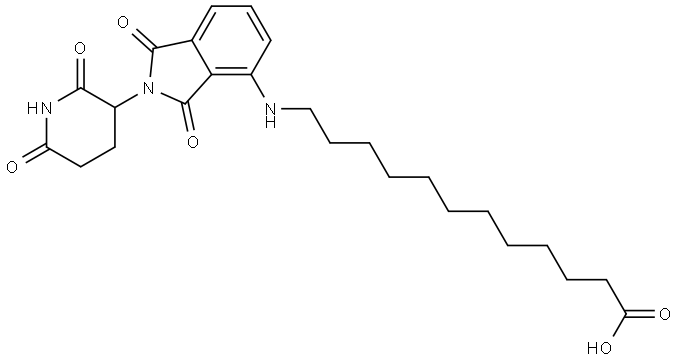
|
