 To enhance service speed and avoid tariff delays, we've opened a US warehouse. All US orders ship directly from our US facility.
| Cat. No. | Product Name | Field of Application | Chemical Structure |
|---|---|---|---|
| DC49710 | KM91104 Featured |
KM91104, a cell-permeable V-ATPase inhibitor, specifically targets the a3-b2 subunits of V-ATPase.
More description
|

|
| DC48439 | Verubulin hydrochloride Featured |
Verubulin hydrochloride(MPC 6827 hydrochloride) is a microtubule destabilizer and vascular disrupting agent that achieve high brain concentration relative to plasma in animals.
More description
|

|
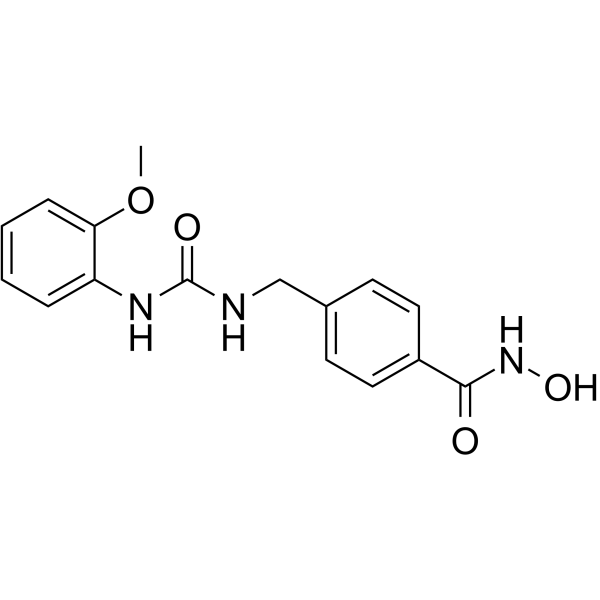
| DC49583 | Elevenostat Featured |
Elevenostat (JB3-22) is a selective HDAC11 inhibitor (IC50=0.235 µM). Anti-multiple myeloma (MM) activity.
More description
|
|
| DC70837 | TG8-260 Featured |
TG8-260 is a second-generation, potent, selective EP2 antagonist with Schild KB of 13.2 nM.TG8-260 displays 500-fold selectivity to EP2 against other prostanoid receptors.TG8-260 has a plasma half-life of 2.14 h (PO) and excellent oral bioavailability (77.3%), TG8-260 is a potent inhibitor of CYP450 enzymes.TG8-260 displays antagonistic activity on the induction of EP2 receptor-mediated inflammatory gene expression in microglia BV2-hEP2 cells.TG8-260 reduces hippocampal neuroinflammation and gliosis after pilocarpine-induced status epilepticus in rats.TG8-260 is a tool for investigating anti-inflammatory pathways in peripheral inflammatory disease animal models.
More description
|

|
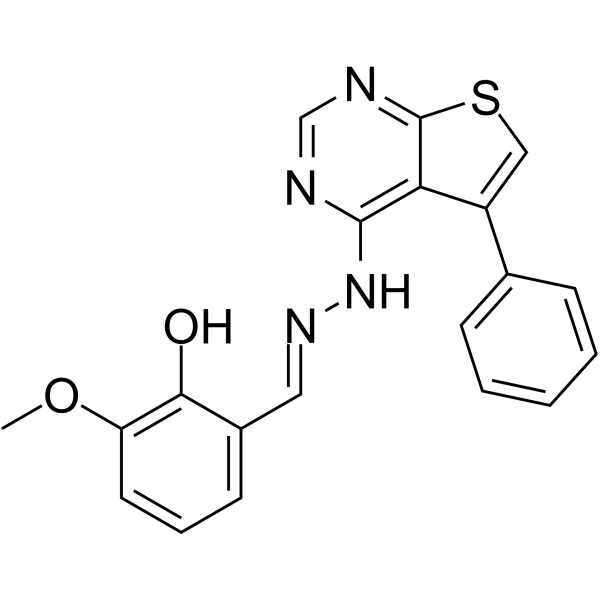
| DC49760 | THP104c Featured |
THP104c is a mitochondrial fission inhibitor.
More description
|
|
| DC21585 | Brilaroxazine Featured |
RP-5063 (Brilaroxazine) is a multimodal dopamine and serotonin modulator with partial agonist activity at DA D2, D3, D4, 5-HT1A, and 5-HT2ARs, and antagonist activity at 5-HT2B, 5-HT6 and 5-HT7Rs.
More description
|
|
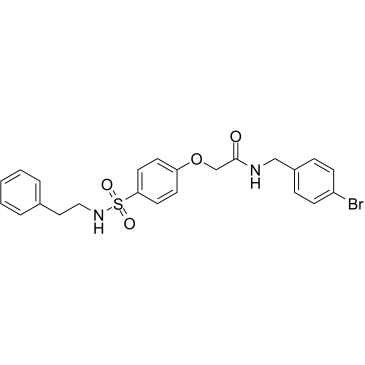
| DC28899 | SMS1-IN-1 Featured |
SMS1-IN-1, compound SAPA 1j, is a novel and the most potent sphingomyelin synthase 1 (SMS1) inhibitor with an IC50 value of 2.1 μM. SMS1-IN-1 has the potential for the treatment of atherosclerosis.
More description
|
|
| DC48411 | CTB Featured |
CTB is a p300 activator and the lowest docked energy for CTB and p300 is 7.72 kcal/mol.
More description
|

|
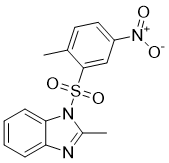
| DC47522 | BI-6015 Featured |
BI-6015 is a hepatocyte nuclear factor 4α (HNF4α) antagonist that can inhibit the expression of known HNF4α target genes. BI6015 represses insulin promoter activity through HNF4α antagonism. BI-6015 can be used for the research of cancer and diabetes.
More description
|
|
| DC46818 | ACT-451840 Featured |
ACT-451840 is an orally active, potent and low-toxicity compound, showing activity against sensitive and resistant plasmodium falciparum strains. ACT-451840 targets all asexual blood stages of the parasite, has a rapid onset of action. ACT-451840 behaves in a way similar to artemisinin derivatives, with very rapid onset of action and elimination of parasite. ACT-451840 can be used for the research of malarial.
More description
|

|
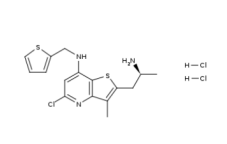
| DC65521 | PTC-258 2HCl Featured |
PTC-258 2HCl is a specific and orally active splicing modulator of Elongator complex protein 1 gene (ELP1). PTC258 increases the expression of ELP1 in vitro and in vivo. PTC258 is well tolerated in mouse model.
More description
|
|
| DC47420 | (S)-ErSO Featured |
(S)-ErSO is the dextrorotatory enantiomer of ErSO. (S)-ErSO is inactive in MCF-7 cells (from patent WO2020009958A1, compound (s)-105).
More description
|

|
| DC70590 | MCI-INI-3 Featured |
MCI-INI-3 is a potent, selective, competitive inhibitor of ALDH1A3 (Ki=0.55 uM), shows poor inhibitory effect on the structurally related isoform ALDH1A1 (>140-fold selectivity).MCI-INI-3 also displays on inhibition against six isoforms of ALDH (ALDH16A1, ALDH7A1, ALDH9A1, ALDH2, ALDH1B1, ALDH18A1).MCI-INI-3 demonstrates selective binding to ALDH1A3 in glioma stem cell lysates, inhibits ALDH activity and affects RA synthesis in cells.
More description
|

|
| DC70442 | GRK6 inhibitor 18 Featured |
GRK6 inhibitor 18 is a potent, and selective GRK6 inhibitor with IC50 of 8 nM.GRK6 inhibitor 18 displays >1,000-fold selectivity over Aurora A, as well as high selectivity against a panel of 85 kinases.GRK6 inhibitor 18 has potent cellular target engagement and antiproliferative activity against MM cells (IC50=0.4-0.46 uM) and is synergistic with bortezomib.
More description
|

|
| DC70169 | AC1-IN-38 Featured |
AC1-IN-38 is a potent, selective inhibitor of adenylyl cyclase type 1 (AC1) with IC50 of 0.54 uM.AC1-IN-38 shows selectivity over a closely related isoform AC8, and no activity against AC2/5 and other common neurological targets.AC1-IN-38 displayed modest antiallodynic effects in a mouse model of inflammatory pain.
More description
|

|
| DC47977 | I-BET567 Featured |
I-BET567 is a potent and oral active inhibitor of pan-BET candidate with pIC50s of 6.9 and 7.2 for BRD4 BD1 and BD2, respectively. I-BET567 has been demonstrated efficacy in mouse models of oncology and inflammation.
More description
|

|
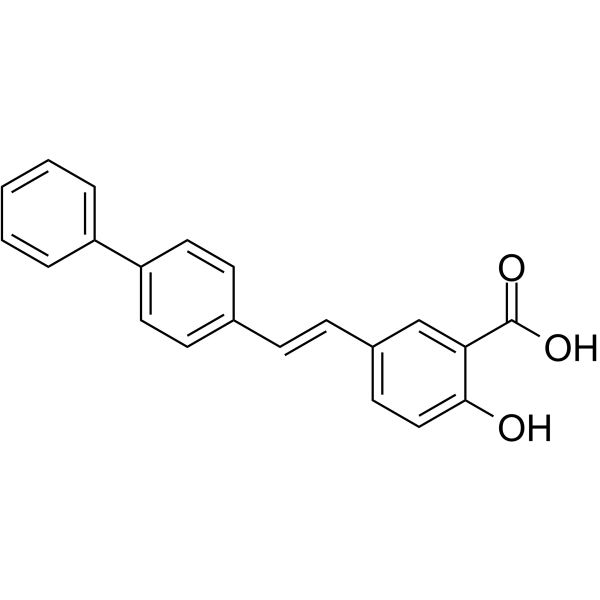
| DC49950 | Glutathione synthesis-IN-1 Featured |
Glutathione synthesis-IN-1 (DC-1) is a glutathione synthesis inhibitor.
More description
|
|
| DC70101 | INE963 Featured |
INE963 (INE-963) is a potent and fast-acting blood-stage antimalarial, demonstrates potent cellular activity against Pf 3D7 with EC50 of 6 nM in Pf growth inhibition assay.
More description
|

|
| DC48893 | SGK1-IN-4 Featured |
SGK1-IN-4 (compound 17a) is a highly selective, orally active SGK1 inhibitor. SGK1-IN-4 can be used for osteoarthritis research.
More description
|

|
| DC47383 | GSK251 Featured |
GSK251 is a highly potent, highly selective, orally bioavailable inhibitor of PI3Kδ with a novel binding mode.
More description
|

|
| DC47969 | JADA82 Featured |
JADA82 (PCK82) is a potent KDM5A (lysine demethylase 5A) inhibitor. From patent WO2020033377A1.
More description
|

|
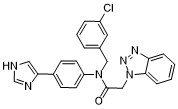
| DC46358 | CCF0058981 Featured |
CCF0058981 (CCF981), 3-chlorophenyl analogue, is a noncovalent SARS-CoV-2 3CLpro (SC2) inhibitor with an IC50 of 68 nM. CCF0058981 inhibits SC1 (SARS-CoV-1 3CLpro) with an IC50 of 19 nM. CCF0058981 has antiviral efficacy and has the potential for COVID-19 research.
More description
|
|
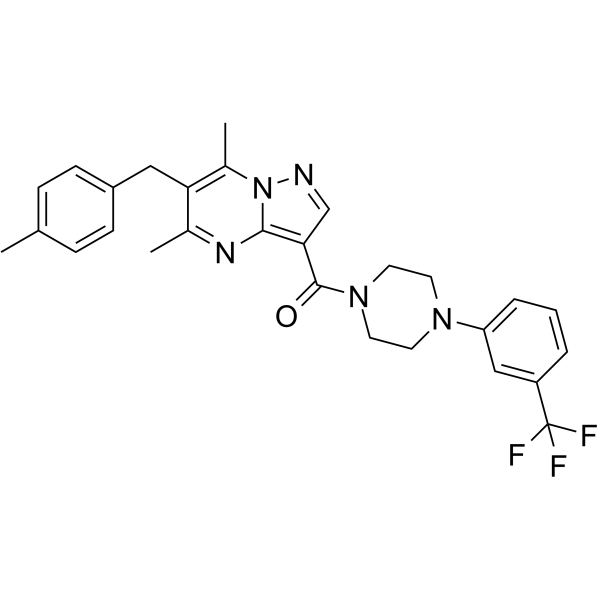
| DC60230 | RUVBL1/2 ATPase-IN-1 Featured |
RUVBL1/2 ATPase-IN-1 (compound 18) is a potent and selective inhibitor of RUVBL1/2 ATPase with IC50 values of 6.0 and 7.7 μM, respectively. RUVBL1 and RUVBL2 are highly conserved AAA ATPases (ATPases Associated with various cellular Activities) and highly relevant to the progression of cancer. RUVBL1/2 ATPase-IN-1 has the potential for the research of cancer diseases.
More description
|
|
| DC60232 | CL-418030 Featured |

|
|
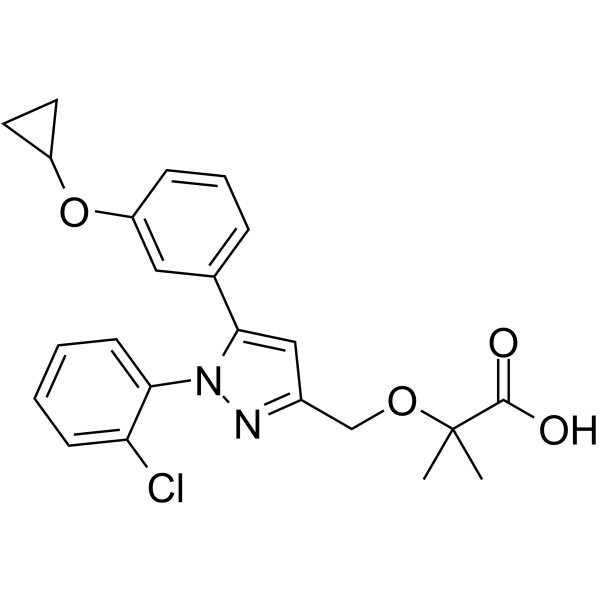
| DC47562 | VB124 Featured |
VB-124 is a potent and selective MCT4 inhibitor. VB124 might redirect glycolytic carbon flux into mitochondrial pyruvate oxidation. VB 124 bolcks lactate import (IC50=8.6nM), and export (IC50=19nM) in MDA-MB-231 cells that are engineers to express MCT4 as the only major plasma membrane lactate transporter.
More description
|
|
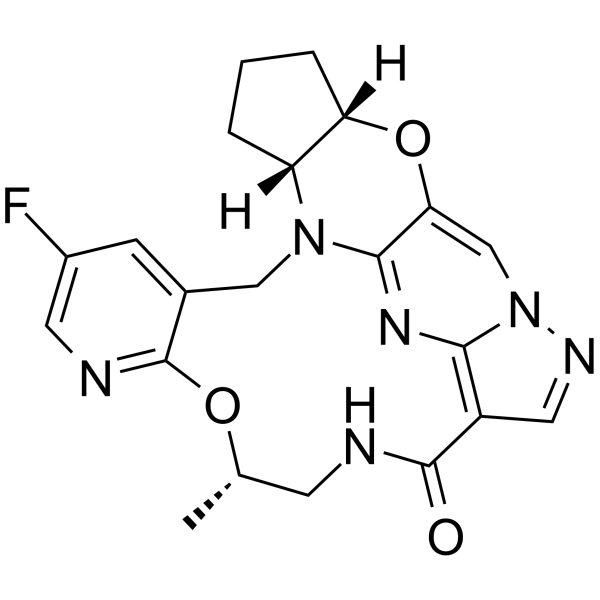
| DC48424 | Enbezotinib Featured |
Enbezotinib, an inhibitor of RET, can inhibit the RET autophosphorylation. Enbezotinib can be used for the research of cancer.
More description
|
|
| DC10976 | E-7386 Featured |
E-7386 (E7386) is a potent, orally active modulator of CBP/beta-catenin, disrupts the interaction and inhibits canonical Wnt signaling pathway /TCF reporter gene activity in LiCl-stimulated HEK-293 and MDA-MB-231 with IC50 of 55 and 73 nM, respectively.
More description
|

|
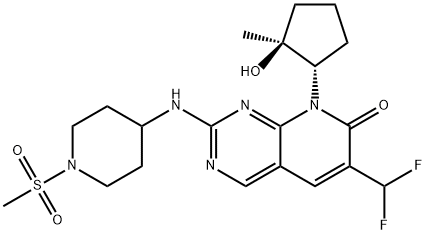
| DC60240 | (S)-PF-06873600 Featured |
|
|
| DC21504 | PF-719 Featured |
PF-719 (PF719) is a potent, selective Pyk2 inhibitor with IC50 of 17 nM, displays 25-fold selectvity over FAK (IC50=469 nM); does not have significant inhibitory effects on recombinant MLCK2, p38, Akt1, or ROCK1, and very little inhibtion at Src family kinases (IC50>5 uM); selectively inhibits tyrosine phosphorylation of Pyk2 at 1 uM, but blocks both Pyk2 and FAK phosphorylation at 2.5 uM in A20 cells; reduces chemoattractant-induced migration of B-2 and MZ B cells.
More description
|

|
| DC22995 | IRES-J007 Featured |
IRES-J007 ia an improved IRES inhibitor that blocks IRES-hnRNP A1 binding; binds to a small pocket structure within the RRM-containing fragment of hnRNP A1 (UP1 fragment), inhibits cyclin D1 and c-MYC IRES activity to a greater extent compared with C11 (IRES-C11); significantly reduces tumor growth of GBM xenografts in mice, and markedly reduces the mRNA translational state of cyclin D1 and c-MYC transcripts combined with PP242.
More description
|
|
