 To enhance service speed and avoid tariff delays, we've opened a US warehouse. All US orders ship directly from our US facility.
| Cat. No. | Product Name | Field of Application | Chemical Structure |
|---|---|---|---|
| DC71909 | Exarafenib Featured |
Exarafenib (RAF/KIN_2787) is a potent, orally active pan-RAF inhibitor. Exarafenib has anticancer activity by suppression of downstream MAPK pathway signaling. Exarafenib can be used for cancer research.
More description
|

|
| DC60333 | BRD7586 Featured |
BRD-7586(BRD 7586) is a cell-permeable small molecule inhibitor of SpCas9 with EC50 of 6.2 µM and 5.7 µM in the eGFP-disruption and HiBiT-knock-in assays, respectively. BRD7586 specifically engages SpCas9 but not Cas12a in cells and enhances SpCas9 specificity at multiple loci.
More description
|
|
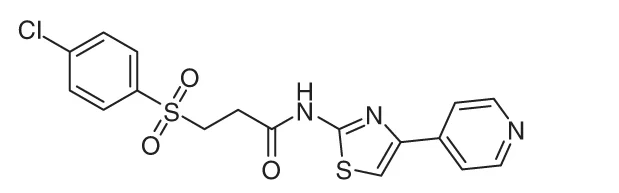
| DC50121 | GTPL-6019 Featured |
GTPL6019, also know nas IUN54940, DGFR Tyrosine Kinase Inhibitor III, is a PDGFR inhibitor with potential anticancer activity.
More description
|

|
| DC70423 | GA-017 Featured |
GA-017 (GA017) is a potent, selective, ATP-competitive LATS kinase (LATS1/2) inhibitor with IC50 of 4.10/3.92 nM, respectively, promotes cell growth.GA-017 increases the number and size of spheroids of various cell-types in both scaffold-based and scaffold-independent cultures.GA-017 also enhances the ex vivo formation of mouse intestinal organoids.GA-017 facilitates the growth of spheroids and organoids by stabilizing and translocating YAP/TAZ into the cell nucleus.GA-017 inhibits the Hippo pathway to promote YAP/TAZ stabilization and nuclear translocation.GA-017 induces expression of Hippo pathway-related genes such as ANKRD1, CYR61, and CTGF in SKOV3 cells in a time- and dose-dependent manner.GA-017 inhibited the activity of 16 kinases of the AGC family at 100 nM against a panel of 321 diverse kinases.The serine/threonine protein kinases LATS (LATS1/2) phosphorylate YAP/TAZ, key effectors of the growth- and proliferation-regulating Hippo signaling pathway.
More description
|

|
| DC46241 | GPR40/FFAR1 modulator 1(WUN55267) Featured |
GPR40/FFAR1 modulator 1 is an agonist and an allosteric modulator for Gq-coupled free fatty acid receptor 1 (GPR40/FFAR1).
More description
|

|
| DC72801 | CAM741 |
CAM741 is a selective VCAM-1 translocation inhibitor. CAM741 selectively inhibits VCAM-1 expression by inhibiting its co-translational translocation within the lumen of the endoplasmic reticulum (ER). CAM741 can be used as a molecular tool and can also be used in the research of chronic inflammation and cancer.
More description
|

|
| DC72799 | DA 3003-2 |
DA 3003-2 is a potent and selectively Cdc25 inhibitor. DA 3003-2 shows antiproliferative activity. DA 3003-2 induces cell cycle arrest at the G2/M phase and increases the expression of P-tyr15 Cdc2. DA 3003-2 has the potential for the research of prostate cancer.
More description
|
|
| DC72798 | 2MD |
2MD is an orally active vitamin D analog. 2MD stimulates periosteal bone formation and decreases trabecular bone resorption. Thus 2MD restores trabecular and cortical bone mass and strength. 2MD also regulates intraocular pressure (IOP)-relative genes and reduces IOP in non-human primates.
More description
|
|
| DC72797 | Prepro-TRH-(160-169) |
Prepro-TRH-(160-169) is one of the connecting peptides of thyrotropin-releasing hormone prohormone (pro-TRH), potentiates TRH-induced thyrotropin (TSH) release.
More description
|
|
| DC72796 | dextrothyroxine sodium |
Dextrothyroxine (D-T4) sodium, a sodium salt of D-T4, is a laevorotatory isomer of thyroxine used for thyroid related studies.
More description
|
|
| DC72795 | BPDA2 |
BPDA2 is a highly selective and competitive active site SHP2 inhibitor with IC50s of 92.0 nM, 33.39 μM, 40.71 μM for SHP2, SHP1, SHP1B, respectively. DBDA2 downregulates mitogenic and cell survival signaling and RTK expression. BPDA2 suppresses SHP2 mediated signaling and breast cancer cell phenotypes.
More description
|
|
| DC72793 | Sp-5,6-DCl-cBIMPS |
Sp-5,6-DCl-cBIMPS is a potent and specific cAMP-dependent protein kinases (cAMP-PK) activator. Sp-5,6-DCl-cBIMPS stimulates insulin release. Sp-5,6-DCl-cBIMPS inhibits U46619-induced activation of Rho, Gq and G12/G13 in platelets.
More description
|
|
| DC72792 | 4′-Demethylnobiletin |
4′-Demethylnobiletin is a bioactive metabolite that activates the PKA/ERK/CREB signaling pathway, enhances CRE-mediated transcription in hippocampal neurons, and reverses memory impairment associated with NMDA receptor antagonism by stimulating ERK signaling.
More description
|
|
| DC72791 | Sp-cAMPS triethylamine |
Sp-cAMPS triethylamine, a cAMP analog, is potent activator of cAMP-dependent PKA I and PKA II. Sp-cAMPS triethylamine is also a potent, competitive phosphodiesterase (PDE3A) inhibitor with a Ki of 47.6 µM. Sp-cAMPS triethylamine binds the PDE10 GAF domain with an EC50 of 40 μM.
More description
|
|
| DC72790 | HKB99 |
HKB99 is an allosteric inhibitor of phosphoglycerate mutase 1 (PGAM1). HKB99 inhibits the formation of invasive pseudopodia and increases the level of PAI-2 in vitro. HKB99 increases the oxidative stress, activates JNK/c-Jun and suppresses AKT and ERK. HKB99 can be used for the research of non-small-cell lung cancer (NSCLC).
More description
|
|
| DC72789 | JUN-1111 |
JUN-1111 is an irreversible and selective Cdc25 phosphatase inhibitor with IC50 values of 0.38, 1.8, 0.66, 28, 37 µM for Cdc25A, Cdc25B, Cdc25C, VHR, PTP1B, respectively. JUN-1111 induces cell cycle arrest at G1 and G2/M phases. JUN-1111 decreases the expression of phosphoCdk1.
More description
|
|
| DC72787 | Cimoxatone |
Cimoxatone (MD 780515) is a reversible, selectively and orally active type A monoamine oxidase (MAO-A) inhibitor. Cimoxatone enhances the anorectic action of Serotonin.
More description
|
|
| DC72786 | cis-ACCP |
cis-ACCP is an orally active antimetastatic matrix metalloproteinase-2 (MMP-2) selective inhibitor. cis-ACCP can inhibit MMP-2 and MMP-9 with IC50 values of 4 μM and 20 μM, respectively. cis-ACCP can be used for the research of a variety of chronic diseases.
More description
|
|
| DC72784 | 3-Morpholinosydnonimine |
3-Morpholinosydnonimine (SIN-1; Linsidomine) is a spontaneous ROS/RNS generator and a peroxynitrite donor. 3-Morpholinosydnonimine inhibits hypertrophic chondrocytes activity and induces necrosis. 3-Morpholinosydnonimine induces p53-dependent apoptosis, induces p53 accumulation and activates MAPK phosphorylation.
More description
|
|
| DC72783 | DDO3711 |
DDO3711, a PP5-recruiting phosphatase recruitment chimeras (PHORCs), is formed by connecting a small molecular apoptosis signal-regulated kinase 1 (ASK1) inhibitor to a PP5 activator through a chemical linker. DDO3711 specifically inhibits ASK1 (IC50 =164.1 nM) not ASK2 (IC50>20 μM). DDO3711 significantly dephosphorylates p-ASK1T838 by recruiting PP5 and shows the ASK1-dependent antiproliferative activity. DDO3711 has anti-cancer activity and has the potential for abnormally phosphorylated oncoproteins research.
More description
|
|
| DC72782 | OSM-SMI-8 |
OSM-SMI-8 (NSC642624) is a potent OSM (oncostatin M) antagonist. OSM-SMI-8 has the potential for the research of cancer.
More description
|
|
| DC72781 | Denileukin diftitox |
Denileukin diftitox (DAB 389IL-2) is a diphtheria toxin (DT)-related interleukin 2 (IL-2) fusion protein toxin that depletes cells expressing the high-affinity form of the IL-2 receptor (IL-2R), CD25. Denileukin diftitox binds to cells expressing IL-2R and inhibits protein synthesis through internalization of the diphtheria toxin fragment.
More description
|
|
| DC72780 | R-87366 |
R-87366 is a water-soluble human immunodeficiency virus (HIV) protease inhibitor. R-87366 has potent inhibitory for HIV protease with a Ki value of 11 nM. R-87366 can be used for the research of anti-human immunodeficiency virus (HIV).
More description
|
|
| DC72778 | UNC4976 TFA |
UNC4976 TFA is a positive allosteric modulator (PAM) peptidomimetic of CBX7 chromodomain binding to nucleic acids. UNC4976 TFA simultaneously antagonizes H3K27me3-specific recruitment of CBX7 to target genes while increasing non-specific binding to DNA and RNA.
More description
|
|
| DC72774 | D-threo-PDMP |
D-threo-PDMP is a potent glucoceramide synthase (GCS) inhibitor, which reduces the glycosphingolipids on the cell surface by inhibiting glycosylation, reduces the total length of the axon plexus and the number of axon branch points, and inhibits neurite growth.
More description
|
|
| DC72772 | Metioprim |
Metioprim is a competitive inhibitor of bacterial Dihydrofolate reductase (DHFR). Metioprim has inhibitory activity against anaerobic bacteria. Metioprim shows synergistic activity in combination with DDS against E. coli. and various mycobacteria.
More description
|
|
| DC72771 | CLK8 |
CLK8 is a potent and specific CLOCK inhibitor that can disrupt the interaction between CLOCK and BMAL1 and interfere with nuclear translocation of CLOCK. CLK8 can be used for the research of disorders associated with dampened circadian rhythms.
More description
|
|
| DC72768 | Mifanertinib |
Mifanertinib is a potent tyrosine kinase inhibitor with antineoplastic activity.
More description
|
|
| DC72767 | Boditrectinib |
Boditrectinib is a potent tyrosine kinase inhibitor. Boditrectinib serves as an antineoplastic agent. Boditrectinib is useful in the research of cancer, inflammation, neurodegenerative diseases and certain infectious diseases.
More description
|
|
| DC72764 | NG-497 |
NG-497 is a selective human adipose triglyceride lipase (ATGL) inhibitor that targets the enzymatically active patatin-like domain of human ATGL. NG-497 has potential value for tumor research.
More description
|
|
