 To enhance service speed and avoid tariff delays, we've opened a US warehouse. All US orders ship directly from our US facility.
| Cat. No. | Product Name | Field of Application | Chemical Structure |
|---|---|---|---|
| DC9964 | BEC hydrochloride Featured |
BEC is a boronic acid-based arginine analog that acts as a slow-binding, competitive transition state inhibitor of arginase I and II (Ki = 310 nM for human recombinant type II arginase, pH 7.5).
More description
|

|
| DC10280 | BD1063 dhydrochloride Featured |
BD1063 dhydrochloride is a potent and selective sigma 1 receptor antagonist.
More description
|

|
| DC8313 | BD1047.2HBr Featured |
BD 1047 dihydrobromide is a selective antagonist of σ receptors.
More description
|

|
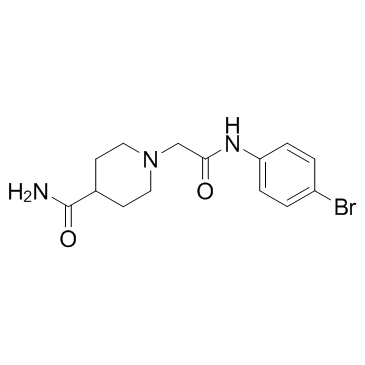
| DC10885 | BCI-121 Featured |
BCI-121 is a SMYD3 inhibitor that impairs the proliferation of cancer cell.
More description
|
|
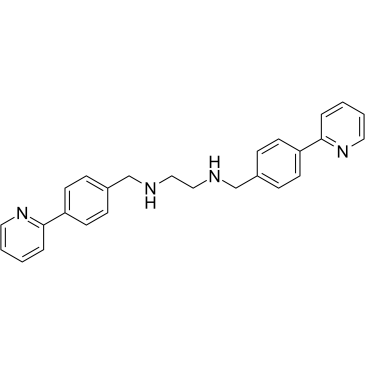
| DC20754 | BC-1215 Featured |
BC-1215 (BC1215) is a highly unique, selective E3 ligase F box component Fbxo3 inhibitor with IL1β IC50 of 0.9 ug/mL.
More description
|
|
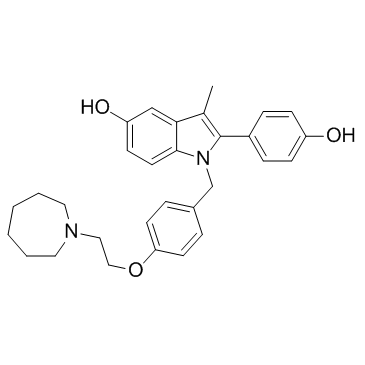
| DC8922 | Bazedoxifene Featured |
Bazedoxifene is a selective estrogen receptor modulator (SERM) currently in development for osteoporosis prevention and treatment.
More description
|
|
| DC10526 | BAY-1895344 HCl(Elimusertib) Featured |
BAY-1895344 is a potent and selective ATM inhibitor. BAY 1895344 shows potent anti-tumor efficacy in monotherapy and strong combination potential with the targeted alpha therapy Radium-223 dichloride.
More description
|

|
| DC9679 | BAY1217389 Featured |
BAY1217389 is an orally bioavailable, selective inhibitor of the serine/threonine kinase monopolar spindle 1 (Mps1, TTK), with potential antineoplastic activity.
More description
|

|
| DC7996 | BAY 87-2243 Featured |
BAY 87-2243 is a highly potent and selective inhibitor of hypoxia-induced HIF-1 activation.
More description
|

|
| DC9632 | BAY 61-3606 (dihydrochloride) Featured |
BAY 61-3606 2Hcl is a potent, ATP-competitive, reversible, and highly selective inhibitor of Syk tyrosine kinase activity (Ki= 7.5 nM) with no inhibitory effect against Btk, Fyn, Itk, Lyn, and Src.
More description
|

|
| DC9783 | Bay 59-3074 Featured |
Bay 59-3074 is a novel CB1/CB2 receptor partial agonist (Ki values are 48.3 and 45.5 nM at human CB1 and CB2 receptors respectively).
More description
|

|
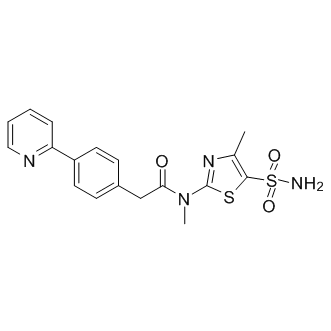
| DC7323 | Pritelivir(BAY-57-1293) Featured |
BAY 57-1293 represents a new class of potent inhibitors of herpes simplex virus (HSV) that target the virus helicase primase complex.
More description
|
|
| DC10085 | Bay 41-4109 (racemate) Featured |
BAY 41-4109 racemate is a potent inhibitor of human hepatitis B virus (HBV) with an IC50 of 53 nM.
More description
|

|
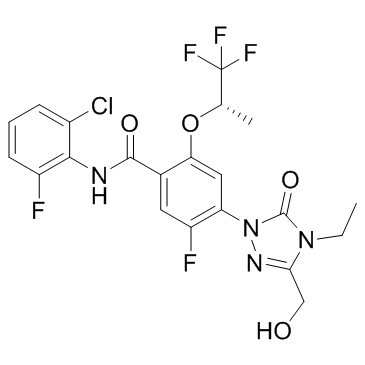
| DC23745 | BAY-2402234 Featured |
BAY 2402234 (BAY2402234) is a novel potent, selective, orally bioavailable DHODH inhibitor with IC50 of 1.2 nM (human full-length DHODH).
More description
|
|
| DC8038 | Bay 11-7085 Featured |
BAY 11-7085 is an irreversible inhibitor of TNFα-induced IκBα phosphorylation with an IC50 value of 10 μM.
More description
|

|
| DC8133 | Batimastat(BB-94) Featured |
Batimastat was used to study the role of MMP in proteolytic release of EGF in human follicular thyroid carcinoma cell line FTC-133.
More description
|

|
| DC5064 | Baricitinib (INCB28050, LY3009104) Featured |
Baricitinib is a selective JAK1 and JAK2 inhibitor with IC50 of 5.9 nM and 5.7 nM, ~70 and ~10-fold selective versus JAK3 and Tyk2, no inhibition to c-Met and Chk2,showed potent activity against COVID-19(SARS-COV-2).
More description
|

|
| DC4135 | Bardoxolone methyl Featured |
Bardoxolone methyl (also known as “RTA 402” and “CDDO-methyl ester”) is an orally-available first-in-class synthetic triterpenoid belonging to the antioxidant inflammation modulator (AIM) class.
More description
|

|
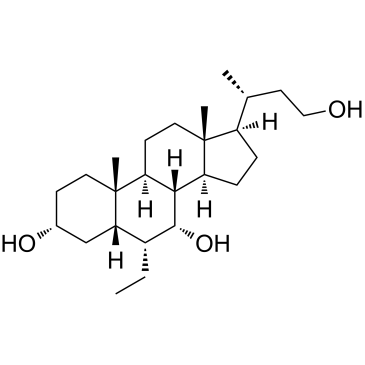
| DC10564 | BAR 502 Featured |
BAR502 is a dual FXR and GPBAR1 agonist with IC50 values of 2 μM and 0.4 μM, respectively.
More description
|
|
| DC8298 | BAN ORL 24 Featured |
BAN ORL 24 is a potent, selective, competitive ORL1 non-peptide agonist. Displays 1000-fold selectivity over classical opioid receptors.
More description
|

|
| DC7371 | Balicatib Featured |
Balicatib(AAE-581) is a potent and selective inhibitor of cathepsin K; 10-100-fold more potent in cell-based enzyme occupancy assays than against cathepsin B, L, and S.
More description
|

|
| DC2013 | Bafetinib (INNO-406) Featured |
Bafetinib (INNO-406) is a potent and selective dual Bcr-Abl/Lyn inhibitor with IC50 of 5.8 nM and 19 nM, respectively.
More description
|

|
| DC10026 | B02 Featured |
B02 is a cell-permeable pyridinylvinyl-quinazolinone compound that is shown to specifically inhibit human RAD51 (IC50 = 27.4 µM).
More description
|

|
| DC8338 | Azeliragon(PF-04494700,TTP488) Featured |
Azeliragon is an oral, small-molecule inhibitor of RAGE.
More description
|

|
| DC9268 | AZD9496 Featured |
AZD9496 is a potent and orally bioavailable selective estrogen receptor downregulator(Ki=0.7 nM) and antagonist.
More description
|

|
| DC7006 | AZD-9291(Osimertinib) Featured |
AZD-9291 is a potent and selective mutated forms EGFR inhibitor(Exon 19 deletion EGFR IC50=12.92 nM, L858R/T790M EGFR IC50= 11.44 nM, wild type EGFR IC50= 493.8 nM).
More description
|

|
| DC9879 | AZD8835 Featured |
AZD8835 ia a novel mixed inhibitor of PI3Kα and PI3Kδ with IC50 of 6.2 nM and 5.7 nM, respectively, also with selectivity against PI3Kβ (IC50=431 nM) and PI3Kγ (IC50=90 nM).
More description
|

|
| DC8380 | AZD8186 Featured |
AZD8186 is an inhibitor of the beta isoform of phosphoinositide-3 kinase (PI3K), with potential antineoplastic activity.
More description
|

|
| DC5084 | AZD-8055 Featured |
AZD-8055 is a potent, selective, and orally bioavailable ATP-competitive mTOR kinase inhibitor with an IC50 of 0.8 nM.
More description
|

|
| DC20242 | AZD-7624 Featured |
AZD-7624 a potent, selective, inhaled p38α MAPK inhibitor for the treatment of chronic obstructive pulmonary disease.
More description
|

|
