 To enhance service speed and avoid tariff delays, we've opened a US warehouse. All US orders ship directly from our US facility.
| Cat. No. | Product Name | Field of Application | Chemical Structure |
|---|---|---|---|
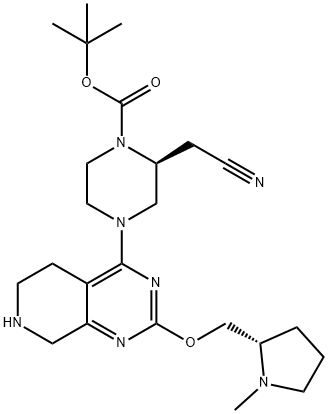
| DC67764 | tert-butyl (2S)-2-(cyanomethyl)-4-[2-[[(2S)-1-methylpyrrolidin-2-yl]methoxy]-5,6,7,8-tetrahydropyrido[3,4-d]pyrimidin-4-yl]piperazine-1-carboxylate Featured |
|
|
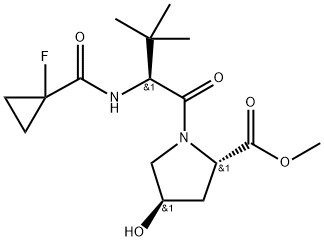
| DC67763 | methyl (2S,4R)-1-[(2S)-2-[(1-fluorocyclopropyl)formamido]-3,3-dimethylbutanoyl]-4-hydroxypyrrolidine-2-carboxylate Featured |
|
|
| DC67761 | tert-butyl (3S)-3-(cyanomethyl)piperazine-1-carboxylate Featured |
-3-(cyanomethyl)piperazine-1-carboxylate.gif)
|
|
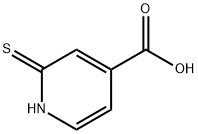
| DC67759 | 2-Mercaptopyridine-4-carboxylic acid Featured |
|
|
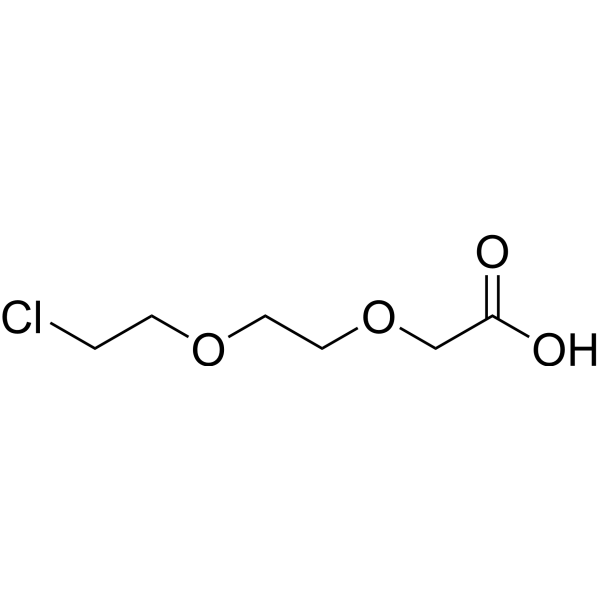
| DC67987 | Cl-PEG2-acid Featured |
Cl-PEG2-acid is a PEG-based PROTAC linker that can be used in the synthesis of PROTACs.
More description
|
|
| DC67758 | 3-(Fluoromethyl)azetidine hydrochloride Featured |
azetidine hydrochloride.gif)
|
|
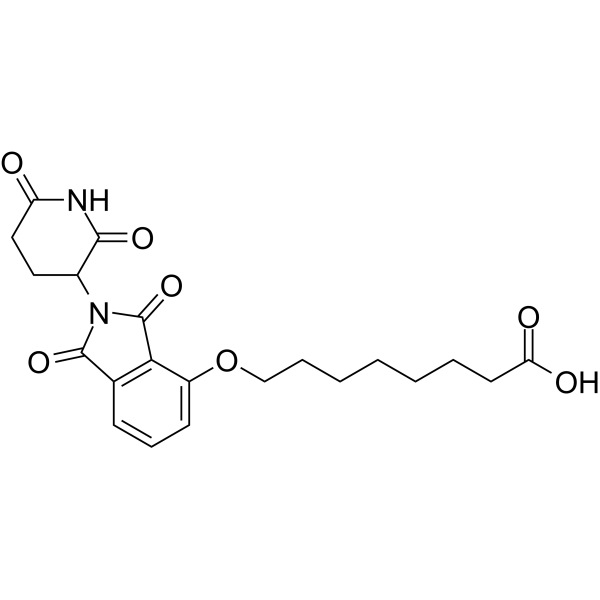
| DC67986 | Thalidomide-O-C7-acid Featured |
Thalidomide-O-C7-acid is a synthesized E3 ligase ligand-linker conjugate that incorporates the Thalidomide (HY-14658) based cereblon ligand and a linker used in PROTAC technology.
More description
|
|
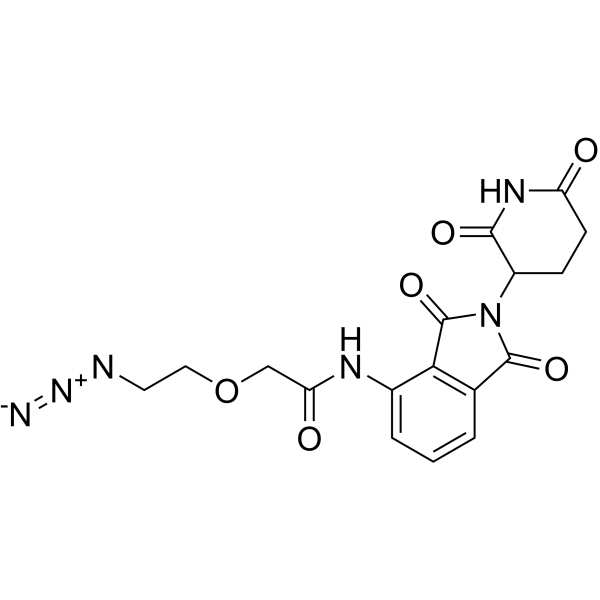
| DC67757 | Pomalidomide-PEG1-azide Featured |
Pomalidomide-PEG1-azide is a E3 ligase lgand-linker conjugate. Pomalidomide-PEG1-azide incorporates the Pomalidomide based cereblon ligand and a linker. Pomalidomide-PEG1-azide can be used to design a PROTAC BRD4 Degrader-1 (HY-133131). Pomalidomide-PEG1-azide is a click chemistry reagent, it contains an Azide group and can undergo copper-catalyzed azide-alkyne cycloaddition reaction (CuAAc) with molecules containing Alkyne groups. It can also undergo strain-promoted alkyne-azide cycloaddition (SPAAC) reactions with molecules containing DBCO or BCN groups.
More description
|
|
| DC67756 | (S,R,S)-AHPC-PEG3-N3 Featured |
(S,R,S)-AHPC-PEG3-N3 is a synthesized E3 ligase ligand-linker conjugate that incorporates the (S,R,S)-AHPC based VHL ligand and 3-unit PEG linker used in PROTAC technology. (S,R,S)-AHPC-PEG3-N3 is a click chemistry reagent, it contains an Azide group and can undergo copper-catalyzed azide-alkyne cycloaddition reaction (CuAAc) with molecules containing Alkyne groups. It can also undergo strain-promoted alkyne-azide cycloaddition (SPAAC) reactions with molecules containing DBCO or BCN groups.
More description
|
-AHPC-PEG3-N3.gif)
|
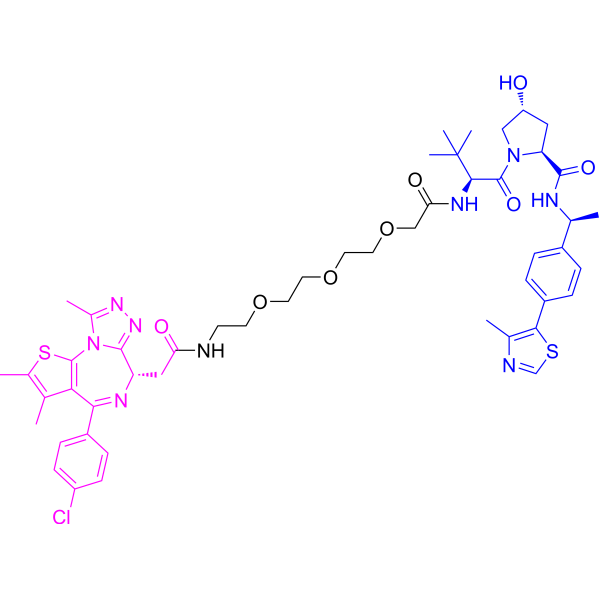
| DC67985 | PROTAC BRD4 Degrader-5(GAL-02-221) Featured |
PROTAC BRD4 Degrader-5 is a PROTAC connected by ligands for von Hippel-Lindau and BRD4. GAL-02-221 can potent degrade BRD4 in HER2 positive and negative breast cancer cell lines.
More description
|
|
| DC67755 | (S,R,S)-AHPC-PEG4-N3 Featured |
(S,R,S)-AHPC-PEG4-N3 is a synthesized E3 ligase ligand-linker conjugate that incorporates the (S,R,S)-AHPC based VHL ligand and 4-unit PEG linker used in PROTAC technology. (S,R,S)-AHPC-PEG4-N3 is a click chemistry reagent, it contains an Azide group and can undergo copper-catalyzed azide-alkyne cycloaddition reaction (CuAAc) with molecules containing Alkyne groups. It can also undergo strain-promoted alkyne-azide cycloaddition (SPAAC) reactions with molecules containing DBCO or BCN groups.
More description
|
-AHPC-PEG4-N3.gif)
|
| DC67754 | (S,R,S)-AHPC-PEG2-N3 Featured |
(S,R,S)-AHPC-PEG2-N3 is a synthesized E3 ligase ligand-linker conjugate that incorporates the (S,R,S)-AHPC based VHL ligand and 2-unit PEG linker used in PROTAC technology. (S,R,S)-AHPC-PEG2-N3 is a click chemistry reagent, it contains an Azide group and can undergo copper-catalyzed azide-alkyne cycloaddition reaction (CuAAc) with molecules containing Alkyne groups. It can also undergo strain-promoted alkyne-azide cycloaddition (SPAAC) reactions with molecules containing DBCO or BCN groups.
More description
|
-AHPC-PEG2-N3.gif)
|
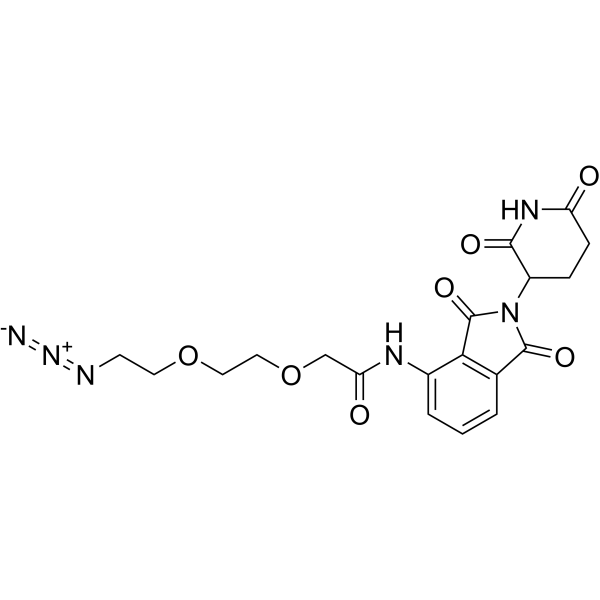
| DC67980 | Pomalidomide-PEG2-azide Featured |
Pomalidomide-PEG2-azide is a synthesized E3 ligase ligand-linker conjugate that incorporates the Pomalidomide based cereblon ligand and 2-unit PEG linker used in PROTAC technology[1]. Pomalidomide-PEG2-azide is a click chemistry reagent, it contains an Azide group and can undergo copper-catalyzed azide-alkyne cycloaddition reaction (CuAAc) with molecules containing Alkyne groups. It can also undergo strain-promoted alkyne-azide cycloaddition (SPAAC) reactions with molecules containing DBCO or BCN groups.
More description
|
|
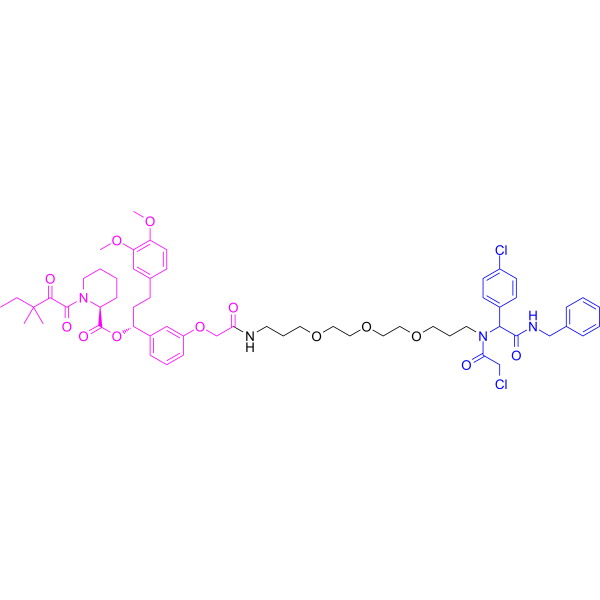
| DC77218 | 10-SLF Featured |
10-SLF is a PROTAC FKBP12 degrader. 10-SLF induces a ternary complex between FKBP12 and FBXW7-R465C, and promotes FBXW7-R465C-dependent proteasomal degradation of FKBP12. 10-SLF selectively reduces FKBP12 levels in cells expressing FBXW7-R465C.
More description
|
|
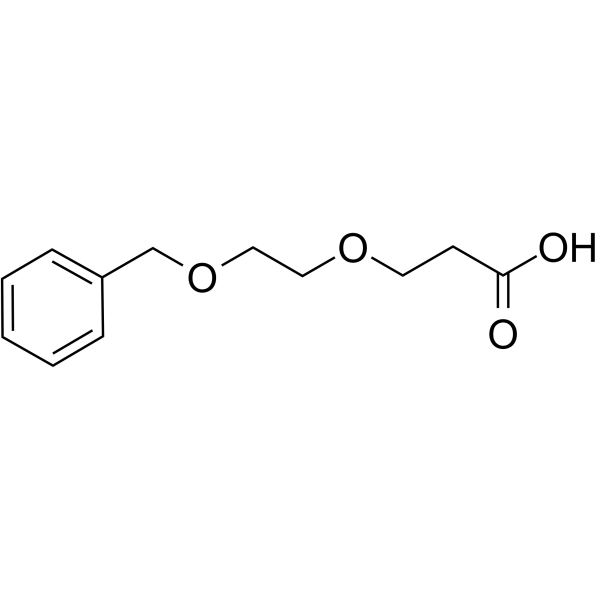
| DC44016 | Benzyl-PEG2-acid Featured |
Benzyl-PEG2-acid is a PEG-based PROTAC linker that can be used in the synthesis of PROTACs.
More description
|
|
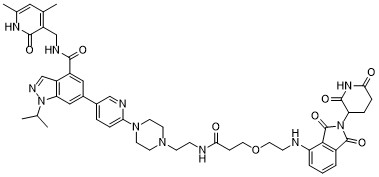
| DC70618 | MS177 Featured |
MS 177 (MS-177) is a potent and selective EZH2 degarder (PROTAC) based on EZH2 inhibitor C24 with CRBN ligand pomalidomide with DC50 of 0.2 uM in EOL-1 cells.MS177 effectively degraded cellular EZH2-PRC2, suppressed global H3K27me3 in leukaemia cells.MS177 exhibited half-maximal degradation concentration (DC50) values of 0.2 ± 0.1 μM and 1.5 ± 0.2 μM, and maximum degradation (Dmax) values of 82% and 68%, respectively, in EOL-1 and MV4;11 cells.MS177 efficiently suppresses EZH2-PRC2 functions, also efficiently induces Myc degradation in cancer cells, suppresses EZH2-PRC2 functions.MS177 efficiently induces leukaemia cell growth inhibition, apoptosis and cell cycle progression arrest, which is more effective than EZH2 inhibitors. MS177 (i.p. injection, 50-1 g/kg) represses AML growth without apparent toxicity in PDX models.
More description
|
|
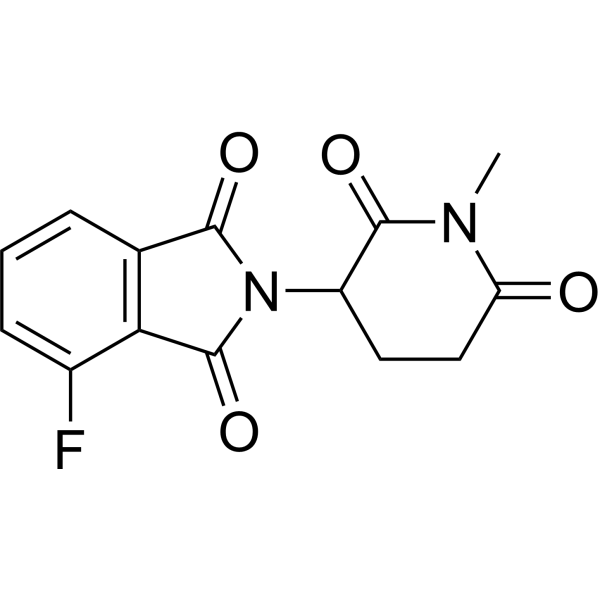
| DC67845 | N-Me-Thalidomide 4-fluoride Featured |
N-Me-Thalidomide 4-fluoride is a ligand for E3 ligase, used for the synthesis of Anti-inflammatory agent 70 .
More description
|
|
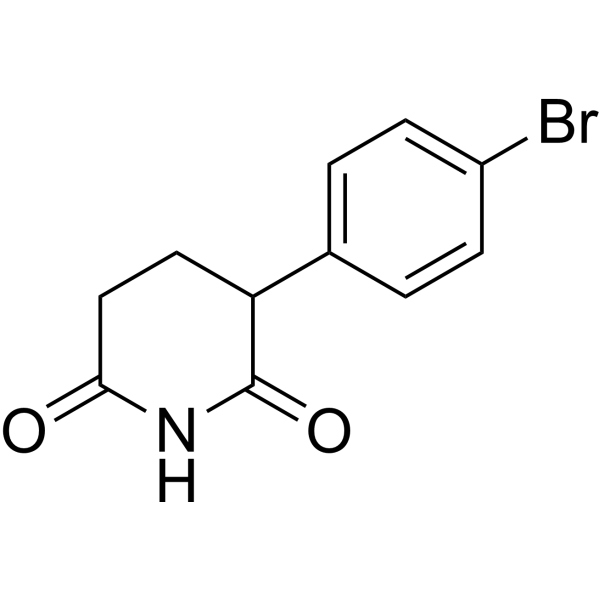
| DC67844 | CRBN ligand-880 Featured |
CRBN ligand-880 is an E3 ubiquitin ligase cereblon (CRBN) ligand used to recruit the cereblon protein. CRBN ligand-880 can be linked to a target protein ligand via a linker to form a PROTAC.
More description
|
|
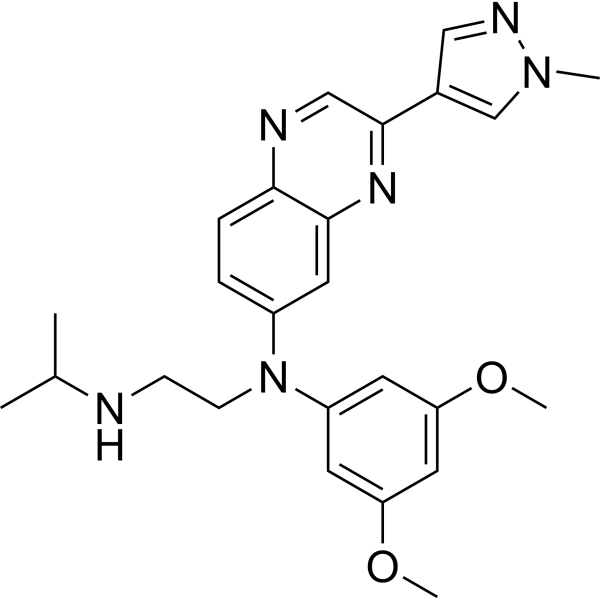
| DC11387 | Erdafitinib Featured |
Erdafitinib (JNJ-42756493) is a potent and orally available FGFR family inhibitor; inhibits FGFR1-4 with IC50 values of 1.2, 2.5, 3.0 and 5.7nM, respectively.
More description
|
|
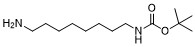
| DC60149 | 1-Boc-1,8-diaminooctane Featured |
tert-butyl (8-aminooctyl)carbamate can be used as a PROTAC linker in the synthesis of PROTACs. tert-butyl (8-aminooctyl)carbamate is an alkane chain with terminal amine and Boc-protected amino groups. Amine group is reactive with carboxylic acids, activated NHS esters, carbonyls (ketone, aldehyde) etc. The Boc group can be deprotected under mild acidic conditions to form the free amine.
More description
|
|
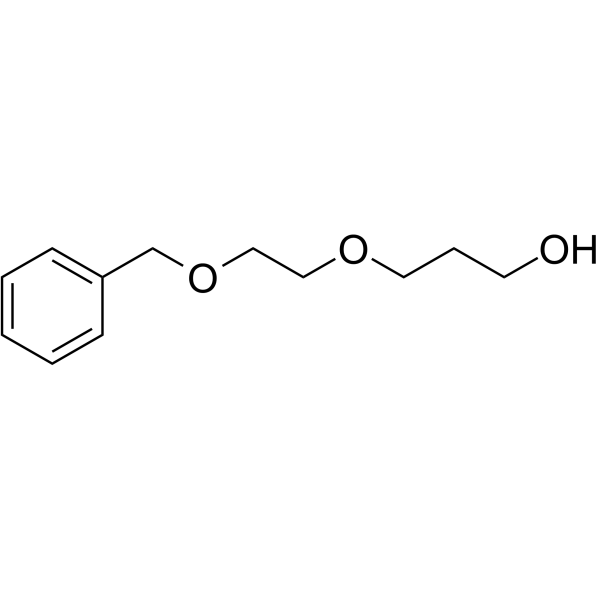
| DC44034 | Benzyl-PEG1-propanol Featured |
Benzyl-PEG1-propanol is a PEG-based PROTAC linker that can be used in the synthesis of PROTACs.
More description
|
|
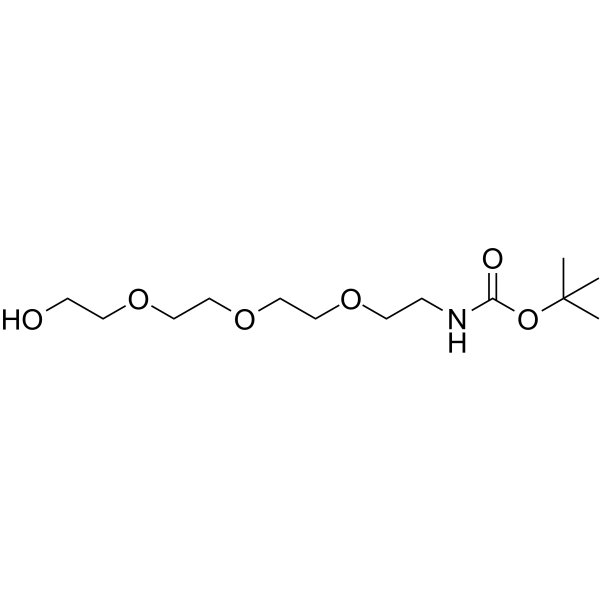
| DC67841 | Boc-NH-PEG4 Featured |
Boc-NH-PEG4 (PROTAC Linker 12) is a PEG-based PROTAC linker can be used in the synthesis of PROTACs.
More description
|
|
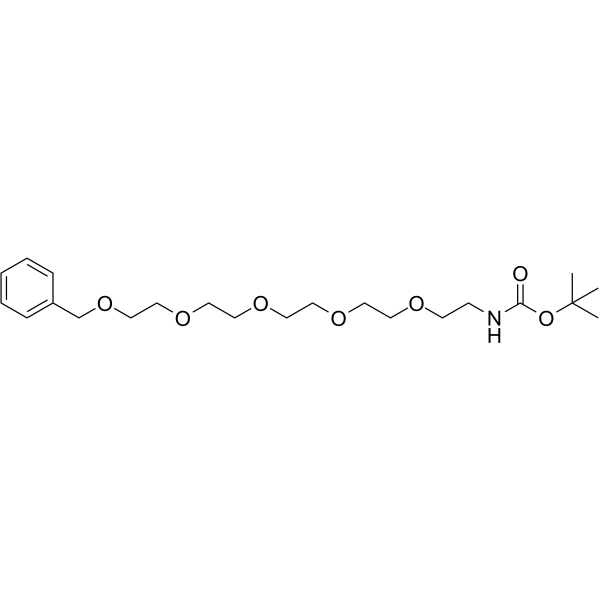
| DC44429 | Benzyl-PEG5-NHBoc Featured |
Benzyl-PEG5-NHBoc is a PEG-based PROTAC linker that can be used in the synthesis of PROTACs.
More description
|
|
| DC67840 | tert-Butyl (6-hydroxyhexyl)carbamate Featured |
tert-Butyl (6-hydroxyhexyl)carbamate is a PROTAC linker that can be used in the synthesis of PROTACs.
More description
|
carbamate.gif)
|
| DC67839 | tert-Butyl N-(2,6-dioxopiperidin-3-yl)carbamate (Standard) Featured |
tert-Butyl N-(2,6-dioxopiperidin-3-yl)carbamate (Standard) is the analytical standard of tert-Butyl N-(2,6-dioxopiperidin-3-yl)carbamate. This product is intended for research and analytical applications.
More description
|
carbamate (Standard).gif)
|
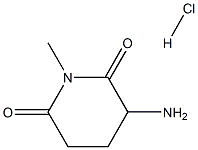
| DC67838 | 3-amino-1-methylpiperidine-2,6-dione hydrochloride Featured |
|
|
| DC67836 | (R)-3-Aminopyrrolidine-2,5-dione Featured |
(R)-3-Aminopyrrolidine-2,5-dione is a potential anticonvulsant agent and its derivatives have comparable in vivo efficacy.
More description
|
-3-Aminopyrrolidine-2,5-dione.gif)
|
| DC67835 | (S)-3-Aminopyrrolidine-2,5-dione Featured |
(S)-3-Aminopyrrolidine-2,5-dione is a potential anticonvulsant agent and its derivatives have comparable in vivo potency.
More description
|
-3-Aminopyrrolidine-2,5-dione.gif)
|
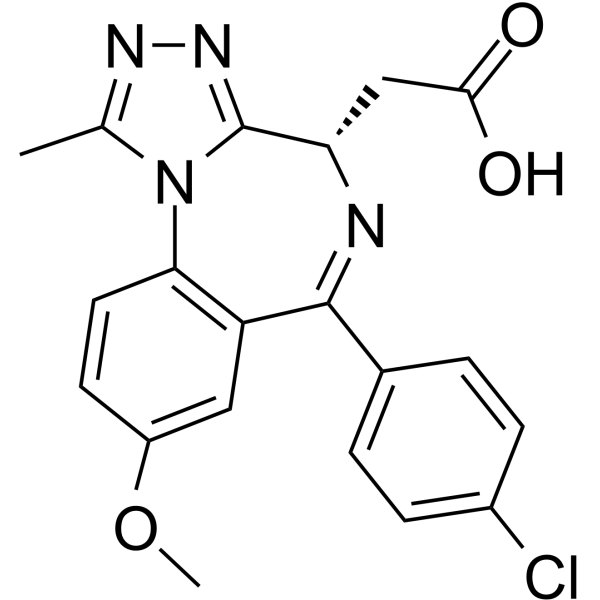
| DC67833 | I-BET762 carboxylic acid Featured |
I-BET762 carboxylic acid (Molibresib carboxylic acid) is an I-BET762-based warhead ligand for conjugation reactions of PROTAC targeting on BET. I-BET762 carboxylic acid (Molibresib carboxylic acid) is a BRD4 inhibitor with a pIC50 of 5.1.
More description
|
|
| DC67832 | (S,S,S)-AHPC-Boc Featured |
(S,S,S)-AHPC-Boc is the isomer of (S,R,S)-AHPC-Boc (HY-123109), and can be used as an experimental control. (S,R,S)-AHPC-Boc (VH032-Boc) is a ligand used in the recruitment of the von Hippel-Lindau (VHL) protein.
More description
|
-AHPC-Boc.gif)
|
