 To enhance service speed and avoid tariff delays, we've opened a US warehouse. All US orders ship directly from our US facility.
| Cat. No. | Product Name | Field of Application | Chemical Structure |
|---|---|---|---|
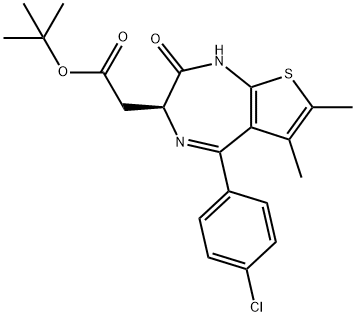
| DC67834 | 1H-Thieno[2,3-e]-1,4-diazepine-3-acetic acid, 5-(4-chlorophenyl)-2,3-dihydro-6,7-diMethyl-2-oxo-, 1,1-diMethylethyl ester, (3S)- Featured |
|
|
| DC67831 | 2-(aminomethyl)-5-(4-methylthiazol-5-yl)phenol hydrochloride Featured |
-5-(4-methylthiazol-5-yl)phenol hydrochloride.gif)
|
|
| DC67837 | (S)-3-Amino-piperidine-2,6-dione hydrochloride Featured |
-3-Amino-piperidine-2,6-dione hydrochloride.gif)
|
|
| DC67842 | Tert-butyl 4-(4-aMino-3-Methoxyphenyl)piperazine-1-carboxylate Featured |
piperazine-1-carboxylate.gif)
|
|
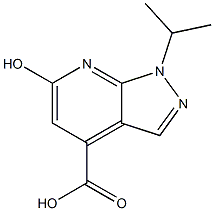
| DC67843 | 6-hydroxy-1-isopropyl-1H-pyrazolo[3,4-b]pyridine-4-carboxylic acid Featured |
|
|
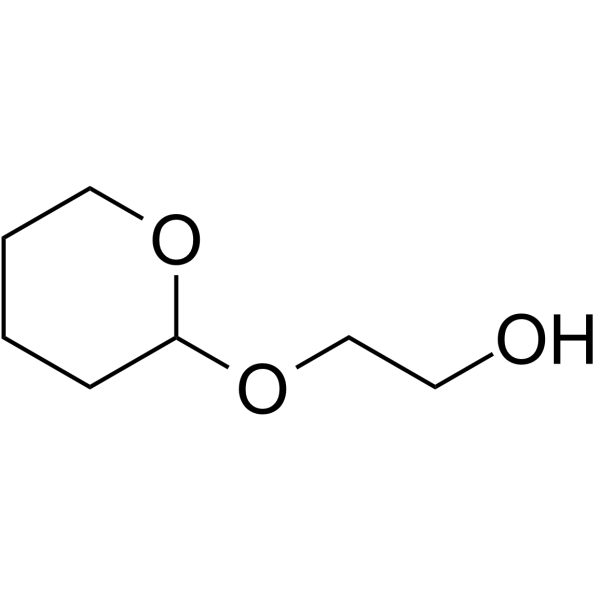
| DC44664 | THP-PEG1-alcohol Featured |
THP-PEG1-alcohol is a PEG-based PROTAC linker that can be used in the synthesis of PROTACs.
More description
|
|
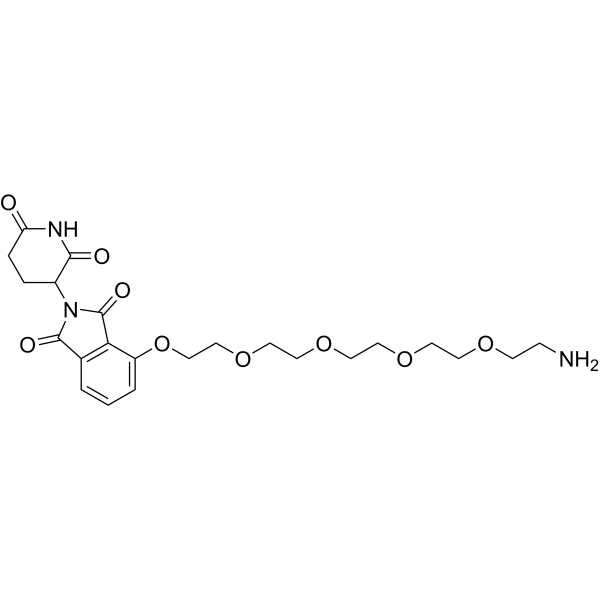
| DC67753 | Thalidomide-O-PEG4-amine Featured |
Thalidomide-O-PEG4-amine is a synthesized E3 ligase ligand-linker conjugate that incorporates the Thalidomide based cereblon ligand and a linker used in PROTAC technology.
More description
|
|
| DC67991 | Lenalidomide-acetamido-O-PEG3-C2-azide Featured |

|
|
| DC74479 | Autotaxin-IN-8 Featured |
BSJ-05-037 is a potent and selective heterobifunctional degrader of ITK with DC50 of 17.6-41.8 nM in TCL lines DERL-2 and Hut78.
BSJ-05-037 induces potent degradation of ITK dependent on CRBN, neddylation, and the proteasome.
BSJ-05-037 induces GATA-3 loss and decreases chemotherapy resistance in vitro.
BSJ-05-037 disrupts TCR signaling, downregulates the Th2-associated transcription factor GATA-3, and can overcome chemotherapy resistance in TCL models in vivo.
More description
|

|
| DC67351 | Tri-GalNAc(OAc)3 Cbz Featured |
Tri-GalNAc(OAc)3 Cbz is a ligand for asialoglycoprotein receptor (ASGPR) where the sugars are protected by acetylation and the tris tertiary amine is protected by benzyloxycarbonyloxy (Cbz). This peracetylated tri-GalNAc(OAc)3 Cbz can be serve as a valuable building block for ASGPR-targeted therapies. Its three branches or arms, each ending in a GalNAc sugar, ensure strong binding to hepatocyte ASGPR. However, the key feature lies in its protective groups: acetylated sugars allow for controlled removal to expose reactive sites for conjugation, while the Cbz-protected amine provides stability and can be selectively cleaved to introduce a reactive amine group for further biomolecule attachment, ultimately enabling researchers to tailor tri-GalNAc(OAc)3 Cbz into customized conjugates for specific therapeutic applications.
More description
|

|
| DC72269 | Tri-GalNAc(OAc)3 TFA Featured |
Tri-GalNAc(OAc)3 TFA is a tri-GalNAc ligand that can be used for the synthesis of GalNAc-LYTAC. GalNAc-LYTAC engages the asialoglycoprotein receptor for targeted protein degradation. tri-GalNAc: triantenerrary N-acetylgalactosamine; LYTAC: lysosome-targeting chimera.
More description
|

|
| DC46965 | Tri-GalNAc-COOH Featured |
tri-GalNAc-COOH is an asialoglycoprotein receptor (ASGPR) ligand that can be used for LYsosome TArgeting Chimera (LYTAC) research.
More description
|

|
| DC67352 | C12-Diacid-Tri-GalNAc-COOH Featured |

|
|
| DC47877 | tri-GalNAc-COOH (acetylation) Featured |
tri-GalNAc-COOH acetylation is the acetylated and modified form of tri-GalNAc-COOH. tri-GalNAc-COOH acetylation can be used for the synthesis of LYTAC.
More description
|

|
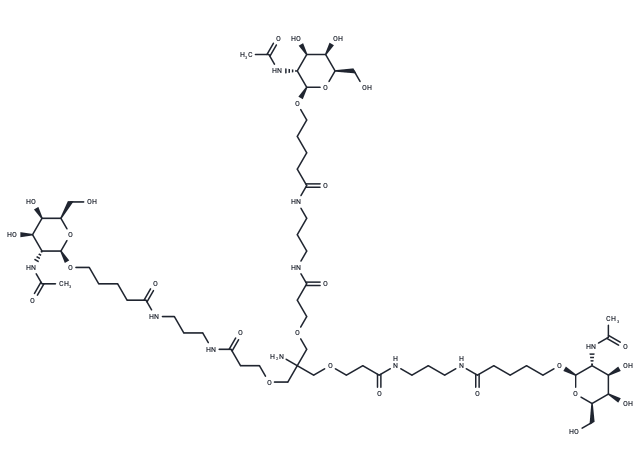
| DC60911 | ASGPR ligand-1 Featured |
ASGPR ligand-1 is a compound that targets the asialoglycoprotein receptor (ASGPR) and is utilized in various disease research contexts .
More description
|
|
| DC68014 | Tri-GalNAc Acid Featured |
Triantennary GalNAc Acid is an asialoglycoprotein receptor (ASGPR) ligand for lysosomal targeting chimera (LYTAC) research and development.
More description
|

|
| DC72546 | Tri-GalNAc-NHS ester Featured |
Tri-GalNAc-NHS ester is a LYsosome TArgeting Chimera (LYTAC) and a ligand of asialoglycoprotein receptor (ASGPR). ASGPR is a lysosomal targeting receptor specifically expressed on liver cells, for the degradation of extracellular proteins including membrane proteins. Tri-GalNAc-NHS ester can be used as a protein degrader and it can be used for the research of LYTAC.
More description
|

|
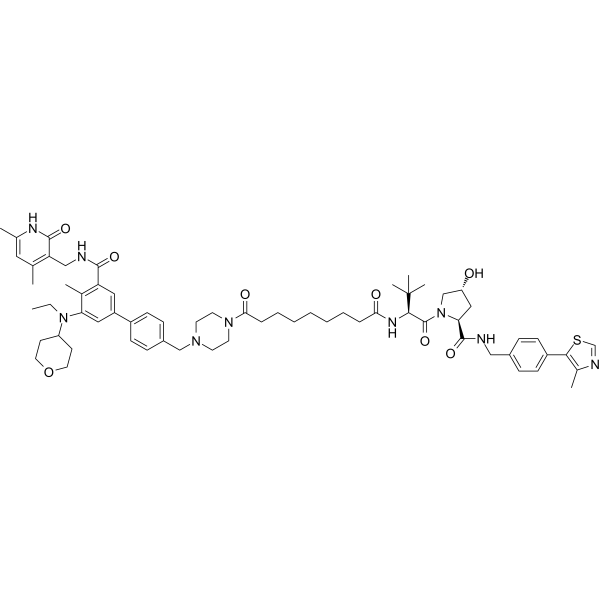
| DC72540 | MS8815 Featured |
MS8815 is a selective enhancer of zeste homolog 2 (EZH2) PROTAC degrader. MS8815 has inhibition activity for EZH2 with an IC50 value of 8.6 nM. MS8815 can be used for the research of triple-negative breast cancer (TNBC).
More description
|
|
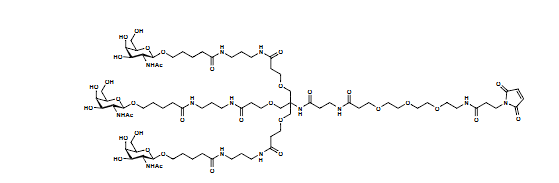
| DC68007 | Tri-GalNAc-β-Ala-PEG3-MAL Featured |
Tri-b-GalNAc-b-Ala-PEG3-MAL contains three terminal beta-N-acetylgalactosamine (GalNAc) sugars arranged in a trivalent configuration, facilitating high-affinity binding to the asialoglycoprotein receptor (ASGPR) expressed on hepatocyte surfaces. The crucial functional group is a terminal maleimide (MAL) moiety, enabling chemoselective bioconjugation with biomolecules harboring thiol (-SH) groups. This strategy allows for site-specific conjugation under mild conditions, valuable for developing targeted conjugates in disciplines like targeted drug delivery and antibody-drug conjugate (ADC) development for hepatocellular carcinoma.
More description
|
|
| DC79876 | (±)-U-50488 Featured |
(±)-U-50488 ((±)-trans-(1R,2R)-U-50488) is a selective kappa opioid receptor agonist. (±)-U-50488 can improve symptoms related to status epilepticus, but has no significant effect on spontaneous seizure episodes. (±)-U-50488 can be used for research of epilepsy.
More description
|
-U-50488.gif)
|
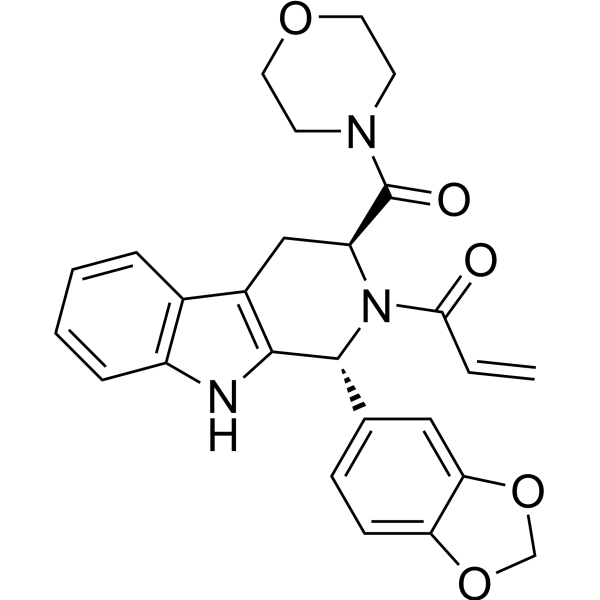
| DC81747 | WX-02-23 Featured |
WX-02-23 is a small-molecule probe that stereoselectively and site-specifically binds to C258 of FOXA1 and C1111 of SF3B1. WX-02-23 remodels FOXA1's chromatin binding and pioneer activity in a DNA-dependent manner, disrupts spliceosome assembly, and enhances the thermal stability of SF3B1. WX-02-23 inhibits tumor cell proliferation and induces apoptosis. WX-02-23 can be used for research on cancers such as prostate cancer.
More description
|
|
| DC60946 | ARV-102(S-enantiomer ) Featured |
S-enantiomer of ARV-102. ARV-102 is a highly potent, orally bioavailable PROTAC that targets LRRK2 with a of 0.14 nM, designed to cross the blood-brain barrier to address neurodegenerative diseases. By hijacking the body’s ubiquitin-proteasome system, it achieves deep and sustained degradation of LRRK2 protein in both peripheral tissues and the central nervous system, offering a potentially superior therapeutic approach over traditional kinase inhibitors.
More description
|
.png)
|
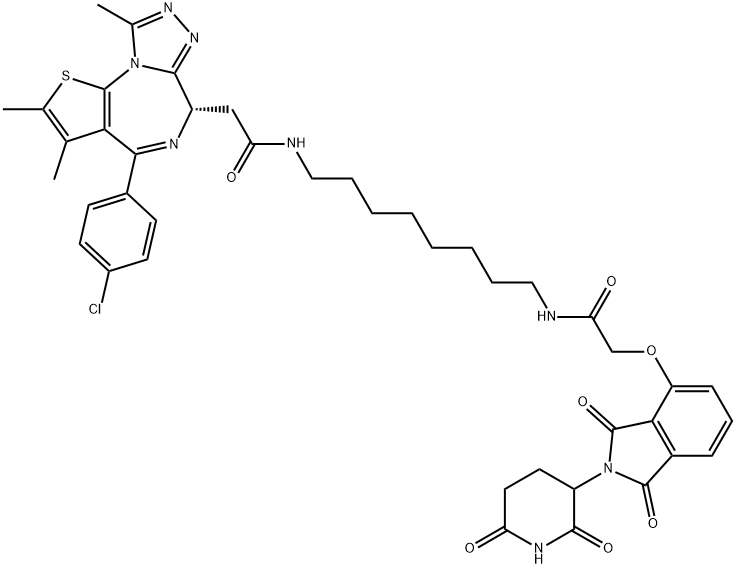
| DC12022 | dBET6 Featured |
dBET6 is a highly potent, selective and cell-permeable degrader of BET with an IC50 of 14 nM, and has antitumor activity.
More description
|
|
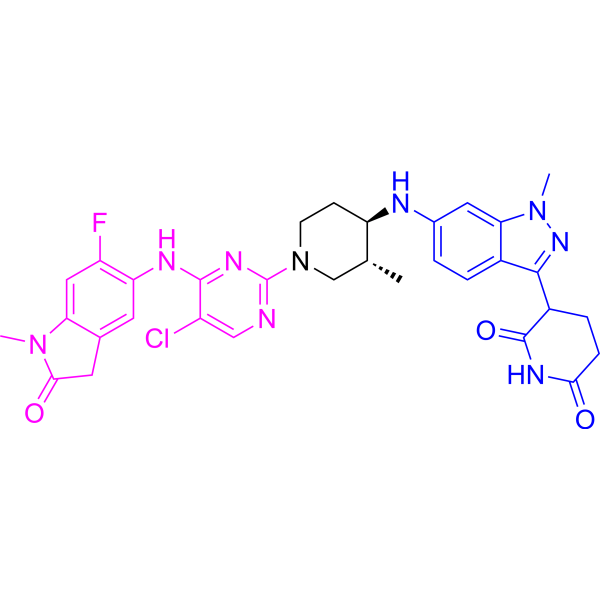
| DC80788 | PROTAC BCL6 Degrader-3 |
PROTAC BCL6 Degrader-3 (compound 92) is a BCL6 PROTAC degrader. PROTAC BCL6 Degrader-3 can be used for the study of cancer or an autoimmune disease.
More description
|
|
| DC81811 | β-Catenin modulator-9 |
β-Catenin modulator-9 (Compound IIa-2075) is a β-Catenin modulator. β-Catenin modulator-9 specifically targets the activity of the stable β-catenin pool and inhibits the Wnt signaling pathway. β-Catenin modulator-9 can be used in cancer-related research.
More description
|
|
| DC81801 | α5β1 integrin-IN-1 |
α5β1 integrin-IN-1 (compound 65) is a potent and selective α5β1 integrin inhibitor with a pIC50 of 9.4. α5β1 integrin-IN-1 displays >10000-fold selectivity for α5β1 over αVβ3 (pIC50 = 5.5). α5β1 integrin-IN-1 reduces airway smooth muscle (ASM) tension through the disruption of cellular tethering. α5β1 integrin-IN-1 exhibits excellent inhalation pharmacokinetics in rodent. α5β1 integrin-IN-1 can be used for asthma research.
More description
|
|
| DC81800 | α4β7 Integrin-IN-1 |
α4β7 Integrin-IN-1 (Example 356) is a potent inhibitor of α4β7 integrin (integrin). Its ability to block the interaction between α4β7 integrin and MadCAM-1 (EC50) is 0.05 nM. α4β7 Integrin-IN-1 can be used for the study of inflammatory bowel disease.
More description
|
|
| DC81799 | α1A/1D-Adrenoceptor antagonist-1 |
α1A/1D-Adrenoceptor antagonist-1 (Compound 15) is a selective α1A/1D-adrenoceptor dual antagonist with IC50 values of 20.26 and 164.9 nM. α1A/1D-Adrenoceptor antagonist-1 shows an IC50 of 1912 nM for α1B-adrenoceptor.α1A/1D-Adrenoceptor antagonist-1 can be used for research of benign prostatic hyperplasia.
More description
|
|
| DC81798 | α,δ-NAG |
α,δ-NAG is an orally active glutaminase-resistant less-hydrolyzable L-Glutamine derivative. α,δ-NAG is a G protein-coupled receptor (GPCR) allosteric modulator. α,δ-NAG suppresses neutrophilic airway inflammation by activating the GPCR/ERK/MKP-1 pathway. α,δ-NAG can be used for the researches of inflammation and immunology, such as asthma.
More description
|
|
| DC81790 | ZMC2 |
ZMC2 is a thiosemicarbazone-class metal ion chelator and zinc ionophore with a human mutant p53R175H binding Ka of 27.4 nM.ZMC2 binds Fe, Cu, Mn, Zn, and other transition metals.ZMC2 facilitates zinc transport across membranes.ZMC2 restores zinc binding to zinc-deficient p53 mutants, restoring wild-type structure and function, including site-specific DNA binding.ZMC2 generates reactive oxygen species (ROS).ZMC2 can be used for the research of cancer.
More description
|
|
