 To enhance service speed and avoid tariff delays, we've opened a US warehouse. All US orders ship directly from our US facility.
| Cat. No. | Product Name | Field of Application | Chemical Structure |
|---|---|---|---|
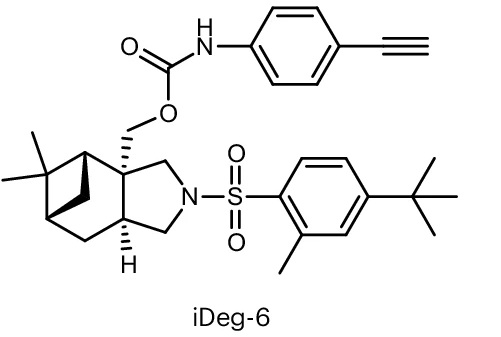
| DC60933 | iDeg-6 Featured |
iDeg-6 is a pseudo-natural product derived from (−)-myrtanol, that inhibit and induce degradation of the immunomodulatory enzyme indoleamine-2,3-dioxygenase 1 (IDO1) by a distinct mechanism. iDeg-1 inhibits kynurenine (Kyn) with IC50 of 16 nM and DC50 of 6.5 nM for IDO1 degradation.
More description
|
|
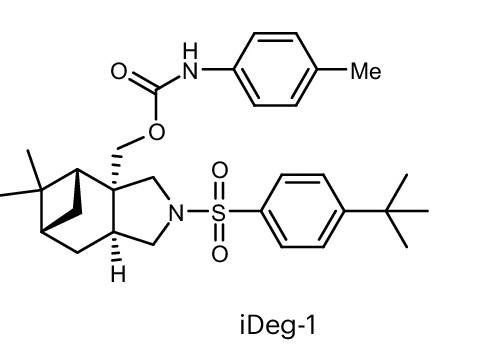
| DC60932 | iDeg-1 Featured |
iDeg-1 is a pseudo-natural product derived from (−)-myrtanol, that inhibit and induce degradation of the immunomodulatory enzyme indoleamine-2,3-dioxygenase 1 (IDO1) by a distinct mechanism. iDeg-1 inhibits kynurenine (Kyn) with IC50 of 0.83 µM.
More description
|
|
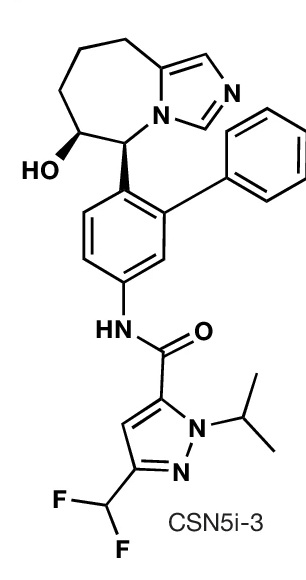
| DC60931 | CSN5i-3 Featured |
CSN5i-3 is a potent orthosteric molecular glue inhibitor of COP9 signalosome (CSN), functions dually as an orthosteric inhibitor of the iso-peptidase target while simultaneously stabilizing the enzyme–substrate complex as a molecular glue.
More description
|
|
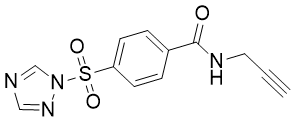
| DC90095 | HHS-475 Featured |
HHS-475 is a novel sulfur-triazole exchange (SuTEx) covalent probe with ~5-fold enhanced chemoselectivity for tyrosines over other nucleophilic amino acids.
More description
|
|
| DC68011 | GalNAc-NAG25 Featured |

|
|
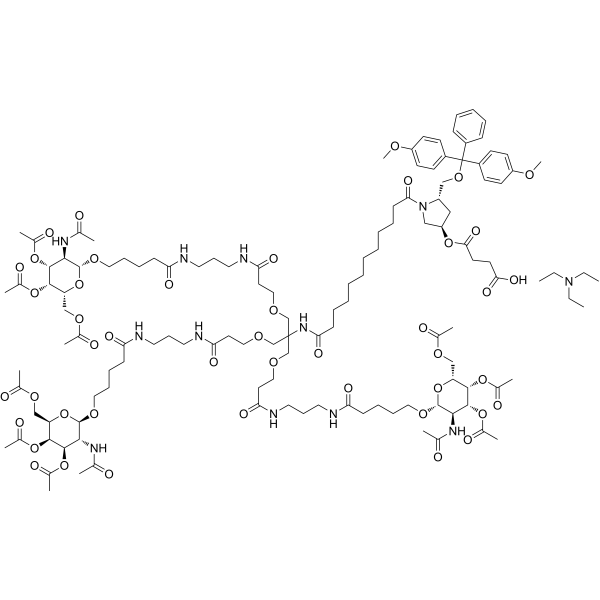
| DC65565 | GalNac-L96 Featured |
GalNac-L96, the G-rich oligonucleotides carrying the longer GalNAc linker that can be used for delivery of nucleic acid drugs[1].
More description
|
|
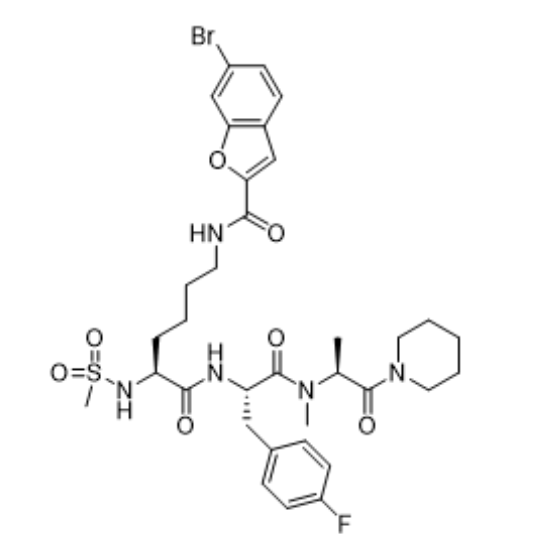
| DC60930 | LS-170 Featured |
LS-170 is a potent, selective and cell-active chemical inhibitor that targets the ATAC-specific YEATS2 YEATS domain with IC50 of 0.14 μM. LS-170 specifically reduces the chromatin occupancy of the ATAC complex, decreases the ATAC-dependent histone acetylation level and downregulates the expression of ATAC-governed genes, leading to significantly suppressed tumor growth in a lung cancer mouse model.
More description
|
|
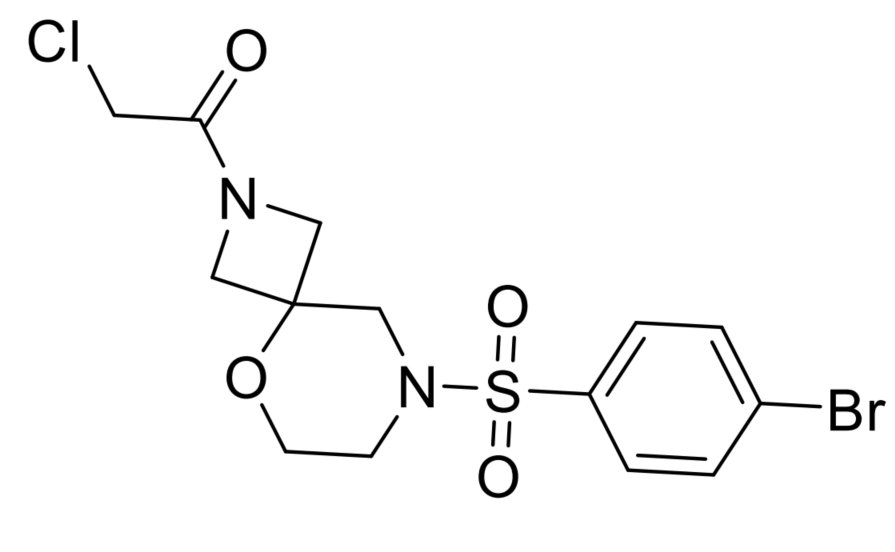
| DC60926 | Compound 78_molecular_glue Featured |
Compound 78 is a molecular glue for the unique composite surface of the 14-3-3/C-RAF259 complex. Compound 78 results in 210-fold stabilization of the 14-3-3σ/C-RAF259 complex in fluorescence anisotropy assays and has an EC50 of 1.2 μM in a cellular 14-3-3/C-RAF NanoBRET assay. Compound 78 shows greater selectivity for C-RAF in the NanoBRET assay and the protection of phosphorylation.
More description
|
|
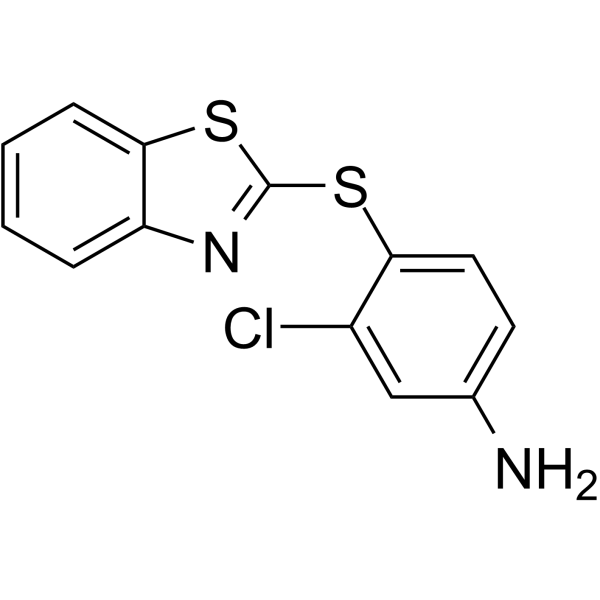
| DC41041 | KRAS inhibitor-9 Featured |
KRAS inhibitor-9, a potent KRAS inhibitor (Kd=92 μM), blocks the formation of GTP-KRAS and downstream activation of KRAS. KRAS inhibitor-9 binds to KRAS G12D, KRAS G12C and KRAS Q61H protein with a moderate binding affinity. KRAS inhibitor-9 causes G2/M cell cycle arrest and induces apoptosis. KRAS inhibitor-9 selectively inhibits the proliferation of NSCLC cells with KRAS mutation but not normal lung cells.
More description
|
|
| DC68009 | Lipid AMG1556 Featured |
AMG1556 is a biodegradable, cyclic amino alcohol-based ionizable lipid from the AMG series, designed specifically for mRNA delivery via lipid nanoparticles (LNPs).
More description
|

|
| DC20891 | ATN-224 Featured |
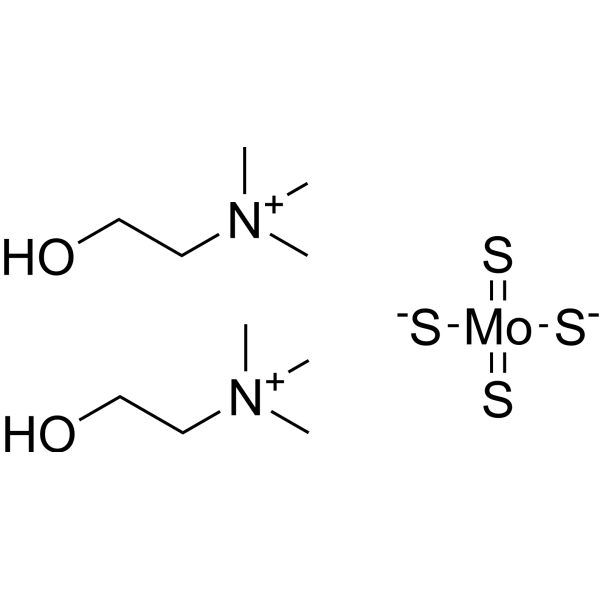
ATN-224 is a choline salt of tetrathiomolybdate and an inhibitor of superoxide dismutase 1 (SOD1; IC50s = 2.91 and 3.51 µM in human and mouse blood cells, respectively, in vitro).
More description
|
|
| DC68008 | Tris-GalNAc-β-Ala-PEG3-FITC Featured |
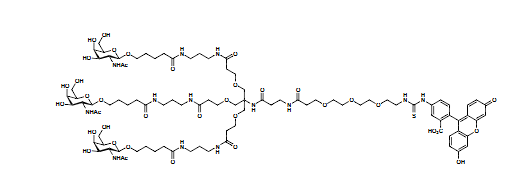
The trivalent β-GalNAc ligand is specific for Asialo Glycoprotein Receptors (ASGPR) on hepatocyte cells. β-Ala-PEG3 acts as linker/spacer between triantennary GalNAc and Fluorescein isothiocyanate (FITC).
More description
|
|
| DC68006 | Tri-GalNAc-PEG2000-DSPE Featured |
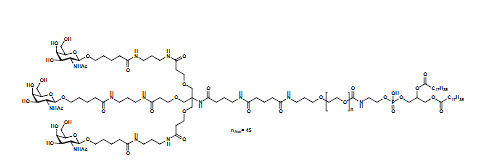
Tris-GalNAc-GABA-NH2 linked via PEG2k to phospholipid (DSPE or 1,2-distearoyl-sn-glycero-3-phosphoethanolamine) where GABA = gamma-Aminobutyric acid, or γ-aminobutyric acid.
More description
|
|
| DC68001 | Tris-β-GalNAc-PEG3-Azide Featured |
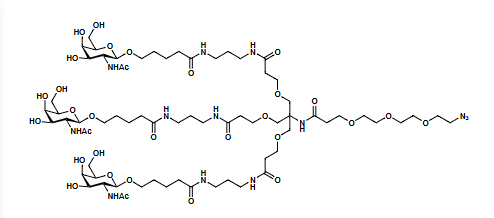
Trivalent β-GalNAc Ligand with discrete, monodisperse, azido-functionalized PEG3 linker/spacer
More description
|
|
| DC67999 | Tris-GalNAc-Ahx-NH2 Featured |
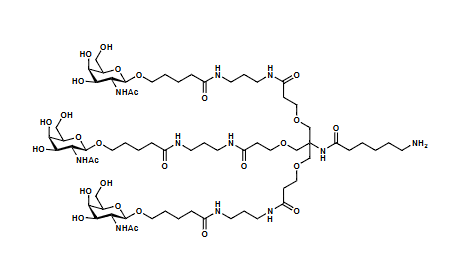
|
|
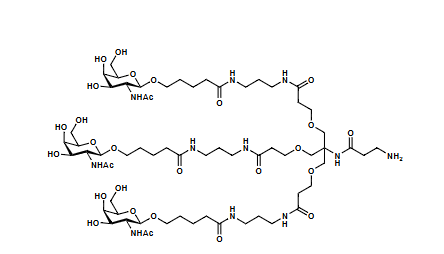
| DC67998 | Tris-GalNAc-β-Ala-NH2 Featured |
Tris-GalNAc ligands bind to Ashwell-Morell (also Asialoglycoprotein receptor or ASGPR) receptors and are validated ligands in medicinal chemistry for liver-specific drug delivery.
More description
|
|
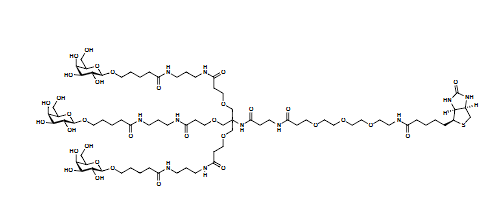
| DC67997 | Triantennary GalNAc-β-Alanine-PEG3-Biotin Featured |
The trivalent β-GalNAc Ligand is specific for Asialo Glycoprotein Receptors on hepatocyte cells. β-Alanine-PEG3 acts as linker/spacer between multivalent GalNAc and biotin.
More description
|
|
| DC67530 | HY-501 Featured |
HY-501 is a next-generation cationically ionizable lipid engineered for high-efficiency RNA delivery developed by Biontech. Formulated at 40–50 mol% in lipid nanoparticles (LNPs) alongside DSPC, cholesterol, and polysarcosine-conjugated lipid C14pSar23, HY-501 yields uniform, stable particles (80–100 nm) with >90% RNA encapsulation. It demonstrates superior in vivo performance: driving 2-fold higher protein expression than benchmark lipids (EA-405/HY-405) in muscle tissue, minimizing off-target liver accumulation, and reducing immunogenic risks (near-zero complement activation and <5% hemolysis). Preclinically, HY-501-based LNPs encoding SARS-CoV-2 spike protein elicit potent neutralizing antibodies and T-cell responses, underscoring its utility in precision vaccines. Its combination of scalable synthesis, exceptional transfection efficiency, and biosafety establishes HY-501 as a transformative vector for therapeutic RNA delivery.
More description
|

|
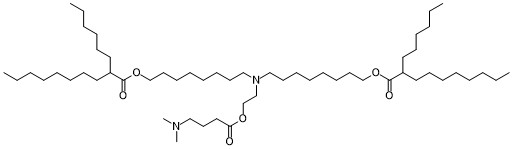
| DC82125 | lipid 14 Featured |
LIPID 14 is a novel ionizable lipid used for mRNA delivery.In 2021, Elia et al. used lipid 2 LNPs and lipid 14 LNPs to deliver mRNA encoding SARSCoV-2 human Fc-conjugated receptor binding domain (RBDhFc
mRNA). While both lipid 274 LNP RBD-hFc mRNA and
lipid 14 LNP RBD-hFc mRNA induced equal cellular and
humoral responses in mice at an mRNA dose of 5 μg, only lipid
14 LNP RBD-hFc mRNA exhibited strong immunogenicity
following intradermal administration. Both intradermal administration
and intramuscular administration of lipid 14 LNPs
could activate antigen presenting cells (APCs), thus inducing
cellular responses.
More description
|
|
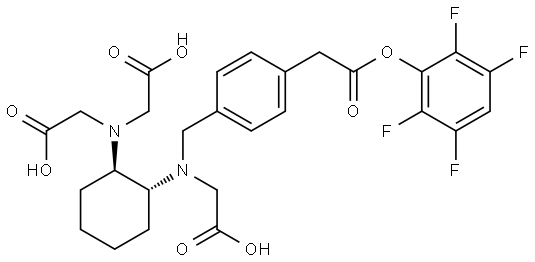
| DC46326 | (±)-H3RESCA-TFP Featured |
(±)-H3RESCA-TFP ((±)-H3L28) is a tetrafluorophenyl ester derivative of restrained complexing agent (RESCA). (±)-H3RESCA-TFP can be used to conjugate the chelator with a biomolecule via amine coupling (e.g., N terminus and/or the ε-amino groups of lysine).
More description
|
|
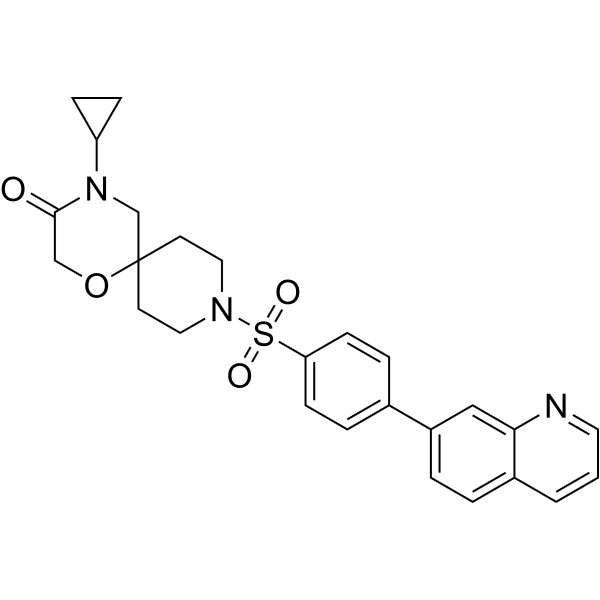
| DC22759 | FAS-IN-1 Featured |
FAS-IN-1 is a potent inhibitor of fatty acid synthase (FAS) wtih IC50 of 10 nM..
More description
|
|
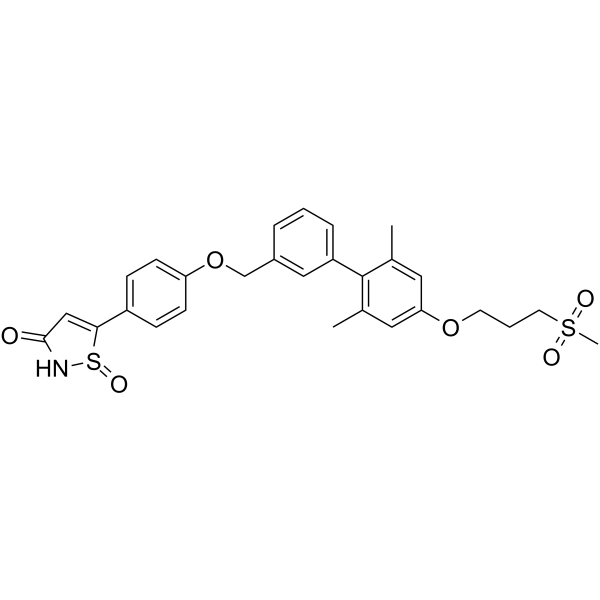
| DC60923 | GPR40 Activator 2 Featured |
GPR40 Activator 2 is a potent GPR40 activator from patents WO 2012147516 A1, WO 2012046869A1 and WO 2011078371 A1.
More description
|
|
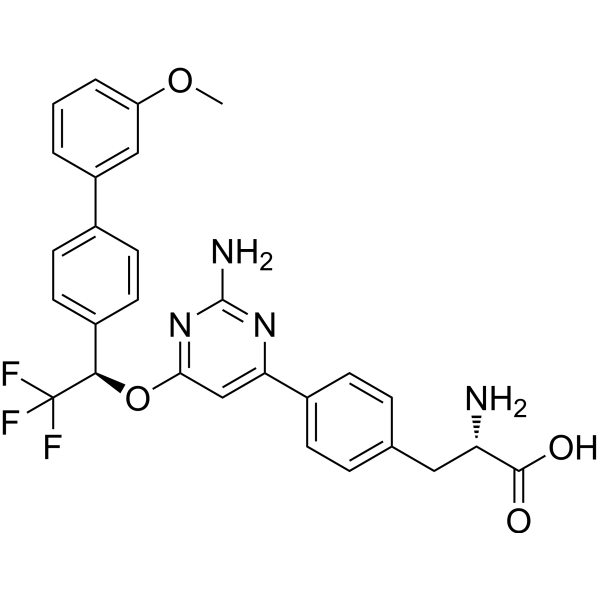
| DC23133 | LX-1031 Featured |
LX-1031 is a potent, orally active tryptophan 5-hydroxylase (TPH) inhibitor with potency of 10-100 nM, reduces 5-HT synthesis peripherally.
More description
|
|
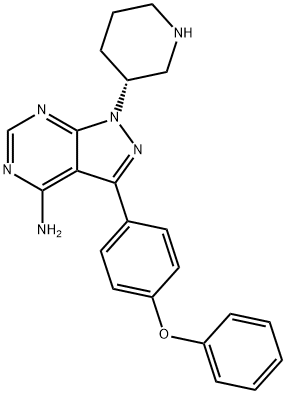
| DC42421 | IBT6A Featured |
IBT6A is an impurity of Ibrutinib. IBT6A can be used in synthesis of IBT6A Ibrutinib dimer and IBT6A adduct. Ibrutinib is a selective, irreversible Btk with an IC50 of 0.5 nM.
More description
|
|
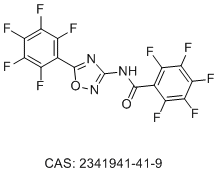
| DC74105 | NV914 Featured |
NV914 is a small molecule inhibitor of tRNA-specific 2′-O-methyltransferase (FTSJ1), exerts readthrough activity in vitro and in vivo.
More description
|
|
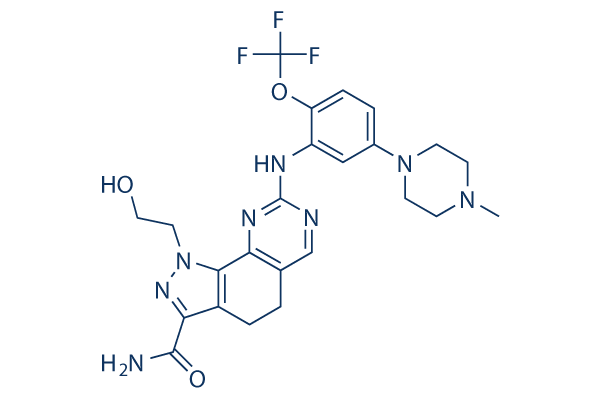
| DC8445 | Onvansertib (NMS-P937) Featured |
NMS-P937 (NMS1286937) is an orally available, selective Polo-like Kinase 1 (PLK1) inhibitor with IC50 of 2 nM, 5000-fold selectivity over PLK2/PLK3. Phase 1.
More description
|
|
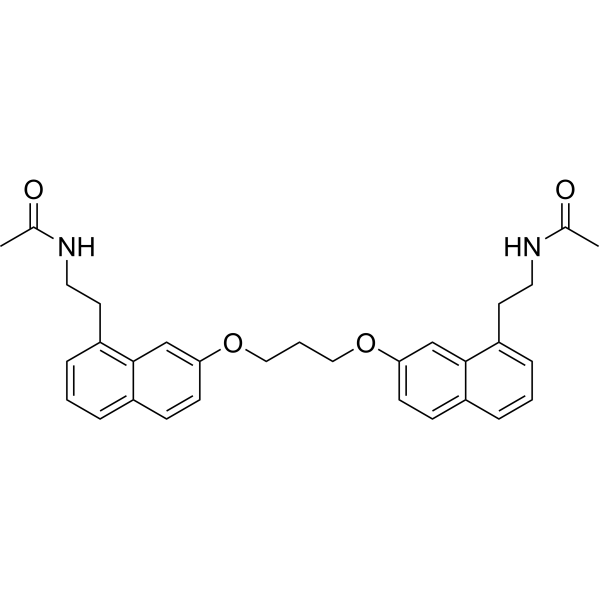
| DC28432 | S26131 Featured |
S26131 (compound 5) is a potent and selective MT1 melatoninergic ligand, and the Ki values are 0.5 and 112 nM for MT1 and MT2, respectively. S26131 behaves as an MT1 and MT2 antagonist.
More description
|
|
| DC60900 | ALC-0159 (di-C18) Featured |
ALC-0159 (di-C18) is an analog of ALC-0159, in which the original C14 chain is replaced with C18 chain. C18-ALC-0159 demonstrates high stability in vivo, effectively prevents binding with proteins such as ApoE, and achieves a prolonged blood circulation time. It also reduces liver targeting and accumulation.
More description
|

|
| DC70312 | CLC-2-IN AK42 Featured |
CLC-2-IN-AK42 (CLC-2 inhibitor AK42, AK42) is a potent, specific small-molecule inhibitor of voltage-gated chloride channel CLC-2 with IC50 of 17 nM (human CLC-2).AK42 displays unprecedented selectivity (>1,000-fold) over CLC-1, the closest CLC-2 homolog, and no off-target engagement a diverse panel of 61 CNS receptors, channels, and transporters expressed in brain tissue.AK-42 binds to an extracellular vestibule above the channel pore. AK-42 is almost three orders-of-magnitude more potent than MCFA, demonstrates high potency (IC50=14 nM for rat CLC-2) in manual patch-clamp experiments on CHO cells transiently transfected with rat CLC-2.AK-42 inhibits hyperpolarization-activated current in hippocampal cells, attenuates steady-state currents and eliminated relaxation currents in recorded neurons.AK-42 is a powerful tool for investigating CLC-2 neurophysiology.
More description
|

|
| DC67584 | BMS-986463 Featured |
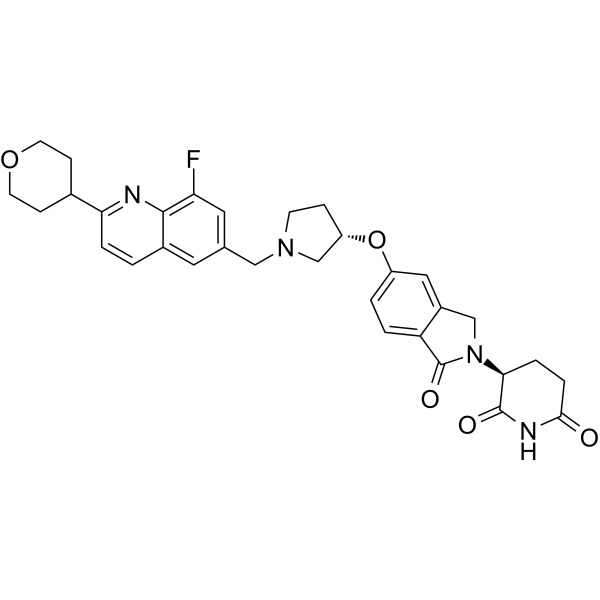
BMS-986463 is a novel, first-in-class targeted protein degrader designed to specifically eliminate WEE1 kinase, a master regulator of cell cycle progression.
More description
|
|
