 To enhance service speed and avoid tariff delays, we've opened a US warehouse. All US orders ship directly from our US facility.
| Cat. No. | Product Name | Field of Application | Chemical Structure |
|---|---|---|---|
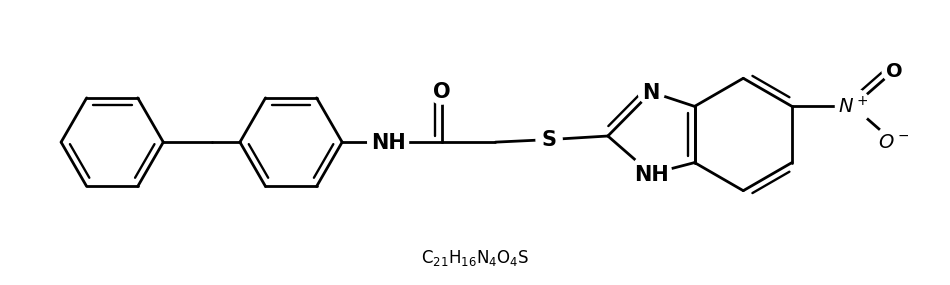
| DCC4235 | Pqsr Antagonist M64 Featured |
Quorum sensing modulator as a PqsR antagonist
More description
|
|
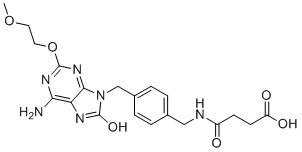
| DC73565 | SZU-101 Featured |
SZU101 is a small molecule TLR7 agonist that directly activates, induces reporter activity (23-fold) in a TLR7-NF-kB reporter system expressed in HEK-293 cells TLR7 signalling.
More description
|
|
| DC73770 | TPN171 Featured |
TPN171 (TPN-171) is a highly potent, selective phosphodiesterase type 5 (PDE5) inhibitor with IC50 of 0.62 nM, 32-fold selectivity over PDE6.
More description
|

|
| DC20019 | Flagelin 22(TFA) |
Flagelin 22 TFA, a fragment of bacterial flagellin, is an effective elicitor in both plants and algae.
More description
|
.gif)
|
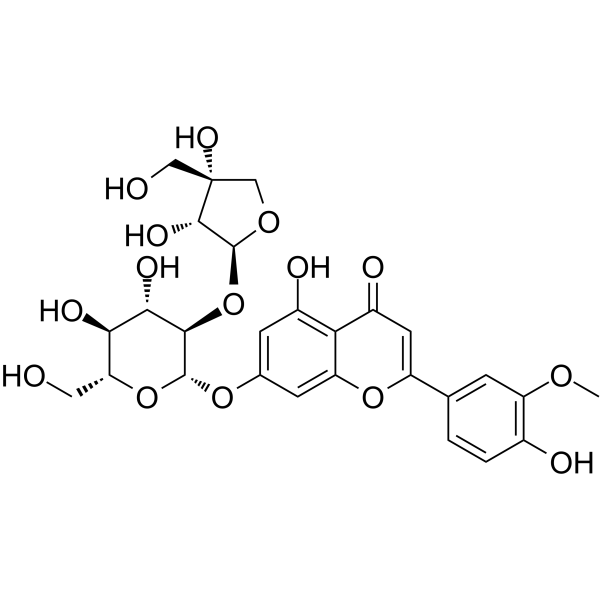
| DC45440 | 3'-Methoxyapiin |
3'-Methoxyapiin (Graveobioside B) is a flavone. 3'-Methoxyapiin can be found in Uraria crinite and celery.
More description
|
|
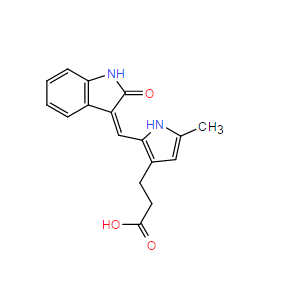
| DC9794 | SU-10994 |
SU-10994 is a novel VEGFR inhibitor.
More description
|
|
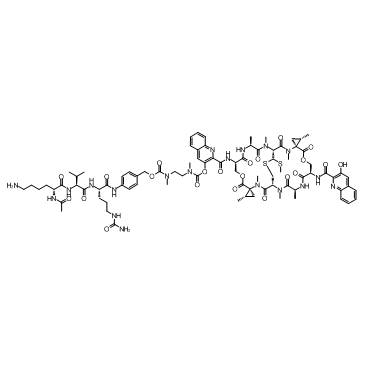
| DC20117 | SW-163D-AcLysValCit-PABC-DMAE |
SW-163D-AcLysValCit-PABC-DMAE is a Drug-Linker Conjugates for ADC which consists of a natural bis-intercalator, SW-163D, conjugated via an AcLysValCitPABC-DMAE linker.
More description
|
|
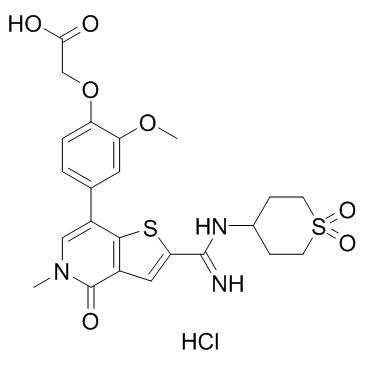
| DC20095 | Target Protein-binding moiety 6 hydrochloride |
Target Protein-binding moiety 6 hydrochloride is a compound that binds to BRD9, and used for inhibiting BRD9 activity, based on PROTAC.
More description
|
|
| DC12115 | Adrenomedullin (AM) (1-52), human TFA (Human adrenomedullin-(1-52)-NH2 (TFA)) |
Adrenomedullin (AM) (1-52), human (TFA) affects cell proliferation and angiogenesis in cancer.
More description
|

|
| DC12290 | Befiradol hydrochloride (F 13640 hydrochloride) |
Befiradol hydrochloride is a selective 5-HT1A receptor agonist.
More description
|

|
| DC12092 | E3 Ligase Ligand-Linker Conjugates 23 TFA |
E3 Ligase Ligand-Linker Conjugates 23 (TFA) is a synthesized compound that incorporates an E3 ligase ligand and a linker used in PROTAC technology.
More description
|

|
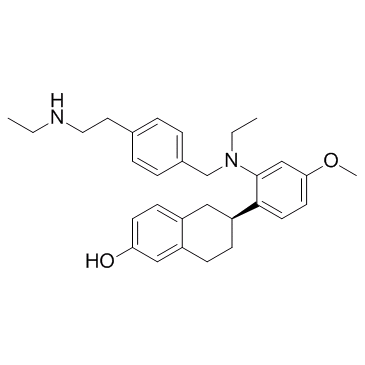
| DC10208 | Elacestrant S enantiomer |
Elacestrant S enantiomer is an low activity enantiomer of elacestrant. Elacestrant (RAD1901) is a selective and orally available estrogen receptor (ERR) degrader with IC50 values of 48 and 870 nM for ERα and ERβ, respectively.
More description
|
|
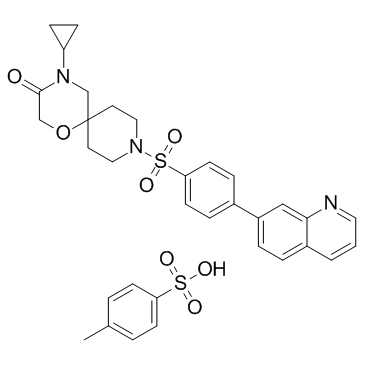
| DC10403 | FAS-IN-1 Tosylate |
FAS-IN-1 tosylate is a potent inhibitor of fatty acid synthase (FAS) extracted from patent WO 2012064642 A1, compound 29; has an IC50 of 10 nM.
More description
|
|
| DC42639 | 5-(3'-Benzyl-5-(4-methoxyphenyl)-1-methyl-1H,3'H,3''H-[2,4':2',4''-terimidazol]-3''-yl)-N-methylpentan-1-amine |
Novel potent inhibitor of Proprotein convertase subtilisin/kexin 9 (PCSK9), targeting the PCSK9/LDLR protein-protein interaction
More description
|
|
| DC60144 | MCULE-3408819416 Featured |
MCULE-3408819416|DC Chemicals
More description
|

|
| DC41887 | Cortagine Featured |
Cortagine is a specific corticotropin-releasing factor receptor subtype 1 (CRF1) agonist with an IC50 of 2.6 nM for rCRF1. Cortagine is an anxiolytic and antidepressive drug in the mouse model.
More description
|
|
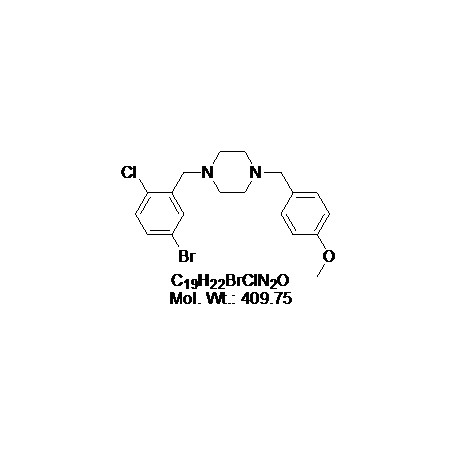
| DC60135 | Sortin-3 Featured |
Sortin3 is a sorting inhibitor, blocking Vps16 function, one protein in the class C tethering complex, and increasing aflatoxin synthesis and export.
More description
|
|
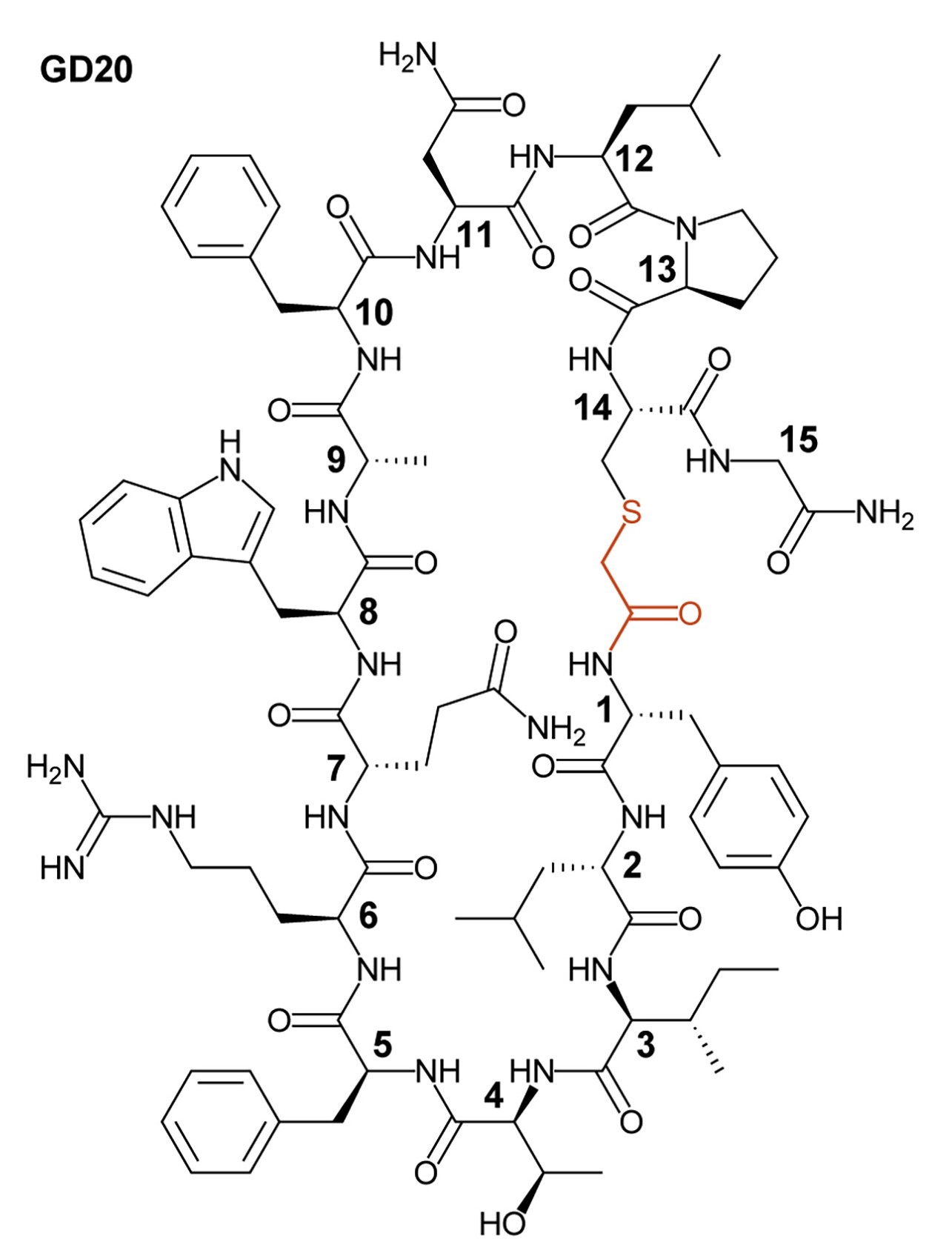
| DC60285 | GD20 Featured |
GD20 is a cell-permeable, nucleotide-inactive-state-selective inhibitor of Gαs, with high selectivity over other G protein subfamilies. GD20 inhibits Gαs steady-state GTPase activity with IC50 of 1.15 μM.
More description
|
|
| DC60288 | (R)-70 Featured |
(R)-70 is a 5-HT2AR partial agonists with EC50 of 110 nM, and shows 6.4-fold/51-fold selectivity over 5HT2BR/5HT2CR. (R)-70 has substantial brain permeability in mouse pharmacokinetic studies and dose not possess locomotor-stimulating or reinforcing activity.
More description
|
-70.png)
|
| DC60286 | (R)-69 Featured |
(R)-69 is a 5-HT2AR partial agonists with EC50 of 41 nM, and shows 4.6-fold/29-fold selectivity over 5HT2BR/5HT2CR. (R)-69 has substantial brain permeability in mouse pharmacokinetic studies and dose not possess locomotor-stimulating or reinforcing activity.
More description
|
-69.jpg)
|
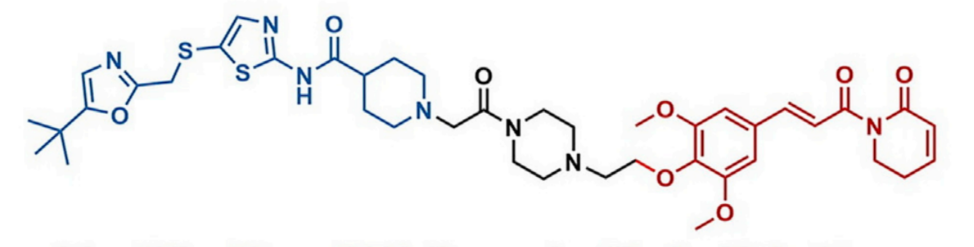
| DC60351 | PL-SNS-032 Featured |
PL-SNS-032 conjugate 955 can potently degrade CDK9 in a ubiquitin-proteasome-dependent manner and is much more potent than SNS-032 against various tumor cells in vitro.
More description
|
|
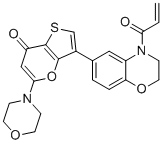
| DC70801 | SRX3305 Featured |
SRX 3305 is a potent, triple BTK/PI3K/BRD4 inhibitor with IC50 of 6.5 nM, 15 nM, and 4 nM toward BTK, PI3Kɑ and PI3Kδ respectively, inhibits BRD4 BD1 and BD2 with IC50 of 77 and 95 nM.SRX3305 showed enhanced binding to the drug-resistant C481S mutant of BTK compared to SRX-3262 (IC50=9 uM and 25 uM, respectively).SRX3305 displayed cytotoxicity aginst MCL cell lines JeKo-1, Mino, Granta with IC50 of 58 nM, 1 nM, 1.1 uM, respectively.SRX3305 inhibited cell vbiability of JeKo-1 BTK C481S and Mino BTK C481S mutant cell lines with IC50 of 1 uM and 47 nM, respectively, with minimally toxic to healthy donor PBMCs.SRX3305 showed improved efficacy in MCL and Ibrutinib-resistant MCL cells, SRX3305 impacted gene expression, perturbs the cell cycle and promotes apoptosis in MCL.
More description
|
|
| DC70709 | PRL-295 Featured |
PRL295 is a small molecule Keap1-Nrf2 protein–protein interaction inhibitor.PRL295 binds to Keap1 in the cellular environment, disrupting its interaction with Nrf2, which leads to enhanced gene expression of the classical Nrf2 target NQO1 in cells and in vivo in the mouse liver.PRL-295 increases the thermostability of Keap1 in cell lysates and in live cells.PRL 295 decreased the levels of plasma alanine aminotransferase and aspartate aminotransferase upon acetaminophen-induced hepatic injury.
More description
|

|
| DC70865 | UHRF1 PHD inhibitor MLD4 Featured |
UHRF1 PHD inhibitor MLD4 is a specific compound that selectively inhibits the UHRF1-histone interaction (IC50=12.4 uM), targets the PHD finger of UHRF1, specifically disrupting histone H3 arginine 2 interactions with the PHD finger.UHRF1 PHD inhibitor MLD4 inhibited binding between H3K9me3(FAM) and UHRF1 with IC50 of 24-26 uM, displace UHRF1-histone H3 binding in cells.
More description
|

|
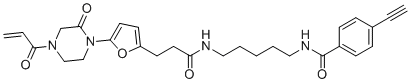
| DC70653 | NJH-2-075 Featured |
NJH-2-075 is an alkyne-functionalized probe of EN523, retains binding to OTUB1 in vitro.
More description
|
|
| DC70866 | UHRF1 PHD inhibitor MLD5 |
UHRF1 PHD inhibitor MLD5 is a specific compound that selectively inhibits the UHRF1-histone interaction (IC50=7.4 uM), targets the PHD finger of UHRF1, specifically disrupting histone H3 arginine 2 interactions with the PHD finger.UHRF1 PHD inhibitor MLD5 inhibited binding between H3K9me3(FAM) and UHRF1 with IC50 of 24-26 uM, displace UHRF1-histone H3 binding in cells.
More description
|

|
| DC70634 | N8279 Featured |
N8279 (NCATS-SM8864) is a selective, brain-penetrant small molecule Gαq-biased GHSR1a agonist with binding IC50 of 1.3 uM.N8279 is nearly an order of magnitude (8.9-fold) more potent than the endogenous ligand ghrelin and is a full agonist.iCa2+ EC50 of N8279 is 41-fold more potent than its GHSR1a binding IC50, suggesting possible allosteric activity, which could be competitively inhibited by GHSR1a antagonists YIL781 and JMV2959.N8279 is a weak activator of GHSR1a-mediated, βarr2-dependent cellular responses relative to ghrelin.N8279 requires receptor sites and/or conformational states driven by the GHSR1a ECD that are distinct from ghrelin.N8279 is brain-penetrant and attenuates aberrant DAergic behavior in mice.
More description
|

|
| DC70788 | SMN2 splicing modulator TEC-1 Featured |
SMN2 splicing modulator TEC-1 is a novel specific, CNS penetrant small molecule SMN2 splicing modulator, increases the expression level of FL-SMN2 mRNA and decreases the expression level of Δ7 mRNA.TEC-1 showed higher selectively (>60-fold) on galactosylceramidase and huntingtin gene expression compared to previously reported compounds (e.g., SMN-C3) due to off-target effects on cryptic exon inclusion and nonsense-mediated mRNA decay.TEC-1 modulates SMN2 splicing and displays disease-modifying effects in motor neurons derived from SMA patient iPSCs (GM24468).|TEC-1 rescues the phenotype in a murine model of spinal muscular atrophy (SMA).
More description
|

|
| DC70373 | DX314 Featured |
DX314 is a potent, specific CYP26B1 inhibitor with IC50 of 108 nM, >15-fold selectivity over CYP26A1.DX314 potentiates all-trans-RA (atRA) gene expression effects in healthy and diseased reconstructed human epidermis (RHE).DX314 potentiates the effects of atRA on the expression and localization of keratin 10 (KRT10), protects barrier function in RHE.DX314 reduces comedonal number, induces epidermal thickening, and increases comedonal profile, while having no effect on transepidermal water loss (TEWL) in treated rhino mice.
More description
|

|
| DC70372 | DX308 Featured |
DX-308 is a potent, selective dual CYP26A1/B1 inhibitor and retinoic acid metabolism blocking agent.DX308 does not interact with off‐target nuclear receptors or CYP450s, is not genotoxic, and is stable in skin, despite vigorous hepatic metabolism.Topical DX308 induces comedolysis and epidermal thickening without apparent adverse effects in vivo.DX308 shows potent modulation of retinoid‐responsive genes by DX308 in both healthy and keratinization disorder keratinocytes (KCs).DX 308 may present an improved therapeutic alternative for the treatment of keratinization disorders and other retinoid‐responsive skin ailments.
More description
|

|
