 To enhance service speed and avoid tariff delays, we've opened a US warehouse. All US orders ship directly from our US facility.
| Cat. No. | Product Name | Field of Application | Chemical Structure |
|---|---|---|---|
| DC70246 | BFL-1 inhibitor 4E14 Featured |
BFL-1 inhibitor 4E14 (4E14) is a potent, selective, covalent BFL-1 inhibitor that disrupt BH3-binding activity with IC50 of 1.3 uM, targets a unique C55 residue in the BFL-1 groove.4E14 blocks BFL-1 suppression of BAX-mediated mitochondrial apoptosis.
More description
|

|
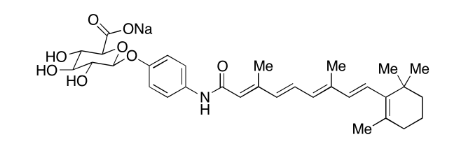
| DC65676 | Fenretinide Glucuronide Monosodium Salt Featured |
Fenretinide Glucuronide Monosodium Salt, is the metabolite of Fenretinide (F250000), which is a synthetic retinoid deriverative, substances related to vitamin A. They are also shown to be used for the treatment of cancer, as well as in the treatment of cystic fibrosis, rheumatoid arthritis, acne, and psoriasis.
More description
|
|
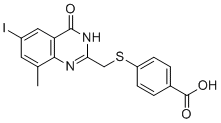
| DC70175 | AEP07 Featured |
AEP07 (AEP 07) is a selective small molecule inhibitor of PARP4 (vPARP) inhibitor with IC50 of 0.8 uM, >12-fold selective over other PARP family members.
More description
|
|
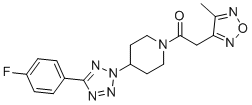
| DC70750 | Rv1625c agonist V-59 Featured |
Rv1625c agonist V-59 (V-59) is a specific small molecule agonist of the Mtb adenylyl cyclase Rv1625c, inhibits Mtb growth in macrophages (EC50=0.3 uM) in an Rv1625c-dependent mechanism.V-59 inhibits Mtb growth in cholesterol media (EC50 0.70 uM), but not in media containing the two-carbon fatty acid acetate, or in standard rich growth media.V-59 stimulates Rv1625c to produce cAMP, which is necessary for V-59 to inhibit Mtb growth.Chemically activating Rv1625c via V-59 preferentially inhibits cholesterol utilization in WT Mtb, rather than equally inhibiting all lipid utilization by the bacterium.
More description
|
|
| DC70417 | Foldamer 33 Featured |
Foldamer 33 is a small molecule HSP110 inhibitor, directly binds to the nucleotide-binding domain (NBD) of HSP110, blocks HSP110 chaperone function and colorectal cancer growth.Foldamer 33 significantly inhibit HSP110 anti-aggregating activity with IC50 of 87.8 uM.Foldamer 33 disrupts HSP110-STAT3 interaction with IC50 of 35.9 uM in competitive BLI assays.Foldamer 33 inhibits SW480 colorectal cancer cell proliferation, and (5 mg/kg) Foldamer 33 displays an anti-tumor effect (TGI of 40% and 60%) in mice bearing a colorectal cancer.
More description
|

|
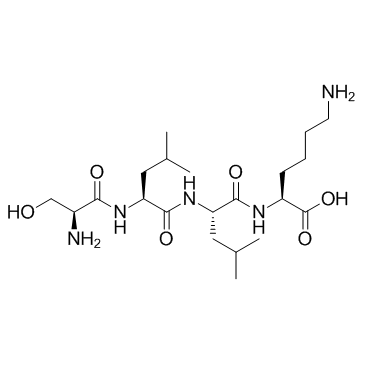
| DC12314 | SLLK, Control Peptide for TSP1 Inhibitor(TFA) Featured |
SLLK, Control Peptide for TSP1 Inhibitor (TFA) is a control peptide for LSKL, which is a Thrombospondin (TSP-1) inhibitor.
More description
|
|
| DC20288 | (-)-CXL017 Featured |
(-)-CXL017 is a small molecule that has selective cytotoxicity toward MDR cancer cell lines in vitro, through inhibition of the sarco/endoplasmic reticulum Ca(2+)-ATPase (SERCA) with IC50 of 13.5 uM.
More description
|

|
| DC28215 | A40926 Featured |
A40926, the precursor of Dalbavancin, is a second-generation glycopeptide antibiotic. A40926 inhibits gram-positive bacteria, and is very active against Neisseria gonorrhoeae.
More description
|
.gif)
|
| DC65521 | PTC-258 Featured |
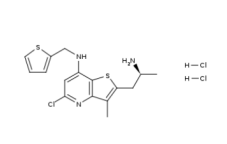
PTC-258 2HCl is a specific and orally active splicing modulator of Elongator complex protein 1 gene (ELP1). PTC258 increases the expression of ELP1 in vitro and in vivo. PTC258 is well tolerated in mouse model.
More description
|
|
| DC57050 | DZD9008 Featured |
DZD9008 is an oral, potent, irreversible, wild type-selective EGFR TKI against EGFR or HER2 Exon20ins and other mutations.
More description
|

|
| DC11516 | Balovaptan Featured |
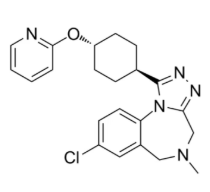
Balovaptan (RG7314, RG-7314) is a potent, selective vasopressin-1 receptor antagonist..
More description
|
|
| DC46361 | NP213 Featured |
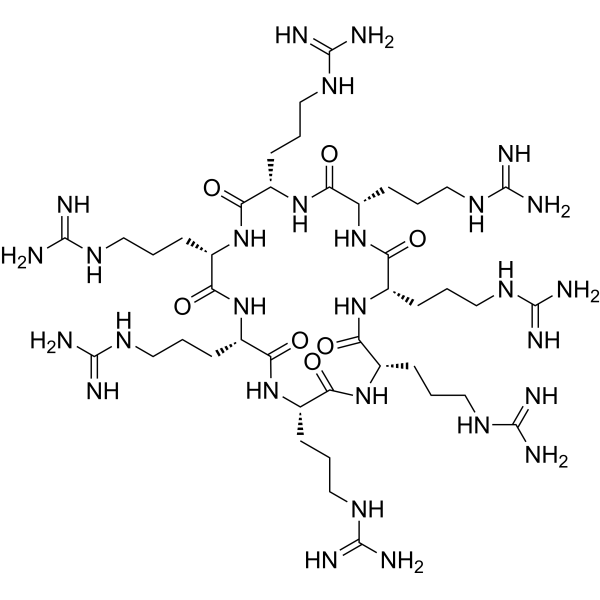
NP213 is a rapidly acting, novel, first-in-class synthetic antimicrobial peptide (AMP), has anti-fungal activities. NP213 targets the fungal cytoplasmic membrane and plays it role via membrane perturbation and disruption. NP213 is effective and well-tolerated in resolving nail fungal infections.
More description
|
|
| DC11200 | NGI-1 derivative C-19 Featured |
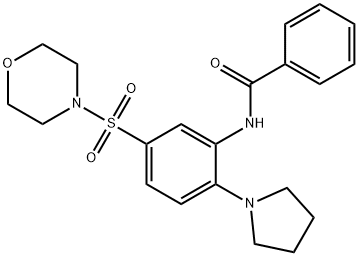
NGI-1 derivative C-19 is a specific, small-molecule inhibitor of oligosaccharyltransferase (OST) catalytic subunit STT3B, without effect on STT3A.
More description
|
|
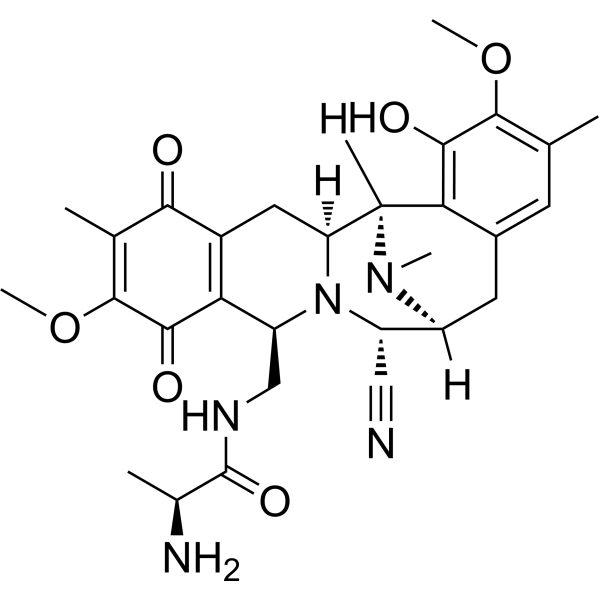
| DC49089 | Cyanosafracin B Featured |
Cyanosafracin B is a starting material for synthesis of Ecteinascidin ET-743 and Phthalascidin Pt-650.
More description
|
|
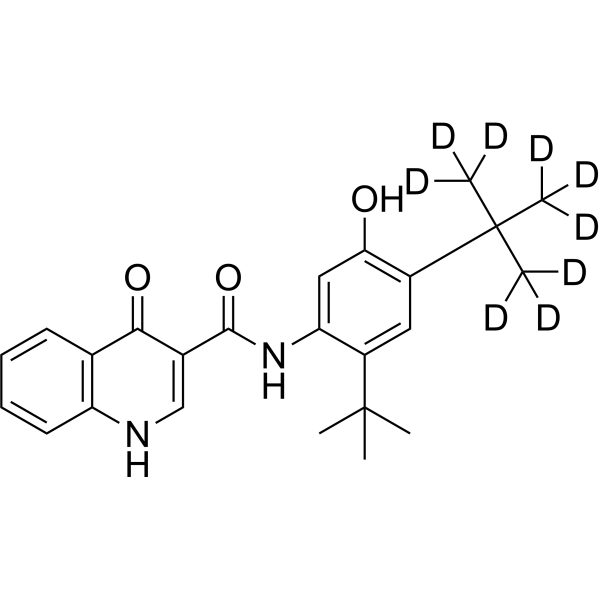
| DC42510 | Ivacaftor-D9 Featured |
Ivacaftor-D9 (CTP-656) is a potent CFTR modulator and exhibits an EC50 value of 255 nM for CFTR potentiation in G551D/F508del HBE Cells. Ivacaftor-D9 acts as an orally active and improved deuterated Ivacaftor analog for cystic fibrosis research.
More description
|
|
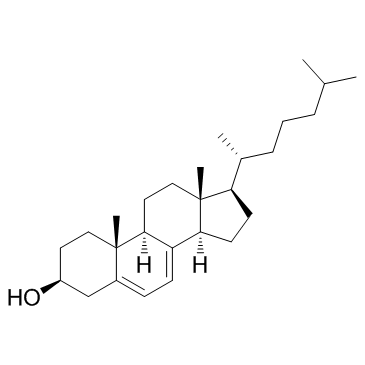
| DC12215 | 7-Dehydro Cholesterol Featured |
7-Dehydrocholesterol is biosynthetic precursor of cholesterol and vitamin D3.
More description
|
|
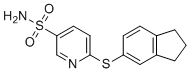
| DC22958 | RU-GIRK-1 Featured |
A potent GIRK2 inhibitor that inhibits GIRK2-mediated flux with an IC50 of 0.35 uM.
More description
|
|
| DC70346 | DC-TEAD3in03 Featured |
DC-TEAD3in03 is a potent, selective, covalent TEAD3 inhibitor with IC50 of 0.16 uM, 100-fold selectivity over other TEAD isoforms (IC50>20 uM) in ABPP assays.DC-TEAD3in03 could significantly improve the thermal stability of TEAD3 protein, while it had minimal effect on widetype TEAD1, TEAD1 C359S and TEAD3 C371A mutants, demonstrated selective cellular engagement with Cys371 of TEAD3.DC-TEAD3in03 showed selective inhibitory effect on TEAD3 in GAL4-TEAD (1–4) reporter assays with IC50 of 1.15 uM in cellular assays.DC-TEAD3in03 reduced the growth rate of zebrafish caudal fins when administered to zebrafish juveniles.In the Hippo signaling pathway, the transcription factor TEA domains (TEADs) family proteins (TEAD1‒4) are the most important terminal regulators, which play an important role in development, cell proliferation, cell differentiation, tissue homeostasis, and regeneration.
More description
|

|
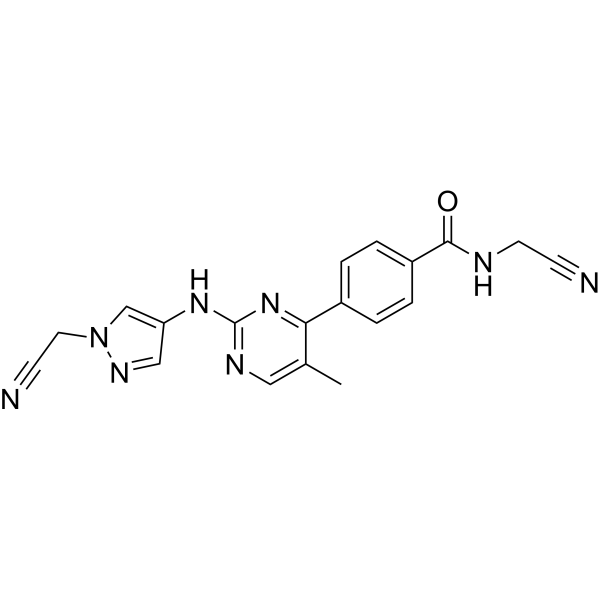
| DC74631 | LNK01003 Featured |
LNK01003(Example 4) is a selective and potent JAK inhibitor.
More description
|
|
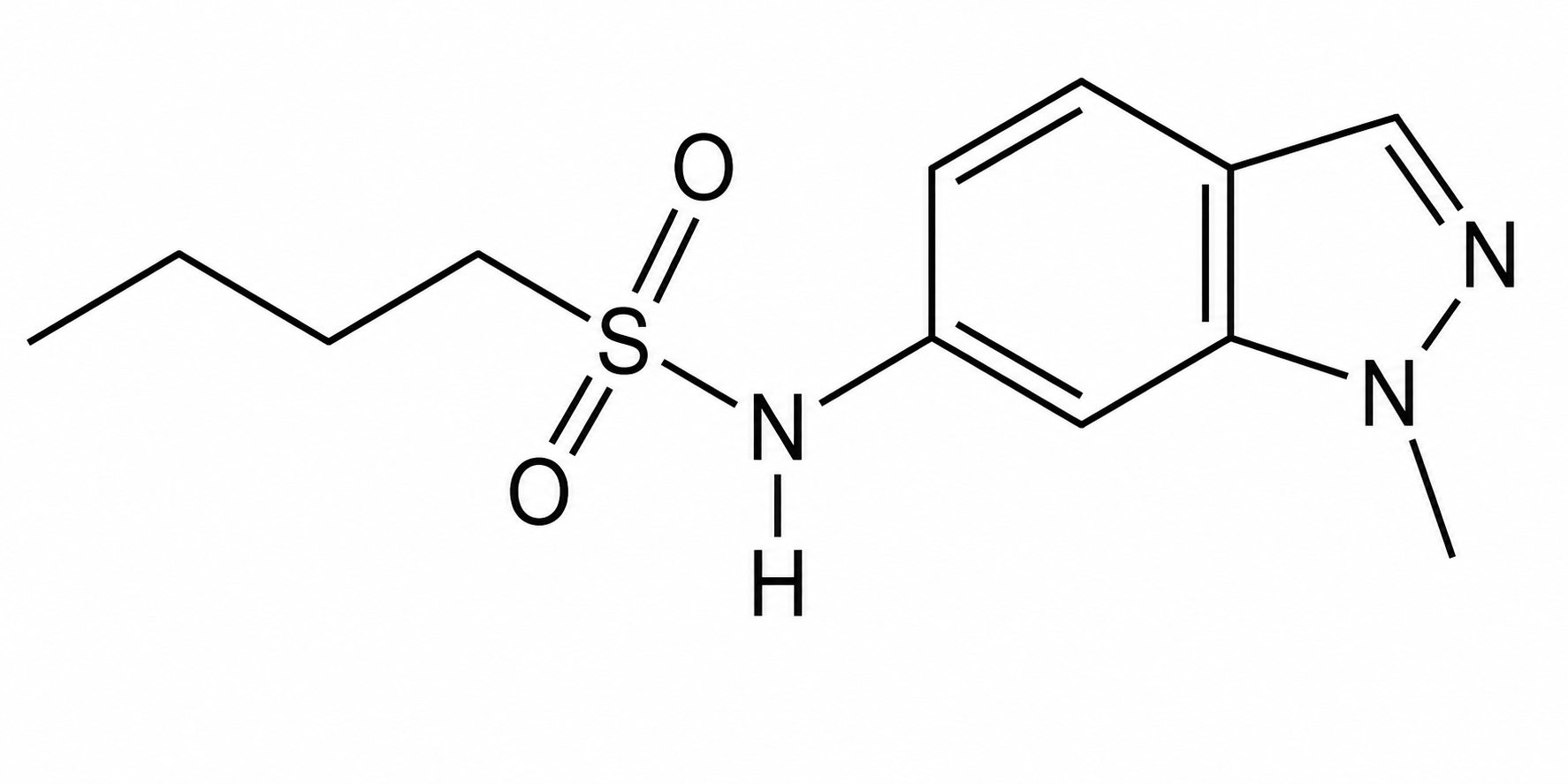
| DC70459 | GSK3011724A Featured |
GSK 3011724A (DG-167, GSK-3011724A) is a potent, specific inhibitor of β-ketoacyl-ACP synthase (KasA, Kd=9 nM), shows anti-tubercular activity (MIC H37Rv=0.8 uM); shows much weaker apparent dissociation constant for both Pks10 and Pks (Kd=1.4 uM); inhibits mycolic acid biosynthesis and shows negligible activity against a panel of unrelated proteins and 18 Gram-positive and Gram-negative bacterial species.
More description
|
|
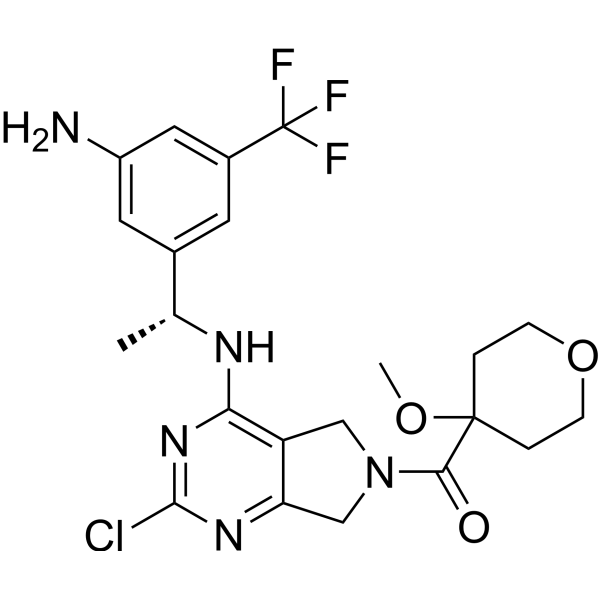
| DC60278 | RMC-0331 Featured |
RMC-0331 (RM-023) is a potent, selective and orally bioavailable SOS1 inhibitor. RMC-0331 is an in vivo tool compound that blocks RAS activation via disruption of the RAS-SOS1 interaction.
More description
|
|
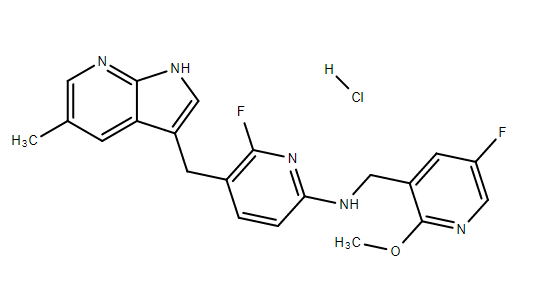
| DC90056 | PLX-5622 HCl form (water solubility form) Featured |
PLX5622 is the HCl salt form of PLX-5622, which has better water solubility.PLX-5622 is a highly selective brain-penetrant CSF1R inhibitor (IC50=0.016 µM; Ki=5.9 nM) allowing for extended and specific microglial elimination, preceding and during pathology development.
More description
|
|
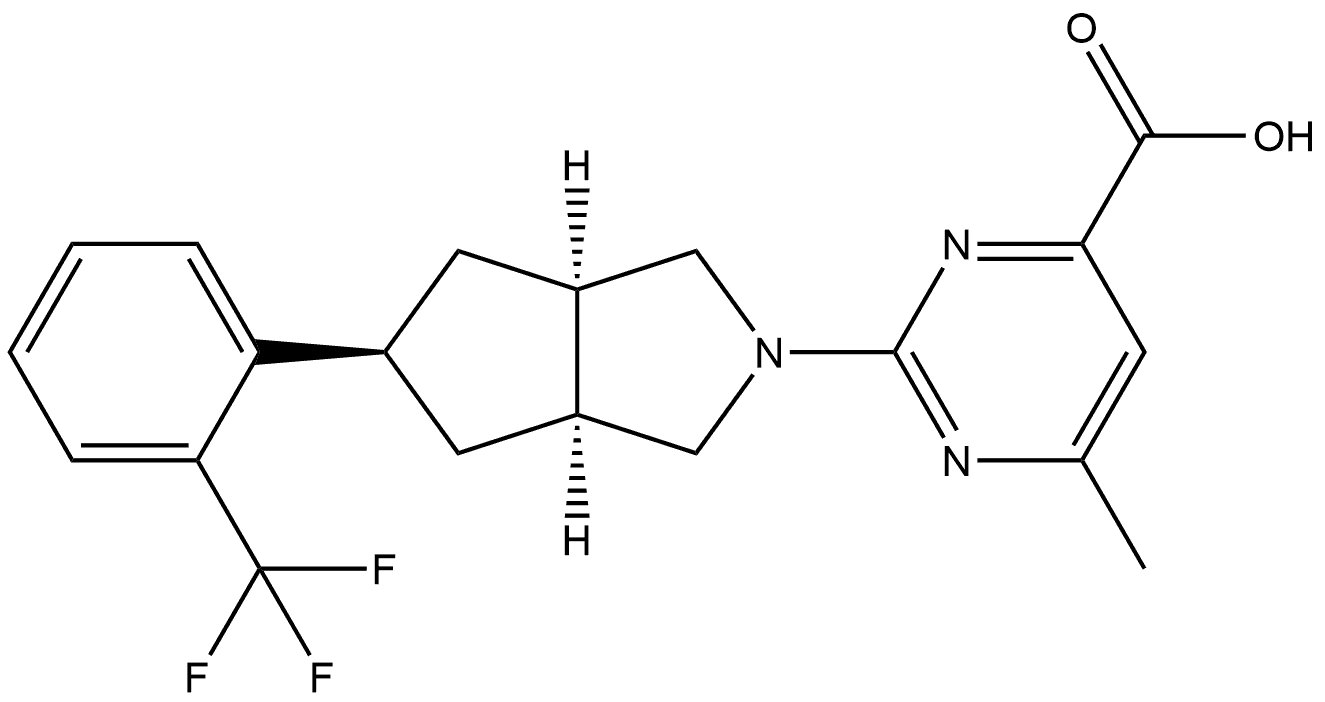
| DCC1108 | Bpn-14136 Featured |
Novel RBP4 antagonist with good in vitro potency and selectivity and optimal rodent pharmacokinetic (PK) and pharmacodynamic (PD) characteristics
More description
|
|
| DC74260 | cyclo-CRVLIR Featured |
cyclo-CRVLIR is a cyclic peptide that binds selectively to p110α RAS binding domain (p110α-RBD) with ITC Kd of 3 uM, blocks p110α/RAS interaction in vitro and KRAS cancer cell lines.
More description
|

|
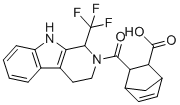
| DC74205 | Tryptolinamide Featured |
Tryptolinamide (TLAM) is a small-molecule compound that activates mitochondrial respiration in cybrids generated from patient-derived mitochondria and fibroblasts from patient-derived iPSCs, inhibits phosphofructokinase-1 (PFK1) with an ATP-uncompetitive
More description
|
|
| DC73683 | LTGO-33 Featured |
LTGO-33 is a potent, selective inhibitor of voltage-gated sodium channel NaV1.8 with IC50 of 44 nM (hNaV1.8), 600-fold selectivity against NaV1.1-NaV1.7 and NaV1.9.
More description
|

|
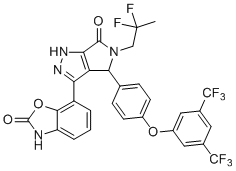
| DC73980 | DS55980254 Featured |
DS55980254 (DS 55980254) is potent, selective and orally active PTDSS1 (phosphatidylserine synthetase 1) inhibitor, suppresses phosphatidylserine (PS) production activity of PTDSS1 (IC50=100 nM) in cell-free assays, but not that of PTDSS2.
More description
|
|
| DC73617 | NV-6297 Featured |
NV-6297 (NV6297) is a potent, selective mTORC1 pathway signaling inhibitor without inhibition on mTORC2, inhibits S6K1 phosphorylation (pS6K1 T389) in MCF7 cells with IC50 of 120 nM, directly and selectively targets GLUT-1.
More description
|

|
| DC70103 | MS.001 Featured |
MS.001 is a small molecule that inhibits both the chaperone binding and ubiquitin ligase activity of C-terminus of Hsc70 interacting protein (CHIP) at low micromolar concentrations (IC50=3.3 uM).
More description
|

|
| DC73066 | NBCoV2 Featured |
NBCoV2 is a highly potent small molecule viral fusion inhibitor with potential pan-Coronavirus activity (SARS-CoV IC50=13.8 nM, SARS-CoV-2 IC50=22.8 nM, MERS-CoV IC50=77 nM, cell-based single-cycle assays).
NBCoV2 also has potent antiviral activity against all mutant pseudoviruses carrying single-, double-, or triple-mutations featured in the B.1.1.7 UK, B.1.351 RSA, and B.1.617.2 Delta variants (IC50=30-80 nM).
NBCoV2 completely preventing the induction of any virus-induced CPE (IC100=1.25 uM, SARS-CoV-2 (US_WA-1/2020)).
NBCoV2 bind to the S2 subdomain of the SARS-CoV-2 trimer, thus, inhibits the fusion of CoVs with the cell membran, and is specific for the SARS-CoV-2 S protein.
More description
|

|
