 To enhance service speed and avoid tariff delays, we've opened a US warehouse. All US orders ship directly from our US facility.
| Cat. No. | Product Name | Field of Application | Chemical Structure |
|---|---|---|---|
| DC80018 | Mindeudesivir(VV116) Featured |
VV116 is an oral drug candidate of nucleoside analog against SARS-CoV-2.
More description
|
.gif)
|
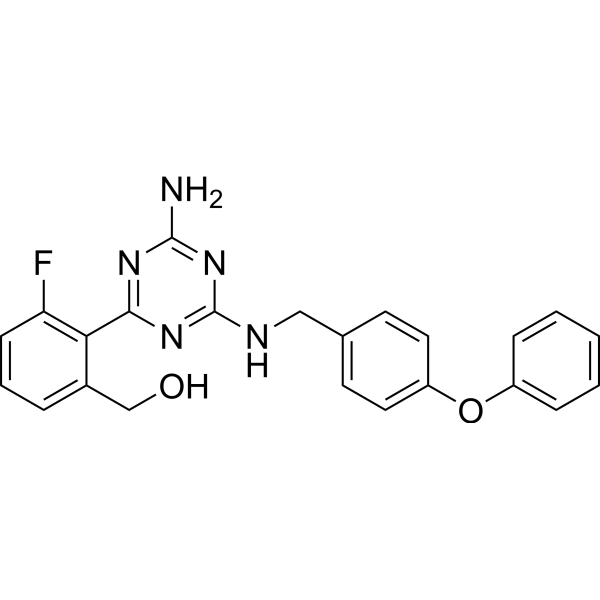
| DC80088 | MS48107 Featured |
MS48107 is a potent and selective positive allosteric modulator of G protein-coupled receptor 68 (GPR68).
More description
|
|
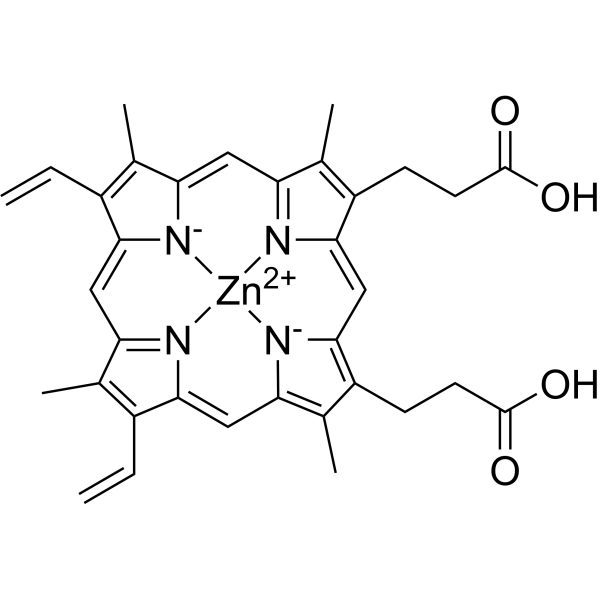
| DC80075 | Zinc protoporphyrin Featured |
Zinc Protoporphyrin (Zn(II)-protoporphyrin IX) is an orally active and competitive heme oxygenase-1 (HO-1) inhibitor and markedly attenuates the protective effects of Phloroglucinol (PG) against H2O2.
More description
|
|
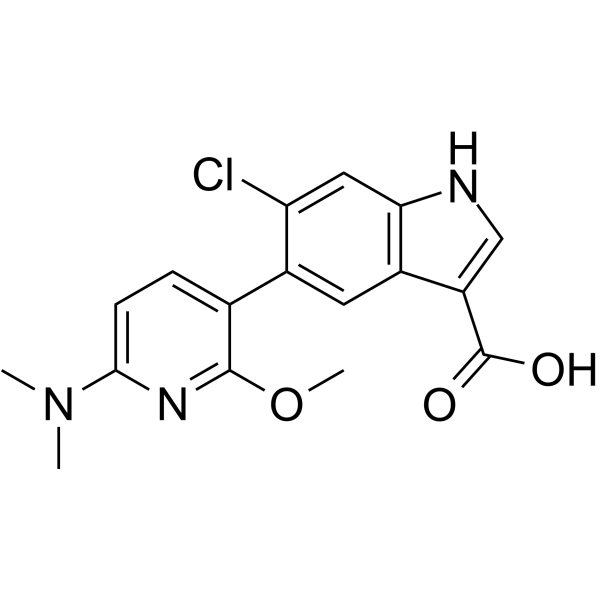
| DC80099 | PF-06685249 Featured |
PF-249 is a potent, selective AMPK β1-containing complexes activator; increases the phosphorylation of the AMPK substrate ACC at S79 with EC50 of 296 nM, potently inhibits de novo lipogenesis (IC50=15 nM) in primary rat hepatocytes.
More description
|
|
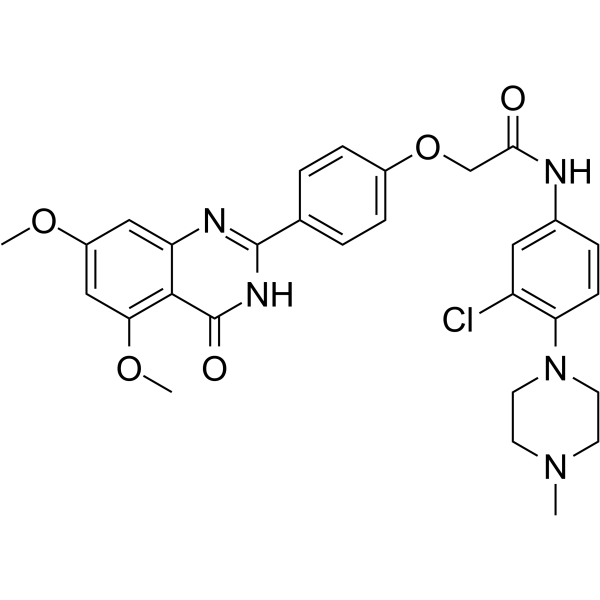
| DC80106 | BRD4/CK2-IN-1 Featured |
BRD4/CK2-IN-1 is the first highly effective and oral active dual-target inhibitor of BRD4/CK2 (bromodomain-containing protein 4/casein kinase 2), with IC50s of 180 nM and 230 nM for BRD4 and CK2, respectively.
More description
|
|
| DC80040 | MS8511 Featured |
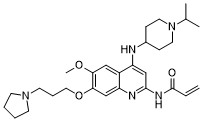
MS8511 is a highly potent, selective, and cell-active covalent inhibitor of G9a (Kd=44 nM) and GLP (Kd=46 nM). MS8511 could be a useful chemical tool for investigating the physiological and pathophysiological functions of G9a and GLP.
More description
|
|
| DC80036 | ZINC36395841(compound 25) Featured |
ZINC36395841 is a small-molecule binder of the m6A-reader
domain of YTHDC1.
More description
|
.GIF)
|
| DC80020 | TH10785 Featured |
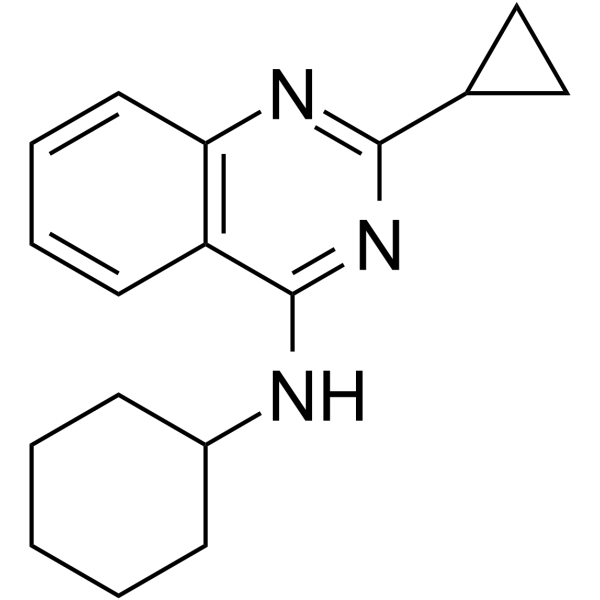
TH10785 is a small-molecule activator that binds to the active site of 8-oxo guanine DNA glycosylase 1 (OGG1) and enables the protein to completely cleave the damaged DNA strand, which results in an overall increased repair of oxidative DNA damage.
More description
|
|
| DC80060 | p-Tolyl-β-D-glucuronide Featured |
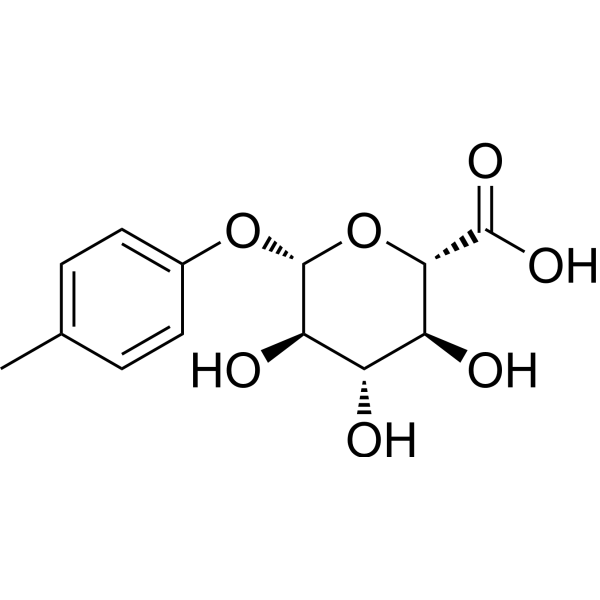
p-Tolyl-β-D-glucuronide is a chromogenic substrate for β-glucuronidase (GUS) gene detection.
More description
|
|
| DC21494 | PF-152 Featured |
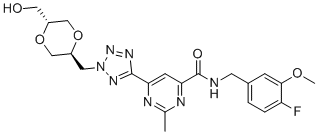
PF-152 is a potent, highly selective and orally bioavailable MMP13 inhibitor with Ki of 1.5 nM, with no activity against MMP3 (Ki>10 uM).
More description
|
|
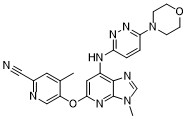
| DC74638 | GLPG3667 Featured |
GLPG3667 is an oral, reversible, and selective tyrosine kinase 2 (TYK2) inhibitor. It is being developed to treat inflammatory and auto-immune diseases. Biochemical assays showed that GLPG3667 displayed nanomolar potency on TYK2 with a selectivity over other JAK kinases >3-fold. In human PBMC, GLPG3667 showed comparable potency on the IFNα and IL-23 pathways (around 50 nM). Selectivity for TYK2 on the IFNα pathway was >14-fold and >19-fold toward the IL-2 and GM-CSF pathways in human PBMC and whole blood, respectively. Dermal ear inflammation in a mouse model of psoriasis driven by IL-23 was prevented by GLPG3667 with a minimal effective dose of 3 mg/kg given orally once daily. This effect was associated with a decrease in neutrophil infiltration and STAT3 phosphorylation at sites of inflammation. In healthy HV, GLPG3667 completely inhibited IFNα-induced STAT1 and STAT3 phosphorylation but did not impact IL-2- and GM-CSF-induced STAT5 phosphorylation.
More description
|
|
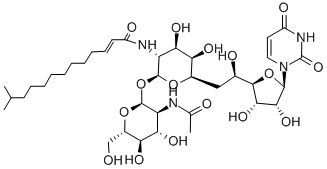
| DCC5270 | Tunicamycin Featured |
Antibiotic, inhibiting the first step in the N-linked glycosylation in eukaryotes and inducing ER stress to activate the unfolded protein response (UPR)
More description
|
|
| DC22098 | GB1107 Featured |
GB1107 is a novel small-molecule inhibitor specifically designed to target galectin-3 (Gal-3), demonstrating high binding affinity and oral bioavailability.
More description
|

|
| DC22129 | HOIPIN-1(JTP-0819958;HOIP inhibitor-1) Featured |
HOIPIN-1 (JTP-0819958, HOIP inhibitor-1) is a chemical inhibitor of linear ubiquitin chain assembly complex (LUBAC, IC50=2.8 uM), specifically generates Met1-linked linear ubiquitin chains through the ubiquitin ligase activity in HOIP, and activates the N
More description
|

|
| DC71669 | ARV471 Featured |
ARV471 is an orally bioavailable estrogen receptor-targeting (ER-targeting) PROTAC for the treatment of patients with locally advanced or metastatic ER+/HER2- breast cancer.
More description
|

|
| DC70864 | UHMCP1 Featured |
UHMCP1 is a small molecule that prevents the SF3b155/U2AF65 interaction, binds to the hydrophobic pocket of the U2AF65 UHM domain (Kd=1-20 uM), impacts splicing and cell viability.
More description
|

|
| DC73047 | JC19 Featured |
JC19 is a a cysteine-reactive small molecule degrader of SARS-CoV-2 nsp14 with DC50 of 8.7 uM in HEK293T cells.
More description
|

|
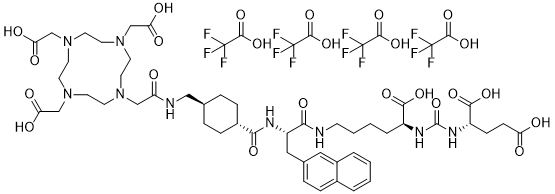
| DC75325 | PSMA-617 TFA Featured |
PSMA-617, also know as vipivotide tetraxetan, is a ligand used to make 177Lu-PSMA-617, which is a radioactive molecule to fight cancer. PSMA617 possesses a small peptide, which was designed to target prostate-specific membrane antigen (PSMA). PSMA617 demonstrates high radiolytic stability for at least 72 h. PSMA617 has high inhibition potency (equilibrium dissociation constant Ki=2.34±2.94 nM on LNCaP; Ki=0.37±0.21 nM enzymatically determined). 177 Lu-PSMA-617 offers a potential additional life-prolonging treatment option for men with mCRPC.
More description
|
|
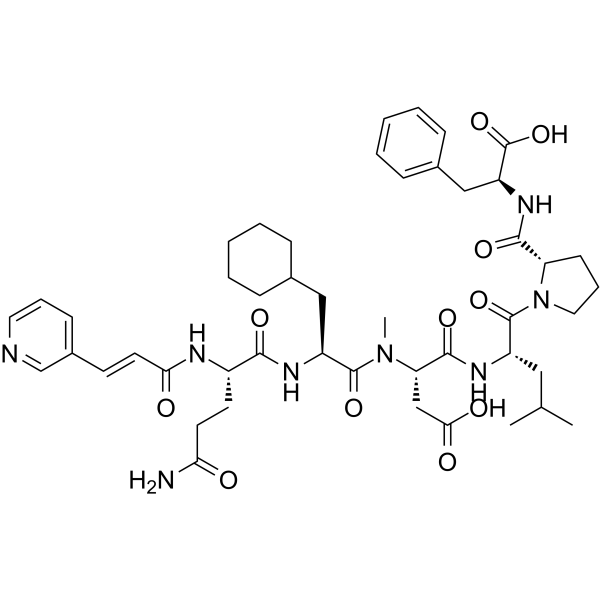
| DC47736 | Targeting the bacterial sliding clamp peptide 46 Featured |
Targeting the bacterial sliding clamp peptide 46 is a short peptide targeting the bacterial sliding clamp(SC), inhibiting SC-dependent DNA synthesis.
More description
|
|
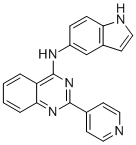
| DC74299 | BC18630 free base Featured |
BC18630 free base (BC 18630) is a small molecule inhibitor of the E3 ubiquitin ligase subunit DCAF7, potently inhibits SARS-CoV-2 infection with IC50 of 39 nM in cell-based assays.
More description
|
|
| DC74298 | BC18630 Featured |
BC18630 (BC 18630) is a small molecule inhibitor of the E3 ubiquitin ligase subunit DCAF7, potently inhibits SARS-CoV-2 infection with IC50 of 39 nM in cell-based assays.
More description
|

|
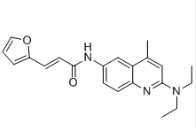
| DC73322 | DP308 Featured |
DP308 is a novel and effective 53BP1 tandem Tudor domain (TTD) inhibitor, disrupts the binding between 53BP1 and H4K20me2 peptide with IC50 of 1.69 uM.
More description
|
|
| DC73130 | AC-003 Featured |
AC-003 is a novel, orally administered small-molecule inhibitor targeting receptor-interacting protein kinase 1 (RIPK1), demonstrating therapeutic potential for the treatment of idiopathic pulmonary fibrosis (IPF).
More description
|

|
| DC70170 | AC3573 Featured |
AC3573 (AC-3573) is a potent, specific small molecule inhibitor of HER3.AC3573 abrogates HER2–HER3 signalling in cells and is more specific for HER3, inhibits NRG (heregulin)-induced HER3 phosphorylation with IC50 of 10 uM, abrogates the formation of the active HER2-HER3 heterodimer, inhibits oncogenic downstream signalling in SK-BR-3 breast cancer cells.
More description
|

|
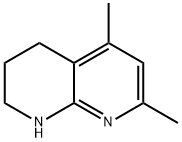
| DC73284 | F1957-0088 Featured |
F1957-0088 is a small molecule targeting the UHRF1 tandem Tudor domain (TTD) with TR-FRET (TTD vs. H3K9me3) EC50 of 45.1 uM.
More description
|
|
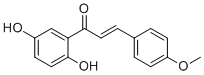
| DC74181 | SPI-21 Featured |
SPI-21 (Spt5-Pol II inhibitor 21) is a small-molecule inhibitor of Spt5-Pol II with IC50 of 25.2 uM.
More description
|
|
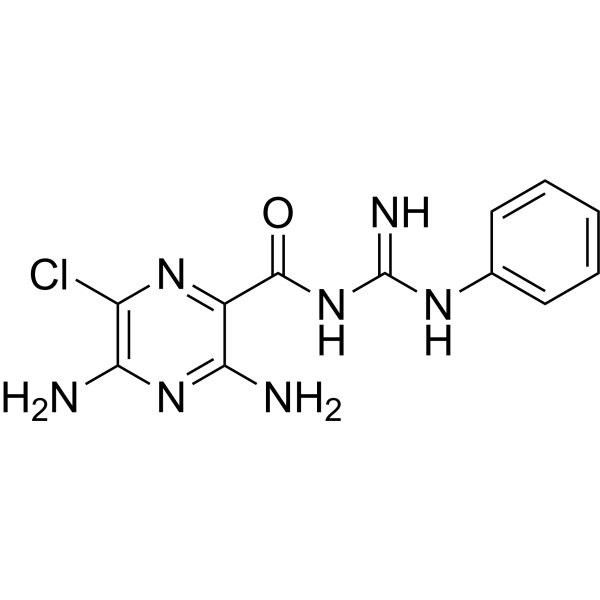
| DC43231 | Phenamil Featured |
Irreversible inhibitor of amiloride-sensitive Na channels; derivative of amiloride
More description
|
|
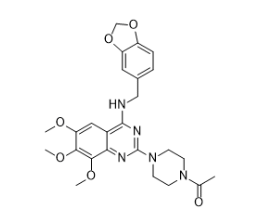
| DC73706 | ER-001135935 Featured |
ER-001135935 is a potent selective inhibitor of aldehyde dehydrogenase family 1 member A3 (ALDH1A3) with IC50 of 64 nM, Ki value of 106 nM.
More description
|
|
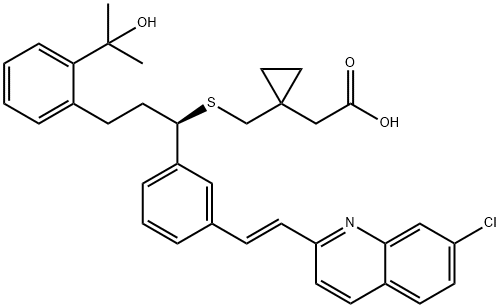
| DC40582 | Montelukast Featured |
Montelukast is a potent, selective and orally active antagonist of cysteinyl leukotriene receptor 1 (CysLT1). Montelukast can be used for the reseach of asthma and liver injury. Montelukast also has an antioxidant effect in intestinal ischemia-reperfusion injury, and could reduce cardiac damage.
More description
|
|
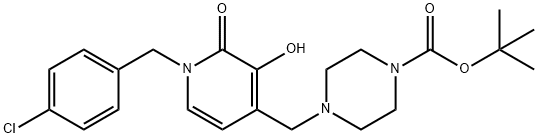
| DC48260 | Izilendustat Featured |
Izilendustat is a potent inhibitor of prolyl hydroxylase which can stabilize hypoxia inducible factor- 1 alpha (HIF- lα) and hypoxia inducible factor-2 (HIF-2). Izilendustat has the potential for researching diseases that relate to the body’s inmmune response like colitis and other inflammatory bowel diseases (extracted from patent WO2011057115A1 and WO2011057121A1).
More description
|
|
