 To enhance service speed and avoid tariff delays, we've opened a US warehouse. All US orders ship directly from our US facility.
| Cat. No. | Product Name | Field of Application | Chemical Structure |
|---|---|---|---|
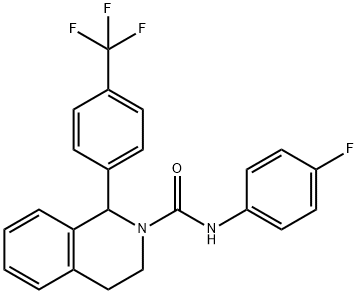
| DCC5057 | Tc-i 2000 Featured |
Novel TRPM8 channel blocker
More description
|
|
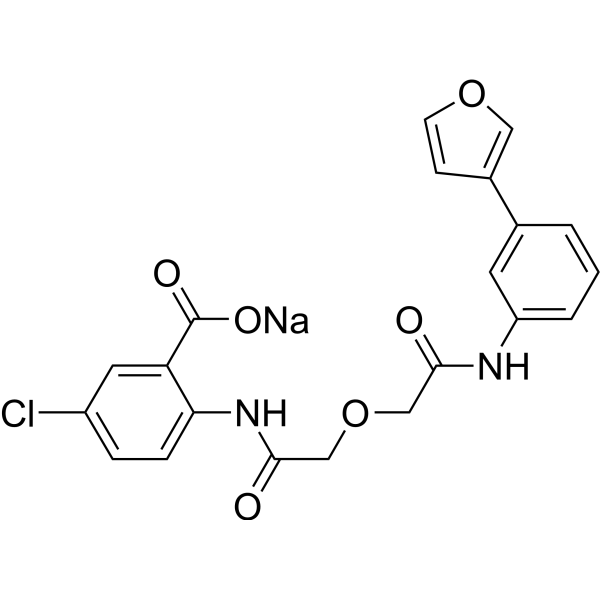
| DC60769 | TM5441 sodium Featured |
TM5441 is an orally bioavailable inhibitor of plasminogen activator inhibitor-1 (PAI-1), has IC50 values between 13.9 and 51.1 μM. TM5441 induces intrinsic apoptosis in several human cancer cell lines. TM5441 attenuates Nω-nitro-l-arginine methyl ester-induced cardiac hypertension and vascular senescence.
More description
|
|
| DC66555 | GalNAc-L96 Linker-Acid Featured |

|
|
| DC66550 | GalNAc-Cluster-COOH Featured |

|
|
| DC66557 | GalNAc-L96 Linker-Azide Featured |

|
|
| DC65559 | GalNAc-L96 Phosphoramidite Featured |

|
|
| DC66574 | Peracetylated GalNAc-L96-1 Featured |

|
|
| DC66549 | GalNAc-NAG-37 Phosphoramidite Featured |

|
|
| DC65562 | GalNAc-NAG-25 Phosphoramidite Featured |

|
|
| DC66559 | Peracetylated GalNAc PEG linker-Azide Featured |

|
|
| DC66575 | Peracetylated GalNAc PEG linker-Acid-2 Featured |

|
|
| DC66551 | GalNAc-Cluster-HHA-CE Phosphoramidite Featured |

|
|
| DC66564 | Peracetylated GalNAc PEG linker-Acid-1 Featured |

|
|
| DC66572 | Peracetylated GalNAc PEG linker-Amino-2 Featured |

|
|
| DC66568 | Peracetylated GalNAc PEG linker-Amino-1 Featured |

|
|
| DC66561 | Peracetylated GalNAc succinimidyl pentanoate Featured |

|
|
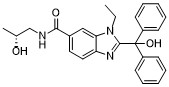
| DC71165 | VY-3-135 Featured |
VY-3-135 is an orally active, selective acetyl-CoA synthetase 2 (ACSS2) inhibitor with an IC50 value of 44 nM. VY-3-135 displayes no inhibitory activity towards recombinant human ACSS1 or ACSS3. VY-3-135 potently inhibits ACSS2 dependent fatty acid metabolism but has no effect on gene expression in tumors. VY-3-135 inhibits triple negative breast cancer (TNBC) tumor growth in mouse ACSS2high but not ACSS2low tumors models.
More description
|
|
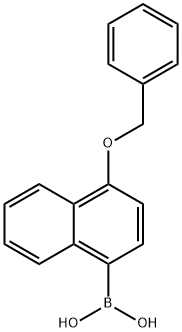
| DC68217 | 1-benzyloxynaphthalene-4-boronic acid Featured |
|
|
| DC65770 | DMPE-mPEG2000(Na salt) Featured |

|
|
| DC60363 | DOSPER Featured |

|
|
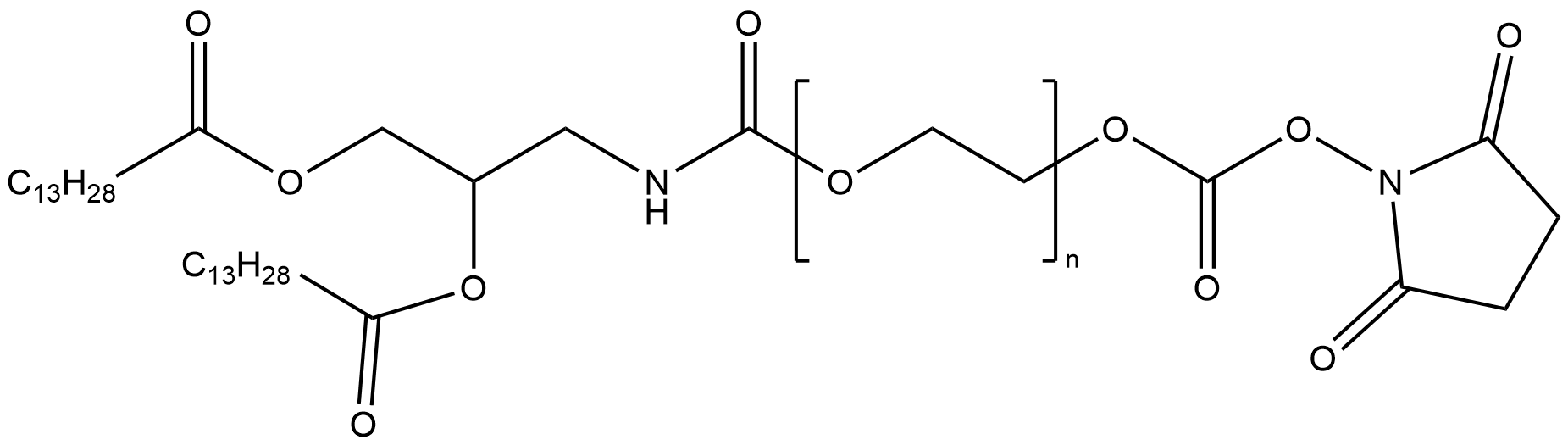
| DC67096 | DMG-PEG2000-NHS Featured |
DMG-PEG2000-NHS is a PEG derivative that can be used in various biomedical applications, such as the construction of drug delivery systems (siRNA delivery liposomes, lipid nanoparticle, etc.). The active ester (NHS) can react with an amino group (-NH2) to form a stable amide bond, which can be used as a linker in a bioconjugation strategy to modify amino-linked peptide proteins as well as other small molecules.
More description
|
|
| DC65742 | Hexadecanoic acid,(1S)-1-[[[(2-aminoethoxy)hydroxyphosphinyl]oxy]methyl]-1,2-ethanediylester |

|
|
| DC65721 | 1,2(R)-Dioleyloxy-sn-giycero-3-phosphocholine |

|
|
| DC65722 | 1,2-Dioleyloxy-sn-giycero-3-phosphocholine |

|
|
| DC60383 | CpUnDMA( PCUnDMA) |
|
|
| DC60389 | 1-Propanaminium,N-(2-aminoethyl)-2,3-bis(dodecyloxy)-N,N-dimethyl-, bromide |
|
|
| DC60375 | Dlin-C-DAP |

|
|
| DC66097 | DSPE-RB Featured |
Phospholipids DSPE belong to the lipid family of biopolymers. Phospholipids consist of two fatty acids, a glycerol unit, a phosphate group, and a polar molecule. The phosphate groups and polar head regions of the molecule are hydrophilic (attracted to water), while the fatty acid tail is hydrophobic (repelled by water). When placed in water, the phospholipids Orient themselves into a double layer, where the non-polar tail region faces the inner region of the double layer. The polar head region faces outward and interacts with the water. Applications in drug release, nanotechnology and new materials research, cell culture. As well as ligand research, peptide synthesis support, grafted polymer compounds, new materials and pegylated modified functional coatings and other active compounds.
More description
|

|
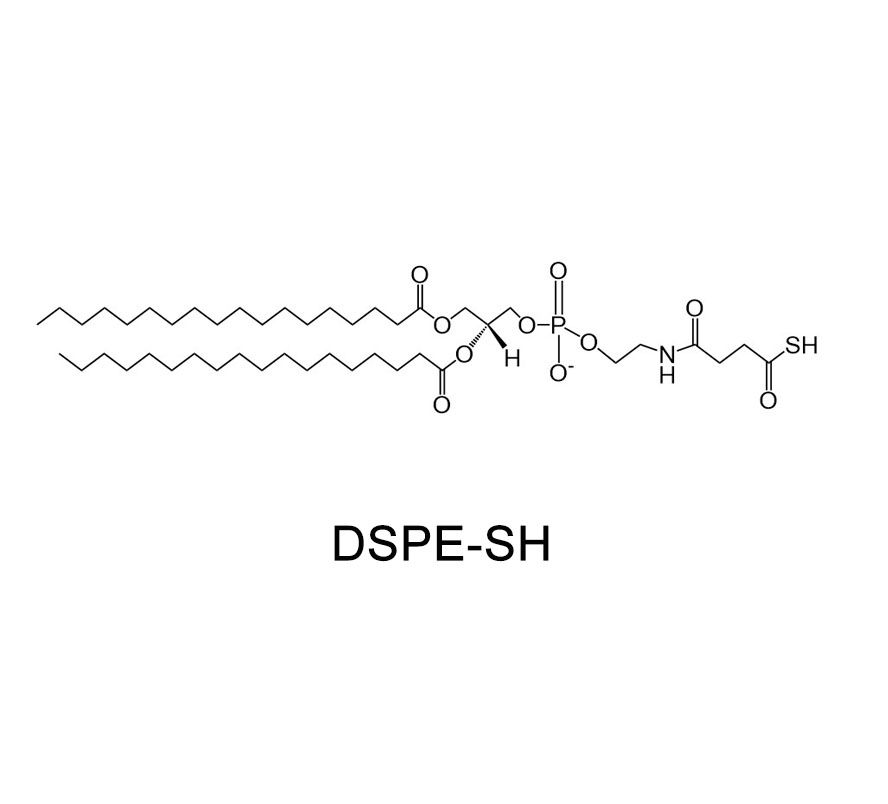
| DC66102 | DSPE-SH(DSPE Thiol) Featured |
Modified phospholipid products: it is to modify the amino group (primary amino group) -NH3 at the end of DSPE into NHS, COOH, N3, MAL, Thiol (SH), OPSS, FITC, FA, Biotin and other different active groups.
Phospholipids DSPE belong to the lipid family of biopolymers. Phospholipids consist of two fatty acids, a glycerol unit, a phosphate group, and a polar molecule.
The phosphate groups and polar head regions of the molecule are hydrophilic (attracted to water), while the fatty acid tail is hydrophobic (repelled by water).
When placed in water, the phospholipids Orient themselves into a double layer, where the non-polar tail region faces the inner region of the double layer. The polar head region faces outward and interacts with the water.
More description
|
|
| DC66103 | DSPE-NH2 Featured |
Phosphatidyl amino DSPE-NH2 is one of the most common materials in polymer modification.
By grafting phospholipid bonds to amino molecules, polymeric polymers with different chain segments are formed by using phospholipid molecules, which reduces the thermal stability and weather resistance of the materials.
At the same time, by introducing modifiers to improve the water resistance of the polymer itself, improve its processing performance, and finally obtain good water resistance, high mechanical properties, good weather resistance, good acid and alkali resistance products.
DSPE-NH2 material is mainly composed of isopropyl alcohol butadiene, the isopropyl alcohol butadiene mixture is an aromatic polymer, with strong water absorption, hydrophilicity, and wide molecular weight distribution, good solubility, high mechanical strength characteristics, so the material can be used in many fields.
More description
|
|
