 To enhance service speed and avoid tariff delays, we've opened a US warehouse. All US orders ship directly from our US facility.
| Cat. No. | Product Name | Field of Application | Chemical Structure |
|---|---|---|---|
| DC77938 | (S,R,S)-AHPC-amide-PEG5-C2-azide |
(S,R,S)-AHPC-amide-PEG5-C2-azide (VH032-CO-(CH2)2-(O-CH2-CH2)5-azide) is a PROTAC linker that can be used to design PROTACs.
More description
|

|
| DC77937 | FBnG-amino-PEG3-C2-azido |
FBnG-amino-PEG3-C2-azido is a tag-linker conjugate that incorporates a degradation tag FBnG and a glycol linker (Amino-PEG3-C2-Azido). FBnG-amino-PEG3-C2-azido can be used for synthesis of GPX4-AUTAC
More description
|
|
| DC77936 | Duazomycin sodium |
Duazomycin (Duazomycin A) sodium is a glutamine antagonist. Duazomycin sodium can significantly enhance the effectiveness of 6-Mercaptopurine (6-MP) in experimental allergic encephalomyelitis (EAE) without increasing toxicity.
More description
|
|
| DC77935 | Movronersen |
Movronersen is an antisense oligonucleotide targeted to α-synuclein.
More description
|
|
| DC77934 | Movronersen sodium |
Movronersen sodium is an antisense oligonucleotide targeted to α-synuclein.
More description
|
|
| DC77933 | Mivelsiran |
Mivelsiran is a siRNA targeted to amyloid-beta precursor protein (APP). It is used for the study of Alzheimer's disease.
More description
|
|
| DC77932 | Mivelsiran sodium |
Mivelsiran sodium is a siRNA targeted to amyloid-beta precursor protein (APP). It is used for the study of Alzheimer's disease.
More description
|
|
| DC77931 | Lufepirsen |
Lufepirsen is an unmodified antisense oligonucleotide targeted to Connexin43 (Cx43). Connexin43 is a specific protein in the eye, which plays a role in wound healing.
More description
|
|
| DC77930 | Lufepirsen sodium |
Lufepirsen sodium is an unmodified antisense oligonucleotide targeted to Connexin43 (Cx43). Connexin43 is a specific protein in the eye, which plays a role in wound healing.
More description
|
|
| DC77929 | Lixadesiran |
Lixadesiran is a siRNA in STP705. It targets to COX-2. STP705 is composed of 2 siRNA oligonucleotides (Pixofisiran and Lixadesiran) that individually target TGF-β1 and COX-2 mRNA.
More description
|
|
| DC77928 | Lixadesiran sodium |
Lixadesiran sodium is a siRNA in STP705. It targets to COX-2. STP705 is composed of 2 siRNA oligonucleotides (Pixofisiran and Lixadesiran) that individually target TGF-β1 and COX-2 mRNA.
More description
|
|
| DC77927 | Litenimod |
Litenimod is potent type B agonist of toll Like receptor 9 (TLR9), triggering both innate and adaptive immune response.
More description
|
|
| DC75934 | (-)-Luteoskyrin |
(-)-Luteoskyrin has a wide range of antibacterial activity, such as against malaria (with an IC50 of 0.51 μg/mL), tuberculosis (MIC of 6.25 μg/mL), and it also shows antibacterial effects (with MIC for Gram-positive bacteria ranging from 0.39 to 1.56 μg/mL, and for Gram-negative bacteria from 3.13 to 12.50 μg/mL), as well as antifungal activity (with MIC against plant pathogens ranging from 3.13 to 50μg/mL). (-)-Luteoskyrin exhibits cytotoxicity against NCI-H187 cells, with an IC50 range of 0.16–17.99 μg/mL.
More description
|
|
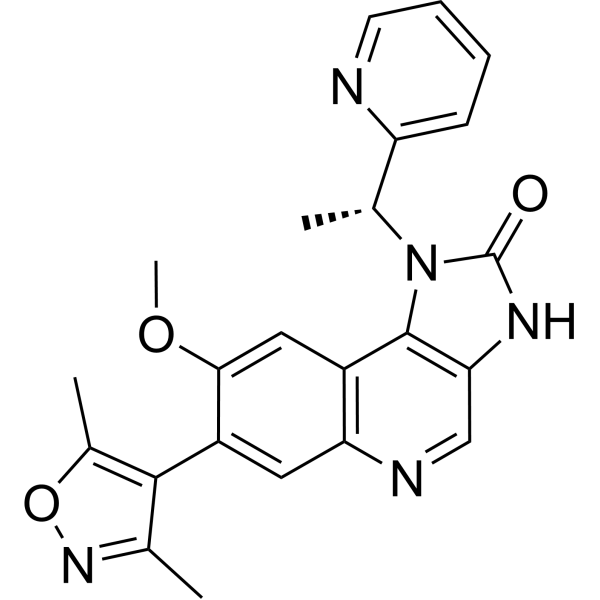
| DC5183 | I-BET151 Featured |
I-BET151 (GSK1210151A) is a novel selective BET inhibitor for BRD2, BRD3 and BRD4 with IC50 of 0.5 μM, 0.25 μM, and 0.79 μM, respectively.
More description
|
|
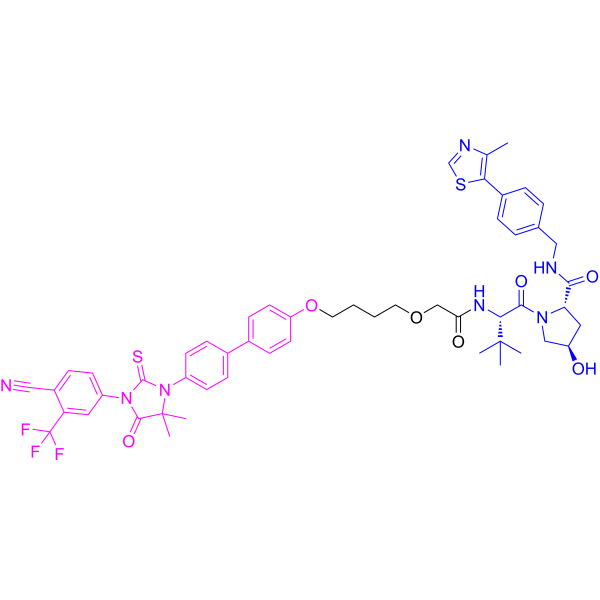
| DC40420 | ARCC-4 Featured |
ARCC-4 is a low-nanomolar androgen receptor (AR) degrader based on PROTAC, with a DC50 of 5?nM. ARCC-4 is an enzalutamide-based von Hippel-Lindau (VHL)-recruiting AR PROTAC and outperforms enzalutamide. ARCC-4 effectively degrades clinically relevant AR mutants associated with antiandrogen therapy.
More description
|
|
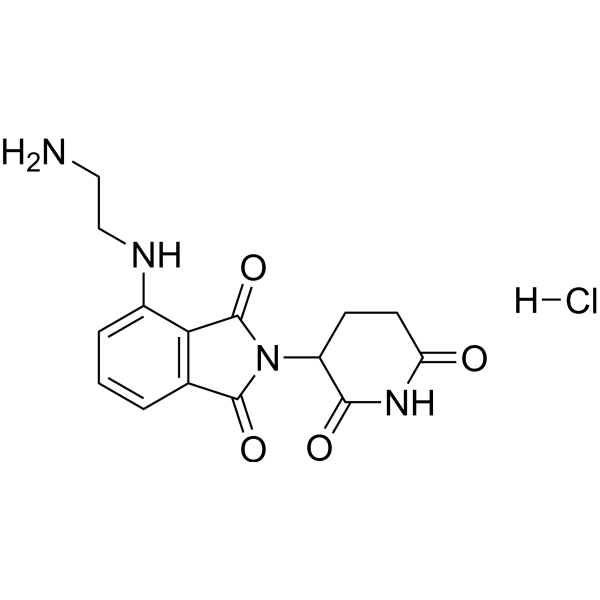
| DC26122 | Pomalidomide-C2-NH2 hydrochloride Featured |
Pomalidomide-C2-NH2 hydrochloride is a synthesized E3 ligase ligand-linker conjugate that incorporates the Pomalidomide based cereblon ligand and a linker used in PROTAC technology.
More description
|
|
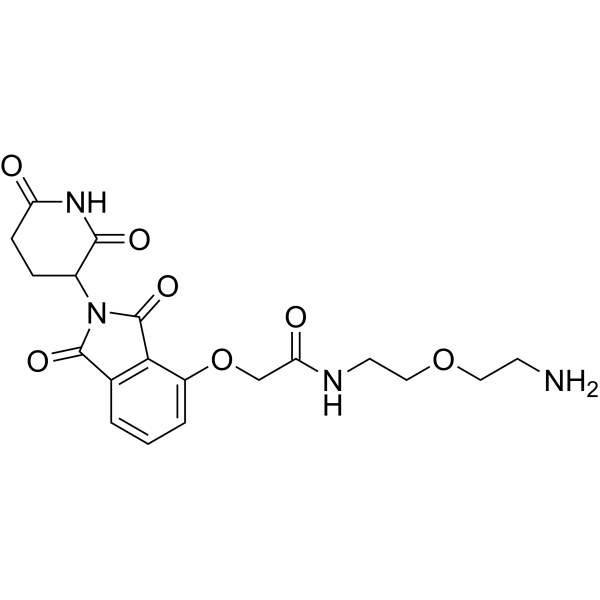
| DC11573 | E3 Ligand-Linker Conjugate 7 Featured |
An E3 ligase ligand-linker conjugate for PROTAC..
More description
|
|
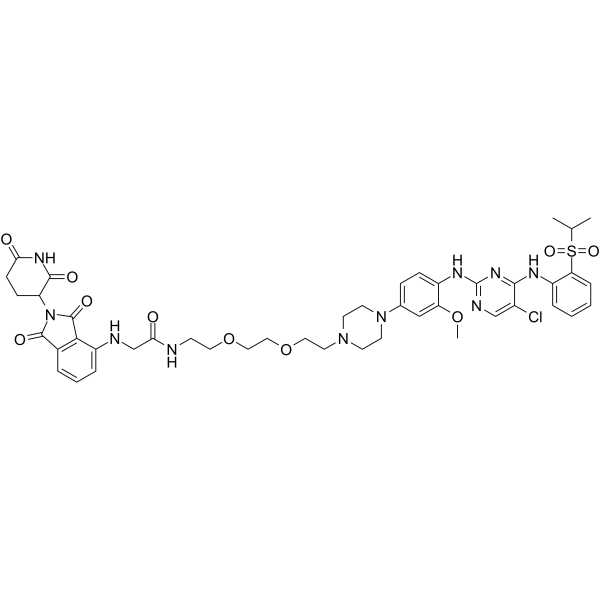
| DC21962 | TL13-12 Featured |
TL13-12 is a novel Anaplastic Lymphoma Kinase (ALK)-PROTAC developed through conjugation of TAE684 and the cereblon ligand pomalidomide.
More description
|
|
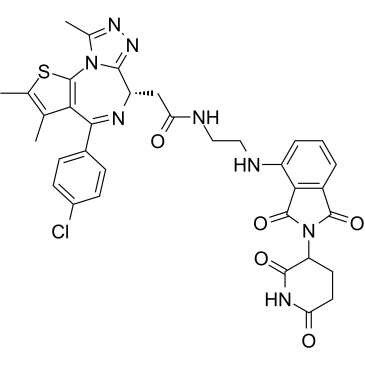
| DC21893 | dBET57 Featured |
dBET57 is a novel BRD4 heterobifunctional small-molecule ligand (PROTAC), exhibits significant and selective degradation of BRD4 BD1 (DC50/5h=500 nM), but is inactive on BRD4 BD2..
More description
|
|
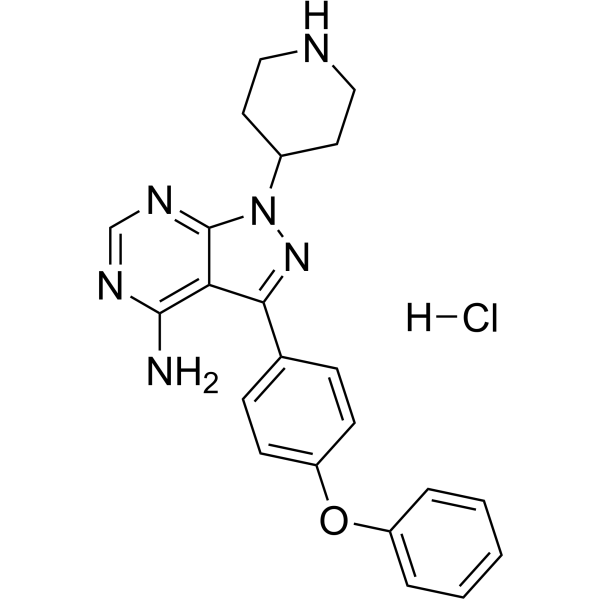
| DC40447 | N-piperidine Ibrutinib hydrochloride Featured |
N-piperidine Ibrutinib hydrochloride (Compound 1) is a reversible Ibrutinib derivative. N-piperidine Ibrutinib hydrochloride is a potent BTK inhibitor with IC50s of 51.0 and 30.7 nM for WT BTK and C481S BTK, respectively. N-piperidine Ibrutinib hydrochloride can be used as a BTK ligand in the synthesis of a series of PROTACs, such as SJF620. SJF620 is a potent PROTAC BTK degrader with a DC50 of 7.9 nM.
More description
|
|
| DC40428 | Pomalidomide 4'-alkylC5-acid Featured |
Pomalidomide 4'-alkylC5-acid is a synthesized E3 ligase ligand-linker conjugate that incorporates the Pomalidomide based cereblon ligand and a PEG linker used in PROTAC technology.
More description
|

|
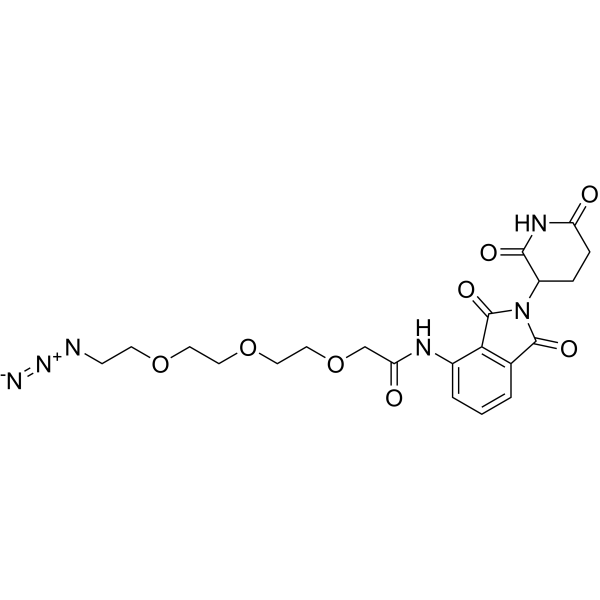
| DC42553 | Pomalidomide-PEG3-azide Featured |
Pomalidomide-PEG3-azide is a synthesized E3 ligase ligand-linker conjugate that incorporates the Pomalidomide based cereblon ligand and 3-unit PEG linker used in PROTAC technology.
More description
|
|
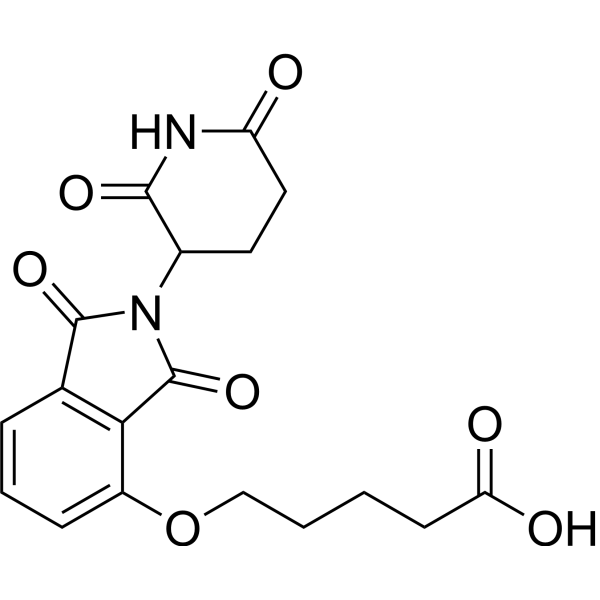
| DC44858 | Thalidomide-O-C4-COOH Featured |
Thalidomide-O-C4-COOH is a synthesized E3 ligase ligand-linker conjugate that incorporates the Thalidomide based cereblon ligand and a linker used in PROTAC technology.
More description
|
|
| DC57100 | Acuitas A9 Featured |
Lipid A9 is an ionizable cationic lipid (pKa = 6.27) that has been used in the generation of lipid nanoparticles (LNPs) for the delivery of mRNA and siRNA in vivo. LNPs containing lipid A9 and encapsulating non-stimulatory siRNA increase plasma levels of chemokine (C-C motif) ligand 2 (CCL2), indicating activation of the innate immune response, and decrease body weight in mice.
More description
|

|
| DC76881 | GK420 Featured |
GK420 (AVX420) is a potent inhibitor of cytosolic phospholipase A2α (cPLA2α), with the XI(50) of 0.0016. GK420 inhibits arachidonic acid release with the EC50 of 0.09 μM. GK420 plays an important role in cancer research.
More description
|

|
| DC55003 | XY028-140 (MS140) Featured |
XY028-140 (MS-140) is a potent and selective PROTAC-based CDK4/CDK6 kinase degrader. XY028-140 specifically inhibits RB-E2F signaling and reduces CDK4 and CDK6 protein levels in a dose- and time-dependent manner in vitro. In addition, XY028-140 can degrade its targets by linking them with ubiquitin-proteasome mechanism. Further, the degradation of CDK4/6 protein by XY028-140 is specifically mediated by CRBN. Therefore, XY028-140 effectively and selectively inhibits and degrades CDK4/6 kinase by targeting CDK4/6 kinase in CDK4/6i-S (CDK4/6 inhibitor-sensitive) tumor cells to the CRL4-CRBN-E3 ubiquitin complex. Compared with CDK6 wild-type cells, XY028-140 treatment of cells expressing wild-type or mutation-activated CDK6 resulted in a more effective degradation of CDK6 (S178P).
More description
|

|
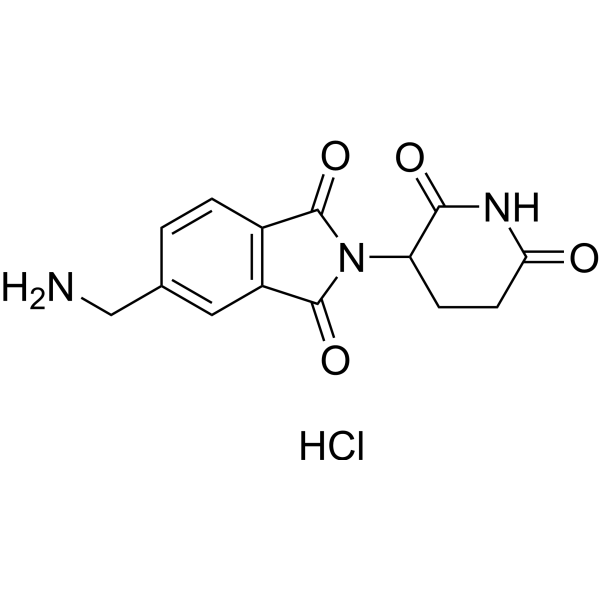
| DC47206 | Thalidomide-5-CH2-NH2 hydrochloride Featured |
Thalidomide-5-CH2-NH2 (hydrochloride) is the Thalidomide-based cereblon ligand used in the recruitment of CRBN protein. Thalidomide-5-CH2-NH2 (hydrochloride) can be connected to the ligand for protein by a linker to form PROTACs.
More description
|
|
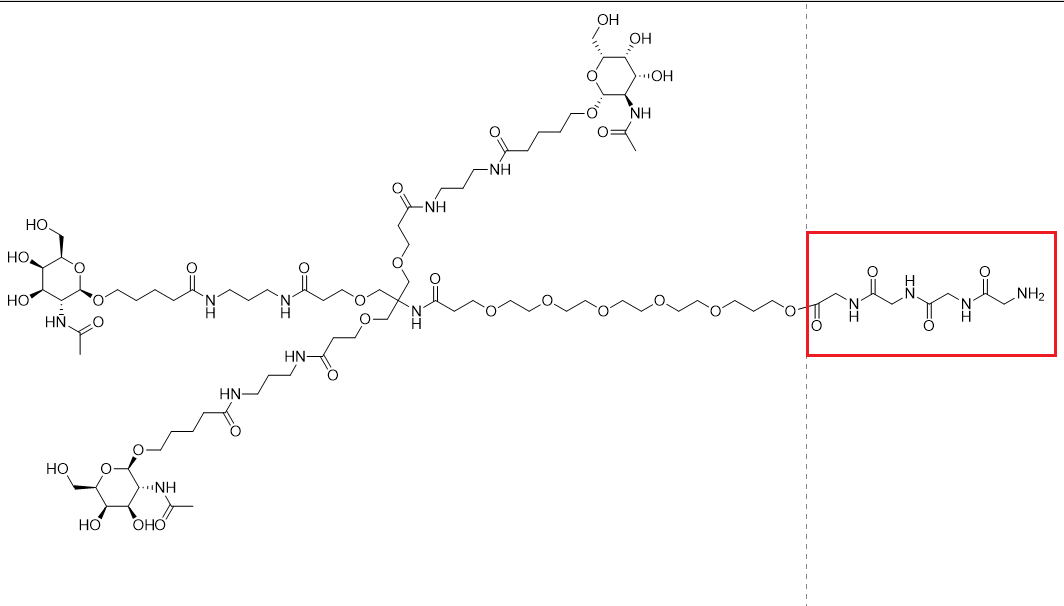
| DC67661 | Tri-GaNAc-PE5-Gly-Gly-Gly Featured |
|
|
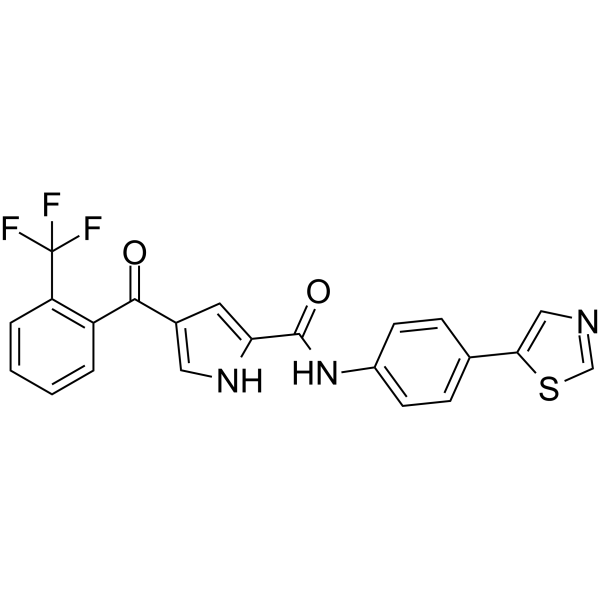
| DC67660 | YL-5092 Featured |
YL-5092 is a selective YT521-B homology (YTH) domain-containing protein 1 (YTHDC1) inhibitor with an IC50 of 7.4 nM and a KD of 29.6 nM. YL-5092 can suppress cancer cell proliferation and induce cell G0/G1 phase arrest and apoptosis. YL-5092 can be used for the research of cancer, such as acute myeloid leukemia (AML).
More description
|
|
| DC77714 | S3226 Featured |
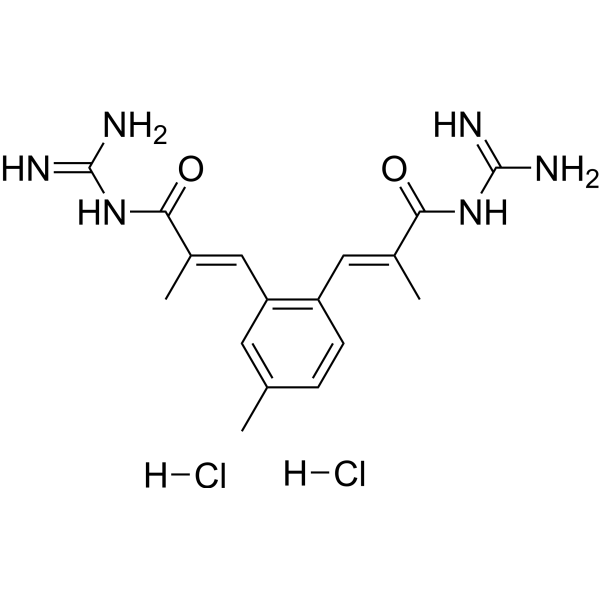
S3226 is an inhibitor for Na+/H+ exchange subtype 3 (NHE3) with an IC50 of 0.2 µmol/L in rat NHE3 transfected fibroblasts. S3226 exhibits protective activity in rat ischemia-induced acute renal failure models.
More description
|
|
