 To enhance service speed and avoid tariff delays, we've opened a US warehouse. All US orders ship directly from our US facility.
| Cat. No. | Product Name | Field of Application | Chemical Structure |
|---|---|---|---|
| DC66569 | GalNAc-L96-Amide Featured |

|
|
| DC66548 | GalNAc-Lipid GL3 Featured |

|
|
| DC65564 | GalNAc-L96-PS Featured |

|
|
| DC65560 | GalNAc-L96 free base Featured |
GalNAc-L96 free base, the G-rich oligonucleotides carrying the longer GalNAc linker that can be used for delivery of nucleic acid drugs.
More description
|

|
| DC66565 | Peracetylated GalNAc-L96-Acid-1 Featured |

|
|
| DC65561 | GalNac-L96 analog Featured |
GalNAc-L96 analog is an intermediate in the synthesis of the asialoglycoprotein receptor (ASGPR) ligand GalNAc-L96.
More description
|

|
| DC67351 | Tri-GalNAc(OAc)3 Cbz Featured |
Tri-GalNAc(OAc)3 Cbz is a ligand for asialoglycoprotein receptor (ASGPR) where the sugars are protected by acetylation and the tris tertiary amine is protected by benzyloxycarbonyloxy (Cbz). This peracetylated tri-GalNAc(OAc)3 Cbz can be serve as a valuable building block for ASGPR-targeted therapies. Its three branches or arms, each ending in a GalNAc sugar, ensure strong binding to hepatocyte ASGPR. However, the key feature lies in its protective groups: acetylated sugars allow for controlled removal to expose reactive sites for conjugation, while the Cbz-protected amine provides stability and can be selectively cleaved to introduce a reactive amine group for further biomolecule attachment, ultimately enabling researchers to tailor tri-GalNAc(OAc)3 Cbz into customized conjugates for specific therapeutic applications.
More description
|

|
| DC72269 | Tri-GalNAc(OAc)3 TFA Featured |
Tri-GalNAc(OAc)3 TFA is a tri-GalNAc ligand that can be used for the synthesis of GalNAc-LYTAC. GalNAc-LYTAC engages the asialoglycoprotein receptor for targeted protein degradation. tri-GalNAc: triantenerrary N-acetylgalactosamine; LYTAC: lysosome-targeting chimera.
More description
|

|
| DC46965 | Tri-GalNAc-COOH Featured |
tri-GalNAc-COOH is an asialoglycoprotein receptor (ASGPR) ligand that can be used for LYsosome TArgeting Chimera (LYTAC) research.
More description
|

|
| DC67352 | C12-Diacid-Tri-GalNAc-COOH Featured |

|
|
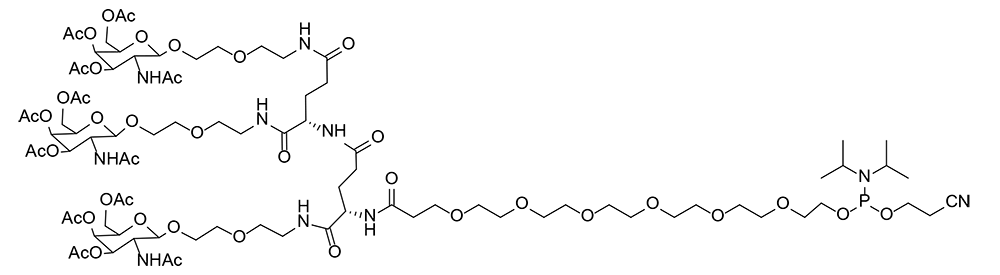
| DC68011 | GalNAc-NAG25 Featured |
|
|
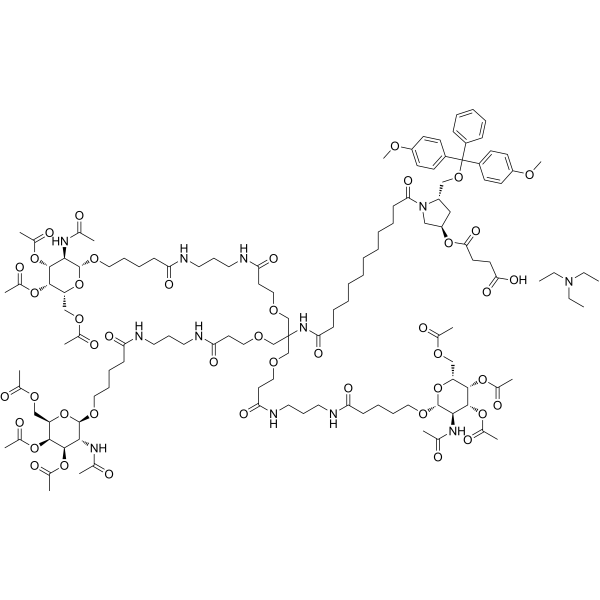
| DC65565 | GalNac-L96 Featured |
GalNac-L96, the G-rich oligonucleotides carrying the longer GalNAc linker that can be used for delivery of nucleic acid drugs[1].
More description
|
|
| DC47877 | tri-GalNAc-COOH (acetylation) Featured |
tri-GalNAc-COOH acetylation is the acetylated and modified form of tri-GalNAc-COOH. tri-GalNAc-COOH acetylation can be used for the synthesis of LYTAC.
More description
|

|
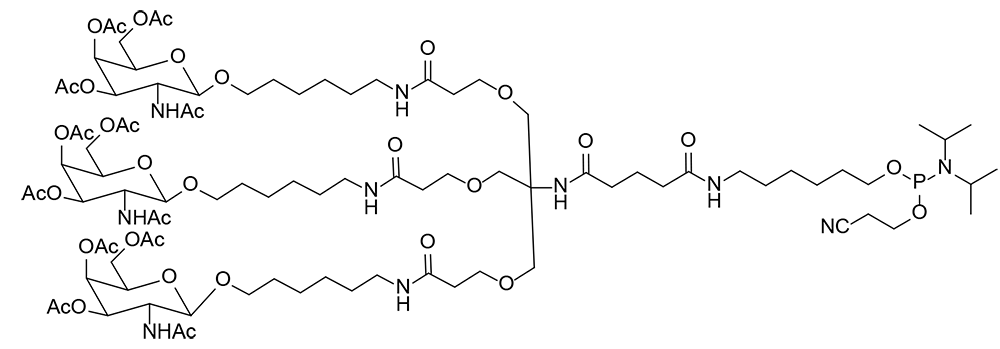
| DC68013 | GalNAc-THA-C6 Featured |
|
|
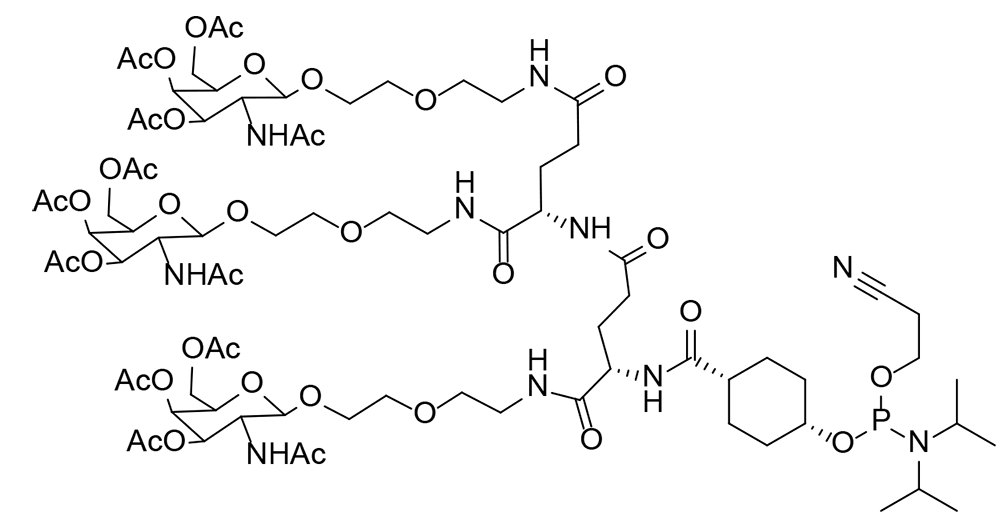
| DC68012 | GalNAc-NAG37 Featured |
|
|
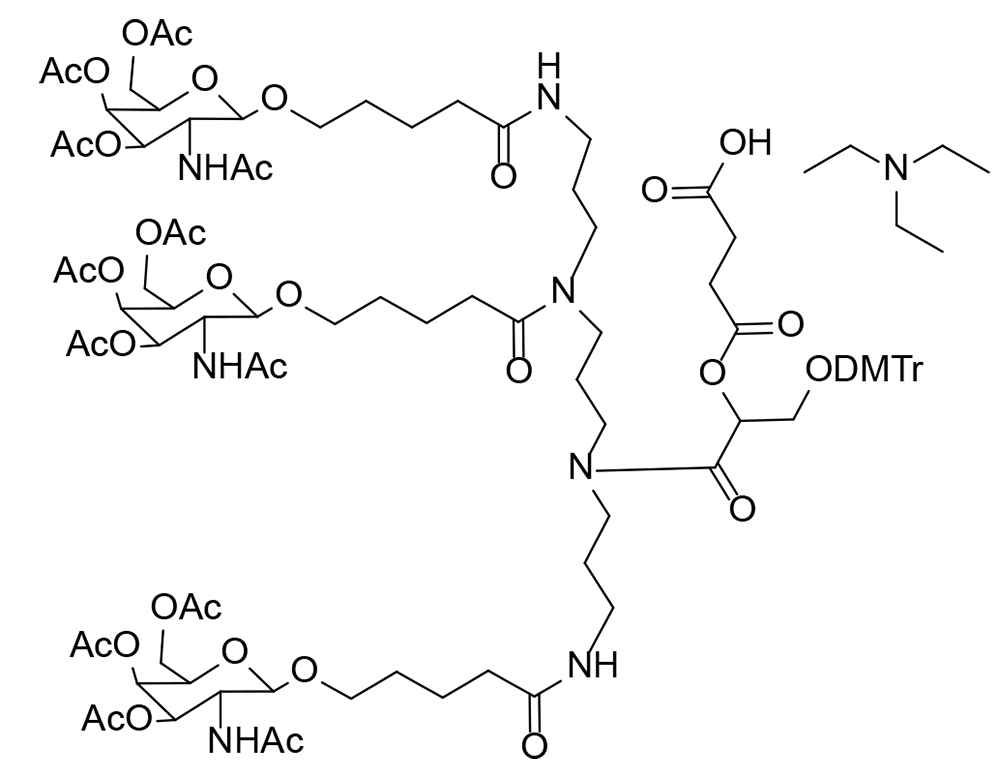
| DC68016 | GalNAc-L-9 Featured |
|
|
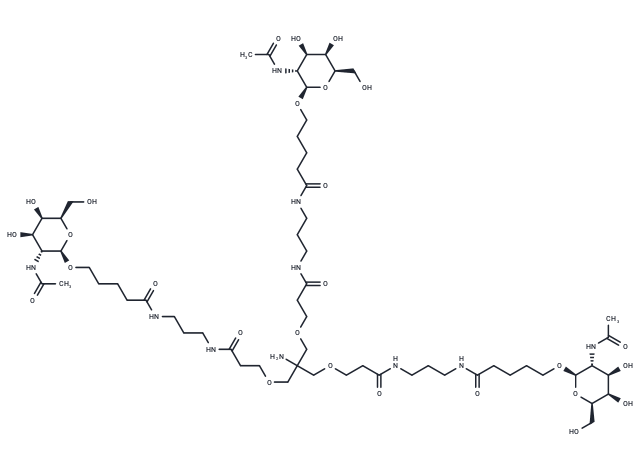
| DC60911 | ASGPR ligand-1 Featured |
ASGPR ligand-1 is a compound that targets the asialoglycoprotein receptor (ASGPR) and is utilized in various disease research contexts .
More description
|
|
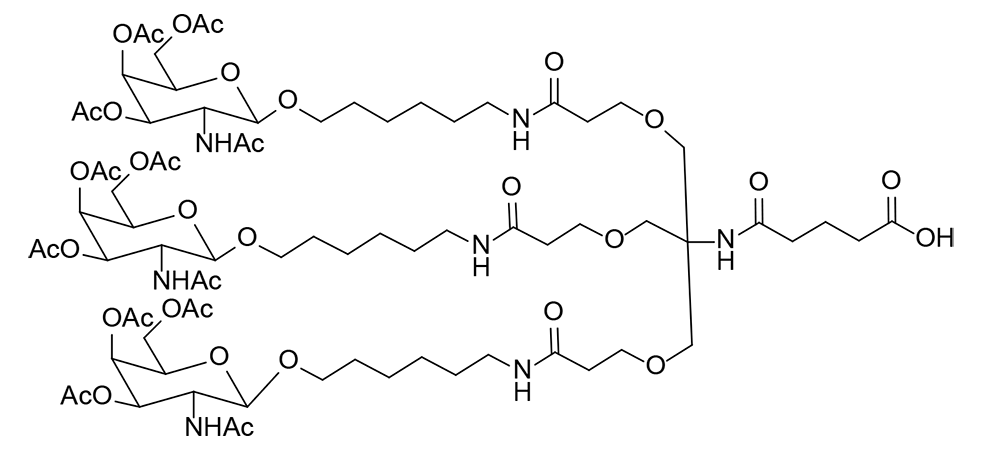
| DC68017 | THA8 acid Featured |
|
|
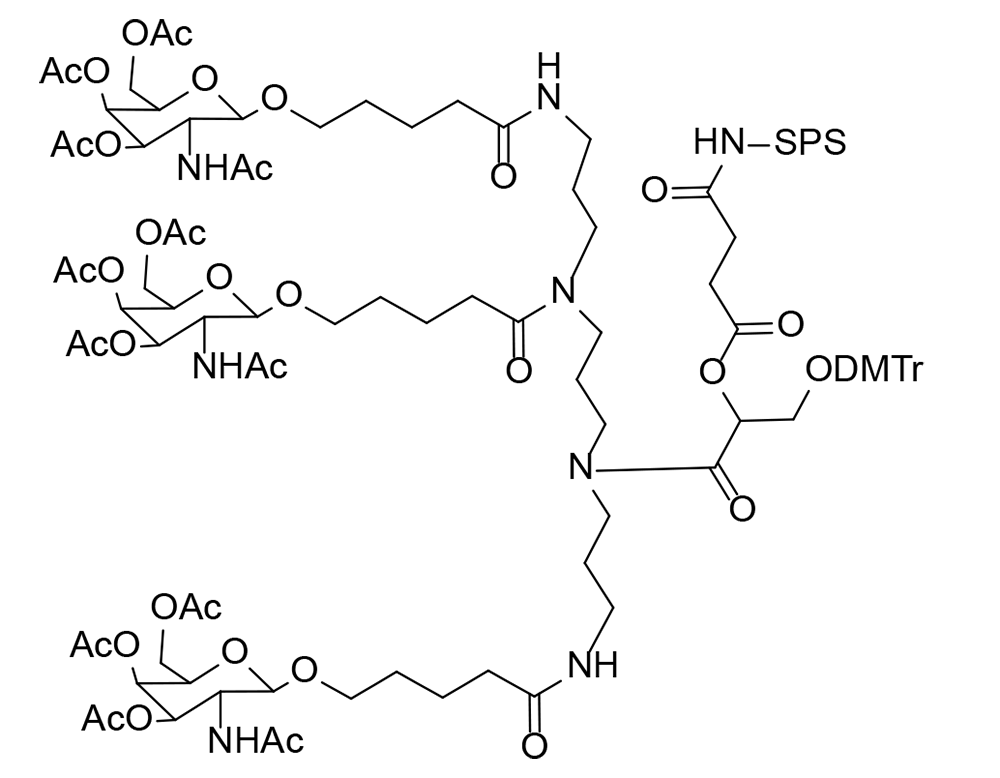
| DC68018 | GalNAc-L10 Featured |
|
|
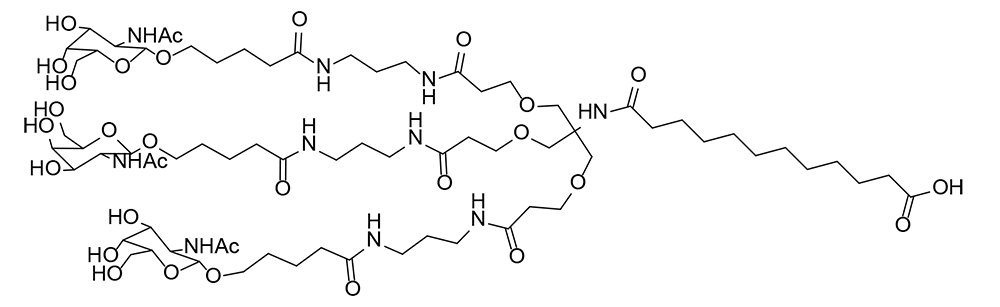
| DC68014 | Tri-GalNAc Acid Featured |
Triantennary GalNAc Acid is an asialoglycoprotein receptor (ASGPR) ligand for lysosomal targeting chimera (LYTAC) research and development.
More description
|
|
| DC72546 | Tri-GalNAc-NHS ester Featured |
Tri-GalNAc-NHS ester is a LYsosome TArgeting Chimera (LYTAC) and a ligand of asialoglycoprotein receptor (ASGPR). ASGPR is a lysosomal targeting receptor specifically expressed on liver cells, for the degradation of extracellular proteins including membrane proteins. Tri-GalNAc-NHS ester can be used as a protein degrader and it can be used for the research of LYTAC.
More description
|

|
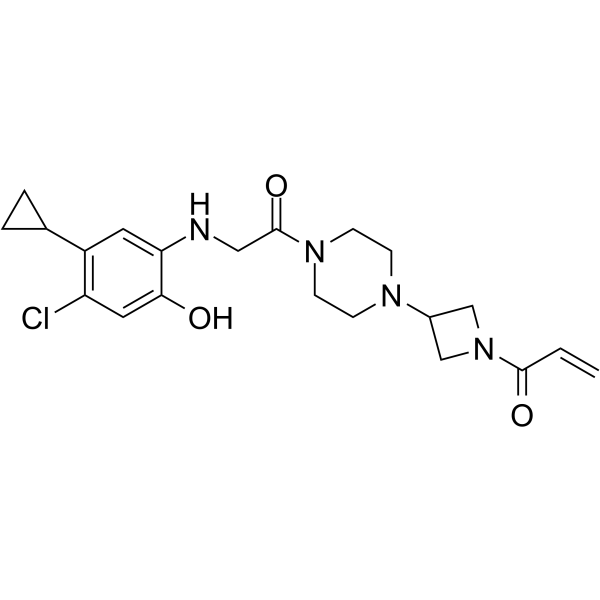
| DC22572 | K-Ras G12C-IN-2 Featured |
A novel and irreversible inhibitor of mutant K-ras G12C..
More description
|
|
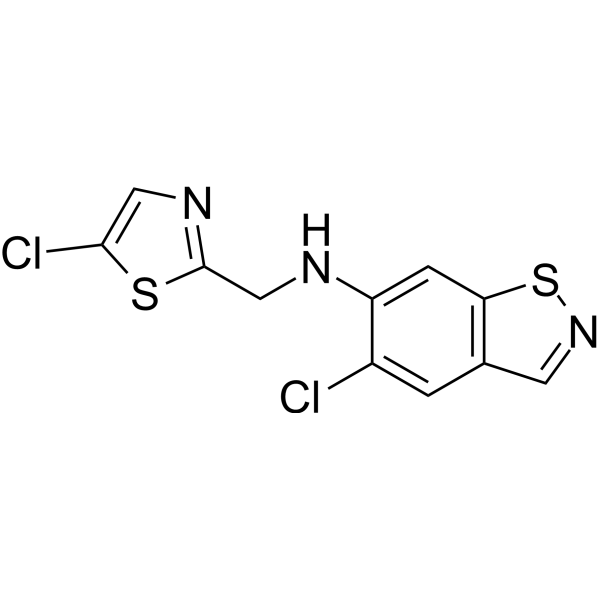
| DC81677 | TRPM5 agonist-1 Featured |
TRPM5 agonist-1 is an orally active TRPM5 agonist with a pEC50 of 8.1. TRPM5 agonist-1 shows excellent selectivity (> 100-fold) versus related cation channels (TRPM8, TRPV1, TRPV4, TRPA1, TRPM4). TRPM5 agonist-1 exhibits locally acting stimulatory effect on gastrointestinal transit in mice. TRPM5 agonist-1 can be used for research on promoting gastric motility.
More description
|
|
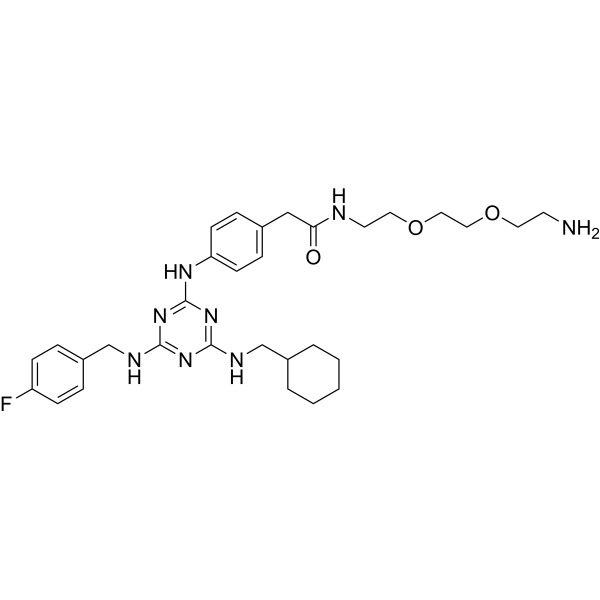
| DC7119 | AP-III-a4 Featured |
ENOblock(AP-III-a4) is a novel small molecule which is the first, nonsubstrate analogue that directly binds to enolase and inhibits its activity (IC50=0.576 uM); inhibit cancer cell metastasis in vivo.
More description
|
|
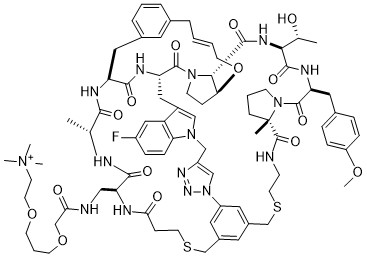
| DC65325 | MK-0616 (Enlicitide ) Featured |
MK-0616 is a potent, oral macrocyclic peptide inhibitor of PCSK9 that is not only able to reduce LDL-cholesterol, non-HDL-cholesterol, and apoB, but can also lower Lp(a).
More description
|
|
| DCC5183 | Tnks/usp25-in-c44 Featured |
Novel selective inhibitor of TNKS-USP25 interaction, effectively reducing prostate cancer cell proliferation and tumor growth
More description
|
.png)
|
| DC67555 | Lipid 2231 Featured |
Sail Lipid 2231 is a novel ionizable lipid targeting to spleen developed by Sai Biomedicine.As described on US20250205167A1 Lipid 2231 features a pyrrolidine core (5-membered ring) with biodegradable ester linkages and asymmetric C17/C11 hydrophobic chains. In vivo data shows moderate spleen targeting (Spleen RLU: 3.8E+06) with a spleen-to-liver ratio of 12.767.
More description
|

|
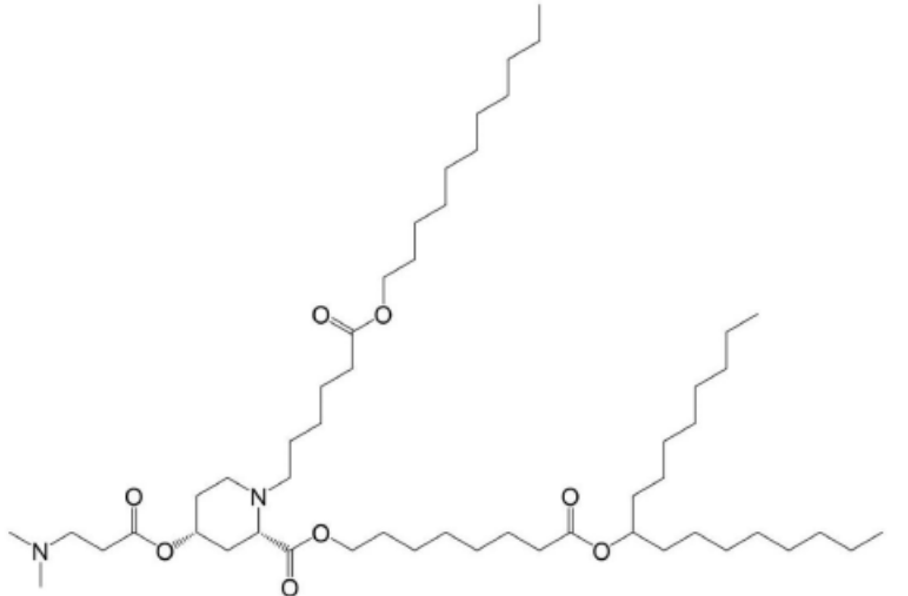
| DC60929 | Lipid 2310 Featured |
Lipid 2310 is a novel ionizable lipid developed by Sail Biomedicine demonstrates excellent performance with a spleen-to-liver ratio of 5.58 and a very high total expression level of 1.3E+07. Lipid 2310 offers a strong balance of efficient systemic protein production and clear preferential delivery to the spleen.
More description
|
|
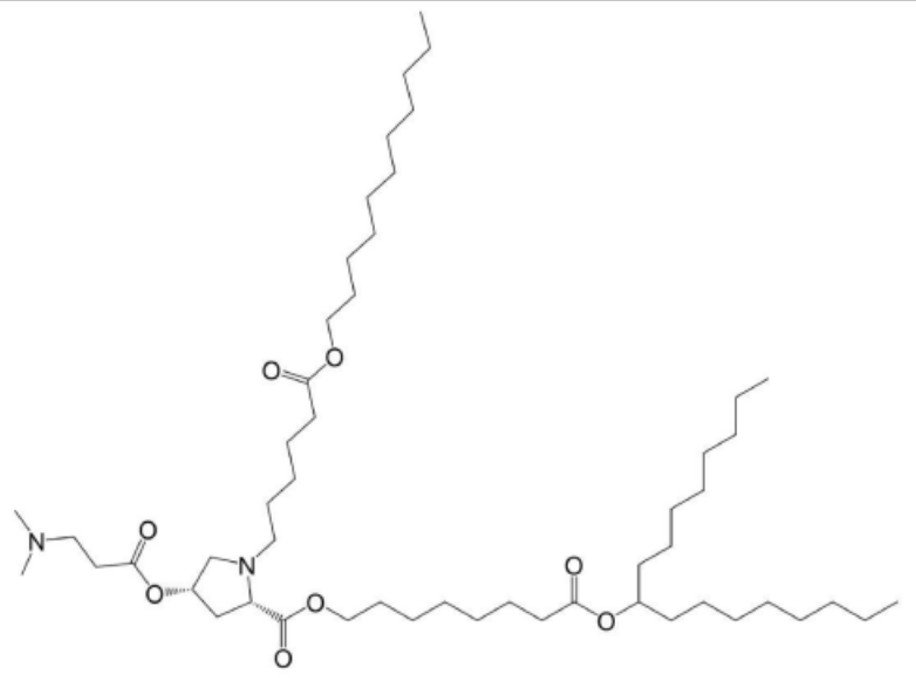
| DC60928 | Lipid 2306 Featured |
Lipid 2306 is a novel ionizable lipid developed by Sail Biomedicine demonstrates excellent performance with a spleen-to-liver ratio of 3.68 and a very high total expression level of 2.5E+07. Lipid 2306 offers a strong balance of efficient systemic protein production and clear preferential delivery to the spleen.
More description
|
|
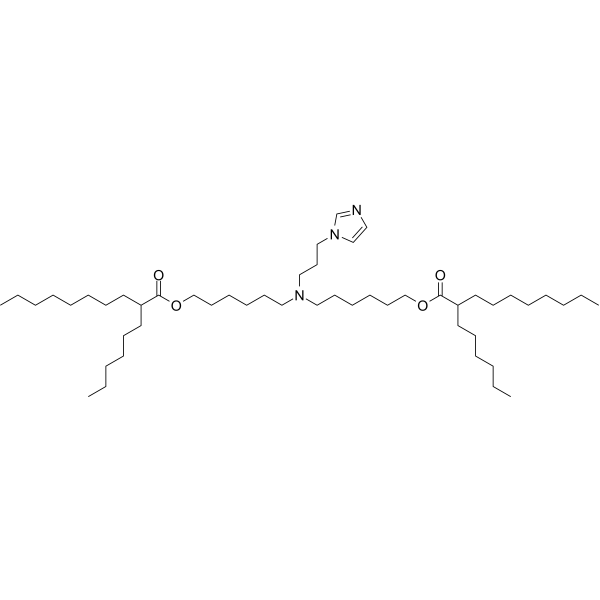
| DC82209 | Lipid 10a-26 Featured |
Lipid 10a-26 is an ionizable lipid developed by Orna Therapeutics for lipid nanoparticle (LNP) formulations. Lipid 10a-26 is a key ionizable lipid in the LNP-6 formulation. Through structural modification, it exhibits reduced binding to ApoE proteins and lowered liver affinity compared to traditional ionizable lipids. Instead, Lipid 10a-26 demonstrates strong splenic tropism—in non-human primate studies, it effectively delivers payloads to the spleen and immune cells in peripheral blood, such as T cells, NK cells, and macrophages, enabling the possibility of "in vivo CAR-T" therapy. Its pKa is tuned to approximately 6.0–6.5, allowing rapid protonation in the acidic endosomal environment, which promotes endosomal membrane disruption and efficient cytosolic release of circular RNA.
More description
|
|
